“1.5cm” search results (300)

Coffee beans? Cocoa beans? Systematic introduction of Coffee beans
Many people like coffee very much, so what does coffee beans look like? Are coffee beans and cocoa beans the same thing? The coffee beans can be traced back to millions of years ago, in fact, the real age when it was discovered can no longer be tested. It is only said that coffee is a man named Ko in the Ethiopian highlands.
2015-09-10 Coffee beans cocoa beans systems introductions a lot of people very like coffee then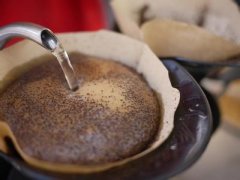
A brief introduction to Coffee planting History and planting techniques
According to historical records, coffee trees were first planted in Taiwan in 1884, and coffee cultivation in mainland China began in Yunnan. In 1902, a French missionary named Tian introduced seeds from Yinggong County in Binchuan County, Yunnan Province. it was successfully planted in a place called Zhu Kula, which is located on the bank of the Yushan River, a tributary of the Jinsha River. The commercial cultivation of coffee in Yunnan began in 1985, but its development is slow.
2015-02-25 Coffee Common sense planting History Technology introduction Historical data Records 1884
Coffee pull flower-technical article
Coffee, an alien species, is now loved by more and more people. Drinking coffee is not only a health but also a fashion. Let's take a look at how baristas make a perfect cup of coffee flowers. Coffee coffee fest has never been clearly defined in the coffee industry. It can only be said that it is played by cappuccino and latte.
2014-07-26 Coffee knowledge coffee drawing flower drawing technology
Control of Diseases and pests in Coffee
(1) Pest control 1. Coffee tiger longicorn beetles are distributed in all coffee producing areas in the world, and also occur in Yunnan, Guangxi and Hainan Island in China. It is one of the major pests of coffee. The coffee tiger longicorn beetle harms the coffee trunk for more than 2 years. At first, it eats between the cambium and xylem, and then eats the xylem. The victim was in a curved tunnel filled with sawdust.
2015-10-07 Coffee diseases and pests control diseases pests
Technical guidance for the cultivation of small-grain coffee
The cultivation techniques of small-grain coffee planting, land preparation, variety selection, timely planting, shade and so on.
2014-06-17 Coffee knowledge small grains of coffee coffee encyclopedia
[reprint] Heart-shaped coffee flower drawing skills
Coffee jacquard skill Coffee is now loved by more and more people. Drinking coffee is not only a health but also a fashion. Let's take a look at how baristas make a perfect cup of coffee. Coffee coffee fest has never been clearly defined in the coffee industry, and it can only be said that it originated from a cappuccino coffee.
2014-08-14 Coffee flower drawing skills flower drawing production flower drawing works
Requirements for making Espersso
Crema persistence: for a long time, there are no cracks. The thickness of Crema: generally 3-5 mm, the thicker the better. Taste: balanced, sweet, sour and bitter. Palate: balanced, full-bodied and smooth. Carrying cup: the requirement of WBC is 50-80ml cup, and the requirement of CCAB is 50-90ml cup. Temperature: warm cup and plate temperature 45 degrees, cup temperature 80 degrees, evaluation temperature 65
2014-08-14 Coffee knowledge requirements of Espresso Espresso
Espersso requirements for basic knowledge of introduction to Coffee
Crema persistence: for a long time, there are no cracks. The thickness of Crema: generally 3-5 mm, the thicker the better. Taste: balanced, sweet, sour and bitter. Palate: balanced, full-bodied and smooth. Carrying cup: the requirement of WBC is 50-80ml cup, and the requirement of CCAB is 50-90ml cup. Temperature: warm cup and plate temperature 45 degrees, cup temperature 80 degrees, evaluation temperature 65
2014-10-31 Coffee knowledge coffee basics Espresso
Requirements of basic knowledge of espresso to do Espersso
Crema persistence: for a long time, there are no cracks. The thickness of Crema: generally 3-5 mm, the thicker the better. Taste: balanced, sweet, sour and bitter. Palate: balanced, full-bodied and smooth. Carrying cup: the requirement of WBC is 50-80ml cup, and the requirement of CCAB is 50-90ml cup. Temperature: warm cup and plate temperature 45 degrees, cup temperature 80 degrees, evaluation temperature 65
2015-01-21 Italian espresso coffee basics common sense Espersso requirements Cre
Introduction to coffee flower drawing-heart-shaped flower drawing skills
Coffee, an alien species, is now loved by more and more people. Drinking coffee is not only a health but also a fashion. Let's take a look at how baristas make a perfect cup of coffee flowers. Coffee coffee fest has never been clearly defined in the coffee industry. It can only be said that it is played by cappuccino and latte.
2015-11-23 Coffee flower entry heart shape skill coffee this alien species now
Production conditions of Coffee trees Shijiazhuang Cafe
Fertilization was carried out in combination with plastic surgery within 1-2 days after planting. The fertilization of young coffee trees is mainly nitrogen fertilizer, while appropriate application of phosphorus and potassium fertilizer, in order to accelerate the formation of crown and promote the development of roots. Human and animal manure and green leaf retting fertilizer also have a good effect on the growth of young coffee trees. Coffee seedlings can be fertilized for the first time two months after planting, and then once every 1-2 months. Such as human and animal dung
2016-06-08 Coffee production conditions Shijiazhuang characteristics cafes planting combination plastic surgery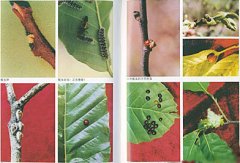
Common Diseases and pests in Coffee cultivation and Prevention and Coffee basic knowledge
(1) Pest control 1. Coffee tiger longicorn beetles are distributed in all coffee producing areas in the world, and also occur in Yunnan, Guangxi and Hainan Island in China. It is one of the major pests of coffee. The coffee tiger longicorn beetle harms the coffee trunk for more than 2 years. At first, it eats between the cambium and xylem, and then eats the xylem. The victim was a curved tunnel filled with sawdust.
2015-10-07 Coffee planting common diseases and insect pests control methods basics common sense
The ingenious use of coffee bean dregs Coffee bean dregs cake
Coffee is one of the high-end drinks. Bean dregs are the dregs filtered out after making soy milk. Most of them are abandoned. The two usually do not overlap, and their status in people's minds is not the same. When the coffee and bean dregs are mixed and baked into a cake, savor it carefully, and a coarse grain cake with a strong aroma of coffee will make you full of praise. 1. Main ingredients: coffee, bean dregs, eggs
2015-03-05 Coffee bean dregs ingenious use practice coffee high-grade drinks one boiled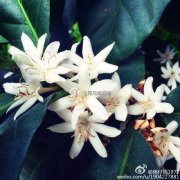
Coffee tree species know coffee knowledge
There are more than 6000 species of coffee trees, most of which are tropical trees and shrubs. There are four main coffee trees in the world, of which only two are of real commercial value and are planted in large quantities, and the quality of the coffee beans produced by other coffee trees is also higher than that of other coffee trees. The wild coffee tree is 510 meters high. In artificial cultivation, in order to facilitate picking by hand, it is generally trimmed into
2016-05-16 Coffee category understanding knowledge coffee 500 variety 6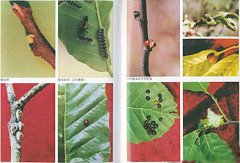
Common Coffee Diseases and pests in Coffee cultivation and Control methods
It is distributed in all coffee producing areas in the world, and it also occurs in Yunnan, Guangxi and Hainan Island in China. It is one of the major pests of coffee. Coffee longicorn beetles, which damage the coffee trunk by larvae for more than 2 years, initially eat between the cambium and xylem, and then eat (1) pest control. 1. Coffee tiger longicorn beetles are distributed in all coffee producing areas in the world. Yunnan, Guangxi and Hainan, China
2015-02-16 Coffee common sense planting common diseases and insect pests prevention and control methods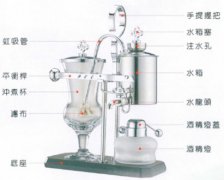
Coffee pot General knowledge of Royal Belgian Pot Operation
1. Preparation before use: please take a piece of filter cloth from the attachment and boil it in boiling water for about 5 minutes, then wash it with clean water and wrap it on the filter sprinkler. For the sake of your food hygiene, please wash and wipe all the utensils first, and pour boiling water into the water container to simulate a trial to thoroughly clean all the utensils. 2. Introduction of Belgian kettle parts and accessories 3. Open or close
2015-03-02 Coffee pot coffee common sense royal Belgium operation method use preparation move
Planting knowledge of Coffee trees guided by cultivation techniques of small Coffee
Small-grain coffee is a shrub of Rubiaceae, which is suitable for planting in areas with an annual average temperature of 19 ℃ ~ 21 ℃ and an altitude of 800-1400m. It has the advantages of fast plant growth, early fruit and high yield. The land preparation should choose the contour platform with deep soil layer, loose and fertile soil, clean wind, sufficient light and shade trees, annual rainfall of 700 to 1600 mm, slope of less than 30 degrees, and row spacing of 2 to 3 meters.
2015-02-16 Small grains coffee cultivation technical guidance planting knowledge
Cultivation techniques of small Coffee guiding the selection of Coffee Bean varieties
Small-grain coffee is a shrub of Rubiaceae, which is suitable for planting in areas with an annual average temperature of 19 ℃ ~ 21 ℃ and an altitude of 800-1400m. It has the advantages of fast plant growth, early fruit and high yield. The land preparation should choose the contour platform with deep soil layer, loose and fertile soil, clean wind, sufficient light and shade trees, annual rainfall of 700 to 1600 mm, slope of less than 30 degrees, and row spacing of 2 to 3 meters.
2015-10-07 Small grains coffee cultivation technical guidance coffee beans varieties selection
Fine Coffee Science explains the nouns of coffee in detail.
[source] basic source of medicinal materials: seeds of small fruit coffee, medium fruit coffee and large fruit coffee of Rubiaceae. Latin plant animal mineral name: 1.CoffeaarabicaL.2.CoffeacanephoraPierreexFroehn.3.CoffealibericaBul1.exH1en harvesting and storage: the pericarp begins to turn red and can be harvested. The harvest time varies with the species, and the small seeds are collected from September to November and from September to October.
2014-10-16 Coffee knowledge boutique caffeine coffee coffee encyclopedia
An introduction to the common sense of coffee trees
The origin of the coffee tree is Ethiopia in Africa.
2014-07-10 Coffee knowledge coffee tree coffee common sense coffee encyclopedia