“1.5cm” search results (300)

Coffee beans travel boutique Coffee basic knowledge
The coffee we drink comes from the roasting and grinding of coffee beans, and all this is provided by magical coffee bars. The origin of this economic crop is in Yisuobi in Africa. It has been cultivated for more than 2000 years. At present, the main coffee producing areas in the world are Latin America, Africa and Africa. According to statistics, coffee is cultivated in 76 countries in the world, mainly in Africa and the United States. Coffee in our country
2015-04-14 Coffee beans travel boutique coffee basics common sense us from
Introduction to the planting method of Coffee Tree where is the origin of coffee tree
The origin of the coffee tree is Ethiopia in Africa. In botany, coffee trees belong to the evergreen trees of the subgenus Rubiaceae, and coffee beans, commonly known as coffee beans, are the seeds of the fruit of coffee trees, just because they are shaped like beans, so they are called coffee beans. Climate is the decisive factor for coffee cultivation. Coffee trees are only suitable for growing in the tropics or subtropics, so latitude 25 is south and north.
2016-07-05 Coffee planting method introduction origin where coffee Africa Egypt![Espresso: [Cappucinno- cappuccino] SCAE International Standard and solution](https://www.coffeesearch.net/uploads/151203/2-1512031K342M3.jpg)
Espresso: [Cappucinno- cappuccino] SCAE International Standard and solution
Cappuccino is a coffee drink invented by the Italians. Its structure is Italian concentrate (Espresso) + milk + milk foam. The traditional cappuccino practice is: the Italian concentrated / milk / milk foam ratio is 1:1:1, the coffee flavor is stronger, and the milk foam is rough and dry. SCAE (European boutique coffee association) cappuccino standard: 1. The cup capacity is 150-180ml in
2015-12-03 Italian Coffee Cappucinno- Cabo Chino SCAE China
The planting technology of coffee requirements for planting coffee trees
Coffee fruit contains two seeds, namely coffee beans. The two beans are connected face to face with each other on one side of the plane. Each coffee bean has a thin outer film, which is called silver skin, and its outer layer is covered with a yellow outer skin, called endocarp. The whole coffee bean is wrapped in a sticky pulp to form coffee pulp, which is soft and sweet.
2016-05-24 Coffee planting technology requirements coffee fruit contains two seeds that is
Introduction to the Ecological Environment of Coffee trees
Morphological characteristics Coffee Fruit Coffee Tree is a shrub or small tree of Rubiaceae; leaves opposite, leathery, long ovate; every March, the branches will appear white flowers, petals spirally arranged, the core of flowers jump around the petals, take a closer look, it is really like a small windmill playing in childhood, emitting the fragrance of jasmine; the fruit is oval, berry, crimson, hidden
2016-06-15 Coffee ecological environment introduction
The origin and planting conditions of coffee trees basic knowledge of coffee
The origin of the coffee tree is Ethiopia in Africa. In botany, coffee trees belong to the evergreen trees of the subgenus Rubiaceae, and coffee beans, commonly known as coffee beans, are the seeds of the fruit of coffee trees, just because they are shaped like beans, so they are called coffee beans. Climate is the decisive factor for coffee cultivation. Coffee trees are only suitable for growing in the tropics or subtropics, so latitude 25 is south and north.
2015-08-14 Coffee country of origin planting conditions basics common sense coffee origin Africa Egypt
What conditions do coffee trees need for planting? what are the requirements for the natural environment?
The origin of the coffee tree is Ethiopia in Africa. In botany, coffee trees belong to the evergreen trees of the subgenus Rubiaceae, and coffee beans, commonly known as coffee beans, are the seeds of the fruit of coffee trees, just because they are shaped like beans, so they are called coffee beans. Climate is the decisive factor for coffee cultivation. Coffee trees are only suitable for growing in the tropics or subtropics, so latitude 25 is south and north.
2016-05-29 Coffee planting needs what conditions natural environment all have requirements coffee original
What conditions do coffee trees need for planting? do they have high requirements on local climate?
The origin of the coffee tree is Ethiopia in Africa. In botany, coffee trees belong to the evergreen trees of the subgenus Rubiaceae, and coffee beans, commonly known as coffee beans, are the seeds of the fruit of coffee trees, just because they are shaped like beans, so they are called coffee beans. Climate is the decisive factor for coffee cultivation. Coffee trees are only suitable for growing in the tropics or subtropics, so latitude 25 is south and north.
2016-05-31 Coffee planting need what conditions place climate requirements whether high not high
History of introduction and expansion of Coffee in early China (3)
1. Investigation on the year of coffee introduction in Hainan Island in 1898 1.1 the age of the early introduction of coffee in Hainan Island is indisputably expressed as 1908 in many local chronicles, agricultural history, agricultural history and various books and periodicals in China. However, the remains of the century-old coffee trees in Hainan Island are still there, and the descendants of the ancient trees are still there. Therefore, the century-old coffee trees that actually exist in Hainan have unequivocally rewritten Hainan.
2015-04-28 Early China coffee introduction expansion
Where does the coffee we drink usually come from?
The coffee we drink comes from the roasting and grinding of coffee beans, and all this is provided by magical coffee bars. The origin of this economic crop is in Yisuobi in Africa. It has been cultivated for more than 2000 years. At present, the main coffee producing areas in the world are Latin America, Africa and Africa. According to statistics, coffee is cultivated in 76 countries in the world, mainly in Africa and the United States. Coffee in our country
2015-10-27 Coffee beans travel us coffee general from where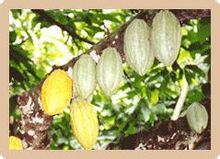
Coffee bean varieties: the historical cause and classification of cocoa bean varieties are explained in detail.
Morphological characteristics of the trunk: up to 12 meters high, trees, wide branches, branchlets brown pubescent. The trunk is solid and the cacao trunk has a luxuriant crown. Leaves: alternate, elliptic, leathery, 20-30 cm long, slightly stellate hairy on veins. Flowers: old cauline flowers, blooming directly on the trunk or main branch, about 1.8 cm in diameter; Calyx pink, smelly. 5 deep cracks; petals 5, lower sunken helmets
2015-12-28 Coffee beans varieties cocoa beans species history reasons classification details explanation
The planting Environment of Coffee trees what kind of environment does coffee trees need to have?
The planting of coffee trees has great requirements on the environment. There are only two areas in China where coffee trees can be planted. The origin of coffee trees is Ethiopia in Africa. In botany, coffee tree belongs to the evergreen tree of the subgenus Rubiaceae, and coffee beans, commonly known as coffee beans, are the seeds of the fruit of coffee trees, just because they are shaped like beans, so they are called coffee.
2016-05-29 Coffee planting environment need have what kind coffee have very
The History of Coffee introduction and expansion in China in the early stage (3)
1. Investigation on the year of coffee introduction in Hainan Island in 1898 1.1 the age of the early introduction of coffee in Hainan Island is indisputably expressed as 1908 in many local chronicles, agricultural history, agricultural history and various books and periodicals in China. However, the remains of the century-old coffee trees in Hainan Island are still there, and the descendants of the ancient trees are still there. Therefore, the century-old coffee trees that actually exist in Hainan have unequivocally rewritten Hainan.
2014-12-01 Coffee History Common sense early China introduction expansion about 1898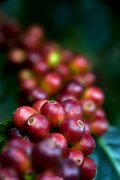
A Survey of Chinese Coffee Culture on the introduction of Coffee in Hainan Island in 1898
1.1 the age of the early introduction of coffee in Hainan Island is indisputably expressed as 1908 in many local records, agricultural history, agricultural history and various books and periodicals in China. However, the remains of the century-old coffee trees in Hainan Island are still there, and the descendants of the ancient trees are still there. Therefore, the actual existence of the century-old coffee trees unequivocally rewrote that the earliest introduction of coffee in Hainan Island should be in 1898. 1.2
2015-02-07 China coffee culture about 1898 Hainan Island introduction coffee age
The introduction and expansion of Coffee in China in the early stage of Coffee Development (3)
1. Investigation on the year of coffee introduction in Hainan Island in 1898 1.1 the age of the early introduction of coffee in Hainan Island is indisputably expressed as 1908 in many local chronicles, agricultural history, agricultural history and various books and periodicals in China. However, the remains of the century-old coffee trees in Hainan Island are still there, and the descendants of the ancient trees are still there. Therefore, the century-old coffee trees that actually exist in Hainan have unequivocally rewritten Hainan.
2015-03-09 China coffee development course early stage introduction expansion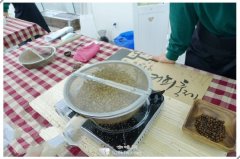
Coffee common sense-coffee roasting
Coffee roasting (coffee roasting) refers to the heating of raw beans to convert starch in raw beans into sugars and acids at high temperature, cellulose and other substances will be carbonized to varying degrees, water and carbon dioxide will be volatilized, proteins will be converted into enzymes and fats, and the remaining substances will be combined to form an oil film on the surface of coffee beans, and in the process coffee acids will be formed.
2014-06-25 Coffee knowledge coffee roasting coffee encyclopedia
Requirements of Coffee on Ecological Environment Environmental requirements for planting Coffee trees
Small seed coffee is native to the lower part of the Ethiopian rainforest in northern Africa. The temperature is relatively low, with an average annual temperature of 20 degrees. The origin of medium-grain coffee is near the equator. Therefore, small seed coffee has stronger cold tolerance and wider adaptability than medium grain coffee. Medium-grain coffee requires a slightly higher temperature. First, the requirement for temperature should be based on the natural conditions of Yunnan, and the suitable planting area of coffee should be selected.
2015-02-25 Coffee ecological environment requirements planting environment
The nutritional conditions for the growing demand for coffee
Small seed coffee is native to the lower part of the Ethiopian rainforest in northern Africa. The temperature is relatively low, with an average annual temperature of 20 degrees. The origin of medium-grain coffee is near the equator. Therefore, small seed coffee has stronger cold tolerance and wider adaptability than medium grain coffee. Medium-grain coffee requires a slightly higher temperature. The requirement of temperature is based on the natural conditions of Yunnan, and the suitable planting area of coffee should be chosen in the year.
2015-08-18 Coffee growth continuous demand nutrition conditions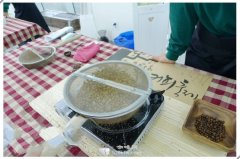
A complete knowledge of coffee roasting
Coffee roasting (coffee roasting) refers to the heating of raw beans to convert starch in raw beans into sugars and acids at high temperature, cellulose and other substances will be carbonized to varying degrees, water and carbon dioxide will be volatilized, proteins will be converted into enzymes and fats, and the remaining substances will be combined to form an oil film on the surface of coffee beans, and in the process coffee acids will be formed.
2014-06-04 Coffee knowledge coffee roasting coffee encyclopedia
Introduction of raw and ripe beans in the process of coffee bean germination, growth and baking
According to an Arab legend, around 1250, the exiled chief Omar discovered exuberant wild coffee berries. The hungry and tired sheikh boiled some of the fruit in water and drank the brewed coffee pulp. He liked the change in his diet very much and gave the drink to some people who had just recovered from a serious illness. Chief Omar.
2016-10-17 Coffee beans sprouting processing growth baking process raw and ripe introduction