“cultivation” search results (13701)

Cultivation techniques of small-grain coffee: multi-dry shaping and cultivation
Cultivation techniques of small-grain coffee: multi-dry shaping and cultivation
2014-06-17 Coffee knowledge small grain coffee coffee cultivation techniques
The whole process of coffee bean cultivation and growth Coffee tree cultivation
Common questions about coffee bean cultivation: First, what is coffee seed? How are coffee seeds obtained? Coffee seeds, commonly known as coffee with shell dry beans, are coffee seeds that have not been removed from the mesocarp and silver skin. Coffee seeds are divided into Arabica seeds and Robusta seeds. The picture shows coffee green beans available for consumption. They are also two major commercial large-scale cultivation.
2015-02-11 coffee beans grow long whole process coffee about common
Arabica coffee cultivation techniques Multi-stem shaping and cultivation of coffee trees
Multi-stem integer Multi-stem integer is an integer method that uses the first branch as the main result branch. The purpose of integer is to cultivate multiple trunks and grow a large number of robust first-order branches. Multi-trunk trees do not pick the top. As a result, when the yield decreases after 3 to 5 years, new trunks are replaced.① Cultivation of multi-stem method oblique planting method: When planting, the seedlings are obliquely planted, generally at an angle of 30~60 degrees with the ground. oblique planting can inhibit
2015-02-16 Arabica coffee cultivation techniques multi-stem shaping cultivation utilization one
Four major cultivation systems of Ethiopian coffee analyze in detail how Ethiopian coffee is cultivated.
Forest coffee (Forest Coffee): wild coffee, which accounts for 10% of Ethiopia's national output, is distributed in the wild coffee forest areas of the west and southwest, also known as the Kafa forest. The dense trees here provide the most natural shade for coffee trees and do not need manual care. Mother Earth is in charge of birth, aging, sickness and death, and coffee farmers can go directly to the woodland to harvest. Hansen
2016-03-16 Ethiopia coffee big four cultivation system detailed analysis how forest
Four major cultivation systems of Ethiopian coffee how is Ethiopian coffee cultivated? Ethiopia
Ethiopia is located between three and fourteen degrees north latitude, and the planting area of coffee trees is nearly 600000 hectares. There are two rainy seasons a year in the south and east of the country, while there is only one rainy season in the west. The distribution of the rainy season is different, so coffee is harvested in Ethiopia all the year round. Coffee grows between 550 and 2750 meters above sea level. The soils in the west and south belong to volcanic rocks and are rich in minerals.
2016-03-16 Ethiopia coffee big four cultivation system how
Cultivation techniques of small-grain coffee: multi-dry shaping and cultivation
Multi-dry shaping is a method that uses the first-order branch as the main fruiting branch. The purpose of plastic surgery is to cultivate multiple trunks and grow a large number of robust primary branches, and the multi-trunk trees will not be topped. As a result, when the yield decreases after 3-5 years, the new trunk will be replaced. ① culture multi-stem method oblique planting method: when planting, the seedlings are oblique, generally at an angle of 30-60 degrees with the ground. Oblique planting can be suppressed
2015-10-07 Small grains coffee cultivation techniques multi-dry plastic culture utilization one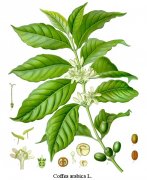
Coffee cultivation technique A tropical cash crop that is easy to cultivate
Coffee, cocoa and tea are called the three major beverages in the world, and their output, consumption and output value all rank first. In addition to being used as a beverage, coffee can also extract caffeine and coffee oil; in medicine, it can be used as an anesthetic, stimulant and diuretic cardiotonic agent. Coffee pulp can be used to make wine, vinegar, pectin and molasses; dried pulp can be used as animal feed; dried fruit shell can be used as fertilizer and burning
2015-10-07 Coffee cultivation techniques one easier cultivation tropical cash crops overview coffee
History and present situation of Coffee cultivation in China
History of Coffee cultivation in the World Coffee originated in the tropics of northern and central Africa. It has been cultivated for more than 2000 years, and the Arabs began to plant it in 525 BC. At first, coffee beans were only used for chewing. In 890 AD, Arab merchants brought coffee to Yemen and made it into a drink for the first time. By the 13th century, Arabs had become in the habit of stir-frying coffee, but to
2015-10-07 China Coffee cultivation History present situation World
The History and present situation of Coffee cultivation in China
History of Coffee cultivation in the World Coffee originated in the tropics of northern and central Africa. It has been cultivated for more than 2000 years, and the Arabs began to plant it in 525 BC. At first, coffee beans were only used for chewing. In 890 AD, Arab merchants brought coffee to Yemen and made it into a drink for the first time. By the 13th century, Arabs had become in the habit of stir-frying coffee, but to
2015-02-16 Boutique coffee planting China cultivation history status quo
Cultivation techniques of Coffee History of Botany Coffee roasting
The cultivation technology editor requires that the origin of coffee tree [4] is in Ethiopia in Africa. In botany, coffee trees belong to the evergreen trees of the subgenus Rubiaceae, and coffee beans, commonly known as coffee beans, are actually the seeds of the fruit of coffee trees. They are called coffee beans only because they are shaped like beans. Climate is the decisive factor for coffee cultivation. Coffee trees are only suitable for growing in the tropics or
2016-06-07 Coffee cultivation techniques plants History Baking Editing requirements
History and Present Situation of Coffee Cultivation in China
Coffee production in China has experienced a tortuous course of development. From the 1950s to the early 1960s, coffee production had a peak period of development. In 1960, the national planting area reached 130,000 mu, with an annual output of more than 300 tons.
2014-06-05 Coffee cultivation Coffee history
Introduction to cultivation techniques of Coffee Fruit
Cultivation techniques require that the origin of coffee trees [4] is in Ethiopia in Africa. In botany, coffee trees belong to the evergreen trees of the subgenus Rubiaceae, and coffee beans, commonly known as coffee beans, are actually the seeds of the fruit of coffee trees. They are called coffee beans only because they are shaped like beans. Climate is the decisive factor for coffee cultivation, and coffee trees are only suitable for growing in the tropics or subheat.
2016-06-13 Coffee fruit cultivation techniques introduction requirements coffee origin non-
Types and varieties of coffee
Coffee is a plant of the genus Coffea genus of Rubiaceae. According to the study of Chevalier,1947, there are 66 species in four groups, including 24 species in Eucoffea group, 18 species in Mascarocoffea group, 13 species in Paracoffea group and 11 species in Argocoffea group.
2014-07-22 Coffee knowledge coffee type coffee encyclopedia
Types and varieties of coffee
Coffee is a plant belonging to the genus Coffea in the Rubiaceae family. According to Chevalier (1947), the genus Coffea is divided into four groups with 66 species, including 24 species in Eucoffea group, 18 species in Mascarocoffea group, 13 species in Paracoffea group and 11 species in Argocoffea group
2014-07-04 Coffee knowledge coffee types coffee varieties coffee encyclopedia
Geographical Distribution cultivation techniques of Coffee trees
Coffee grows mostly in countries with alpine terrain between the Tropic of Cancer and the Tropic of Cancer. It is native to tropical Africa and is introduced and cultivated in South and Southwest China. [2] the cultivation technology editor requires that the origin of the coffee tree [4] is in Ethiopia in Africa. In botany, the coffee tree belongs to the evergreen tree of the coffee subgenus of Rubiaceae, and the so-called coffee bean is actually the fruit of the coffee tree.
2016-06-08 Coffee geographical distribution cultivation techniques coffee long promised land mostly located in Beihui
Geographical Distribution cultivation techniques of Coffee trees
Coffee grows mostly in countries with alpine terrain between the Tropic of Cancer and the Tropic of Cancer. It is native to tropical Africa and is introduced and cultivated in South and Southwest China. [2] the cultivation technology editor requires that the origin of the coffee tree [4] is in Ethiopia in Africa. In botany, the coffee tree belongs to the evergreen tree of the coffee subgenus of Rubiaceae, and the so-called coffee bean is actually the fruit of the coffee tree.
2016-06-08 Coffee geographical distribution cultivation techniques coffee long promised land mostly located in Beihui
The requirements of geographical environment for the cultivation techniques of coffee trees
The cultivation technology editor requires that the origin of coffee tree [4] is in Ethiopia in Africa. In botany, coffee trees belong to the evergreen trees of the subgenus Rubiaceae, and coffee beans, commonly known as coffee beans, are actually the seeds of the fruit of coffee trees. They are called coffee beans only because they are shaped like beans. Climate is the decisive factor for coffee cultivation. Coffee trees are only suitable for growing in the tropics or
2016-06-06 Coffee species cultivation techniques geographical environment requirements editors
Comparison of basic data of Coffee varieties
Suitable cultivation conditions: Arabica variety (Arabica) is suitable for plateau cultivation, Robesta variety (Robusta) is suitable for lowland cultivation, and Liberian variety (Liberica) is suitable for minimum cultivation. Production: the Arabica variety (Arabica) accounts for about 70-80% of the world's total output; the Robesta variety (Robusta) accounts for about 20-30% of the world's total output of Liberian varieties (Liberica)
2014-06-10 Coffee varieties cultivation caffeine
Comparison of basic Information of Coffee varieties
Suitable cultivation conditions: Arabica variety (Arabica) is suitable for plateau cultivation, Robesta variety (Robusta) is suitable for lowland cultivation, and Liberian variety (Liberica) is suitable for minimum cultivation. Production: the Arabica variety (Arabica) accounts for about 70-80% of the world's total output; the Robesta variety (Robusta) accounts for about 20-30% of the world's total output of Liberian varieties (Liberica)
2015-02-11 Coffee variety basic information contrast boutique fit cultivation condition rabbi product
Comparison of basic data of Coffee varieties
Suitable cultivation conditions: Arabica variety (Arabica) is suitable for plateau cultivation, Robesta variety (Robusta) is suitable for lowland cultivation, and Liberian variety (Liberica) is suitable for minimum cultivation. Production: the Arabica variety (Arabica) accounts for about 70-80% of the world's total output; the Robesta variety (Robusta) accounts for about 20-30% of the world's total output of Liberian varieties (Liberica)
2015-04-24 Coffee common sense variety basic information comparison suitability cultivation conditions rabbi product