“messy” search results (295)

Introduction to the methods of variety treatment in Ethiopian coffee flavor description and grinding degree production area
Washed coffee accounts for 35% of exports. Good quality washed coffee is processed with freshly picked fully ripe fruit, picked carefully and closely monitored by professionals. The picked clean coffee beans are pulped on the day of picking, then fermented, washed, dried and peeled. The humidity of processed coffee beans is kept at about 12%. Sun-cured coffee accounts for 65% of exports. Mainly by
2016-09-28 Ethiopia Coffee Flavor description Grinding degree producing area Variety treatment
The grade flavor of Ethiopian coffee
Essel coffee is processed by two processing methods: sun and water washing. The flavor of coffee processed by different processing methods is very different. Generally speaking, the alcohol thickness and soil taste of washed Sidamo, Yirgacheffe and Limmu coffee are slightly lower, and the taste of sun-processed coffee is more wild. But Ethiopian coffee may taste different from batch to batch, which requires more cup tests before it can be found.
2016-06-01 Ethiopia coffee grade flavor
Ethiopian Coffee Manor Flavor description Grinding characteristics introduction to the taste price of varieties in producing areas
Ethiopian coffee beans grow in close to the natural environment, after years of planting under the same growth conditions, Ethiopian coffee beans have gradually adapted to the environment here. More than 60% of coffee beans are grown in forests or semi-forests. Large-scale coffee-growing villages account for about 35% of the country's total coffee production. Many of these are used.
2016-10-10 Ethiopia Coffee Manor Flavor description Grinding characteristics varieties producing areas
Coffee Technical Operation: eight principles for judging Coffee by Cup timing
[introduction] the first principle: clean, clean when light, and clean when strong. It's like a room, it's easy to be clean when it's empty, but it has to be clean when it's full. The second first principle: clean, clean when light, and clean when strong. It's like a room, it's easy to be clean when it's empty, but it has to be clean when it's full.
2015-12-07 Coffee technology operation timing evaluation eight principle guide first
Like the faint bitterness of coffee
Like coffee, not because of its refreshing, but because of its bitterness and its aroma, like the mood when drinking coffee, that kind of elegance, that kind of leisure, that kind of quiet, that kind of yearning in love with this kind of coffee mood, irresistible. I don't know when coffee became a part of my life. In fact, coffee is an art of life, because coffee itself
2014-08-21 Like coffee that kind light bitter feeling like because it's
Characteristics of grinding degree of Ethiopian coffee with soft acidity introduction to flavor description of varieties
Grade of Ethiopian coffee: Ethiopian washed coffee Yega Chuefei G1 G2 Sidamo (Yirgacheffe, Sidamo) has the highest grades 2 and 3 (G2, G3), while sun-processed coffee in eastern Ethiopia is mostly grade 4 or 5 (G4, G5). In many cases, level 4 coffee is marked as level 5 in order to reduce taxes. At present, the classification is not uniform and there are
2016-10-11 Acidity softness Ethiopia coffee grinding characteristics taste variety producing area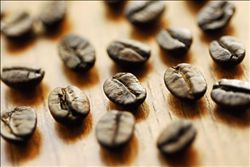
The characteristics of several major coffee producing areas in Ethiopia introduction to the Flavor description of Fine Coffee varieties
Harald is famous for its special bean variety, Longberry, which is processed by dry method. This coffee has a fruity aroma of red wine. It is this unique aroma from the Harald region that gives the mellow aroma of the Arabica coffee we usually drink. Kinby and Cedamo produce washed coffee. Kimbe Coffee has a balanced taste and a stronger flavor than Harald Coffee. Cedamo
2016-10-20 Ethiopia several coffee producing areas characteristics boutique flavor description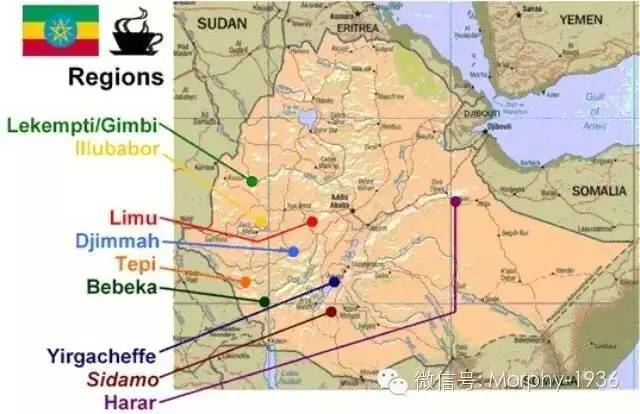
Introduction of boutique coffee beans Ethiopian coffee
Ethiopia is the hometown of Arabica coffee, and it is in the forests of Kaffa that you can see wild Arabica coffee. In Ethiopian, coffee is called Bun or Buna, and coffee beans (coffeebean) may be translated from Kaffa Bun. Arabica coffee was discovered early in the Harald area, probably from Kafa.
2015-07-09 Boutique coffee beans Ethiopia coffee introduction
Ethiopian Coffee Manor with rich taste introduces the taste of Ethiopian coffee producing areas
Harald coffee, which grows within 900m from the Darolebu plain to 2700 m from the highland mountain range of Chercher in eastern Ethiopia. These mountains do provide unique characteristics for these perennial coffee beans: the fruit is full and long, moderately acidic, and the typical mocha is refreshing.
2016-07-27 Rich taste Ethiopia coffee manor introduction producing area Harald Rahl
Since you can't keep it, then live a wonderful life! In Fujiwara coffee, it's still good, feel the good time.
You don't need a story to open a house, do you? Feelings may be even less! Li answered my expectant question so gently. I was stunned for a moment: Oh, that. Is there nothing more to say? Yes
2016-01-11 Since do not live then wonderful live Fujiwara coffee still beautiful feeling
Flavor characteristics of Ethiopian Fine Coffee Ethiopian Coffee
Ethiopia is the hometown of Arabica coffee, and it is in the forests of Kaffa that you can see wild Arabica coffee. In Ethiopian, coffee is called Bun or Buna, and coffee beans (coffeebean) may be translated from Kaffa Bun. Arabica coffee was discovered early in the Harald area, probably from Kafa.
2016-03-18 Ethiopia boutique coffee flavor characteristics
Signboard Design of Cafe
The upper part of the storefront can set up a strip store sign to display the name of the store prominently. In the bustling business district, consumers often first browse all kinds of store signs, large and small, looking for commercial service places that achieve their consumption goals or are worth visiting. Therefore, the effects of cafe signboards with high generalization and strong attraction on the visual stimulation and psychology of customers are
2014-07-26 Coffee shop operation coffee shop signboard signboard design
Ethiopian Arabica coffee with rich body Original growing environment Fine coffee
The highest grades of washed Ethiopian coffee Yirgacheffe G1 G2 Sidamo are Grade 2 and Grade 3 (G2, G3), and the coffee processed in the sun in eastern Ethiopia is mostly Grade 4 or Grade 5 (G4, G5). In many cases, fourth-grade coffee is labeled as five-grade in order to reduce taxes. Now the classification is not very uniform, some chaos, because there are sun processing
2016-08-19 thickness richness ethiopia rabbi coffee origin flavor cultivation environment
Flavor description of Ethiopian Coffee Manor introduction of High-quality Coffee beans in producing areas
In February 1977, Lieutenant Colonel Mengistu Haier Maryam (MENGISTU HAILE MARIAM) launched a military coup and served as Chairman of the interim military Administrative Council and head of State. In 1979, the Ethiopian Labor people's Party Organization Committee, dominated by soldiers, was established to implement an one-party system. In 1984, the Ethiopian Workers' Party was formed according to the Soviet Communist Party model. Mengistu, September 1987
2016-10-06 Ethiopia Coffee Manor Flavor description Variety producing area characteristics Fine goods
Introduction to Ethiopian Coffee, the hometown of Arabica Coffee
Ethiopia is the hometown of Arabica coffee, and it is in the forests of Kaffa that you can see wild Arabica coffee. In Ethiopian, coffee is called Bun or Buna, and coffee beans (coffeebean) may be translated from Kaffa Bun. Arabica coffee was discovered early in the Harald area, probably from Kafa.
2015-01-09 Rabbi coffee hometown Ethiopia introduction rabbi
A method suitable for household operation of siphon pot to make coffee
This production method is a popular standard production method of siphon pot in the 1990s. If it is different from the current popular schools, the reader can be regarded as Uncle Dou's personal point of view. but the biggest feature of this siphon pot is that it is easy to master and control, easy to learn, and suitable for friends who use siphon pots at home.
2014-06-20 Coffee knowledge siphon pot coffee making coffee encyclopedia
Ethiopian coffee introduction Ethiopian coffee beans exquisite coffee beans and introduction
Ethiopia is the hometown of Arabica coffee, and it is in the forests of Kaffa that you can see wild Arabica coffee. In Ethiopian, coffee is called Bun or Buna, and coffee beans (coffee bean) may be translated from Kaffa Bun. Arabica coffee was discovered early in the Harald area.
2016-04-30 Ethiopia coffee introduction coffee beans exquisite
A brief introduction to boutique coffee and Ethiopian coffee
Ethiopia is the hometown of Arabica coffee, and it is in the forests of Kaffa that you can see wild Arabica coffee. In Ethiopian, coffee is called Bun or Buna, and coffee beans (coffee bean) may be translated from Kaffa Bun. Arabica coffee was discovered early in the Harar area, probably from the card.
2014-10-15 Coffee knowledge boutique coffee Ethiopian coffee
Ethiopian Coffee Flavor Description Grind Taste Variety Fine Coffee Introduction
In July 1991, EPF hosted a national conference attended by more than 20 political and ethnic organizations. The meeting adopted the Transitional Charter and elected an 87-member House of Representatives, with EPF Chairman Meles Zenawi as President of the Transitional Government and President of the House of Representatives. A transitional government was established. On 24 May 1993, Eritrea (formerly Ethiopian Province of Eritrea) adopted a resolution at the International Conference on the Elimination of All Forms of Discrimination against Women (ICPD).
2016-09-28 Ethiopia Coffee Flavor Description Grind Taste Variety Fine Introduction
Introduction to the characteristics of coffee flavor and taste of Ethiopian coffee manor with long, pointed beans
The highest grades of Ethiopian washed coffee Yega Chuefei G1 G2 Sidamo (Yirgacheffe, Sidamo) are Grade 2 and Grade 3 (G2, G3), while most of the sun-processed coffee in eastern Ethiopia are Grade 4 or Grade 5 (G4, G5). In many cases, level 4 coffee is marked as level 5 in order to reduce taxes. At present, the grading is not uniform and messy, because there is also sun processing.
2016-09-06 Skinny long body Ethiopia coffee manor flavor taste characteristics introduction