“high grade” search results (8000)
Coffee grading knowledge how to classify coffee grades
If the owners of two cafes are discussing, shopkeeper A says, "the coffee beans we use in our shop are NO.2 in Santos, Brazil. What about your store?" shopkeeper B said: our store uses Brazilian NO.1 of the same grade as Blue Mountain NO.1. The evaluation method adopted in Brazil is the deduction method, which is classified according to the number of defective beans per 300g of staple beans, with a total of seven grades from NO.2 to No.8, with a deduction of less than 4 points.
2015-03-06 Coffee grade division knowledge how
Honduran coffee production grade taste
Brazil is a producer of coffee, with a third of the world's coffee consumed in all grades and varieties. There are many kinds of coffee here, although there are not many excellent coffee, but it can be used to make coffee blends with other coffees. Taste characteristics: mild, sour and bitter moderate, soft aroma. Best cooking: medium cooking Colombia is second only to Brazil in coffee production
2016-05-31 Honduras Coffee Place of production Grade Taste Brazil Various
General knowledge of fine coffee beans grading of raw coffee beans
There are two ways to classify raw coffee beans, one is the filter number, and the other is the elevation. It is divided by the filter number, and the size is size in terms of the screen size. Round beans are generally smaller than flat beans, between 8-13 and 12-29. 8, 9, 10. 12, 13. 18. 29 = small, medium, ordinary. Quasi-big. Big, extra large. The bigger the size, the bigger the beans. Like SC-.
2014-11-13 Coffee knowledge boutique coffee coffee bean common sense grading
Grade Planning for the handling of Salvadoran Coffee introduction to the Santa Ana volcano area
Coffee treatment, washing treatment, sun drying. Coffee grades are classified according to altitude, the highest is SHG: SHG,strictly high grown,3950 feet (about 1200 meters); HG, high grown, 2950 feet (about 899m); CS, central standard, 1960 feet (about 597m). Note: 1 feet ft
2016-07-02 El Salvador Coffee treatment method Grade Planning introduction Anna Volcano Earth
How is the coffee graded? who is in charge of grading? How is it graded?
Select coffee is usually the top coffee, but what does the top coffee represent? Who is in charge of grading? How is it graded? Although grade is not the only criterion for distinguishing flavor, it is still a quite objective index. First, why there are different ways of managing the origin of graded coffee, some are composed of large and small farmers, and some are dominated by specialized enterprises. Even if the coffee in the same place
2015-11-03 Coffee how grading who is in charge
Introduction of Colombian coffee beans with more than 200 grades
The varieties of Colombian coffee are mainly Arabica coffee (coffea arabica), that is, small fruit coffee (small grain coffee). Relatively speaking, large fruit coffee (coffea robusta) is mostly grown in Africa of origin, such as Madagascar coffee. There are several varieties of small fruit coffee. Brazilian coffee, which has the highest yield in the world, has large seeds, strong adaptability and fruit production.
2016-06-20 200 multiple grades Columbia Coffee beans introduction Variety Grade Goran
The basic knowledge of Blue Mountain Coffee Grade Fine Coffee
The Blue Mountains are located in the eastern part of the island of Jamaica, hence its name because it is surrounded by the Caribbean Sea. On clear days, the sun shines directly on the blue sea, and the peaks reflect the bright blue light of the sea. The Blue Mountains are more than 2100 meters high. Cool weather, foggy, frequent precipitation, using this rich land Rain Water to reconcile to plant the world-famous Blue Mountains
2015-03-19 Blue Mountains Coffee grades boutiques Basics Common sense Mountains located in Jamaica
Introduction to the grades of coffee beans in Kenya
Kenya can be said to be a dynamic element of the high-end Arabica raw bean market. The highest grade coffee in Kenya is not generally traded in the same way as Kenya AA (Kenya AA) or Kenya AB (Kenya AB) in circulation, but is traded through specific auctions at a much higher price than premium coffee. Of course, Kenyan AA coffee and through specific
2016-06-06 Kenya coffee beans grades introduction
There are two methods for grading raw coffee beans in terms of sieve size, size
There are two ways to classify raw coffee beans, one is the filter number, and the other is the elevation. It is divided by the filter number, and the size is size in terms of the screen size. Round beans are generally smaller than flat beans, between 8-13 and 12-29. 8, 9, 10. 12, 13. 18. 29 = small, medium, ordinary. Quasi-big. Big, extra large. The bigger the size, the bigger the beans. Like SC-.
2015-10-05 Coffee raw beans grading method two kinds size sieve as a unit
Kenya Coffee Grade Planning
Bean type filter number code caffeine bean size flat bean 20-29 large 18 large 17 quasi-big 16 ordinary 15 medium 14 small 13-12 super small round bean 13-12 large 11 quasi-large 10 ordinary 9 medium 8 small table one graded by filter number and coffee bean size D. Graded by elevation (see Table 2) according to the elevation of the cultivated land, it can be divided into three, four, seven and so on.
2016-05-31 Kenya Coffee Grade Planning Ping Dou 20-29 extra large quasi-large ordinary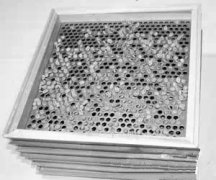
Standard of coffee bean grading international standard coffee raw bean grading method
If we go to the wholesale market to buy coffee beans, we will find that the coffee beans there are generally divided into three grades: AA, A, B or AAA, AA, A, which is a simple classification for commercial use. In fact, the grading standards vary from country to country. Today, Chongqing Beresta baristas training School introduces some common ways of grading raw coffee beans to friends: 1. With the size of coffee beans
2015-09-06 Coffee beans grading standards international standards coffee raw beans methods
How to select high quality coffee beans
In fact, at present, there is no unified classification in the coffee industry, and each country of production is divided into different levels. For example, Brazil sets NO.2 as the highest level and Jamaica sets NO.1 as the highest level.
2014-07-10 Coffee knowledge selection of coffee beans coffee encyclopedia
Coffee grades introduction Coffee Grade introduction Fine Coffee beans
◎ grades defective beans by the number of points, which is the earliest method of grading, and is still in use in many parts of Brazil. The method of identification is to randomly take 300 grams of samples and put them on black paper, because black paper can best avoid reflection. Then, examined carefully by the professional appraiser, find out the defective beans in the sample, and accumulate different scores according to the types of defects. For example, one black bean counts as one.
2016-06-24 Coffee grade division introduction boutique coffee beans defects points grading is the most
Ethiopian Coffee-Wash Coffee Yerga Sherfi Flavor Introduction
Yirgacheffe Coffee has a strong floral flavor. Washed Yerga Sherfi is one of the world's finest high quality coffee, with soft acidity and rich body. Top and Bebeka coffee, low in acidity but high in body, is an indispensable member of the blend coffee. Grade of Ethiopian coffee: Ethiopian washed coffee Ye Jia Xue Fei G1 G2 West Damo (Yi
2016-06-18 Ethiopia coffee wash yega sherry flavor presentation
Grade A coffee beans from India
India is the first country in Asia to grow coffee, and India's A-grade coffee beans have always been a kind of coffee strongly concerned by coffee lovers all over the world. Its flavor and taste features: uniform particles, rich taste, slippery and delicious. The cultivation of Indian coffee originated from their colonists, the British. As early as the 17th and early 18th centuries, the English were not as addicted to tea as they are now.
2014-08-07 India coffee beans Asia the earliest cultivation coffee country one
General knowledge of boutique coffee beans explain the grade of Blue Mountain Coffee
The Blue Mountains are located in the eastern part of the island of Jamaica, hence its name because it is surrounded by the Caribbean Sea. On clear days, the sun shines directly on the blue sea, and the peaks reflect the bright blue light of the sea. The Blue Mountains are more than 2100 meters high. Cool weather, foggy, frequent precipitation, using this rich land Rain Water to reconcile to plant the world-famous Blue Mountains
2014-12-12 Boutique coffee beans common sense detailed explanation blue mountain coffee grade mountain range located in
Introduction to the graded flavor of high-quality coffee beans in Tanzania
The coffee beans in Tanzania are not only graded in a similar way to Kenya, but also have a similar flavor. According to Fuligao coffee experts, the better Clemangaro produced in Tanzania has a strong texture, which is the same as the ordinary coffee beans in Kenya, but the acidity is mild and can stimulate the taste buds. The overall feeling is a bit similar to the sour taste of deed tax. And beans growing in the south
2016-06-16 Boutique coffee beans Tanzania grading flavor introduction
Introduction to Ethiopian Coffee Grade
Grade of Ethiopian coffee: Ethiopian washed coffee Yega Chuefei G1 G2 Sidamo (Yirgacheffe, Sidamo) has the highest grades 2 and 3 (G2, G3), while sun-processed coffee in eastern Ethiopia is mostly grade 4 or 5 (G4, G5). In many cases, level 4 coffee is marked as level 5 in order to reduce taxes. At present, the classification is not uniform and there are
2016-05-29 Ethiopia coffee grade introduction
The Common sense Coffee basis of Grade A Coffee beans in India
India is the first country in Asia to grow coffee, and India's A-grade coffee beans have always been a kind of coffee strongly concerned by coffee lovers all over the world. Its flavor and taste features: uniform particles, rich taste, slippery and delicious. The cultivation of Indian coffee originated from their colonists, the British. As early as the 17th and early 18th centuries, the English were not as addicted to tea as they are now.
2015-05-14 India coffee beans common sense coffee basics
High-quality coffee learns how to grade coffee beans
At present, there is no international standard for coffee bean quality classification, and the classification method varies from country to country, so coffee classification is carried out according to some characteristics applicable to each producing country. Take samples of coffee beans from a bag, judge them according to the standards of the producing country, grade the samples, and determine whether they are good or bad according to the evaluation.
2014-10-29 Coffee knowledge boutique coffee science how to grade coffee beans