“grading standards” search results (2000)

Yunnan Coffee Bean Special Grade I Standard
The appearance and sensory characteristics project requires a special level of sensory aroma, flavor and taste. The appearance should be light blue or light green. Physical index item special level (7.1mm) test method granularity / >, 90 DB53/T 154.6 broken beans / (%), 5 DB53/T 154.8 discolored beans / (%), 1.0 DB53/T 154.8 foreign bodies / (%), 0.1 DB53/T 154.8
2014-07-02 Yunnan coffee beans Yunnan small coffee beans Yunnan first-class coffee beans
Grading of raw coffee beans
At present, there are three main rating criteria for raw coffee beans, and different countries adopt different rating methods according to their own production conditions and national conditions (not all coffee producing countries adopt the same method). Let's introduce these three popular rating methods. One: the reason for the emergence of such a classification standard according to the altitude of the coffee producing area is mainly because of the high level.
2014-07-22 Coffee raw beans coffee raw bean grading coffee encyclopedia coffee knowledge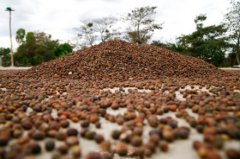
Coffee Bean rating Standard for Blue Mountain Coffee
According to the law, only beans produced in the Blue Mountain area can be called Blue Mountain Coffee. High-quality Blue Mountain Coffee is divided into three grades: No. 1 (more than 17cm 18 mesh), No. 2 (16 mesh) and No. 3 (15 mesh), with 17 mesh equivalent to 17x64 inches; they all taste the same (all confirmed by dental sales plus government-approved professional cups), but of different sizes, and these three grades of raw beans are different.
2014-12-28 Coffee beans grades standards about Blue Mountains coffee teeth laws regulations only
90 + Top Taste Standard of Gesha varieties grown in Panamanian Manor
Level Level is the number after ninety + item name mark L. For example: L12-is Level 12. Level is probably in proportion to the price, representing 90 + special-purpose raw bean classification model: according to quality, quantity, production cost, 90 based on the original excellent raw beans, continue to be graded as: Level 7 (L7) single production area harvest. A rarity with a delicate taste and a special flavor
2016-07-18 Ninety boutique coffee Panama manor planted Gesha variety top
Size, uniformity and composition quality of raw coffee beans Hawaiian Kona coffee beans
The name Kona Extra Fancy | Hawaiian Kona Extra Fancy Extra Fancy refers to the quality standard grade set by the Kona Association of Hawaii. The evaluation standard of this grade is the size of raw coffee beans.
2016-05-04 Coffee raw beans size uniformity composition quality Hawaii Cona coffee beans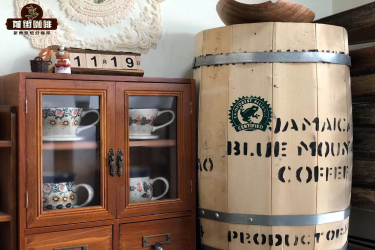
The Common sense of the grading Standard of Blue Mountain Coffee Coffee description of taste characteristics and flavor of Jamaica Blue Mountain No. 1 coffee
According to the law, only beans produced in the Blue Mountain area can be called Blue Mountain Coffee. High-quality Blue Mountain Coffee is divided into three grades: No. 1 (more than 17cm 18 mesh), No. 2 (16 mesh) and No. 3 (15 mesh), with a size of 17 mesh equivalent to 17x64 inches; they taste (all through dental sales and recognized by the government.
2022-12-01 About Blue Mountain coffee grades common sense tooth selling laws regulations only
General knowledge of Fine Coffee Yunnan Coffee beans Special Grade II Standard
The project requires extra secondary sensory aroma, flavor and taste. The appearance should be light blue or light green. Physical index item Special second level (7.1mm) test method granularity / >, 90 DB53/T 154.6 broken beans / (%), 10 DB53/T 154.8 discolored beans / (%), 2.0 DB53/T 154.8 foreign bodies / (%), 0.1 DB53/T 154.8 chemical index items
2014-11-20 Coffee knowledge boutique coffee coffee common sense Yunnan coffee beans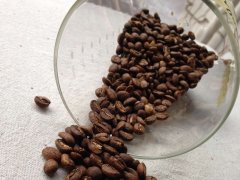
There are two ways to grade green coffee beans.
There are two ways to grade coffee beans, one is to filter the number of points, one is to elevation points. The size of the round beans is generally smaller than the flat beans, the round beans are between 8-13, and the flat beans are between 12-29. 8,9,10... 12,13... 18... 29= ,,......, Extra large. The bigger the number, the bigger the bean. SC-19, for example, is bean number 19.
2015-11-03 coffee green beans grading method two
Graded coffee raw bean treatment
At present, there are three main rating criteria for raw coffee beans, and different countries adopt different rating methods according to their own production conditions and national conditions (not all coffee producing countries adopt the same method). Let's introduce these three popular rating methods. One: the reason for the emergence of such a classification standard according to the altitude of the coffee producing area is mainly because of the high level.
2014-09-18 Grading of raw coffee beans and treatment of raw coffee beans
Introduction to the international classification of the standard production mode of raw coffee beans in Indonesia
Indonesian coffee beans are handled differently in different countries, so there are a variety of classification methods, and there is no unified method in the world at present. Generally speaking, a producing country uses only one method, and the commonly used ones are as follows: ◎ classifies coffee beans according to the size of coffee beans. This grading method is based on a variety of perforated sieves, which have various specifications, identified and compiled by numbers.
2016-10-24 Indonesia coffee raw beans grading standard mode of production international introduction
Graded high-quality coffee beans
There are two ways to classify raw coffee beans, one is the filter number, and the other is the elevation. It is divided by the number of the filter screen, and the size is in the unit of the screen (size). Round beans are generally smaller than flat beans, between 8-13 and 12-29. 8, 9, 10. 12, 13. 18. 29 = small, medium, ordinary. Quasi-big. Big, extra large. The bigger the size, the bigger the beans. Like SC.
2014-09-13 Grading of raw coffee beans boutique coffee beans
Basic knowledge of fine coffee grading of raw coffee beans
At present, there are three main rating criteria for raw coffee beans, and different countries adopt different rating methods according to their own production conditions and national conditions (not all coffee producing countries adopt the same method). Let's introduce these three popular rating methods. One: the reason for the emergence of such a classification standard according to the altitude of the coffee producing area is mainly because of the high level.
2015-04-17 Boutique coffee basics common sense raw beans grading at present
European Special Coffee Association (SCAE) barista certification standard
There are a large number of barista training institutions around the world, but there is no independent testing and certification mechanism based on knowledge and production capabilities. Just like getting a driver's license, the European Special Coffee Association will get our certification no matter where you received the training or even learned it yourself. You only need to pass our written, oral and hands-on tests.
2015-04-23 Europe specialty coffee association SCAE certification standards all over the world.
Introduction to the main points of the knowledge of raw coffee beans: a detailed explanation of the classification of raw coffee beans
The last step in the processing of raw coffee beans is grading, so what are the grading methods of raw coffee beans? Do different countries adopt the same approach? At present, there are three main rating criteria for raw coffee beans, and different countries adopt different rating methods according to their own production conditions and national conditions (not all coffee producing countries adopt the same method).
2015-12-18 Coffee raw beans knowledge main points introduction grading detail explanation coffee
Quality coffee beans, knowledge, classification of raw coffee beans
There are two ways to classify raw coffee beans, one is the filter number, and the other is the elevation. It is divided by the number of the filter screen, and the size is in the unit of the screen (size). Round beans are generally smaller than flat beans, between 8-13 and 12-29. 8, 9, 10. 12, 13. 18. 29 = small, medium, ordinary. Quasi-big. Big, extra large. The bigger the size, the bigger the beans. Like SC.
2015-01-04 Boutique coffee beans knowledge coffee raw beans grading methods
Grading of raw coffee beans
There are two ways to classify raw coffee beans, one is the filter number, and the other is the elevation. It is divided by the filter number, and the size is size in terms of the screen size. Round beans are generally smaller than flat beans, between 8-13 and 12-29. 8, 9, 10. 12, 13. 18. 29 = small, medium, ordinary. Quasi-big. Big, extra large. The bigger the size, the bigger the beans. Like SC-.
2014-07-01 Raw beans raw coffee beans coffee beans grading
The grade of fine coffee is divided into fine coffee by country.
1. Generally speaking, coffee is not classified according to altitude in countries near the equator because coffee is grown at a higher altitude. In addition, if it is picked by hand and processed by washing, it will not be graded by bad points because there are few immature beans and sundries mixed in. Therefore, the size of the sieve number is generally used as the grading standard. Such as: Colombia, Tanzania, Kenny
2016-05-16 Boutique coffee grade country boutique
Determination of the selection of grading methods in various countries
1. Generally speaking, coffee is not classified according to altitude in countries near the equator because coffee is grown at a higher altitude. In addition, if it is picked by hand and processed by washing, it will not be graded by bad points because there are few immature beans and sundries mixed in. Therefore, the size of the sieve number is generally used as the grading standard. Such as: Colombia, Tanzania, Kenny
2016-05-10 Countries grades methods selection determination generally speaking equator near country by
High-quality coffee study Yunnan coffee beans special second-class standard
Special secondary appearance and sensory characteristics project requires special secondary sensory aroma, flavor and taste are very good. The appearance should be light blue or light green. Physical index item special second level (7.1mm) test method granularity / >, 90 DB53/T 154.6 broken beans / (%), 10 DB53/T 154.8 discolored beans / (%), 2.0 DB53/T 154.8 foreign bodies / (%), 0.1 DB53
2014-11-12 Coffee knowledge boutique coffee science Yunnan coffee beans coffee bean standards
On the classification standard of Jamaican boutique Blue Mountain Coffee how many kinds of Blue Mountain Coffee are there
According to the law, only beans produced in the Blue Mountain area can be called Blue Mountain Coffee. High-quality Blue Mountain Coffee is divided into three grades: No. 1 (more than 17cm 18 mesh), No. 2 (16 mesh) and No. 3 (15 mesh), with a size of 17 mesh equivalent to 17x64 inches; they taste (all through dental sales and recognized by the government.
2022-10-28 Coffee knowledge boutique coffee Blue Mountain Coffee Coffee Grade