There are two ways to grade green coffee beans.
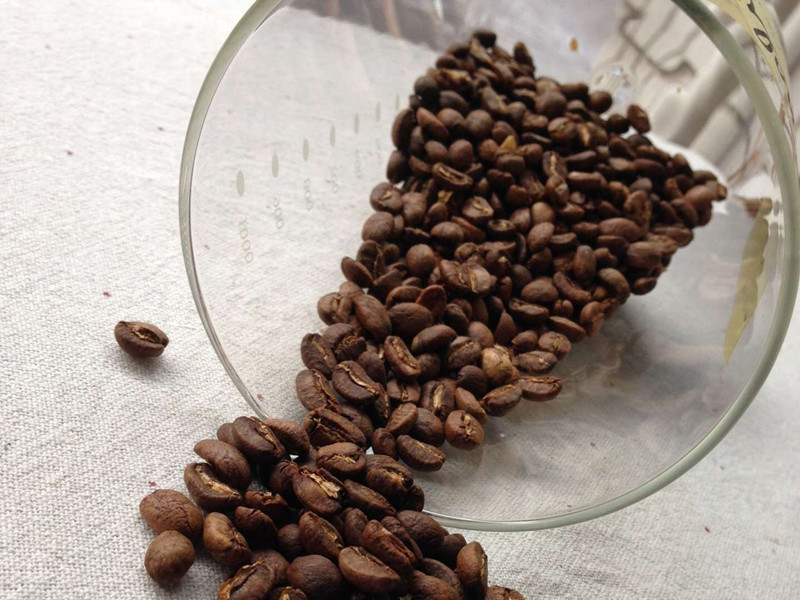
There are two ways to classify raw coffee beans, one is the filter number, and the other is the elevation.
It is divided by filter number, and the size is based on screen size (size).
Round beans are generally smaller than flat beans, between 8-13 and 12-29.
8, 9, 10. 12, 13. 18. 29 = >, extra-large. The bigger the size, the bigger the beans. SC-19, for example, is the No. 19 bean.
Grade by level
According to the elevation of the cultivated land, it can be divided into seven grades. Generally speaking, the quality of highland beans is better than that of lowland beans, and the price is higher because of the increase in freight.
Sequence number equal order abbreviated elevation
1 selected quality beans S.H.B 4500 ~
2 good coffee beans H.B 4000mm 4500
3 medium coffee beans S.H 3500 million 4000
4 Super high-grade washed coffee beans E.P.W3000~3500
5 first-class washed coffee beans P.W 250000 3000
6 special water washed coffee beans E.G.W 2000 2500
7 High quality washed coffee beans G.W~2000
Grading purpose: to make the size of raw beans uniform, which is conducive to the baking operation, and improve the value of raw beans.
Screen diameter
The size of the international practice is 9: 22, and the number used represents the diameter of the screen, with this number as the numerator and 64 as the denominator, in inches. For example, 14 refers to raw coffee beans that can be sifted through a 14-inch screen with a diameter of 64 inches, and 19 + refers to raw coffee beans that can be sifted with a diameter of more than 64 inches with a 19-inch screen.
Grading standard and code name
The governments of each coffee-exporting country set their own grading standards and code names.
Common grading standards
Block transactions:
The proportion of bad beans
Bean size
Soybean grain hardness
Name of farm where single coffee (specialty coffee) is produced
Organic cultivation (organic)
Fair trade (fair trade)
African countries-kenya
PB: peaberry
AA Plus-plus
AA plus
AA: Screen 17 and 18
AB: screen 15 and 16
C
E
African countries-Ethiopia
300 grams of raw beans as the basis for calculation
1: 0-3 defects
2: 4-12
3: 13-25
4: 20-45
5: 46-100
6: 101-153
7: 154-340
8: over 340 = substandard
South America-Colombia Maragogype: special trees Malago Rippi, elephant beans
Supremo: screen > 17
Excelso: screen 15-16.5
UGQ: Usual Good Quality: Screen 12-14
South America
TypeDefects (COB) (New York) (Le Havre)
2 468
2/389 12.5
31213 17
3/4192123.5
426 3030
4/536 4558.5
5466087
5/664123
686158
Central America-Guatemala Good Washed:700m (GW)
Extra Good Washed: 700Universe 850m (EGW)
Prime Washed: 850Universe 1000m (PW)
Extra Prime Washed: 1000Universe 1200m (EPW)
Semi Hard Bean: 1200Compact 1350m (SH)
Hard Bean: 1350max 1500m (HB)
Fancy Hard Bean: 1500Comp1600m (FHB)
Strict Hard Bean: 1600thumb 1700m (SHB)
Central America-El Salvador Washed
Central Standard: 5000000m (CS)
High Grow: 9001,200m (HG)
Strictly High Grown: > 1200 m (SHG)
Natural
Coriente
Superior
Caracoil
Kona Kona Extra Fancy, Hawaii: screen 19 maximum 10 defects
Kona Fancy: Screen 18 max. 16 defs.
Kona Prime: no size requirement max. 25 defs.
Kona Caracoli No.1: Screen 10 max. 20 defs.
Jamaica jamaica
Blue Mountain
High Mountain Supreme
Prime Washed Jamaica aica
Grade Grade
Grade I: screen 18
Grade II: screen 17
Grade III: screen 16
Peaberry
300g raw beans are calculated based on Grade based on 300g.
1: 11 defects
2: 12-25
3: 26-44
4a: 45-60
4B: 61-80
5: 81-150
6: 151-225
Share
Follow Coffee Search for the latest coffee updates. Reproduced from "Coffee Search"
Article URL: https://www.coffeesearch.net/coffee43611.html
Related Articles
- Guji coffee producing area of Guji, Ethiopia: Humbela, Shakiso, Wulaga
- What is the most expensive variety of Qiloso in BOP multi-variety group?
- How to store the coffee beans bought home?
- Why are Yemeni coffee beans so rare now?
- Ethiopian Sidamo all Red Fruit Sun Sun Santa Vini Coffee beans
- SOE is mostly sour? What does it mean? Is it a single bean? what's the difference between it and Italian blending?
- Is Italian coffee beans suitable for making hand-brewed coffee?
- How to choose coffee beans when making cold coffee? What kind of coffee beans are suitable for making cold coffee?
- Just entered the pit to make coffee, what kind of coffee beans should be chosen?
- Can only Japan buy real Blue Mountain Coffee? What are authentic Jamaican Blue Mountain coffee beans?