“frost” search results (3005)

Bolivian Coffee Flavor characteristics and Market Bolivian Coffee Story
In the past, coffee trees in Bolivia used to act as hedges and ornaments around the garden. Real commercial production began in the early 1950s. The coffee industry in Brazil was seriously damaged by the great frost in 1975, while Bolivia (Bolivia) benefited from it and developed rapidly. The origin of Bolivian coffee: Bolivian coffee at an altitude of 180 Muhami 670 meters.
2015-03-27 Bolivia coffee specialty market past tree often planted in
How to prepare soft mocha iced coffee
Soft mocha frosted coffee: iced coffee that tastes like sorbet and looks delicious. The key point of production is to solidify the fully dissolved liquid again. Preparation: In a blender pour ice cubes, frozen coffee, chocolate syrup 20ml, mocha ice cream and mix well, but be careful not to mix too much. Spread chocolate syrup on the rim of the glass to see the flow marks
2015-04-09 soft rub sweetened coffee recipe method sorbet taste
The characteristic attribute of coffee in Guatemala is slightly south fruit highland.
Of the three major non-volcanic coffee-producing regions in Guatemala, the Weitango Highlands has the driest climate and the highest elevation. The dry and hot wind from Mexico's Tehuantepec plateau protects the coffee from frost and can be grown to 2000 meters (6500 feet). Because of its remote location, all coffee farmers have to process their own coffee, but fortunately there are no streams in the area.
2015-04-11 Guatemala producing areas Coffee characteristics attributes Micro Tenan Highlands
Basic knowledge of Bolivian boutique coffee
In the past, coffee trees in Bolivia used to act as hedges and ornaments around the garden. Real commercial production began in the early 1950s. The coffee industry in Brazil was badly damaged by the great frost in 1957, while Bolivia (Bolivia) benefited and developed rapidly. Bolivian coffee is grown at an altitude of 180,670 meters above sea level, including Allah.
2015-04-15 Bolivia boutique coffee basics common sense past tree often
South African coffee tastes fragrant and has less acidity
It is fragrant with less acidity, reminiscent of coffee beans from Central America. Coffee production in South Africa (South Africa) is mainly in the northeast of the country, from Natal between Transvaal and Mozambique, extending northward to Transvaal, with the southernmost limit of latitude 30 south; further south, coffee cannot be grown due to the harm of early frost.
2015-04-15 South Africa coffee taste aroma acidity less
The production method of Coffee basic knowledge fresh Cream
Materials: fresh milk, egg bowl, egg beater, vanilla powder, cream flower bag, sugar. (1) pour the right amount of fresh milk (about 200 ml) into the egg bowl and beat it at a low speed with the egg beater. (2) when the fresh milk is beaten until foaming, add sugar and vanilla powder and continue beating at medium speed. (3) when the fresh milk is frosted and cannot be inverted. (4) put the whipped cream into the cream flower bag.
2015-04-22 Coffee basics common sense cream production methods materials fresh milk beating eggs grass powder milk
The producer of boutique coffee beans introduces Bolivian coffee.
In the past, coffee trees in Bolivia used to act as hedges and ornaments around the garden. Real commercial production began in the early 1950s. The coffee industry in Brazil was seriously damaged by the great frost in 1975, while Bolivia (Bolivia) benefited from it and developed rapidly. The origin of Bolivian coffee: Bolivian coffee at an altitude of 180 Muhami 670 meters.
2015-05-14 Boutique coffee beans producing countries introduction Bolivia coffee past
Coffee from South Africa tastes fragrant and has less acidity.
It is fragrant with less acidity, reminiscent of coffee beans from Central America. Coffee production in South Africa (South Africa) is mainly in the northeast of the country, from Natal between Transvaal and Mozambique, extending northward to Transvaal, with the southernmost limit of latitude 30 south; further south, coffee cannot be grown due to the harm of early frost.
2015-07-30 Coffee origin South Africa taste aroma acidity less
Coffee producing country Bolivia boutique coffee bean producing country
In the past, coffee trees in Bolivia used to act as hedges and ornaments around the garden. Real commercial production began in the early 1950s. The great frost of 1957 seriously damaged Brazil's coffee industry, while Bolivia (Bolivia) benefited from it and developed rapidly. Bolivian coffee is grown at an altitude of 180,670 meters above sea level, including Allah.
2015-07-30 Coffee origin Bolivia boutique coffee beans producing country past
Global coffee producing area-Honduras
Coffee in Honduras is imported from El Salvador. Coffee production in Honduras increased significantly after the Brazilian frost in 1975, more than tripling in 20 years. Coffee producing area in Honduras: as in other places, the coffee grade in Honduras depends on altitude: coffee grown at 700-1000 meters above sea level is medium, 1000-1000 above sea level.
2015-08-24 Global coffee origin Honduras
Global Coffee producing area-Bolivian Coffee Market
In the past, coffee trees in Bolivia used to act as hedges and ornaments around the garden. Real commercial production began in the early 1950s. The coffee industry in Brazil was seriously damaged by the great frost in 1975, while Bolivia (Bolivia) benefited from it and developed rapidly. The origin of Bolivian coffee: Bolivian coffee at an altitude of 180 Muhami 670 meters.
2015-08-24 Global coffee origin Bolivia market past tree often
Bolivian coffee trees are often planted around gardens as hedges
Coffee trees used to be planted around gardens as hedges and ornamental plants in Bolivia. Real commercial production began in the early 1950s. Brazil's coffee industry was badly damaged by the 1957 frost, but Bolivia benefited from it and thrived. Bolivian coffee is grown at an altitude of 180 to 670 meters, of which Arabian coffee is grown at an altitude of 180 to 670 meters.
2015-10-06 Bolivia coffee trees often planted in garden around act as hedge past glass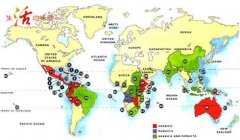
Analysis of global coffee producing area map analysis of coffee bean production area
Coffee trees grow in tropical or subtropical agricultural gardens centered around the equator and called coffee belts. Most of the coffee production is between the Tropic of Cancer, 25 degrees north of the tropical or subtropical equator and 30 degrees south of the equator. An area with an annual average temperature of 16-25 degrees Celsius, no Frosts Descent and rainfall of 1600-2000 mm.
2015-10-15 Global coffee origin map analysis coffee beans place of production tree growth growth
World Coffee Boutique Estate: Natal, South Africa
Aromatic and less acidic, reminiscent of coffee beans from Central America. Coffee production in South Africa is mainly in the north-east of the country, from Natal between Lesotho and Mozambique, extending northward to Transvaal, with the southernmost limit being latitude 30 south; further south coffee cannot be grown due to early frost.
2015-12-23 world coffee boutique estate South africa south africa region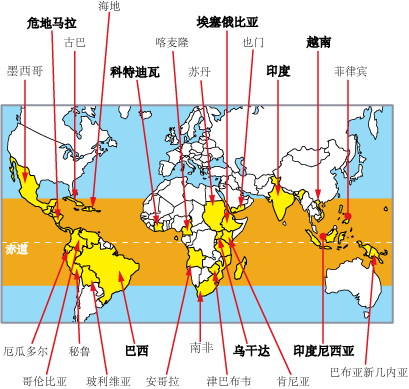
Coffee producing area 53 coffee producing areas worldwide Bolivian coffee producing area Bolivia coffee
Bolivia from serving as a garden hedge to coffee grown exclusively on a manor. In the past, Bolivian coffee trees used to act as hedges around the garden, decorating flowers and trees. Real commercial production began in the early 1950s. The coffee industry in Brazil was badly damaged by the great frost in 1957, while Bolivia (Bolivia) benefited and developed rapidly. Glass
2016-03-23 Coffee origin global 53 Bolivia act as garden tree
An introduction to Guatemalan Coffee-- Guatemalan Coffee from Mini Tenanguo Highland Coffee
Of the three major non-volcanic coffee-producing regions in Guatemala, the Weitango Highland has the driest climate and the highest elevation. The dry and hot wind from Mexico's Tehuantepec plateau protects the area's coffee from frost and can be grown to 2000 meters (6500 feet). Because of its remote location, all coffee farmers have to process their own coffee.
2016-03-24 Guatemala producing area Coffee introduction Micro Tenan Highland Origin Special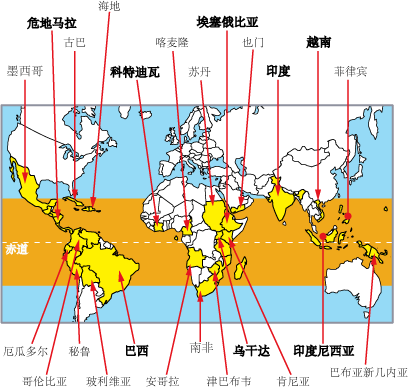
Characteristics of Arabica beans Coffee beans from Suriname
South Africa is fragrant with less acidity, reminiscent of Central American coffee beans. Coffee production in South Africa (South Africa) is mainly in the northeast of the country, from Natal between Transvaal and Mozambique, extending northward to Transvaal, with a southernmost limit of latitude 30 south. Further south, it cannot be caused by early frost.
2016-03-24 Rabbi Kadou specialty coffee producing country Suriname coffee beans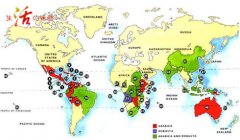
Global Coffee producing countries take a large inventory of where coffee is produced? Each
Coffee trees grow in tropical or subtropical agricultural gardens centered around the equator and called coffee belts. Most of the coffee production is between the Tropic of Cancer, 25 degrees north of the tropical or subtropical equator and 30 degrees south of the equator. An area with an annual average temperature of 16-25 degrees Celsius, no Frosts Descent and rainfall of 1600-2000 mm.
2016-03-31 Global coffee origin introduction world production national university inventory where out
Coffee beans and Coffee production area of Mini Nanguo Highland Manor in Guatemala
Of the three major non-volcanic coffee-producing regions in Guatemala, the Weitango Highland has the driest climate and the highest elevation. The dry and hot wind from Mexico's Tehuantepec plateau protects the area's coffee from frost and can be grown to 2000 meters (6500 feet). Because of its remote location, all coffee farmers have to process their own coffee.
2016-04-27 Guatemala Micro Tenan Highlands Manors Coffee beans Coffee producing areas
Where is the best place to grow coffee in the coffee growing area?
The coffee belt (coffee production zone) ranges from 25 degrees north latitude to 30 degrees south latitude, including many countries in Central, West Africa, the Middle East and South Asia, the Pacific, Latin America and the Caribbean. The reason why coffee cultivation is concentrated in this area is due to the limitation of temperature. Coffee trees are very vulnerable to frost, neither the north nor the south latitude is suitable, but only in the tropics.
2016-05-03 Coffee planting production zone where suitable coffee medium