“forest” search results (6752)

Common sense of Coffee Culture Coffee Legend of Zhukula Village in Yunnan Province
When it comes to the history of Chinese coffee, we have to mention Yunnan Dali Zhukula Coffee, which plays a vital role in the history of Chinese coffee. The ancient coffee forest in Zhukula Village is a unique variety of small-grain coffee in Yunnan. It is very rare and of excellent quality. It can be called a living fossil of Chinese coffee. We went to explore the century-old coffee legend of Zhukula village. Zhu Kula, located in Yunnan Province
2015-03-09 Coffee culture common sense Yunnan Zhu Kula coffee legends speaking of China
Introduction to the characteristics of high-quality coffee beans in Panamanian coffee producing areas
Panama is rich in forest resources and has many tree species, including valuable wood such as mahogany, cedar, teak, mahogany, and cedar. The forest area of eastern Dalian Province is the most widely distributed, but it has not been fully developed due to lack of market and for reasons such as national defense and protection of the natural ecological environment. [5] according to FAO estimates in 2010, the forest area of Panama is 4.29 million hectares, accounting for the land area.
2016-09-22 Panama coffee variety producing area flavor taste boutique coffee beans characteristics introduction
History of Coffee in China the Legend of Coffee in Zhukula Village, Dali, Yunnan
When it comes to the history of Chinese coffee, we have to mention Yunnan Dali Zhukula Coffee, which plays a vital role in the history of Chinese coffee. The ancient coffee forest in Zhukula Village is a unique variety of small-grain coffee in Yunnan. It is very rare and of excellent quality. It can be called a living fossil of Chinese coffee. In today's program, we will explore the century-old coffee legend of Zhukula Village. Zhu
2014-12-26 China Coffee History Yunnan Dali Zhu Kula hundred years Legend speaking of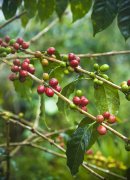
Sidamo Fruit Fruit Coffee with Light to moderate Baking and washing Nuts
The coffee-producing region of Ethiopia is divided into east and west parts by the East African Rift Valley, with lakes, volcanoes, lowlands, plateaus and woodlands interlaced, each evolving. Ethiopia has the most diverse coffee ecosystem in the world (forest coffee, semi-forest coffee, pastoral coffee and plantation coffee), which also preserves its rich Arabica genes. The eastern half is mostly plateaus, coffee beans.
2016-07-04 Dharma Sidamo light medium baking washing nuts fruit boutique
The History of Coffee in China the Biography of Coffee in Zhukula Village, Yunnan Province
When it comes to the history of Chinese coffee, we have to mention Yunnan Dali Zhukula Coffee, which plays a vital role in the history of Chinese coffee. The ancient coffee forest in Zhukula Village is a unique variety of small-grain coffee in Yunnan. It is very rare and of excellent quality. It can be called a living fossil of Chinese coffee. We went to explore the century-old coffee legend of Zhukula village. Zhu Kula, located in Yunnan Province
2014-12-01 China Coffee History Yunnan Zhu Kula Zhuan speaking of China
Flavor and taste characteristics of Ethiopian coffee manor introduce Ethiopian coffee varieties
Ethiopian coffee beans grow in close to the natural environment, after years of planting under the same growth conditions, Ethiopian coffee beans have gradually adapted to the environment here. More than 60% of coffee beans are grown in forests or semi-forests. Large-scale coffee-growing villages account for about 35% of the country's total coffee production. Many of these are used.
2016-08-06 Ethiopia coffee manor producing area flavor taste characteristics introduction variety
Introduction to the Fine Coffee Bean Flavor and Taste Manor in Ethiopia
Ethiopian coffee beans grow in close to the natural environment, after years of planting under the same growth conditions, Ethiopian coffee beans have gradually adapted to the environment here. More than 60% of coffee beans are grown in forests or semi-forests. Large-scale coffee-growing villages account for about 35% of the country's total coffee production. Many of these are used.
2016-07-14 Ethiopia boutique coffee beans flavor taste manor producing area introduction
The morphological characteristics of Coffee trees introduce the characteristics of Forest Green Coffee
Morphological characteristics Coffee Fruit Coffee Tree is a shrub or small tree of Rubiaceae; leaves opposite, leathery, long ovate; every March, the branches will appear white flowers, petals spirally arranged, the core of flowers jump around the petals, take a closer look, it is really like a small windmill playing in childhood, emitting the fragrance of jasmine; the fruit is oval, berry, crimson, hidden
2016-06-13 Coffee morphological characteristics introduction forest green characteristics
Mandarin Coffee Indonesia Asian Coffee Sumatra Bean Forest Coffee beans
Country: Indonesia level: G13 hand-selected producing areas: Lindong Sumatra treatment: traditional wet planing altitude: 1100-1600 meters Flavor: baked toast, nuts, pine, caramel, herbal Asian coffee the most famous producing areas are the islands of Malaysia: Sumatra, Java, Kaliman. Among them, the Indonesian island of Sumatra
2016-04-26 Mante Flavor Coffee Indonesia Asia Sumatra Lin Dong Coffee beans
Ethiopian Coffee Manor Culture introduces Flavor
Coffee Culture Coffee beans in Ethiopia grow in close to the natural environment. After years of planting under the same growth conditions, Ethiopian coffee beans have gradually adapted to the environment here. More than 60% of coffee beans are grown in forests or semi-forests. Large-scale coffee-growing villages account for about 35% of the country's total coffee production.
2016-06-13 Ethiopia coffee manor culture introduction flavor coffee culture
Introduction to the growing environment of Ethiopian coffee introduction to Yega Snow Coffee Manor
Ethiopian coffee beans grow in close to the natural environment, after years of planting under the same growth conditions, Ethiopian coffee beans have gradually adapted to the environment here. More than 60% of coffee beans are grown in forests or semi-forests. Large-scale coffee-growing villages account for about 35% of the country's total coffee production. Many of these are used.
2016-07-05 Ethiopia Coffee growth Environment introduction Yega Snow Coffee Manor
Ethiopian coffee bean flavor taste the manor area introduces fine coffee beans Ethiopian coffee
Sustainable coffee culture Ethiopian coffee beans grow in close to the natural environment, after years of planting under the same growth conditions, Ethiopian coffee beans have gradually adapted to the environment here. More than 60% of coffee beans are grown in forests or semi-forests. The villages that grow coffee in large areas account for about the total amount of coffee produced in the country.
2016-07-21 Ethiopia coffee beans flavor taste manor producing area introduction boutique coffee
Introduction to the Fine Coffee of Guatemala Antigua Coffee with Fine taste
Guatemala is located in the tropics, the northern and eastern coastal plains have a tropical rain forest climate, the southern mountains have a subtropical climate, the year is divided into two dry and wet seasons, with the wet season from May to October and the dry season from November to April of the following year. The narrow and fertile flatlands on the Pacific side of Guatemala have a tropical climate. The central plateau is also the cultural center of Guatemala, where the year-round temperature ranges from 1300 to 1800 meters.
2016-08-11 Monosodium glutamate fine Guatemala Antioch coffee flavor taste manor boutique introduction
Introduction of Coffee Variety Flavor description in Xida Mochizo producing area with strong fragrance
Sustainable coffee culture Ethiopian coffee beans grow in close to the natural environment, after years of planting under the same growth conditions, Ethiopian coffee beans have gradually adapted to the environment here. More than 60% of coffee beans are grown in forests or semi-forests. The villages that grow coffee in large areas account for about the total amount of coffee produced in the country.
2016-09-24 Smell aroma full-bodied Dharma Shaquiso producing area coffee variety flavor description
Introduction to coffee flavor of Sumatra Lindongla Sunawahanna Manor with strong flavor
Sumatra has an equatorial crossing and belongs to a tropical rain forest climate (high temperature and rainy throughout the year, with obvious dry and wet seasons [1]). Due to the high temperature and rainy all the year round, there is little temperature difference in different places, but there are obvious differences in rainfall. The annual precipitation along the west coast is 3000 mm. The geographical location of Sumatra Island is Sumatra. The mountain area can reach 4500-6000 mm. The annual precipitation from the eastern slope of the mountains to the coastal plain 2.
2016-08-31 Strong heavy Sumatra Lindong Lassu Nava Hana Manor Coffee Wind
An introduction to the Jamaican Blue Mountain Coffee with a long-lasting fruit flavor.
Lanshan County is located on the north side of the middle part of Nanling Mountains, bordered by Linwu County of Chenzhou to the east, Jianghua Yao Autonomous County on the south boundary and Lianzhou City of Guangdong Province, Ningyuan County to the west and Jiahe County of Chenzhou in the north. It is located between 11154-11227 east longitude and 2501-2537 north latitude. It is 67 kilometers from north to south and 55 kilometers from east to west. The county is located in longitude 1115415112208 east, latitude 250102 "253708 north, and the width from east to west is 55 kilometers.
2016-08-30 Persistent fruity Jamaica Blue Mountain Coffee Flavor Taste Manor introduction
The Biography of Coffee in Zhukula Village, Yunnan Province
When it comes to the history of Chinese coffee, we have to mention Yunnan Dali Zhukula Coffee, which plays a vital role in the history of Chinese coffee.
2014-06-13 Coffee Culture Yunnan Coffee Coffee Legend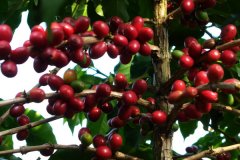
Ethiopian Yega Chevy Fine Coffee
The coffee-producing region of Ethiopia is divided into east and west parts by the East African Rift Valley, with lakes, volcanoes, lowlands, plateaus and woodlands interlaced, each evolving. Ethiopia has the most diverse coffee ecosystem in the world (forest coffee, semi-forest coffee, pastoral coffee and plantation coffee), which also preserves its rich Arabica genes. The eastern half is mostly plateaus, coffee beans.
2016-05-25 Yesso Biya Yega Chevy boutique coffee Ethiopia producing areas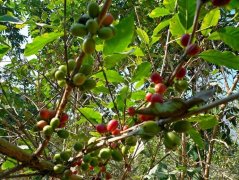
The most delicious small grain coffee in Lujiang in the world
We accidentally broke into the Lujiang coffee forest and had heard of the most fragrant Lujiang coffee in the world. it is recognized in the world that small coffee is the spice in the coffee, and only the special geographical environment and climate of Lujiangba can grow high-quality small-grained coffee. I happened to meet the workers of Lujiang forest farm picking ripe coffee fruits, and he told us a lot about coffee drying and roasting. Small grain
2015-10-08 In the world the most fragrant beautiful Lujiang small grains coffee we by chance intrude
An introduction to the estates of Ethiopian coffee-producing areas with the natural conditions for growing coffee
Sustainable coffee culture Ethiopian coffee beans grow in close to the natural environment, after years of planting under the same growth conditions, Ethiopian coffee beans have gradually adapted to the environment here. More than 60% of coffee beans are grown in forests or semi-forests. The villages that grow coffee in large areas account for about the total amount of coffee produced in the country.
2016-07-06 With planting coffee natural conditions Ethiopia producing areas manors introduction