“ethiopia” search results (9097)

Introduction to the treatment methods of roasting degree of high-quality coffee beans in Ethiopian coffee producing areas
Coffee is Ethiopia's most important export cash crop and the main source of Ethiopia's foreign exchange earnings. Ethiopia's coffee exports account for about 3% of the world market, making it the eighth largest coffee exporter in the world. Coffee exports increased steadily from 58000 tons in 1990 to 110000 tons in 1995-1996 and remained at this level in the following years. 2001-2002
2016-09-26 Ethiopia coffee producing areas characteristics boutique coffee beans roasting degree processing
Common sense of coffee beans mocha coffee raw beans from Ethiopia
Ethiopia (Ethiopia) Mocha Coffee Raw Bean Ethiopia mocha green bean Arabica Coffee is the hometown of Arabica Coffee, which grows at high latitudes and requires a lot of manual care. Here is the famous Ethiopian mocha, which has a sour taste similar to that of wine, fragrant and productive. Ethiopia also passes through its neighboring countries across the Red Sea.
2015-06-01 Coffee beans common sense Ethiopia origin mocha coffee raw beans
Introduction of Coffee Flavor description and Grinding degree in Cedar Motede Manor, Ethiopia
In September 1974, a group of young officers formed the Coordination Committee of the Army, the Police and the Local Army (DERGUE, meaning SHADOW, and later generally referred to as the junta and the Mengistu regime) launched a military coup to overthrow the government of Haile Selassie and announced the end of monarchy and the establishment of an interim junta. In November, the interim military junta was changed to the interim military Administrative Council. In December, interim military administration
2016-09-29 Ethiopia Dharma Ted Manor Coffee Flavor description Grinding taste
Ethiopian Coffee Export Coffee Fine Coffee Kenya Yega Chuefei
Coffee export coffee is Ethiopia's most important export cash crop and the main source of Ethiopia's foreign exchange earnings. Ethiopia's coffee exports account for about 3% of the world market, making it the eighth largest coffee exporter in the world. Coffee exports increased steadily from 58000 tons in 1990 to 110000 tons in 1995-1996 and remained at this level in the following years. two
2016-04-22 Ethel Searle Biya Coffee Export Fine goods Kenya Yega Sheffield
Variety characteristics of naturally fermented sun-cured Ethiopian coffee introduction to the flavor of fine coffee beans in the manor
Ethiopia has unique natural conditions suitable for growing all imaginable varieties of coffee. As a upland crop, Ethiopian coffee beans are mainly grown in areas between 1100 and 2300 meters above sea level, roughly distributed in southern Ethiopia. Deep soil, well drained soil, weakly acidic soil, laterite and soil are soft and contain
2016-09-01 Natural fermented solarization Ethiopia coffee variety characteristics taste manor
Taste characteristics of natural Ethiopian coffee fermented in the sun introduction to the flavor of fine coffee beans in the manor
Ethiopia has unique natural conditions suitable for growing all imaginable varieties of coffee. As a upland crop, Ethiopian coffee beans are mainly grown in areas between 1100 and 2300 meters above sea level, roughly distributed in southern Ethiopia. Deep soil, well drained soil, weakly acidic soil, laterite and soil are soft and contain
2016-09-03 Sun fermentation Natural Ethiopia Coffee Taste Variety characteristics Manor
Djimmah accounts for about 50% of Ethiopia's annual output (1000000bags/60kg).
Djimmah, which accounts for about 50 per cent of Ethiopia's annual output (1000000bags/60kg), grows between 4400 and 6000 feet above sea level in the southwestern highlands of the country (the border between Kaffa and Illubabor provinces) and is usually exported by G5/G4. However, in recent years, about 10% or 20% of Gima has been used to make up for the lack of taste of coffee, but its quality has gradually declined.
2016-05-09 Gima Djimmah this annual output 50% of Ethiopia.
Introduction to the flavor of high-quality coffee beans in the manor characteristics of natural Ethiopian coffee fermented in the sun
Ethiopia has unique natural conditions suitable for growing all imaginable varieties of coffee. As a upland crop, Ethiopian coffee beans are mainly grown in areas between 1100 and 2300 meters above sea level, roughly distributed in southern Ethiopia. Deep soil, well drained soil, weakly acidic soil, laterite and soil are soft and contain
2016-09-05 Sun fermentation natural Ethiopia coffee taste variety manor characteristics
Reveal the whole process of the birth of Ethiopia's top coffee
Coffee forests in Ethiopia's Balle National Park in eastern Africa are as high as 2000 meters above sea level. The coffee rich here was named one of the five best coffees in Africa in 2012. Coffee grows naturally here and is still picked and collected by a small group of about 5000 local people. Decades ago, the first road was built here to bring the coffee forest, which had been isolated, closer.
2015-10-19 Uncover Ethiopia Top Coffee birth whole process Africa East
Characteristics of grinding degree of Ethiopian coffee introduction of high-quality coffee beans
Coffee is Ethiopia's most important export cash crop and the main source of Ethiopia's foreign exchange earnings. Ethiopia's coffee exports account for about 3% of the world market, making it the eighth largest coffee exporter in the world. Coffee exports increased steadily from 58000 tons in 1990 to 110000 tons in 1995-1996 and remained at this level in the following years. 2001-2002
2016-10-10 Ethiopia coffee grinding features processing taste boutique coffee beans introduction
Grade G1 original species of snow caffeine from Worka estate in Waka, Ethiopia
Today, there are still a large number of wild Arabica coffee trees growing in many parts of Ethiopia, averaging between 4200 and 6800 feet above sea level. Now there is a trend of small cultivation, generally planting banana trees for shade at the same time, but due to lack of agricultural technology, herbicides and pesticides are less used. Coffee is Ethiopia's main economic crop and the largest in the country.
2016-07-08 Ethiopia Waka Worka Manor Yega Sheffield Chefe Native
Introduction to the Flavor and Taste of Coffee in Xidamo Shachiso area of Ethiopia
Ethiopia is rectangular, with a ratio of length to width of 3:2. From top to bottom, it is composed of green, yellow and red parallel equal horizontal rectangles, with the national emblem in the middle of the flag. Since the end of the 19th century, Ethiopia began to use the green, yellow and red cross-striped national flag. In modern history, Ethiopia is the first African country to join the forest of free nations. [8] to this century
2016-09-24 Ethiopia Dharma Shaquiso producing areas Coffee Flavor Taste characteristics Fine products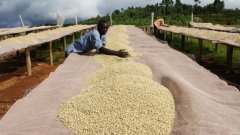
Ethiopia Coffee Ethiopia Sidamo Sun-treated Lion King
Ethiopia is the first country to discover coffee, there are still many wild coffee farmers harvest in the virgin forest, Ethiopia is a poor country with continuous drought and civil war, but it is still the most important coffee producing country in terms of coffee quality and yield, and it is also the best coffee producing country in the past one or two years. Ethiopian coffee can be divided into two main treatments: 1. washing
2016-03-25 Ethiopia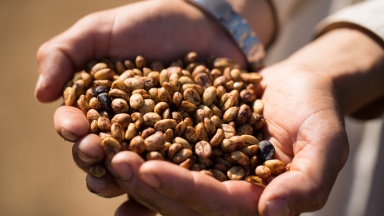
Grade Analysis of Ethiopian Coffee varieties Ethiopia's main producing areas
Ethiopia is one of the major producers of Arabica coffee in Africa, producing the best Arabian coffee in the world. It is said that coffee was first discovered by shepherds in Essekafa, and the name of coffee evolved from Kafa, so Essex is still the hometown of coffee. The geographical environment of coffee production and processing is very suitable for coffee growth. Coffee is mainly cultivated.
2016-04-26 Ethiopia Coffee varieties Coffee beans Grade Analysis main producing areas
Boutique Ethiopian Sidamo Coffee beans Sidamo Coffee Coffee Sidamo Coffee
Ethiopia has two of the best producing areas, Yiragcheffe and Sidamo. Sidamo is located in a plateau region south of Ethiopia. Sidamo has a balanced acidity and moderate consistency. In Ethiopia, people usually have a cup of mocha coffee for breakfast to replenish the spirit and vitality of the day. As Ethiopia's classification system is still very backward,
2016-05-04 Boutique Ethiopia Dharma coffee beans taste rose summer coffee
The fine acidity of Ethiopia's major coffee growing areas Manor Introduction
Ethiopia is located between 6 ° N and 9 ° N and between 34 ° E and 40 ° E. It is located in the center of the Horn of Africa and is a landlocked country. It borders Djibouti and Somalia in the east, Sudan in the northwest, Eritrea in the north and Kenya in the south. [5]Terrain Ethiopia is dominated by mountainous plateaus, mostly subordinate to the Ethiopian plateau, and the central and western regions are the main plateau, accounting for the whole territory.
2016-08-17 acidity fine ethiopia major boutique coffee beans cultivation region estate
World boutique coffee farm beans; Harald mocha (part 1) in Ethiopia has a delicate and rich taste
[product name]: Ethiopia Harald Mocha (Ethiopia Harar Mokha) [quality rating]: DP Grade 4 [baking]: recommended moderate baking (Medium Roast or City Roast) [grade]: excellent [granule]: ★ full [acidity]: ★★★★ slightly sour, dark chocolate aftertaste [balance]: ★★★★ is very stable
2015-12-22 World boutique coffee manor Ethiopia Harald Rahl mocha taste
Ethiopian Coffee Ted Manor Flavor description Variety characteristics of High-quality Coffee beans
The coffee market regulatory body in Ethiopia is the Ethiopian Coffee and Tea products Administration. There are two auction centers in the country, one in the capital Addis Ababa (Addis Ababa) and the other in Dire Dawa in eastern Ethiopia. Coffee growers bring fresh fruit or to private coffee processing plants or cooperative coffee washing stations
2016-09-28 Ethiopia Coffee Ted Manor Flavor description Variety producing area characteristics
The birthplace of coffee, Ethiopian coffee.
In the world of coffee, there are countless stories and reports about Ethiopia: the birthplace of coffee, the story of shepherds, black gold, and so on. Ethiopia's coffee culture and popularity are so shocking that even some coffee bars at the airport have four professional semi-automatic coffee machines, whether in urban or rural cafes, western restaurants, Chinese restaurants or hotel bars.
2015-01-09 Coffee birthplace Ethiopia coffee the world there are countless about Ethiopia
Export of coffee Ethiopian coffee exports high-quality coffee beans from Africa
Coffee is Ethiopia's most important export cash crop and the main source of Ethiopia's foreign exchange earnings. Ethiopia's coffee exports account for about 3% of the world market, making it the eighth largest coffee exporter in the world. Coffee exports increased steadily from 58000 tons in 1990 to 110000 tons in 1995-1996 and remained at this level in the following years. 2001-2002
2016-04-27 Coffee export Ethel Searle Biya export volume Africa quality coffee beans