“coffee graded” search results (14300)

The origin rating system of Brazilian boutique coffee quality grading of Brazilian coffee quality of Brazilian coffee
The grading system of Brazilian coffee is very extraordinary, according to the results obtained by the Brazilian cup test as the primary basis for grading, rather than like most other coffee beans, it will refer to altitude, bean size, and so on. So when we choose to buy Brazil, we often add a number of coffee beans to name its size. The so-called mesh number is the size of the screen.
2016-03-24 Brazil boutique coffee origin rating system quality grading
The grading method of Kenyan coffee with fine coffee beans
It is believed that Kenyan coffee is one of the boutique coffee chosen by many coffee drinkers. The editor has been introducing the taste and production methods of Kenyan coffee. Today, the editor wants to change the way. Instead, you will introduce how Kenyan coffee is graded. I believe that friends will be very interested in this topic. First, it should be graded according to the size of coffee beans.
2015-11-27 Boutique coffee beans Kenya coffee grade division method
The grade of fine coffee is divided into fine coffee by country.
1. Generally speaking, coffee is not classified according to altitude in countries near the equator because coffee is grown at a higher altitude. In addition, if it is picked by hand and processed by washing, it will not be graded by bad points because there are few immature beans and sundries mixed in. Therefore, the size of the sieve number is generally used as the grading standard. Such as: Colombia, Tanzania, Kenny
2016-05-16 Boutique coffee grade country boutique
The grading method of coffee grade high-quality coffee beans
National place name: indicates the area where coffee is produced. For example, Ethiopia. Harald shows that the product is produced in Harald, Ethiopia. It should be noted here that the name of the country is the same, but when the region and year are different, the quality of coffee is different, and the taste of coffee is not guaranteed to be consistent. Port of export: indicates the port of export of coffee. Coffee of the same origin and brand in the same place.
2015-01-15 Coffee grades boutique coffee beans grading methods famous products place names indicating that coffee
The grade of Ethiopian coffee
Grade of Ethiopian coffee: Ethiopian washed coffee Yega Chuefei G1 G2 Sidamo (Yirgacheffe, Sidamo) has the highest grades 2 and 3 (G2, G3), while sun-processed coffee in eastern Ethiopia is mostly grade 4 or 5 (G4, G5). In many cases, level 4 coffee is marked as level 5 in order to reduce taxes. At present, the classification is not uniform and there are
2016-06-02 Ethiopia coffee grade
General knowledge of fine coffee beans grading of raw coffee beans
There are two ways to classify raw coffee beans, one is the filter number, and the other is the elevation. It is divided by the filter number, and the size is size in terms of the screen size. Round beans are generally smaller than flat beans, between 8-13 and 12-29. 8, 9, 10. 12, 13. 18. 29 = small, medium, ordinary. Quasi-big. Big, extra large. The bigger the size, the bigger the beans. Like SC-.
2014-11-13 Coffee knowledge boutique coffee coffee bean common sense grading
Coffee beans are also divided into "aristocratic and poor classes". Evaluation of the quality of coffee
Coffee quality Evaluation Coffee producing countries have their own grading methods and quality evaluation standards in order to grade their harvested coffee, of course, there are also famous coffee mochas. Like Yemen in Matali, there are no countries with uniform export specifications and no coffee culture of the same style. If there are common evaluation criteria for coffee producers all over the world, it will be convenient for buyers.
2015-10-20 Coffee beans also have aristocracy poor class distinction quality evaluation
Reference index of coffee bean grading
(1) the size of coffee beans it is said that the size of beans does not affect the flavor of coffee, such as Mattari in Yemen. Although the particles of beans are large and small, they are still the top grade of coffee. However, in many producing areas, the size of coffee beans is indeed a valuable indicator. The regions where this classification method is generally used are Kenya, New Guinea and Poland.
2016-05-26 Coffee beans grading reference indicators coffee beans size people say beans no shadow
Introduction to the flavor and taste characteristics of Yejasuffi Coffee Manor in Yuyun
The traditional way of tanning in Ethiopia is rough and smelly, so it is popular.
2016-08-08 Yuyun Sweet Yega Chevy Coffee Manor producing area Flavor palate characteristics
Brief introduction and grading of Ethiopian Coffee beans
Most of the sun-processed coffee in eastern Ethiopia are grade 4 or grade 5 (G4, G5). In many cases, level 4 coffee is marked as level 5 in order to reduce taxes. At present, the grading is not uniform and a bit messy, because there are also first-and second-tier (Grand G2) Yirga Cheffe coffee processed by solarization, but the highest grade of Harald (Harar) is level four (
2016-06-01 Ethiopia Coffee beans introduction grading East region Solar processing
Classification and quality Control system of High quality Coffee Bean Ethiopian Coffee
In Ethiopia, the grading and quality control system of coffee is divided into three levels: producer, regional and national. All coffee is inspected by local inspection agencies before leaving the country of origin, and then re-tested at the coffee inspection and grading centers in Addis and Diredawa to determine its quality grade. Coffee is graded before auction and sale, for all involved in production, acquisition,
2016-05-16 Boutique coffee beans Ethel Searle Biya coffee grading quality control body
Guatemala Coffee Practice and Grading
Coffee Grades Traditional Guatemala coffee is graded according to the altitude at which it is grown: SHB, Very Hard Bean, 1370m HB, Hard Bean, 1370-1066m Prime-ExtraPrime, Selected, 762-1066m. The seven main production areas are: 1)Highland Huehue Vivetnan Highlands 2)Volcanic San Marcos Volcano 3)Traditional Atitl
2016-06-12 Guatemala Coffee Practice Grade Planning Traditional
Classification standard of coffee raw beans for fine coffee
There are two ways to classify raw coffee beans, one is the filter number, and the other is the elevation. It is divided by the number of the filter screen, and the size is in the unit of the screen (size). Round beans are generally smaller than flat beans, between 8-13 and 12-29. 8, 9, 10. 12, 13. 18. 29 = small, medium, ordinary. Quasi-big. Big, extra large. The bigger the size, the bigger the beans. Like SC.
2014-09-03 Coffee knowledge boutique coffee beans coffee raw beans coffee bean grading
Simple grading system of fine coffee beans and Colombian coffee beans
Colombia's coffee bean grading system is quite simple, judging its grade only by the size of the beans. Therefore, if you choose to buy Colombian coffee, just marking Supremo does not mean that its taste is also the best. Generally speaking, Colombian coffee produced in boutique bean producing areas will be marked with detailed information such as origin and manor. If it is not marked, it is generally.
2014-11-13 Coffee knowledge boutique coffee beans Colombian coffee beans grading system
Introduction to the grade of Ethiopian coffee beans
The coffee producing areas of Ethiopia are Sidamo, Harald and Sidamo, Harrar and Yirgacheffe. Sidamo and Harrar are provinces and divisions. Sidamo is located in the south of Ethiopia bordering Kenya, and Harrar borders Somalia in the east of Ethiopia. Although Yirgacheffe is a community in the Sidamo region, due to soil composition and water content and other reasons.
2016-06-03 Ethiopia Coffee Bean Grade introduction Coffee producing area Xida
Taste-first origin rating system Brazilian coffee is divided into five grades
The grading system of Brazilian coffee is very special, which is based on the results of the Brazilian cup test as the main basis for grading, rather than referring to altitude, bean size, and so on, as most other coffee beans do. So when we choose and buy Brazil, we often add the number of coffee beans to show its size.
2015-06-04 Taste priority Origin rating system Brazil Coffee split 5 Grade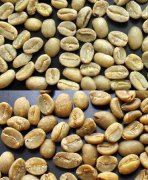
There are two methods for grading raw coffee beans in terms of sieve size, size
There are two ways to classify raw coffee beans, one is the filter number, and the other is the elevation. It is divided by the filter number, and the size is size in terms of the screen size. Round beans are generally smaller than flat beans, between 8-13 and 12-29. 8, 9, 10. 12, 13. 18. 29 = small, medium, ordinary. Quasi-big. Big, extra large. The bigger the size, the bigger the beans. Like SC-.
2015-10-05 Coffee raw beans grading method two kinds size sieve as a unit
Introduction to the quality grades of Ugandan Coffee in the Western Ruwensori Mountains
The quality grade of Ugandan coffee: Bujisu Bugisu AA (only 4% of the country's total production) Bujisu Bugisu A Vago Wugar A (all above belong to washing treatment) and a small amount of sun-dried bean beads Drugar Bugisu Bugisu AA where AA indicates the grade of coffee, representing the highest grade in the country. Bugisu Bugisu grew up in Mt.Elg, eastern Uganda.
2016-06-20 Uganda Coffee quality Grade introduction West Wenzori Ruwenso
Introduction of raw bean grade of Ethiopian coffee boutique coffee
Although the Ethiopian Yirgacheffe coffee is petite, it is gentle and delicate and sweet. As the hometown of coffee, thousands of years of planting history and processing tradition in Ethiopia have created high-quality washed Arabica beans. Light baking has unique sweet aromas of lemon, flowers and honey, soft acidity and citrus flavors, fresh and bright on the palate. No.
2015-12-14 Ethiopia coffee boutique raw beans grades introduction Yega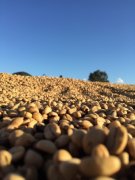
The method of grading and classification of coffee beans
Coffee beans are graded first by size and then by density. With two exceptions, all coffee beans have a considerable size and the same proportion, with flat on one side and semi-oval on the other. The special cases are pea-shaped coffee beans that tend to be more oval in shape and giant coffee beans with large particles (that is, Marragol peel coffee beans). The prices of these two kinds of coffee beans are always higher.
2014-12-29 Coffee common sense boutique coffee beans grading classification methods press first big