“West Africa” search results (800)

Introduction to the flavor and taste of Arabica coffee manor in Indonesia
Varieties resistant to leaf rust found in Congo, Africa, teach Arabica species to be more resistant to the disease. People like to compare the robusta species to the Arabica species of coffee. In fact, the robusta species was originally a mutant of the Congolese species (scientific name Cofffea canephora), so it is the Congolese species that should be compared with the Arabica species. To this day, however, Robusta species
2016-07-20 Indonesia Rabbi Coffee Manor producing area Flavor taste introduction Africa
Introduction of Ugandan Robart coffee beans with low acidity and delicate taste
Java produces only a small amount of Arabica beans, most of which were imported from Africa after the rust disaster. This kind of coffee has a strong bitter taste after roasting, but its aroma is extremely light. Although it has low acidity and delicate taste, it is rarely used for direct drinking. It is often used to mix mixed coffee, or to make instant coffee. Uganda's coffee production ranks first in Africa, accounting for the total output of its exports.
2016-06-22 Acidity low taste comparison delicate Uganda Robbins coffee beans introduction
Introduction of fragrant Kenyan boutique coffee bean flavor manor
Kenya is 582646 square kilometers across the equator, bordered by Somalia to the east, Ethiopia and the Republic of South Sudan to the north, Uganda to the west and Tanzania to the south. The southeast is bordered by the Indian Ocean, with a coastline of 536 kilometers. [3] the coastal areas are plains, and most of the rest are plateaus with an average elevation of 1500 meters. Mount Kenya, the highest peak in the Great Rift Valley of East Africa
2016-08-30 Fragrant Kenyan boutique coffee beans flavor taste manor introduction Kenya
The coffee-growing area of the highest mountain in Africa, the Kilimanjaro Mountain Fire area.
Crustal movement still exists in the East African Rift Valley to this day, and Kilimanjaro is the result of more recent volcanic activity. Its formation began about 750000 years ago and was originally made up of three large craters: Sheila, Kibo and Mavitz. Then the Sheila cone collapsed and disappeared, followed by Mavenz. However, Mount Kibo remains active and appeared once about 360000 years ago.
2016-06-18 Africa highest mountain range coffee growing area Geely Mazha Luo hill fire hill fire ground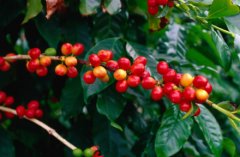
The planting and Distribution of Coffee trees in the World
Coffee is distributed near the equator, tropical and subtropical regions. It is widely distributed in South America, Central America, West Indies, Asia, Africa, Arabia, South Pacific and Oceania. Brazil leads the world in coffee production, accounting for about 30 per cent, followed by Colombia, accounting for about 10 per cent. Taking Central and South America as the center accounts for 60%, followed by Africa and Arabia accounting for about 30%, and the remaining 10%
2014-09-09 Coffee knowledge coffee tree planting coffee tree distribution
Description of aromatic Burundian Coffee Flavor description of Grinding degree Taste characteristics of varieties
Lake Tanganyika is longitudinally striped from north to south, 670km long and only 48-70km wide from east to west. It is the narrowest lake in the world, with a surface area of about 32900 square kilometers. It is the second largest lake in Africa (the first largest lake is Lake Victoria L.Victoria), with an elevation of 774m, and the deepest depth of the lake is 1470 meters. It is the deepest lake in Africa, second only to Lake Baikal in Russia.
2016-10-07 Aromatic rich Burundian coffee flavor description grinding taste characteristics variety
African men develop health-preserving tea coffee
Tea and coffee are already the main drinks of China and the West, and it can be said that there is no overlap between these two drinks at all, but a coffee lover in South Africa broke this boundary and perfectly matched tea and coffee to make a special coffee drink. Let's learn about it. According to foreign media reports, many people like to drink coffee, but they drink too much and are afraid of affecting their health
2015-09-07 Africa men developed health tea coffee originally is
Introduction to the flavor and taste of Ugandan boutique coffee beans in the mountains of Elgon and Bugisu
Uganda Uganda Coffee introduction in Uganda (Uganda), Arabica coffee beans account for only 10% of the country's total coffee production, but it is enough to attract attention. The best coffee in Uganda is mainly produced in the mountains of Elgon and Bugisu along the Kenyan border in the north and Ruwensori in the west.
2016-07-12 Uganda boutique coffee beans flavor taste introduction el Elgon mountain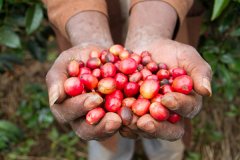
Three native species of coffee: Arabica, Robusta and Liberia
Coffee belongs to the evergreen shrub of the genus Rubiaceae, which is centered in the tropics. There are about 6000 species of Rubiaceae belonging to 500 genera. Coffee has always been considered to have certain effects, such as invigorating the stomach, waking up the brain, stopping bleeding, dissipating heat, strengthening the body and so on. There are about 40 species of coffee plants, but the only ones that can produce coffee beans of commercial value are Arabica, Robusta and Libby.
2015-11-02 Coffee three native rabbi card species Robbs booth Libby subspecies
Low yield coffee cultivation conditions Cultivation process and method Introduction
West Africa is the origin of Liberian coffee. It has strong adaptability to various environments such as high temperature or low temperature, humidity or dryness. It is not resistant to leaf rust and its flavor is worse than Arabica. Therefore, it is only traded domestically in some West African countries (Libya, Cote d'Ivoire, etc.) or planted for research. Coffee circulating in the world market
2016-06-30 estate coffee cultivation condition process method presentation west africa libby
Ugandan coffee with delicate flavor and unique flavor in the western Ruwensori mountains.
Ugandan coffee beans have a unique flavor of delicate flavor, which is very suitable for making Italian and other flavors of coffee. More importantly, Ugandan coffee beans are strictly screened according to the standards of the international market to ensure their high quality and pollution-free characteristics. Africa is the hometown of the two major varieties of coffee, Arabica and Robusta, while the eastern African country enjoys the beauty of plateau water and the Pearl of East Africa.
2016-06-24 West Wenzoli Ruwensori mountainous area with taste fragrance alone
An introduction to the manor producing area with low ripe fruit aroma and the flavor of fine Ugandan coffee beans.
Climate: although Wu is located on the equatorial line, due to its high terrain, vertical and horizontal rivers and dotted lakes, it has abundant rainfall, luxuriant plants and spring all the year round, and was once regarded by Churchill as the Pearl of Africa. The annual average temperature is 22.3℃. The temperature was the highest in October with an average of 23.55 ℃ and the lowest in June with an average of 21.4℃. The annual rainfall in most areas is between 1000 and 1500 mm.
2016-08-12 Have low fruit ripe fragrance Uganda boutique coffee beans flavor taste Zhuang
Mysterious coffee belt where coffee is grown
Coffee beans grow in tropical or subtropical agricultural gardens around the equator, called coffee belts, and travel to Japan with ships. When the brown coffee beans appear in front of your eyes, they have actually gone through a variety of different circulation processes and the hands of many people. Coffee is widely distributed in South America, Central America, the West Indies, Asia, Africa, Arabia, the South Pacific and
2015-04-21 Mystery coffee planting place coffee beans longer than the equator centered called
How a cup of coffee drives social change
Every cup of Fairtrade coffee purchased directly supports the lives of poor farmers in developing countries. Coffee is a very lucrative industry in the West because of the instability of the coffee market. Coffee farmers in Africa and other developing countries, where middlemen and traders make large profits from it, are trapped in a cycle of poverty due to low labor. Many children cannot afford to go to school because of this, and they also join the ranks of those who have been killed.
2015-10-15 cup coffee how push social change buy fair trade
Three primary coffee beans
Arabica: Origin of Ethiopia, equivalent to the rich and handsome coffee beans, belong to the precious coffee beans. It is grown at an altitude of 700-2000 meters and accounts for 75-80% of the world's coffee production. It has excellent flavor and aroma, low caffeine content, caffeine content of about 1-1.5% of its weight, but for drying, frost, disease
2016-08-30 coffee three big original bean seed rabbi card seed
Coffee flavor and taste in Tanzania the characteristics of the manor producing area introduce the fine coffee beans of Kilimanjaro.
The eastern coastal areas and inland lowlands of Tanzania have a savanna climate, while the western inland plateau has a tropical mountain climate, with an average temperature of 21-25 ℃ in most areas. More than 20 islands in Zanzibar have a tropical maritime climate, hot and humid all the year round, with an annual average temperature of 26 ℃. The types of rainfall can be divided into bimodal distribution and unimodal distribution. The area with double bee distribution rainfall includes dimension.
2016-08-09 Tanzania coffee flavor taste manor producing area characteristics introduction beggar horse
Ugandan Coffee Flavor Ugandan Coffee Taste introduction to Ugandan coffee producing areas
Uganda's coffee production ranks first in Africa, accounting for more than 70% of its total exports. Uganda is also the hometown and main producing area of Robes specialty coffee. In the 1960s, Ugandan coffee production remained at 3.5 million bags a year. By the mid-1980s, coffee production had dropped to 2.5 million bags a year, mainly for political reasons. But now coffee production is on the rise again, which is large at present.
2016-07-27 Uganda coffee flavor taste introduction producing area output non-
Cultivation conditions of three native species of coffee beans
Coffee is mainly divided into three categories: Arabica (Arabica), Robusta (Robusta) and Liberia (Liberica), but Arabica and Robsta are mostly in circulation in the market. No matter what it is, it has its advantages and disadvantages, and its purpose and use are not the same. There are about 40 species of coffee plants, but only coffee beans with commercial value can be produced.
2016-05-25 Coffee beans three native coffee cultivation conditions
The mysterious Coffee Belt of the basic knowledge of Coffee
Coffee beans grow in tropical or subtropical agricultural gardens around the equator, called coffee belts, and travel to Japan with ships. When the brown coffee beans appear in front of your eyes, they have actually gone through a variety of different circulation processes and the hands of many people. Coffee is widely distributed in South America, Central America, the West Indies, Asia, Africa, Arabia, the South Pacific and
2014-11-08 Coffee knowledge coffee basics coffee belt
Strong aroma of Tanzanian coffee flavor taste introduction of boutique coffee in manor producing area
The topography of Tanzania is high in the northwest and low in the southeast, showing a ladder shape. The eastern coast is a lowland, the western inland plateau accounts for more than half of the total inland area, and the East African Rift Valley runs from east to west from Lake Malawi to the north and south. The Kibo peak of Mount Kilimanjaro in the northeast is 5895 meters above sea level. It is the highest peak in Africa. The eastern coastal areas of Tanzania and part of the inland lowlands have a savanna climate.
2016-08-23 Thick aroma Tanzania coffee flavor taste manor producing area characteristics essence