“Indian coffee” search results (2100)

Make Indian coffee and enjoy the sweetness of fragrance
Only a little salt can make the delicious milk taste more obvious. Fill a wide cup and then sip it, you can get infinite warmth in body and mind. Practice: pour milk into the pot and heat it up. Add deep-roasted coffee with brown sugar 10CC and a small amount of salt before boiling and then stir carefully. Instead of brown sugar, use black sugar and honey also OK.
2015-04-27 Make Indian coffee enjoy mellow sweet add a little salt can make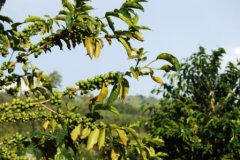
Thalanar Estate, Tabil Nadi Nadi, Val Barai Manor Indian Coffee Flavor
Indian Manor: Thalanar Estate, Tabil Nadi Nadi, Val Barai Village Manor owner: Mr Angamuthu Mudhaliar Family production area: Val Pare varieties: SL9 treatment: washed planting altitude: 1600 m-1700 m flavor: orange acid, spicy taste, thick taste, cocoa aftertaste.
2016-06-19 Thalanar Estate Tabil Nadi Nadi.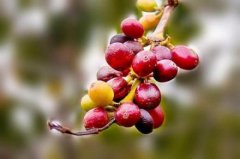
Coffee bean market Indian coffee exports rose 6% in 2014
According to the Economic Times of India, India's coffee exports this year were 300000 tons, down 4 per cent from a year earlier, while exports rose 6 per cent to 49.86 billion rupees. India exported 312000 tons of coffee in 2013, with an export value of 46.92 billion rupees. The export price of coffee in 2014 was 165500 rupees / ton, up from 150200 rupees / ton last year. India exports Robusta coffee in 2014
2015-01-08 Coffee beans market 2014 India coffee exports rising economy
Indian coffee boutique coffee cultivation
Coffee tree is a small evergreen tree of Rubiaceae. Coffee for daily consumption is made from coffee beans combined with various cooking utensils, and coffee beans refer to the nuts in the fruit of coffee trees, which are then baked in an appropriate way. The taste of a standard cup of coffee should not be bitter, and a qualified barista will strictly carry out every step when making coffee.
2016-06-06 India coffee boutique cultivation
Indian coffee is slippery and delicious, with even granules.
Consumers are getting used to this, so when steamships shorten the journey time, coffee producers find that consumers still want beans of the same color and taste that are affected by long trips. In order to recreate the flavor of the original coffee, the monsoon process was used. Monsoons occur in southwestern India in May and June every year, so
2016-05-18 India coffee slippery delicious granular even
Global coffee producing area-India
There are several reasons why Indian coffee is popular with coffee lovers, but the most important is a process used on coffee beans, often referred to as the "monsooning" process.
2014-06-17 Coffee knowledge coffee origin Indian coffee coffee encyclopedia
Monsoon Malabar coffee has a heavy texture and a faint bitter taste, as well as a weak sour taste.
In BC, raw coffee beans produced in India entered England through the Suez Canal in Egypt. At that time, Indian coffee raw beans were loaded on the floor of the cargo warehouse of the cargo ship. due to the long sailing time of the ship, the raw beans fermented naturally in the cargo warehouse with high temperature and humidity. After arriving in Europe, fermented Indian coffee beans are consumed by Europeans who cannot recognize the difference. Later, Europe
2016-05-05 Monsoon Mara Barr coffee with heavy gentle hidden astringent and
Indonesian coffee is very strong, mellow, slightly syrup, excellent acidity and Indian flavor.
On the whole, Indonesian coffee has a strong flavor, mellow taste, slightly syrup flavor and excellent acidity, and its two main export markets are Germany and Japan, which reflects the excellent quality of the coffee. What attracts consumers is the unique quality of its Arabica coffee beans. You can add milk or cream to high-quality Indonesian coffee without worrying about affecting it.
2016-06-14 Indonesia coffee taste mellow slightly syrup acidity excellent
Cultivating "Coffee Mother Tree" in Holland to achieve Coffee Prosperity
About 16 ⊙○ years ago, the Indian Babudan was infatuated with Middle Eastern coffee and hid seven Yemeni mocha seeds in a hidden bag on his belly to avoid the eyes and ears of Turkish soldiers. After returning to India, he planted coffee beans on Mount Chandragiri Hills in the southwestern state of Kanlataka, outside Babudan's spiritual cave. Due to the climate
2015-04-02 Holland cultivation Coffee Mother Tree Achievement Coffee Prosperity 16 around Indians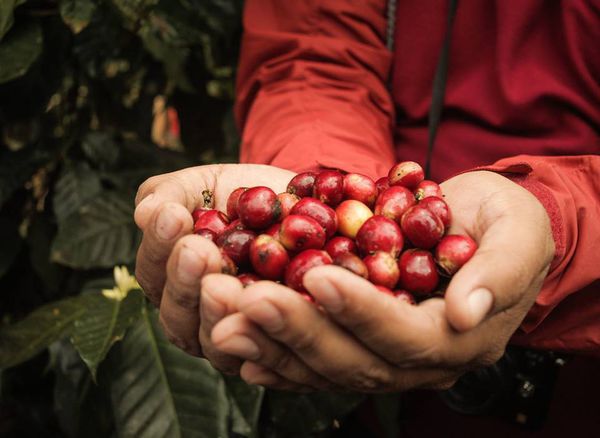
News flash | Indian companies hope to use drones for coffee crop health monitoring
Today, there are drones used in agriculture all over the world, and drones are used for agricultural data collection and accurate analysis of facilities to help increase crop production and income. There are restrictions on the use of drones in India, and many coffee company speakers say they want India to allow drones to be used to monitor crop health. Except for drones.
2016-02-15 News flash India enterprises hope drones for coffee crops health monitoring
Global Coffee Origin India Coffee Market
There are several reasons why Indian coffee is popular with coffee lovers, but the most important is a process used on coffee beans, often called the monsooning process. Coffee production in India: coffee is grown in the Gozhi Mountains in western India, where the southwest monsoon is crucial to coffee growth. Except in Karnataka (Ka
2015-08-24 Global coffee origin India market the reason hobby
Global coffee production India coffee production
Indian coffee is loved by coffee lovers for several reasons, but the most important is due to a process applied to the coffee beans, often referred to as monsoon. Coffee growing in India: Coffee is grown in large quantities in the Ghats region of western India, where the southwest monsoon is critical for coffee growth. Except in Karnataka
2015-02-16 Global Coffee Origin India Reason Received Fans Favorite
Coffee producers in Asia introduce coffee from India
There are several reasons why Indian coffee is popular with coffee lovers, but the most important is a process used on coffee beans, often called the monsooning process. Coffee production in India: coffee is grown in the Gozhi Mountains in western India, where the southwest monsoon is crucial to coffee growth. Except in Karnataka (Ka
2015-05-14 Asia coffee beans producing countries introduction India coffee the reason
The coffee producing area of India: Jinta Manika Hayang Gan Manor in the west of the mountain
The coffee in India is mainly Arabica coffee, while Robbist coffee was introduced at the end of the 19th century and accounted for a certain proportion. Indian Grade A coffee beans are baptized by the monsoon and are rich, smooth and delicious, but have a peculiar spicy taste. A coffee connoisseur once commented that grade A coffee has a taste similar to that of Indonesian aged beans, which may have something to do with their handling.
2016-06-16 India Coffee Origin West Alpine Golden Pagoda Mani Kaha Yanggan Manor
Why Starbucks is optimistic about the Chinese and Indian markets
Howard Schultz, chief executive of the Starbucks coffee chain, said Starbucks' business in China has the potential to surpass that of the United States. Starbucks announced on the 26th that it plans to open its first international Starbucks boutique bakery in Shanghai, China, in 2017. American Consumer News and Business Channel (CNBC) quoted Schultz as saying that if one day, the number of Starbucks stores in China
2016-08-24 Buck why bullish China India the market
Twelve famous high-quality coffee producing areas in India
There are several reasons why Indian coffee is popular with coffee lovers, but the most important is a process used on coffee beans, often called the monsooning process. Coffee production in India: coffee is grown in the Gozhi Mountains in western India, where the southwest monsoon is crucial to coffee growth. Except in Karnataka (Ka
2015-06-01 Famous twelve quality coffee origin India the reason
Cultivating "Coffee Mother Tree" in the Netherlands to achieve Coffee Prosperity the History of Coffee in the Middle East
About 16 ⊙○ years ago, the Indian Babudan was infatuated with Middle Eastern coffee and hid seven Yemeni mocha seeds in a hidden bag on his belly to avoid the eyes and ears of Turkish soldiers. After returning to India, he planted coffee beans on Mount Chandragiri Hills in the southwestern state of Kanlataka, outside Babudan's spiritual cave. Due to the climate
2016-03-16 Holland cultivation Coffee Mother Tree Achievement Coffee Prosperity Middle East History India one
Flavor characteristics of Indian Innesia, Sumatra and Manning in Asian Coffee Manor
Innesia, Sumatra, Sumatran Mandheling are very full-bodied, low acidity, with unique nutty and floral aromas. Uniqely, heavy body, low acidity, pleasant nutty aroma, distinctive, syrupy, exotic flavor the famous producing area of Sumanda Wax Island in Indonesia is Mantenin GR1 (Class I).
2016-01-08 Asia Coffee Manor India producing area Indonesia West Asia Sumanda Mante Flavor
Indian coffee with salt
Like to drink coffee, but seldom drink black coffee, always with sugar, or sugar and milk. So that at midnight this winter, numb and mechanical nerves, taste organs, tongue can easily feel the sweet taste, probably I have forgotten what kind of feeling sweet used to be, so I have to hope that sugar is a good nerve-soothing condiment.
2014-08-11 Coffee knowledge salt Indian coffee
Grade A coffee beans from India
India is the first country in Asia to grow coffee, and India's A-grade coffee beans have always been a kind of coffee strongly concerned by coffee lovers all over the world. Its flavor and taste features: uniform particles, rich taste, slippery and delicious. The cultivation of Indian coffee originated from their colonists, the British. As early as the 17th and early 18th centuries, the English were not as addicted to tea as they are now.
2014-08-07 India coffee beans Asia the earliest cultivation coffee country one