“to plant” search results (21000)

An introduction to the characteristics of the Flavor Manor of small Grain Coffee in Yunnan, China
Pu'er, Xishuangbanna, Wenshan, Baoshan, Dehong, Lincang and other places in the south and west of Yunnan are all the distribution areas of small-grain coffee in Yunnan. As of January 1, 2012, according to the comprehensive survey of Yunnan Province, the planting area of coffee in Yunnan has exceeded 800000 mu, and the output of coffee beans in this period is expected to exceed 55000 tons. For the future, the blueprints of local governments in Yunnan have also been drawn up:
2016-09-19 China Yunnan pickup small grains Coffee Flavor Manor characteristics introduction
Establishment of Coffee quality Inspection system in Yunnan
On March 26, in Yunnan Province, the largest coffee producing area in China, local coffee companies are registering coffee bases in an attempt to establish a quality traceability system. Scan the bar code to find out the planting area, altitude, grower, primary processing plant of each cup of coffee. It is understood that this is also an important measure for Yunnan to promote the fine cultivation of coffee and create boutique coffee. Located in the west of China
2015-09-02 Establish Yunnan coffee quality inspection system
How much do you know about the growing conditions and distribution of coffee
Coffee planting conditions and distribution 1. What is coffee? Coffee (Coffee) is derived from the Latin word Coffea (biological word name) and belongs to a member of the Rubiaceae family. These plants are all woody plants, most of which are distributed in the tropics, with more than 500 classifications and about 6000 varieties. Most of the Coffea plants are tropical evergreen bushes 5-6 meters high.
2014-07-30 Coffee planting coffee growing conditions coffee beans
Planting techniques of small Coffee trees in Yunnan: irrigation and fertilization
Fertilization is one of the key measures for high yield of cultivated coffee. According to the data, for every 1 kg of dried beans harvested, coffee trees absorb 70 grams of nitrogen, 14 grams of phosphorus and 76 grams of potassium from the soil.
2014-09-02 Coffee knowledge small grain coffee coffee tree planting techniques irrigation fertilization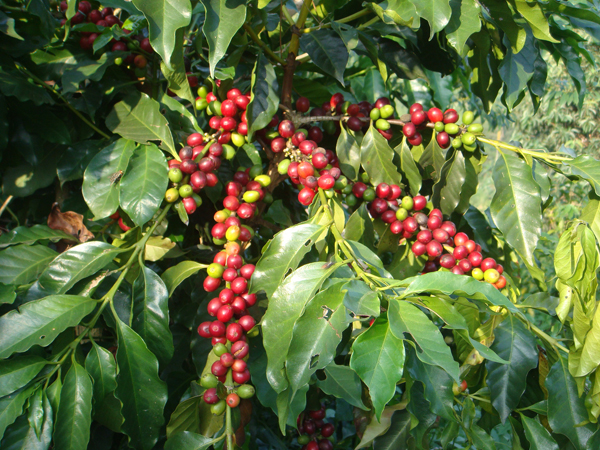
Explain the planting and cultivation of coffee trees in detail to understand the growth environment and needs of coffee trees.
(1) Seedling propagation Coffee seedling propagation can be divided into seed propagation and asexual reproduction. 1. Seed propagation (1) seed collection, seed washing and seed storage during the full ripening period of coffee (the full ripening period of medium-grain coffee in Hainan Island is from February to March, and that of small seed is from September to November). The fully ripe fruits are picked from strong and high-yielding mother trees to make seeds. Immediately after the fruit is harvested, peel and wash the seeds. The method is to place the fruit.
2015-11-25 Details explanation coffee planting cultivation understanding growth environment demand
Coffee legend Coffee the origin of this plant dates back millions of years
The origin of coffee plant can be traced back to millions of years ago, in fact, it was discovered in the real age is not known, only legend coffee is Ethiopia Heights a shepherd named Kaldi (Kaldi), when he found his sheep accidentally ate the fruit of a plant, became very lively and energetic, from the discovery of coffee. All historians seem to agree.
2015-09-18 Coffee Legend Plant Origin Dating Millions of years ago From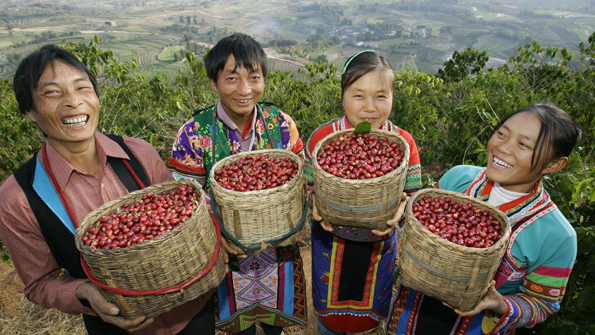
The green dream of Yunnan coffee is the only way to take intensive processing, and join the competition of international coffee giants.
Yunnan coffee was planted on a large scale in the mid-1950s, with a planting scale of 4000 hectares at one time. By the end of 1997, the planting area of coffee in the province had reached 7800 hectares. At present, the planting area of the province accounts for 70% of the national area, and the output accounts for 83% of the whole country. Yunnan coffee has established the dominant position in China in terms of planting area and coffee bean production. At present, Pu'er City is still there.
2016-07-08 Yunnan coffee green dream fine deep processing the only way join international
Basic knowledge of Coffee Coffee planting Belt
Most of the coffee producing areas in the world are located in the tropics between the Tropic of Cancer and the Tropic of Cancer, which we call the coffee belt and Coffee Belt or Coffee Zone in English. As a tropical cash crop, coffee trees grow in coffee belts with excellent climatic conditions, where the sun shines all the year round, is rich in calories and Rain Water, and the annual average temperature is above 20 ℃. But the high temperature
2014-10-29 Coffee knowledge coffee basics coffee growing belt
The planting system of Ethiopian coffee is roughly divided into four types.
The planting system of Ethiopian coffee is roughly divided into four categories: 1) primeval forest coffee (Forest Coffee:8-10%) 2) semi-virgin forest coffee (Semi-forest Coffee: 30-35%) 3) Manor coffee (Garden/Cottage: 50% mae 55%) 4) Enterprise coffee cultivation (Plantation Coffee: 5-6%) specifically: primeval forest coffee belongs to the category
2014-08-13 Coffee knowledge Ethiopia coffee cultivation planting system
The two most important coffee varieties in the world
Arabica coffee beans Arabica coffee tree plant morphology is relatively slender shrubs, leaves are oval, green, natural growth height generally up to 5-6 meters, artificial planting needs to control its height at about 3 meters, in order to facilitate future picking. Arabica coffee trees generally have a life span of 20-30 years.
2014-07-09 coffee knowledge coffee varieties arabica robstein
Costa Rican Saint Roman washing Plant Coffee, cooked beans, Royal Coffee fresh order for self-baking
The best coffee in Costa Rica seems to come from small processing plants, spread across several major coffee producing areas, including Tarazu and the western valley. This so-called coffee revolution originated 15 years ago and has greatly changed the way bean baking experts and importers think about Costa Rican coffee. Take the processing plant as the center, collect coffee beans from the surrounding small farms for processing, most of these farms are small societies
2016-05-08 Costa Rica Roman washing processing Plant Coffee cooked beans Royal fresh place order
Culture methods of potted Coffee trees the growth process of coffee trees
There are many coffee plants in Yunnan, and they are of good quality. This is the help given by the unique climate. The purpose of planting coffee trees is to harvest high-quality coffee beans, but the cultivation process is very strict, and it can be said that appropriate climatic conditions are needed: sunshine, rainfall, soil, air temperature, as well as the way coffee beans are harvested and the production process. Will affect the quality of the coffee itself.
2015-11-05 Potted plants coffee farming methods growth processes we Yunnan many planting
Introduction of Bolivian coffee planting areas planted at an altitude of 180,670 meters above sea level
In the past, coffee trees in Bolivia used to act as hedges and ornaments around the garden. Real commercial production began in the early 1950s. The great frost of 1957 seriously damaged Brazil's coffee industry, while Bolivia (Bolivia) benefited from it and developed rapidly. Bolivian coffee is grown at an altitude of 180,670 meters above sea level, including Allah.
2016-06-23 Altitude 180670 m altitude planting Bolivia coffee region medium
Description of Coffee Flavor of Katim Coffee in Yunnan Province, China
The method of describing the flavor of boutique coffee beans in Katim, Yunnan, China introduces the selection of suitable forest land with an annual average temperature of 19-21 ℃ years, the accumulated temperature of 10 ℃ per year is more than 6800 ℃, the coldest monthly average temperature is 11.5 ℃, the absolute lowest temperature is above 1 ℃, the coldest monthly average temperature is 11.5 ℃, the monthly average temperature of 13 ℃ is more than two months, the extremely lowest general year is above 0 ℃, and some years appear-1 ℃.
2016-10-21 China South Carolina Tim Coffee Flavor description treatment Grinding characteristics varieties
Introduction of Coffee planting methods what conditions are needed for Coffee Tree planting
The most common way to control coffee bean disease is gray leaf spot, which is caused by a half-known fungus in fungi, which mainly harms the leaves. At the beginning, a light brown spot appeared in the middle of the leaf, and then a gray mildew was produced on the spot. Before or at the initial stage of the disease, 65% Dysen zinc solution 500 times or 800 times 1000 times was sprayed to remove and treat. Insect pests mostly occur in late spring and early summer, especially aphids.
2016-08-03 Coffee planting methods introduction needs what conditions types diseases and insect pests control
Coffee bean Katim CIFC7963
Characteristic small seed coffee, belongs to the Katim high generation variety, the plant is medium dwarf, the growth vigor is vigorous, the secondary character is stable, the crown top bud tender leaf is emerald green, the whole plant leaf color is dark green, the plant shape is columnar, the Internode is short, the branch is many, the growth is exuberant, the adaptability is wide, the drought resistance is strong, has the certain cold resistance ability, under the medium management level, the average dry bean yield is more than 200 kg. Seeds per kilogram
2014-09-05 Coffee beans Katim.
Coffee planting knowledge planting and picking of Coffee trees
One of the characteristics of a coffee tree is that its fruit can bear fruit several times a year, and another is that flowers and fruits coexist at different stages of ripening. If the fruit is too ripe, the beans in it will rot. If the beans are not ripe, the beans will not ripen by themselves. So bean pickers often go through the same tree several times to find ripe fruit, but try their best.
2014-11-26 Coffee knowledge coffee planting coffee tree planting coffee picking
The whole process of planting and growth of coffee beans
Common questions about coffee bean cultivation: first, what are coffee kernels? How did you get the coffee seeds? Coffee seed, commonly known as coffee shell dried bean, is a kind of coffee seed without removing mesocarp and silver skin. Coffee seed is divided into Arabica Arabica seed and Robusta Robasta seed. The picture shows the commercial coffee raw bean available for consumption, and it is also the two major commercial plants on a large scale.
2015-04-24 Coffee beans growing the whole process about coffee beans planting common problems.
Cangyuan grasps Coffee planting to increase income
Relying on the resources and location advantages of hot areas, Cangyuan follows the ideas of "high yield, high quality, high efficiency, ecology, safety" and "something to do and something not to do".
2014-07-17 Coffee news coffee planting Cangyuan planting coffee harvest
Boutique Coffee Coffee cooked beans from San Roman washing Plant, Costa Rica
The best coffee in Costa Rica seems to come from small processing plants, spread across several major coffee producing areas, including Tarazu and the western valley. This so-called coffee revolution originated 15 years ago and has greatly changed the way bean baking experts and importers think about Costa Rican coffee. Take the processing plant as the center, collect coffee beans from the surrounding small farms for processing, most of these farms are small societies
2016-05-14 Boutique Coffee Costa Rica Roman washing processing Plant cooked beans