“south” search results (14373)

Romantic Coffee Tour and TA in South Korean TV dramas have a sweet date. A must for a trip to Korea.
Do you still remember Park Youtian's lovely Wang Shizi Li Ke's favorite sweet drinks? Hollys Coffee sells all kinds of sweet drinks that fans love. But after all, the coffee shop should be based on coffee, and the American coffee here is also very authentic, fragrant and mellow, which is well worth tasting. South Koreans can't live without coffee. Seoul has many special cafes because it contains the feelings of the protagonists in Korean TV dramas.
2015-12-04 Romance coffee trip Korean TV series medium sweet date Korea travel must go
Researchers from the United States and South Korea have jointly found that coffee protects against retinal degeneration
Coffee has always been the focus of the health community. Researchers in the United States and South Korea have jointly found that drinking coffee is good for the eyes and helps prevent retinal degeneration, the Health Day website reported a few days ago.
2014-07-08 Coffee News Coffee Health Retinal degeneration Coffee Encyclopedia
Kimchi Kingdom Coffee Fragrance
On the streets of Seoul, South Korea's capital, the air is always filled with the faint aroma of coffee. Coffee shops of all kinds can be found all over the streets. Most bakery and dessert shops sell coffee. There are coffee vending machines in subway stations, convenience stores and schools. Some restaurants also offer free coffee for guests.
2014-06-04 Coffee culture Korean coffee culture Coffee encyclopedia
Introduction to coffee bean producing areas-- characteristics of Ecuadorian fine coffee in South America
Well-known representative coffee: Galapagos is between Colombia and Peru, and Ecuador, which passes through the equator, is one of the few countries in South America that produces both Arabica and Robastian coffee. In fact, Ecuador means the Spanish equator. Due to the use of old-fashioned traditional harvesting and handling methods, Ecuadorian coffee has not been
2016-03-28 Coffee beans producing areas introductions South America Ecuador boutique coffee characteristics well-known
Organic Coffee, a Peruvian coffee producer in western South America, introduces the production areas of Peruvian coffee.
Peruvian coffee is grown in a planned way, which has greatly increased coffee production. Its rich acidity and mellow smoothness are its most prominent features. Peruvian coffee has a soft sour taste, medium texture, good taste and aroma, and is an indispensable ingredient in the production of comprehensive coffee. High-quality Peruvian coffee with a strong aroma, smooth, layered and full-bodied
2016-07-06 Located in South America West Peru Coffee producing country Organic introduction yield cultivation
Congo Coffee, the largest coffee exporter of PNG, gets a loan of 10 million.
The IFC, a member of the World Bank Group, will work with PNG South Pacific Bank to set up a risk-taking mechanism to ensure that South Pacific Bank will provide a loan of 10 million Gina to Congo Coffee, the largest coffee exporter in PNG. The National newspaper of Papua New Guinea reported on July 2 that the International Finance Corporation, a member of the World Bank Group, will work with the Singapore South Pacific Bank to establish the wind.
2016-09-13 PNG largest coffee exporter Congo company loan 10 million World Bank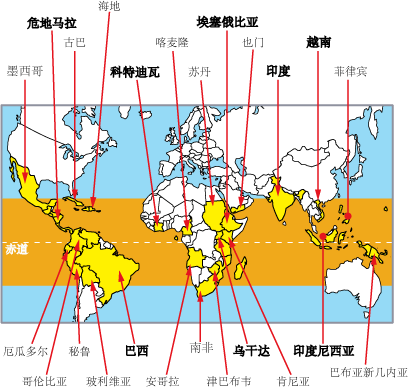
Suriname is the first country in South America to grow coffee. Norway is a major importer of coffee products.
Suriname Suriname (Surinam) is the first country in South America to grow coffee, and Norway was once a major importer of coffee products. However, the country's output is very small today, and it is mentioned here only for historical reasons. The Dutch, who settled in Suriname in 1667, introduced coffee trees from Java in the early 18th century. The first coffee trees were made by the mayor of Asmstedan.
2016-04-11 Suriname South America the first growing coffee country Norway products major into
Introduction to coffee bean producing areas-- South America Peruvian boutique coffee Peruvian coffee characteristics Peruvian coffee mouth
Well-known representative coffee: Peru (Peru) Peru is one of the major coffee producing countries in South America, and coffee is Peru's largest export agricultural product, which has grown greatly in recent years. It can be seen from the map that the Andes mountains run parallel to the coast in Peru. More than 90% of Peruvian coffee is grown in the north, in the valleys east of the capital Lima, and in the slopes of the Andes.
2016-03-28 Coffee beans producing areas introduction South America Peru boutique coffee characteristics well-known generation
Dirkley-- the Father of Coffee trees in Central and South America
In the middle of the 18th century, cafes were opened in major cities in Europe, and the huge demand for coffee led to the popularity of growing coffee in Central America. At present, most of the Tibica coffee trees in Central America are related to the coffee mother tree transplanted by Deckley. In 1777, 19 million coffee trees were planted on Martinique Island alone. Haiti, Puerto Rico and Cuba in the Caribbean followed suit to grow coffee.
2015-04-02 Klee Central and South America Coffee Father of Coffee 18th Century Mid-Mid Cafe all over Europe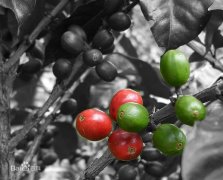
Suriname (Surinam) was the first country in South America to grow coffee, and Norway used to be the country's coffee.
Suriname (Surinam) was the first country in South America to grow coffee, and Norway was once a major importer of coffee products. However, the country's output is very small today, and it is mentioned here only for historical reasons. The Dutch, who settled in Suriname in 1667, introduced coffee trees from Java in the early 18th century. The first batch of coffee trees were given by the mayor of Asmstedan.
2016-05-08 Suriname Surinam South America first cultivation coffee country Norway
Introduction to the method of describing the characteristic Flavor of Coffee beans in Latin America
Characteristics of flavor description of coffee beans in Latin America Central and South America is the largest coffee producing area in the world, and there are numerous boutique coffees here. Take Colombia, Guatemala or Brazil as an example, good coffee is enough to make people dazzling. What is the resource advantage that makes Central and South America so good? French naval officer Gabriel Mat in 1721
2016-10-20 Latin America coffee beans characteristics flavor description treatment variety taste grinding
[Shanghai exhibition presale] South Korea Kim Jinku flower book scene signing the top 30 have surprises!
[Shanghai exhibition presale] South Korea Kim Jinku flower book scene signing the top 30 have surprises! From March 31 to April 3, 2014, HOTELEX Shanghai, Kim JinKu, the Korean coffee flower champion, will bring his coffee flower book to the booth [N4 Hall 4A01] of CoffeeTeai magazine for signing. From now on, friends who buy advance payment from Taobao in coffee salon will receive a mobile phone.
2014-04-27 Shanghai Presale Korea Kim Jinku Flower Scene Book signing Thirty
The popularity of South Korean capsule coffee rises and the coffee culture gradually enters the Korean family.
South Korean capsule coffee is becoming more and more popular, making it easy for coffee lovers to enjoy the delicious coffee at home. Recently, office worker A doesn't often go out to buy coffee and drink. Not long ago, A bought a capsule coffee machine and could drink a cup of coffee every morning. When he came home from work in the evening, he could put the coffee beans bought during the day into the grinder and grind them. After that, he could drink delicious dripping coffee.
2014-04-27 South Korea capsule coffee popularity climbing coffee culture gradually into Korean families
South Korea "Coffee Fever" 2Compact 3 Old people drink at least one cup a day
According to a report on the website of South Korea's Central Daily on March 11, South Korea's elderly love coffee has increased over the past decade, with two out of three drinking at least one cup of coffee a day. Compared with ten years ago, today, ten years later, the coffee love of the elderly in South Korea has greatly increased. A recent survey shows that two out of three people between the ages of 65 and 74, more than half
2015-03-12 Korea coffee old people every day at least one cup Central Daily website 3
Introduction to Puerto Rican Coffee Taste Larez Coffee in South-Central China
In 1736, the first coffee tree was introduced to Puerto Rico from Martinique. Since then, Puerto Rico has become the base for producing the highest quality coffee in the world. The unique taste chosen by Yaocote has also become the object of admiration of coffee experts all over the world. Most of the earliest coffee trees were planted by immigrants from Corsica. About 160 years later, the coffee industry in Puerto Rico has emerged
2016-06-16 Puerto Rico coffee taste introduction South Central Les 1736 first
Introduction of a coffee producer in Papua New Guinea, an island country in the western South Pacific
Papua New Guinea is an island country in the western South Pacific and a member of the Commonwealth. The name of the country consists of Papua and New Guinea. There are many small islands here, about 600 in size. It is adjacent to Indonesia and Australia to the south. It belongs to the Asia-Pacific region, but it is a country in Oceania. Located in the tropical climate, high temperature and rainy. Rich and rich volcanic rock and soil
2016-06-23 South Pacific West one Island Papua New Guinea Coffee producing country introduction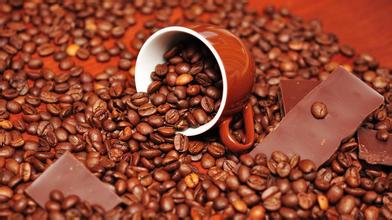
Introduction to the processing methods of highly aromatic Brazilian coffee with the characteristics of grindness and taste
Brazil is located in southeastern South America, spanning 35 to 74 degrees west longitude and 5 degrees north to 35 degrees south latitude. It is bordered by the South Atlantic Ocean to the east and any country in South America to the north, west and south (except Chile). It is bordered by French Guiana, Suriname, Guyana, Venezuela and Colombia to the north, Peru and Bolivia to the west, and Paraguay, Argentina and Uruguay to the south. Coastline
2016-09-30 Strong fragrant Brazilian coffee grinding taste characteristics boutique handling way
Central and South American Coffee Flavor washing Raw Coffee beans at La Tisa Manor in Guatemala
Coffee was really introduced into Guatemala in 1750 by Father Jesuit, where the coffee industry was developed by German colonists at the end of the 19th century. Today, most of the coffee industry's production takes place in the south of the country. There are seven main coffee producing areas in Guatemala: Antigua, Coban, Atitlan and Huehuete.
2016-05-14 Central and South America Coffee Flavor Guatemala Ratti Manor washing processing Raw beans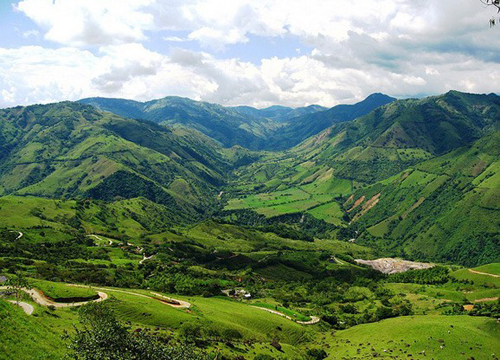
The ancestor of coffee in Central and South America, the most important coffee producing area in the world, the coffee consumed around the world.
Central and South America is now the most important coffee producing area in the world, accounting for more than half of the coffee beans consumed in the world. When it comes to the ancestor of Coffee in Central and South America, we have to mention an island, Martinique, and a soldier, Deckley. In 1723, de Klee, a French naval officer who returned home on leave, got a coffee seedling. Dirkley finally planted the coffee seedling.
2016-04-08 Central and South America coffee ancestor world most important producing area global consumption medium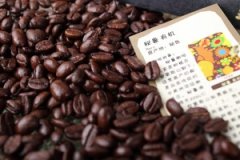
Peruvian organic coffee beans, a major coffee producer in western South America
Coffee origin: Peru (Peru) is also a major coffee producer. Up to 98% of Peruvian coffee is grown in forest areas, and most producers are small farmers. Peru has good economic conditions and a stable political situation, thus ensuring the good quality of coffee. However, there are many local problems, in addition to guerrilla warfare and drug trafficking, in the mid-1990s in the coastal areas
2014-09-18 Peruvian organic coffee beans South American coffee beans organic coffee beans