“silver ash” search results (200)

What are the kinds of coffee beans?
Coffee species Editing Plant Classification Coffee beans Coffee trees belong to Rubiaceae evergreen trees, Rubiaceae plants have been dominated by plants with special effects since ancient times, quinine trees, which are regarded as specific drugs for malaria, and Dugen, which is used to treat amitoeba dysentery. Coffee is defined as the most unique alkaloid drinking flora. The fruit of coffee is made up of outer skin, pulp, endocarp and silver skin.
2016-06-05 Coffee beans categories what coffee species editors plants classification coffee beans trees
Toper hot air coffee roaster OPTICAL 001 150g Coffee Show
Hot air roaster OPTICAL 001 single production: 150g raw coffee beans roasting time: 5 minutes-shallow roasting, 10 minutes-deep roasting quantity: 1800g/ hours = shallow roasting hours = deep roasting ruler: long 50cmX wide 30cmX high 85cm bottom hot air roaster OPTICAL 001 single production: 150g raw coffee beans roasting time: 5 minutes-shallow
2016-04-22 Toper hot air coffee roaster OPTICAL 001 15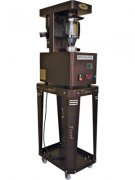
Hot roaster Toper hot air coffee roaster OPTICAL 001 150g
Roaster is a professional baking equipment, working temperature range is room temperature ~ 110℃ or room temperature ~ 250℃ single production: 150g raw coffee beans roasting time: 5 minutes-shallow baking, 10 minutes-deep roasting quantity: 1800g/ hours = shallow roasting hours = deep roasting ruler: long 50cmX wide 30cmX high 85cm base height: high 80cm weight: 27kg electricity
2016-05-24 Hot roaster Toper hot air coffee OPTICAL 001
Coffee beans Coffee Tree Coffee Tree Coffee Bean
Classification of plants Coffee beans Coffee trees belong to the evergreen tree of Rubiaceae. Rubiaceae plants have been dominated by plants with special effects since ancient times, such as quinine tree, which is regarded as a specific drug for malaria, and Dugen, which is used to treat amoeba dysentery. Coffee is defined as the most unique alkaloid drinking flora. The fruit of coffee consists of outer skin, pulp, endocarp, silver skin, and the above-mentioned layers.
2016-06-27 Coffee beans coffee types classification introduction boutique plants coffee beans
Introduction to the characteristic varieties of Kenyan Coffee Flavor Manor
Kenya is divided into seven provinces (PROVINCE) and one provincial special district (Nairobi province). The following provinces are divided into districts (DISTRICT), townships (DIVISION) and villages (LOCATION). Under the new constitution, the four-tier administrative structure will be changed to the central and county (COUNTY) levels. The 47 counties established under the new constitution will be officially operational after the 2013 general election, with a total population of 41.8 million.
2016-08-25 Taste thick Kenya coffee flavor manor producing area characteristics varieties introduction
Introduction to the Development History of cultivation and planting techniques for Coffee seedlings
Coffee planting technology introduces the origin of coffee trees in Ethiopia in Africa. In botany, coffee trees belong to the evergreen trees of the subgenus Rubiaceae, and coffee beans, commonly known as coffee beans, are the seeds of the fruit of coffee trees, just because they are shaped like beans, so they are called coffee beans. Climate is the decisive factor for coffee cultivation, and coffee trees are only suitable for growing in the tropics or subtropics.
2016-10-19 Coffee saplings how cultivation planting technology development history introduction coffee
Life Journey of Coffee Tree
Coffee, as a perennial evergreen shrub or small tree of Rubiaceae, is a horticultural perennial cash crop. The life of a coffee tree is generally divided into these stages: (1) the seedling stage is the period from the germination of seeds (or cuttings or grafting) to the emergence of seedlings (the stage of raising seedlings in the nursery), about 0.5-1.5 years. After the coffee seed is sown, after a period of time
2016-08-16 Coffee life journey coffee as grasses perennials evergreens shrubs trees
Classification of coffee introduction of coffee types introduction of boutique coffee beans
Classification of plants Coffee beans Coffee trees belong to the evergreen tree of Rubiaceae. Rubiaceae plants have been dominated by plants with special effects since ancient times, such as quinine tree, which is regarded as a specific drug for malaria, and Dugen, which is used to treat amoeba dysentery. Coffee is defined as the most unique alkaloid drinking flora. The fruit of coffee consists of outer skin, pulp, endocarp, silver skin, and the above-mentioned layers.
2016-06-28 Coffee classification introduction category boutique coffee beans plants coffee
Introduction to the smooth and silky taste of coffee from Shakiso, Sidamo, Kenya
Kenya has a total population of 41.8 million (2013), with a population growth rate of 2.7 per cent. There are 42 ethnic groups in the country, including Kikuyu (17%), Lucia (14%), Kalenjin (13%), Luo (10%) and Kangba (10%). In addition, a small number of Indians and Pakistanis, Arabs and Europeans are plains along the coast, and most of the rest are at an average altitude of 1500.
2016-09-03 Taste silky smooth Kenya Dharma Shaquiso producing area coffee flavor special
The life journey of coffee trees, from the planting of coffee trees to the harvest of coffee beans
(1) the seedling stage is the period from the germination of seeds (or cuttings or grafting) to the emergence of seedlings (the stage of raising seedlings in the nursery), about 0.5-1.5 years. After the coffee seeds were sown, the cotyledons began to be unearthed after a period of germination, which took about 30-100 days, and the length of time was closely related to temperature and humidity. Cotyledons must be removed after germination
2016-08-15 Coffee life journey planting coffee beans harvest seedling from seeds cuttings
Description of the flavor of Kenyan coffee varieties with bright flavor introduction to fine coffee beans in the producing area
Kenya has a total population of 41.8 million (2013), with a population growth rate of 2.7 per cent. There are 42 ethnic groups in the country, including Kikuyu (17%), Lucia (14%), Kalenjin (13%), Luo (10%) and Kangba (10%). In addition, a small number of Indians and Pakistanis, Arabs and Europeans are located in tropical monsoon areas, most of which have a savanna climate.
2016-09-23 Bright flavor Kenya coffee variety description producing area characteristics boutique
Kenya Berman Manor Coffee Flavor Taste Variety Production Features Boutique Coffee Introduction
The Kenyan government takes the coffee industry extremely seriously, and it is illegal to cut down or ring coffee trees here. Kenya's coffee buyers are world-class buyers of premium coffee, and no country grows, produces and sells coffee as consistently as Kenya. All coffee beans are first purchased by the Coffee Board of Kenya (CBK), where
2016-09-21 Kenny Abel Manor Coffee Flavor Taste Variety Region Characteristics Boutique
Refreshing taste of Kenyan coffee taste introduction to boutique coffee in manor production area
The coastal areas are plains, and most of the rest are plateaus with an average elevation of 1500 meters. The East African Rift Valley, Mount Kenya, the highest peak in Kenya, the eastern branch of Mount Kenya cuts across the north and south of the plateau, dividing the highland into east and west. The bottom of the Great Rift Valley is 450 miles below the plateau and 100 kilometers wide, with lakes of varying depths and many volcanoes standing. The northern part is
2016-09-02 Refreshing taste Kenya coffee flavor manor producing area characteristics boutique introduction
Crisp and refreshing taste introduction to the flavor and taste of Burman Manor of Kenyan Coffee
Kenya is divided into seven provinces (PROVINCE) and one provincial special district (Nairobi province). The following provinces are divided into districts (DISTRICT), townships (DIVISION) and villages (LOCATION). Under the new constitution, the four-tier administrative structure will be changed to the central and county (COUNTY) levels. The 47 counties established under the new constitution will be officially operational after the 2013 general election, with a total population of 41.8 million.
2016-08-23 Crisp refreshing taste Kenya coffee Berman manor producing area flavor characteristics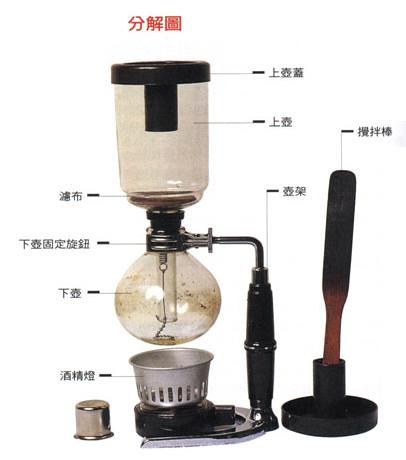
Making coffee is a rare and ordinary thing.
As an unlucky kid who is addicted to coffee, I have talked about the history of coffee, the cultural connotation of coffee, the purchase of coffee beans, including the purchase of coffee pots. But recently, the addiction to curry ash has come again. I want to change my home to a card ash machine, and then I have expanded all kinds of tips in the coffee pot. If you want to do a good job, you must first sharpen its tools. You can't eat raw curry beans only.
2015-07-31 Coffee originally is one sparse ordinary thing as a coffee
Coffee producing area introduces the advantages of siphon coffee maker
● the coffee beans produced at the high latitudes of Costa Rica are famous in the world, full-bodied, mild in taste, but extremely sour. The coffee beans here are carefully processed, which is why they have high quality coffee. The famous coffee is produced in the Central Plateau (Central Plateau), where the soil consists of successive layers of ash and volcanoes.
2016-06-07 Coffee origin introduction siphon coffee maker advantage Costa Rica high latitude ground
Growth and characteristics of Coffee trees
The origin of the coffee tree is Ethiopia in Africa. In botany, coffee trees belong to the evergreen trees of the subgenus Rubiaceae, and coffee beans, commonly known as coffee beans, are actually the seeds of the fruit of coffee trees. They are called coffee beans only because they are shaped like beans.
2014-09-02 Coffee knowledge coffee tree coffee tree planting coffee tree growth characteristics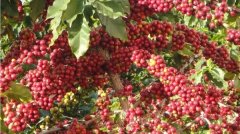
An introduction to the common sense of coffee trees
The origin of the coffee tree is Ethiopia in Africa.
2014-07-10 Coffee knowledge coffee tree coffee common sense coffee encyclopedia
Introduction to the treatment method of Grinding degree for describing the Flavor of Burman Manor Coffee in Kenya
Kenya has a total population of 41.8 million (2013), with a population growth rate of 2.7 per cent. There are 42 ethnic groups in the country, including Kikuyu (17%), Lucia (14%), Kalenjin (13%), Luo (10%) and Kangba (10%). In addition, a small number of Indians and Pakistanis, Arabs and Europeans are located in tropical monsoon areas, most of which have a savanna climate.
2016-09-29 Mellow medium Kenny Abel Manor Coffee Flavor description Grinding treatment