“seed testing” search results (500)

How much is Blue Mountain Coffee?
Edible Method: Chewing to extract its juice Origin: ArabicSpecies: Cuban Coffee, Brazilian Coffee Representative: Cat poop coffee Catalog 1 Overview 2 Specifications 3 Colors 4 Options 5 Tips for production 6 Benefits 8 Origin 9 Four famous beans 10 Categories 11 Species 12 Method of production 13 Country of origin and name Brazilian Blue Mountain Colombia Mantenin Kona Raw
2016-05-05 boutique coffee beans less money one jin introduction blue mountain coffee
Columbia "Gaixia" Coffee Cup Test
There are three types of coffee tested: one is a sample of Gesha baked in Colombia, and the other two are two batches of Colombian Gesha baked by the author in Beijing, each with three cups and the standard of SCAA is 5 cups.
2014-05-19 Columbia coffee cup
What is coffee cup test? what is coffee cup test?
The quality of coffee is judged by the sense of taste, which is called the coffee cup test, and the person who evaluates it is called the appraiser. The method is to pour 10 grams of coffee powder into a warm coffee cup, then pour 100C boiling water into the cup, stir thoroughly with a spoon, let the powder precipitate, and then remove the foam from the surface. First of all, identify its aroma, and then put the coffee in the mouth to judge
2015-07-24 What do you mean coffee cup what test coffee quality taste judgment call it coffee.
What is coffee cup test? what is coffee cup test?
The quality of coffee is judged by the sense of taste, which is called the coffee cup test, and the person who evaluates it is called the appraiser. The method is to pour 10 grams of coffee powder into a warm coffee cup, then pour 100C boiling water into the cup, stir thoroughly with a spoon, let the powder precipitate, and then remove the foam from the surface. First of all, identify its aroma, and then put the coffee in the mouth to judge
2015-09-16 What do you mean coffee cup what test coffee quality taste judgment call it coffee.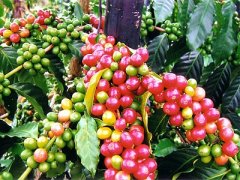
Colombian Gesa Coffee introduces Rosa Coffee Colombian Fine Coffee Colombian Coffee
Geisha is an Arabica coffee variety from Geisha Mountain in southwestern Ethiopia, which is transliterated as Gesha. Because the Japanese pronunciation of geisha is similar to Geisha, Geisha is called geisha coffee in Japan. I think it is easier to communicate with foreign countries by transliteration. According to the Panamanian Emerald Manor website, Gaixia Coffee Seeds began in 1931.
2016-03-23 Columbia Gesha Coffee introduction Rose Summer boutique Geisha from
The most suitable conditions for the cultivation of Coffee trees Coffee Bean Baking
Washing type: in the sink, after rubbing with water and utensils, the pulp and colloid are removed and dried, which is called washing coffee bean with uniform quality. Non-washing type: after the sun is naturally dried, the pulp and peel is removed by a sheller, and its quality is unstable. b. The fruit of flat bean / round bean coffee is made up of two oval seeds opposite each other. The connecting side is a flat joint, called
2016-05-24 Suitable for cultivation coffee conditions coffee beans roasting
The general knowledge of coffee culture the origin of all kinds of coffee names
The cup of coffee arrived at you after a journey across the mountains. Let's not trace it back to how it changed from coffee beans to coffee powder. Are you drinking Blue Mountain, Brazil or Jamaica? Why do they have such names? Why is there a distinction between levels? You must be as curious about its origin as I am. Today, the editor will tell you about all kinds of coffee.
2015-02-07 Coffee culture common sense all kinds coffee name origin that cup over turn
Characteristics of Rosa Coffee Flavor
The species of Geisha was discovered in the Rose Summer Forest of Ethiopia in 1931 and sent to the Coffee Institute in Kenya; it was introduced to Uganda and Tanzania in 1936, in Costa Rica in 1953, and Panama was introduced in the 1970s by Francesca of Dongba Seven Farm Garden. Mr. Serraxin got the seeds from CATIE in Costa Rica and started growing Rosa Coffee because
2016-08-29 Rose summer coffee flavor characteristics rose summer Geisha was in 1931
Characteristics of Rosa Coffee Flavor
The species of Geisha was discovered in the Rose Summer Forest of Ethiopia in 1931 and sent to the Coffee Institute in Kenya; it was introduced to Uganda and Tanzania in 1936, in Costa Rica in 1953, and Panama was introduced in the 1970s by Francesca of Dongba Seven Farm Garden. Mr. Serraxin got the seeds from CATIE in Costa Rica and started growing Rosa Coffee because
2016-08-30 Rose summer coffee flavor characteristics rose summer Geisha was in 1931
Characteristics of Rosa Coffee Flavor
The species of Geisha was discovered in the Rose Summer Forest of Ethiopia in 1931 and sent to the Coffee Institute in Kenya; it was introduced to Uganda and Tanzania in 1936, in Costa Rica in 1953, and Panama was introduced in the 1970s by Francesca of Dongba Seven Farm Garden. Mr. Serraxin got the seeds from CATIE in Costa Rica and started growing Rosa Coffee because
2016-08-30 Rose summer coffee flavor characteristics rose summer Geisha was in 1931
Basic knowledge of boutique coffee beans characteristics of Colombian Gesa Coffee
Geisha is an Arabica coffee variety from Geisha Mountain in southwestern Ethiopia, which is transliterated as Gesha. Because the Japanese pronunciation of geisha is similar to Geisha, Geisha is called geisha coffee in Japan. I think it is easier to communicate with foreign countries by transliteration. According to the Panamanian Emerald Manor website, Gaixia Coffee Seeds began in 1931.
2015-04-30 Boutique Coffee beans Basics Common sense Columbia Gesa Coffee Features Gei
The terminology explanation of Fine Coffee words about coffee
About coffee beans: coffee cherries: coffee trees are not beautiful, because the skin color is bright red, and the shape is very similar to cherries. Round beans: coffee is not beautiful in fact, in the process of growing up, one of the seeds of Langzhu developed very well, and the other seed was eaten missing, making the coffee beans that should be oval into a circle. Elephant beans: the body is bigger than the average coffee bean year.
2014-10-13 Coffee knowledge fine coffee coffee terminology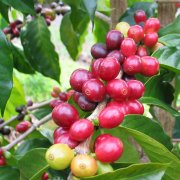
Classification of Kenyan coffee beans African boutique coffee
Usually, Kenyan coffee is classified as follows: 1) Common categories: coffee fruits picked by hand, picked by hand, picked out immature fruit (unripe), overripe fruit (overripe) and other defects, peeled, after about 36 hours of fermentation, placed on a metal grid for sun drying, in the processing plant to remove the seed shell (parchment) to become a blue-green appearance
2016-05-27 Kenya coffee beans grades divisions Africa boutique coffee usually
Coffee will be healthier instead of alcohol.
At present, thousands of scientists around the world are studying coffee from this perspective-coffee is the seed of a fruit rich in healthy ingredients. However, just as there is a difference between bad cholesterol and good cholesterol, there is junk coffee in coffee, mainly because coffee beans are overroasted and become too black and too bitter. On the other hand, scientists are testing such a hypothesis.
2015-10-07 Coffee substitute alcohol your experience health
Boutique Coffee Science explains in detail what is coffee cup testing
What is coffee cup test? what is coffee cup test? The quality of coffee is judged by the sense of taste, which is called the coffee cup test, and the person who evaluates it is called the anatomist. The method is to pour 10 grams of coffee powder into a warm coffee cup, then pour 100C boiling water into the cup, stir the ∽ car with soup, let the powder precipitate for a while, and then remove the foam. First of all, cut it.
2014-10-13 Coffee knowledge boutique coffee science coffee cup test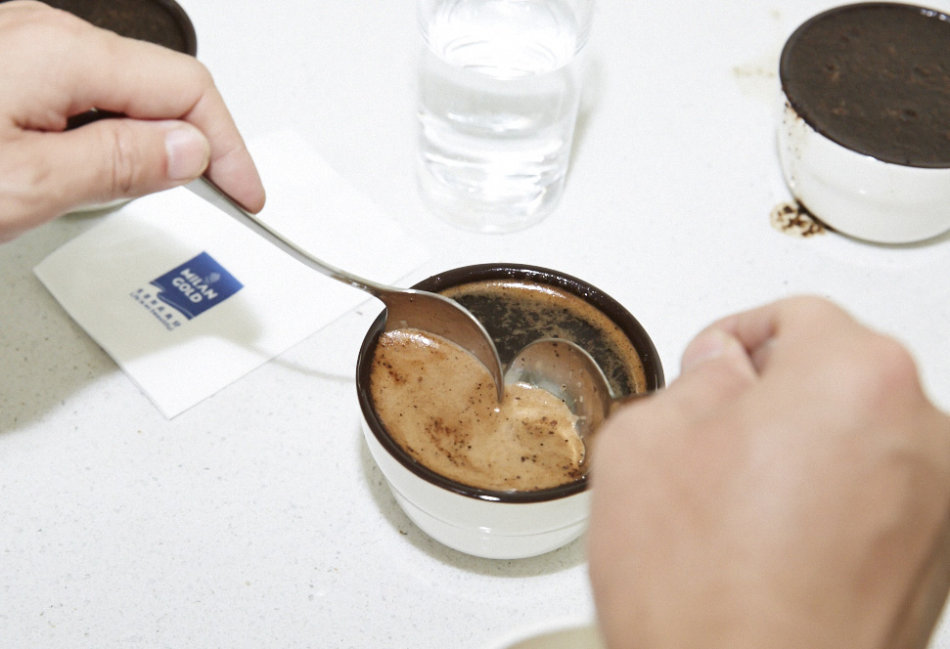
The knowledge of coffee cup testing: the purpose, preparation, process and significance of coffee cup testing.
What is coffee cup test? what is coffee cup test? The quality of coffee is judged by the sense of taste, which is called the coffee cup test, and the person who evaluates it is called the appraiser. The method is to pour 10 grams of coffee powder into a warm coffee cup, then pour 100C boiling water into the cup, stir thoroughly with a spoon, let the powder precipitate, and then remove the foam from the surface. First of all, identify it.
2015-12-26 Coffee cup knowledge point cup test purpose preparation use determination process meaning what
Introduction of Salvadoran Coffee Flavor producing area and Manor (Siberia Manor)
1 Ruth introduces the estate LOMA LAGLORIA; 2, the production, treatment and cultivation of Salvadoran coffee; 3, red bourbon cup test of LOMA LAGLORIA fresh to Hong Kong (washing, dry fermentation, white honey, yellow honey treatment); (participants are invited to bring their own cup tester) Manor: Finca Loma LaGloria Lagoli. Manor bean seed: red bourbon De Ag
2016-06-16 El Salvador Coffee Flavor production area Manor introduction Sibei Leia Anny
Raw coffee beans
When it comes to coffee beans, what does it look like in your mind? Black? Glittering? Do you remember when you first saw coffee and raw beans? Do you remember what it was like to see coffee and raw beans for the first time? Raw coffee beans are the processed products of the seeds in the coffee fruit on the coffee tree. Most of the coffee-producing countries export raw coffee beans. Coffee and raw beans need to go through
2014-09-03 Raw coffee beans
Introduction to the production area with excellent medium purity Berman Manor coffee flavor
Kenya AA coffee beans Kenya is adjacent to Ethiopia, the origin of Arabica coffee trees to the north, but it was not until the beginning of the 20th century that coffee cultivation began. Missionaries introduced Arabica trees from Yemen in the 19th century, but did not plant them in large quantities. Coffee was not cultivated on a large scale until 1893, when Brazil's ancient "bourbon" coffee seeds were introduced.
2016-09-14 With excellent medium purity Berman manor coffee flavor taste producing area
Boutique Coffee Test of Colombian "Gaisha" Coffee Cup
There are three types of coffee tested: one is a sample of Gesha baked in Colombia, and the other two are two batches of Colombian Gesha baked by the author in Beijing, each with three cups and the standard of SCAA is 5 cups. Geisha is an Arabica coffee variety from Geisha Mountain in southwestern Ethiopia, transliterated by the author as Gesha; because of the day of a geisha
2014-10-21 Coffee knowledge boutique coffee science coffee cup test