The general knowledge of coffee culture the origin of all kinds of coffee names
That cup of coffee has traveled over mountains to reach you. How it changed from coffee beans to coffee powder is not traced back. Are you drinking Blue Mountain or Brazil or Jamaica? Why do they have such names? Why is there a hierarchy? Presumably you are as curious as I am about its origin, its name... today Xiaobian tells you about the origin of various coffee names!
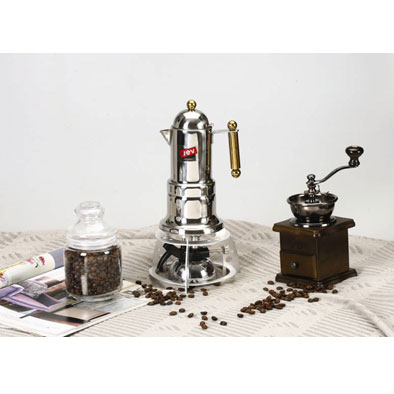
The origin of coffee names:
gang Ming
The route of shipment can be known from the name of the port of exit indicated. Coffee of the same origin or brand has a certain route, so it is also exported from the same port. For example, if the label is "Brazil." Santos "indicates that it is coffee from Santos exit, except for those marked" mocha." Some of the coffee produced in Yemen still uses the port name "Mocha" after leaving the port. motor). In addition, Ethiopian coffee is also known as "haramocha."
species name
Only coffee produced in countries such as Arabia will be omitted, but if Arabica and Robusta species are shipped, the variety name will be indicated below the country name. For example: "Camelon. Arabica "Uganda. Robusta, wait. In addition, there are Mendo Norbert, Blumont and other varieties of the name of the mark.
mountain name
Blue Mountain (Jamaica), Jiayu Mountain (Indonesia), Coral Mountain (Costa Rica), Crystal Mountain (Cuba), Kilimanjaro Mountain (Tanzania), Mawindohagen (Papua New Guinea) and so on, are very famous brands.
Grade, specification
At present, each producer country has its own independent standards. The most commonly used criteria are as follows:
A. Washable/Non-washable Washable:
In the sink, after rubbing with water and utensils, remove pulp and gum and dry, called washed coffee beans, its quality is uniform. Non-washing type: After natural drying in sunlight, remove the pulp and peel with a shelling machine, and its quality is unstable.
B. Flat beans/round beans
Coffee fruit is composed of two oval seeds facing each other. One side of the joint is a flat joint, called a flat bean. But there is also a round seed, called round beans, which taste no different. Ripe and red coffee cherries are multi-textured. In the middle is the precursor of coffee beans, light green seeds, generally speaking, coffee fruit is composed of two oval seeds opposite. The other side of the joint is a flat joint, so it is called flat beans. But there are also ones that consist of a round seed and taste no different.
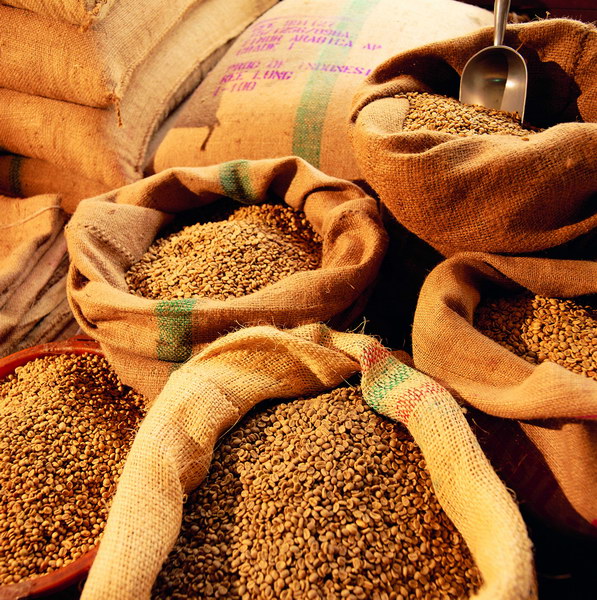
C. (Filter) Size of coffee beans (see table)
For example, Brazil, Colombia, Tanzania and other countries have adopted C classification. Although the size and quality of coffee beans may not have an absolute relationship, but can make the size of green coffee beans consistent.
Bean Type Filter Number Coffee Bean Size
Flat beans 20-29 extra large
18 big
17 quasi-great
16 ordinary
15 in
14 small
13-12 very small
Round beans 13-12 large
11 quasi-great
10 ordinary
9 in
8 small
The above is graded by filter number and bean size
D. Grading by elevation (refer to table)
According to the elevation of the cultivated land, it can be divided into three, four and seven grades. Generally speaking, upland beans are of better quality than lowland beans, and because of increased freight costs, prices are higher.
serial number class abbreviate elevation
1 S.H. B 4500~
2 Coffee beans H.B 4000~4500
3 Medium coffee beans S.H 3500~4000
4 E.P. W 3000~3500
5 High quality washed coffee beans P.W 2500~3000
6 E.G. W 2000~2500
7 High-quality washed coffee beans G.W ~2000
Table Graded by Elevation
E. Quality
According to statistical methods, the type and quantity of impurities contained in a certain amount of samples are converted into a percentage of "defect number" to determine the basis of quality class. The smaller the number of defects, the higher the quality.
F. Taste
Brazil, Haiti, Kenya, Sayi and other countries have their own taste test methods, after taste testing before export. The name of the exporter indicates the name of the ship exporting the coffee beans, and it is also very important to check the label of the reference origin and specification of the raw coffee beans with your hand, and to touch it directly with your hand to observe its appearance and feeling. To judge the quality of raw coffee beans by appearance, you must have a certain degree of experience, but as long as the type is certain, you can be familiar with it. Color without spots, light green and bright, for the beautiful color of coffee beans, and this is also related to the harvest. Use coffee beans of the same size to avoid deformation, even if there is a small amount of mixing to remove. Aromatic coffee beans have a characteristic bright green color, which does not necessarily mean that it has a good taste, but can prove that fresh produce. In addition to the original fragrance, it is also necessary to pay attention to other odors (such as fermentation, mold, medicinal smell, earthy smell, etc.).
Faulty beans such as worm-eaten coffee beans, immature, fermented, shell beans, broken beans, etc., can be inspected by appearance.
Share
Follow Coffee Search for the latest coffee updates. Reproduced from "Coffee Search"
Article URL: https://www.coffeesearch.net/coffee24138.html
Related Articles
- How did the Salvadoran coffee industry develop in Central America?
- What exactly does the golden cup extraction of coffee mean?
- The Origin of Coffee flower
- [2023 Starbucks World Earth Day] there are more meaningful things besides free Starbucks coffee!
- What kind of coffee is there in Spain? 9 Flavors of Spanish Coffee
- Aromatic African coffee| Kenya's coffee culture and historical production area
- Liberica Coffee Bean knowledge: the characteristics of Liberian Coffee beans of the three original species of Coffee beans
- The origin and formula of Spanish latte introduces the taste characteristics of Bombon coffee in Valencia, Spain.
- How to adjust the solution of over-extracted coffee
- What is the tasting period of coffee beans? What is the period of coffee and beans? How should coffee wake up and raise beans?