“rainfall” search results (6178)

Extraordinary quality of Tanzanian Kilimanjaro Coffee Flavor and Taste characteristics
In 1886, Tanganyika Inland was placed under the German sphere of influence. In November 1917, British forces occupied the whole territory of Tanganyika. In 1920, Tanganyika became a British mandate. In 1946, the United Nations General Assembly adopted a resolution to change it into a British trust. On May 1, 1961, Tanzania achieved internal autonomy. On December 9 of the same year, independence was declared, and the Republic of Tanganyika was established a year later. Zanzibar became a British guarantor in 1890
2016-08-23 Different loud quality Tanzania Kili Mazar Luo coffee coffee flavor
Tanzania Coffee Flavor with excellent taste introduction to boutique coffee in manor producing area
The topography of Tanzania is high in the northwest and low in the southeast, showing a ladder shape. The eastern coast is a lowland, the western inland plateau accounts for more than half of the total inland area, and the East African Rift Valley runs from east to west from Lake Malawi to the north and south. The Kibo peak of Mount Kilimanjaro in the northeast is 5895 meters above sea level, which is the highest peak in Africa. [6] Climate in the eastern coastal areas of Tanzania and part of the lowland heat in the interior
2016-08-20 Taste excellent Tanzania coffee flavor manor producing area characteristics boutique introduction
Small grain coffee berry Yunnan small grain coffee boutique coffee flavor taste manor introduction
The quality of coffee is determined by many factors, such as growth environment, climate, altitude, cultivation and management techniques and so on. Its best growth environment is low latitude, high altitude, sufficient rainfall, suitable light! Therefore, between latitude 15 and Tropic of Cancer is the ideal growing zone for coffee. But at this latitude, such as the United States, Hawaii, Saudi Arabia, etc. Or low altitude or little rainfall in the desert.
2016-08-01 Small grains coffee berries Yunnan boutique flavor taste producing area manor introduction
Species and cultivation techniques of Coffee trees
Arabica bean coffee tree can be divided into two main varieties: Arabica species (Coffea Arabica) and Robusta species (Coffea Robusta/Coffea Canephora). There are also some minor species, such as the Liberian species (Coffea Liberica) and the Alabasta species (Coffea Arabusta), but they are rare on the market.
2016-06-03 Coffee category and cultivation techniques varieties classification editing rabbi Kadou coffee main
The basics of coffee
The optimal planting conditions for coffee trees are: a warm climate with a temperature between 15-25 ℃, and annual rainfall of 1500-2000 mm. At the same time, the rainfall time should be in line with the flowering cycle of coffee trees. Of course, in addition to the coordination of seasons and rainfall, there should be fertile soil. The most suitable soil for growing coffee is well drained and contains fire.
2014-08-13 Coffee knowledge Coffee Basics Coffee Encyclopedia
Introduction to the light sour coffee flavor and taste of the coffee manor in Arusha, Ethiopia
On January 12, 1964, the Sang people overthrew the sultan and founded the Zanzibar people's Republic. Tanganyika and Zanzibar formed a United Republic on April 26, 1964. On October 29 of the same year, the name of the country was changed to the United Republic of Tanzania. Julius Cambara Ginerere was the founding president and was re-elected twice until he resigned voluntarily in 1985. Mwinyi was elected on October 27th of the same year.
2016-08-31 Light sour Ethiopia Arusha coffee manor flavor taste characteristics
The basic altitude of coffee planting technology is the most suitable for planting.
Coffee planting technology the origin of coffee trees is in Ethiopia, Africa. In botany, coffee trees belong to the evergreen trees of the subgenus Rubiaceae, and coffee beans, commonly known as coffee beans, are the seeds of the fruit of coffee trees, just because they are shaped like beans, so they are called coffee beans. Climate is the decisive factor for coffee cultivation. Coffee trees are only suitable for growing in the tropics or subtropics.
2016-10-19 Coffee planting technology basic altitude how much suitable coffee
Production conditions and soil Management of Coffee trees
Coffee trees-production conditions Coffee trees Coffee Tree Atlas 1. Planting conditions of coffee trees the ideal planting conditions for coffee trees are: the temperature climate is between 15 and 25 ℃, and the annual rainfall must reach 1500 to 2000 mm. At the same time, the rainfall time should be in line with the flowering cycle of coffee trees. Of course, in addition to the seasonal rainfall, there should be fertile soil.
2016-06-03 Coffee production conditions soil management coffee atlas planting conditions
Sidamo production area introduced by Coffee Tree Plantation
Variety classification Arabica bean coffee tree can be divided into two main varieties: Arabica species (Coffea Arabica) and Robusta species (Coffea Robusta/Coffea Canephora). There are also some minor species, such as the Liberian species (Coffea Liberica) and the Alabasta species (Coffea Arabusta), but they are rare on the market. Rob.
2016-06-16 Coffee planting Manor introduction West Dharma producing area Variety Classification Rabbi
Coffee knowledge the growth conditions of coffee
The planting conditions of Ethiopian coffee trees originating in Africa are tropical or subtropical, that is, between the south and north latitudes of 25 degrees; the ideal altitude is 500-2000 meters, and the warm climate with a temperature between 18-25 ℃ must have rainfall of 1500-2250 mm throughout the year, and the rainfall time should be able to match the flowering cycle of coffee trees; adequate sunshine, good ventilation and drainage
2014-09-18 Coffee knowledge coffee growth growth conditions
The characteristic attribute of coffee in Guatemala volcano San Marco
San Marco has the hottest climate of the eight largest coffee producing regions in Guatemala, with a maximum rainfall of 200inches (5000 mm). The rainy season is earlier than in other areas, and coffee trees bloom earlier. Like other remote areas of Guatemala, volcanic San Marco coffee is grown and processed by small farmers. Due to the frequent rainfall in the rainy season, most coffees are pre-dried in the sun before using a Guardiola dryer
2015-04-11 Guatemala producing area coffee characteristics attributes San Marco volcano San Ma but
San Marco volcano coffee beans Guatemala country imports coffee beans from manor coffee beans
San Marco volcano San Marco has the hottest climate of the eight major coffee producing regions in Guatemala, with a maximum rainfall of 200inches (5000 mm). The rainy season is earlier than in other areas, and coffee trees bloom earlier. Like other remote areas of Guatemala, volcanic San Marco coffee is grown and processed by small farmers. Due to the frequent rainfall in the rainy season, most coffees are dried in the sun before using Guar
2016-04-27 San Marco Volcano Coffee beans Guatemala country Import Manor San Mark Fire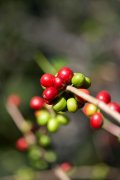
Boutique coffee San Marco is the hottest of the eight coffee producing areas in Guatemala.
San Marco volcano San Marco has the hottest climate of the eight major coffee producing regions in Guatemala, with a maximum rainfall of 200inches (5000 mm). The rainy season is earlier than in other areas, and coffee trees bloom earlier. Like other remote areas of Guatemala, volcanic San Marco coffee is grown and processed by small farmers. Due to the frequent rainfall in the rainy season, most coffees are dried in the sun before using Guar
2016-05-16 Boutique coffee holy horse but Guatemala eight producing areas climate hottest ground
What are the main types of coffee trees? what is the introduction to the types of coffee?
Arabica bean coffee tree can be divided into two main varieties: Arabica species (Coffea Arabica) and Robusta species (Coffea Robusta/Coffea Canephora). There are also some minor species, such as the Liberian species (Coffea Liberica) and the Alabasta species (Coffea Arabusta), but they are rare on the market.
2016-06-16 Coffee main category which about introduction variety classification editor rabbi
The name of coffee comes from what is the planting environment of coffee trees in coffee manor
Every country has its own coffee estate, and no one farm produces coffee varieties that are different from the planting conditions of coffee trees, but not all the land located in this area can produce good coffee trees. The ideal planting conditions for coffee trees are: a warm climate with a temperature of 15-25 ℃, and a rainfall of 1500-2000 mm throughout the year.
2016-05-27 Coffee name origin manor which planting environment each country all have
Introduction to the quality and taste characteristics of Yunnan Tieka coffee bean flavor description treatment
Yunnan coffee beans introduce that the quality of coffee depends on the environment, climate, cultivation and management techniques and other factors. Its excellent growth environment is low latitude, high altitude, sufficient rainfall and suitable sunshine, so the north latitude is 15. The ideal growing area for coffee is between the Tropic of Cancer and the Tropic of Cancer. Our planting base in Yunnan is located at 23 ℃ north latitude and 99 ℃ east longitude. The base is 1230 meters above sea level and high.
2016-10-20 Yunnan pickup coffee beans flavor description treatment quality taste characteristics grinding
Full aroma, fine body, Guatemala Inchter Estate coffee flavor, taste, production characteristics
Rich volcanic soil, low humidity, plenty of sunshine and cool nights are characteristic of this region. The valley is surrounded by three volcanoes: Agua, Fuego and Acatenango. Ash from the eruption enriched the soils of Antigua with minerals. Volcanic pumice can maintain humidity and overcome the relatively low rainfall in Antigua.
2016-09-12 Aroma Thickness Delicate Guatemala Hutt Manor Coffee Flavor Taste Yield
Severe loss of coffee production caused by drought in Brazil is expected to be reduced by 30%.
According to a report on the website of Brazilian newspaper Le Sao Paulo on November 3, in a plantation in Eloy Mendes (southern state of Minas Gerais), Jean Philippe, a 25-year-old agricultural technician, measured the height of a 2-year-old coffee tree with a ruler. The result is 80 cm, but if Minas Gerais has sufficient rainfall this year, the normal height of the coffee tree should reach 1.3.
2014-11-06 Coffee news Brazilian drought Brazilian coffee reduced production
Introduction of cultivation and species of Coffee Tree
Cultivation techniques require that the origin of coffee trees [4] is in Ethiopia in Africa. In botany, coffee trees belong to the evergreen trees of the subgenus Rubiaceae, and coffee beans, commonly known as coffee beans, are actually the seeds of the fruit of coffee trees. They are called coffee beans only because they are shaped like beans. Climate is the decisive factor for coffee cultivation, and coffee trees are only suitable for growing in the tropics or subheat.
2016-06-13 Coffee cultivation introduction species cultivation techniques requirements Origin Africa
Coffee planting conditions
The origin of the coffee tree is Ethiopia in Africa. In botany, coffee trees belong to the evergreen trees of the subgenus Rubiaceae, and coffee beans, commonly known as coffee beans, are the seeds of the fruit of coffee trees, just because they are shaped like beans, so they are called coffee beans. Climate is the decisive factor for coffee cultivation. Coffee trees are only suitable for growing in the tropics or subtropics, so latitude 25 is south and north.
2016-06-04 Coffee cultivation conditions coffee origin Africa Ethiopia botany genus