“pericarp” search results (574)

Coffee species gene mutant
From left to right: Kenya round beans, elephant beans, Kenya AA pointed bourbon (Bourbon Pointu): found in Bourbon Island in 1810, beans changed from round to pointed, with only half the caffeine content, but in small quantities, weak and extremely precious (mostly cultivated in the laboratory). Elephant bean (Maragogype, or Elephant Bean): the most famous variety of Tibica beans, first found in northeastern Brazil in 1870.
2014-06-16 Coffee knowledge coffee type coffee gene mutation
The basic knowledge of Coffee Tree planting
Coffee is now widely grown in the ribbon between the Tropic of Cancer. Coffee grown in different regions has different tastes. The unique soil, climatic conditions and planting methods of a country make the coffee produced in that country have a unique flavor. French winemakers call this phenomenon regional style. Geographically, there are three global coffee growing areas.
2015-03-23 Coffee planting basics boutique now Tropic of Cancer occasional ribbon region
Learn about the planting of coffee trees
Coffee is now widely grown in the ribbon between the Tropic of Cancer. Coffee grown in different regions has different tastes. The unique soil, climatic conditions and planting methods of a country make the coffee produced in that country have a unique flavor. French winemakers call this phenomenon regional style. Geographically, there are three global coffee growing areas.
2014-08-04 Understand coffee planting now Tropic of Cancer occasional banded regional extensive species
On Coffee species Gene Mutants
Pointed Bourbon (Bourbon Pointu): found in Bourbon Island in 1810, beans changed from round to pointed, with only half the caffeine content, but in small amounts, weak and extremely precious (mostly cultivated in the laboratory). Elephant bean (Maragogype, or Elephant Bean): the most famous variety of Tibica beans, first discovered in 1870 in the Maragogype bean-producing region of the state of Bahia in northeastern Brazil.
2014-08-07 About coffee species genes mutants sharp body bourbon Bourbon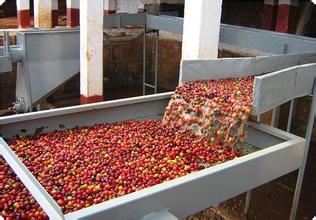
Treatment of raw coffee beans: introduction to the operation method and purpose of washing method
Washing method: 1, select beans: put the harvested fruit in a water tank and soak for about 24 hours. At this time, ripe fruit will sink, while immature and overripe fruit will float up and can be removed. 2. Remove the pulp: use a machine to remove the skin and pulp, leaving only the coffee beans wrapped in the endocarp. At this time, there is a layer of mucous membrane on the outside of the beans, and the process of washing is
2015-12-08 Coffee raw beans treatment washing operation method introduction
Introduction to Green Coffee Bean Treatment--Washing Method
Place the harvested fruit in a tank of water and soak for about 24 hours. The ripe fruit will sink, while the immature and overripe fruit will float up and can be culled.
2014-06-24 Coffee knowledge coffee bean treatment washing method
About the drying of coffee beans
After the wet treatment process, the coffee beans are still preserved within the endocarp shell, which still contains about 15% water. The endocarp must be dried to a moisture content of approximately 11% to ensure that the beans are stored in a stable and safe environment. Moisture content is critical because if arabica beans are over-dried to a moisture content of 10%, they lose
2014-08-06 About Coffee beans Drying Processing Process After Presence Inner fruit Skin
Cultivation of Coffee and Cultural Coffee trees
Coffee cultivation now, in the belt between the Tropic of Cancer and the Tropic of Cancer, coffee is widely grown. Coffee grown in different regions has different flavors. The unique soil, climatic conditions and planting methods of a country make the coffee produced in that country have a unique flavor. French winemakers call this phenomenon regional style. Geographically, a global coffee growing area
2015-03-13 Coffee culture planting coffee now Tropic of Cancer occasional ribbon ground
When does the coffee tree bear fruit?
Coffee trees usually blossom in 3-4 years, about 2-3 months a year, and their appearance and smell are similar to those of jasmine. when they bloom, they grow in clusters on the branches and bloom for 3-5 days. After the flowers bloom, they bear small green fruits, which ripen and turn red into ripe fruits that can be picked after a few months.
2014-09-01 Coffee knowledge coffee bean picking coffee tree planting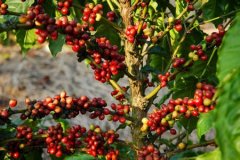
Coffee training knowledge: coffee picking
Coffee trees usually blossom in 3-4 years, about 2-3 months a year, and their appearance and smell are similar to those of jasmine. when they bloom, they grow in clusters on the branches and bloom for 3-5 days. After the flowers bloom, they bear small green fruits, which ripen and turn red into ripe fruits that can be picked after a few months.
2014-05-16 Coffee knowledge coffee picking
The taste of Tanzanian coffee with the step of washing treatment
Tanzania is also often compared with its nearest neighbor Kenya. It is said that the earliest Arabica coffee in Tanzania was introduced by Christians from Kenya and is similar to Kenya in flavor characteristics. With grapefruit aromas and soft and bright acidity. However, because the economic conditions of Tanzania are worse than those of Kenya, the production conditions are poor. Tanzania is concerned about quality.
2016-06-29 Adopt wash treat step Tanzania coffee taste often used
Basic knowledge of Fine Coffee planting of Coffee trees
Coffee is now widely grown in the ribbon between the Tropic of Cancer. Coffee grown in different regions has different tastes. The unique soil, climatic conditions and planting methods of a country make the coffee produced in that country have a unique flavor. French winemakers call this phenomenon regional style. Geographically, there are three global coffee growing areas.
2014-12-15 Boutique coffee basics common sense planting now Tropic of Cancer occasional ribbon ground
The basic knowledge of planting high-quality coffee
Coffee is now widely grown in the ribbon between the Tropic of Cancer. Coffee grown in different regions has different tastes. The unique soil, climatic conditions and planting methods of a country make the coffee produced in that country have a unique flavor. French winemakers call this phenomenon regional style. Geographically, there are three global coffee growing areas.
2015-05-09 Coffee planting boutique basics common sense now Tropic of Cancer occasional ribbon ground
Introduction to the treatment process of raw coffee beans Coffee trees bear fruit several times a year
When the coffee berries are ripe, they are usually harvested by manual picking. In some places, only the fully ripe berries are picked, while others are all picked from a single branch. The former is called handpicked and the latter is called strip-picking. Because the ripening time of coffee berries is not consistent, the harvest is likely to be divided into several stages.
2016-07-11 Coffee raw beans treatment process introduction structure several times a year coffee berries
Yunnan Binchuan Zhukula Coffee declares National Geographic indication Product Protection
A few days ago, the reporter learned from the propaganda Department of Binchuan County Party Committee in Dali Bai Autonomous Prefecture, Yunnan Province that Zhu Kula Coffee and Binchuan Citrus (Binchuan Citrus) in Binchuan County, known as living fossils of coffee, have submitted a declaration of national geographical indication protection products to the State Administration of quality Supervision.
2014-07-08 Coffee News Yunnan Coffee Zhukula Coffee Geographical indication Product Protection
Treatment of coffee beans Coffee beans treated with honey
We know that the three treatment methods of raw coffee beans can be divided into three types. The distinction between each method is based on the fact that several layers of matter are removed from the fruit before the coffee is dried. The following is a list of the three major processing methods: 1. Natural sun treatment: retain all substances 2. Honey treatment: remove the peel and pulp and retain part or all of the mucous membrane (honey) 3. Washing method
2016-07-22 Coffee beans treatment methods white honey coffee raw beans three we
Processing method of raw coffee
The dry processing of dry process is the drying method, in which the fresh coffee fruit is dried into dried fruit, and then the dried peel is removed mechanically to prepare raw coffee. Drying drying of cherry coffee of fresh coffee fruit this operation is to reduce the water content of fresh coffee fruit to facilitate shelling and preservation. Shelling dehusking removes the coffee shell mechanically. Wet processing of fresh fruit in wet process coffee
2014-06-11 Raw coffee coffee processing
The purification and selection of Coffee: the treatment of Raw beans
The process of extracting seeds from the fruit, called refining, can be divided into three methods: 1, DRY-METHOD: the coffee fruit is widely distributed on the sun field for 2 weeks, raked and swept several times a day, so that the coffee beans can be dried more evenly. When dried, the coffee beans are separated from the skin, and the dried pulp and peel are removed by a sheller, then screened and
2014-09-05 Coffee knowledge coffee raw bean treatment coffee bean treatment
Coffee Bean Type Introduction Gene Mutant
From left to right: Kenyan round beans, elephant beans, Kenyan AA pointy Bourbon (Bourbon Pointu): Found on Bourbon Island in 1810, the bean body has changed from round to pointy, and the caffeine content is only half; however, the quantity is small and weak, and it is extremely precious (mostly cultivated in the laboratory). Maragogype (or Elephant Bean): The best-known variety of tibeka bean, first developed in northeastern Brazil in 1870.
2015-03-27 boutique coffee bean species description gene mutant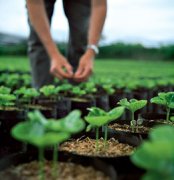
The way coffee is grown. A conscientious coffee tree.
Coffee cultivation is now widely grown in the ribbon between the Tropic of Cancer and the Tropic of Cancer. Coffee grown in different regions has different flavors. The unique soil, climatic conditions and planting methods of a country make the coffee produced in that country have a unique flavor. French winemakers call this phenomenon regional style. Geographically, global coffee
2015-10-07 Coffee planting way due diligence coffee now Tropic of Cancer