“growing in” search results (22000)

Ethiopian coffee species Origin of Ethiopian coffee
Saifeng coffee beans grow in close to the natural environment, after years of planting under the same growth conditions, Ethiopian coffee beans have gradually adapted to the environment here. More than 60% of coffee beans are grown in forests or semi-forests. Large-scale coffee-growing villages account for about 35% of the country's total coffee production. These use multiple layers.
2016-05-27 Ethiopia coffee species origin Serbia Biya coffee beans growing in close to
Introduction of coffee culture and growing environment in Tanzania!
Coffee beans in Tanzania are of extraordinary quality. They are produced in the Mohi district near Mount Kilimanjaro. The mountains with a height of 3,000 to 6,000 feet are the most suitable areas for growing coffee. The fertile volcanic ash gives the coffee here a strong texture and soft acidity. It exudes a delicate fragrance and contains aromas of wine and fruit.
2016-02-29 Tanzania coffee culture and growth environment introduction
Introduction of coffee producing areas in Rwanda
The country's fertile soil and suitable climate help plants grow, and coffee trees seem to be driven or forced to grow upward, or because they grow too fast to produce the best coffee beans. The beautiful country of thousands of hills Rwanda has a long and rich culture for growing highland coffee, mainly high-quality Arabica coffee. Rwanda is the world.
2016-06-03 Rwanda coffee producing area introduction country so fertile soil suitable climate
Relationship between coffee flavor and planting altitude
The influence of geographical location on the flavor of coffee beans is profound. All coffee grows in the tropics, and the altitude at which it grows has a profound effect on the taste of the coffee. From the tropics to 30 degrees north latitude and the mountains south of the equator produce the world's truly high-quality Arabica coffee. Central and South America, South Asia and some Pacific islands, south-central Africa is also the heaviest in the world.
2016-05-25 Coffee flavor planting altitude relationship geographical location coffee beans
Introduction of St. Thomas producing area in Jamaica Blue Mountain Coffee growing area with favorable planting conditions
The real Blue Mountain Coffee is one of the most advantageous coffee growing conditions in the world. Jamaica's weather, address structure and topography provide a unique ideal place. The ridge across Jamaica extends to the east of the island, and the Blue Mountains are more than 2100 meters high. Cool weather, foggy, frequent rainfall make this rich land Rain Water reconcile, where people use mixing
2016-07-02 Planting conditions comparison superiority Jamaica Blue Mountains Coffee planting area introduction support
Ghimbi West Ethiopian Coffee grows Commercial Coffee beans and Comprehensive mixed Coffee beans
Boutique coffee (specialty coffee) is also called specialty coffee selection coffee. It refers to coffee made from a small number of raw beans with excellent taste grown in an ideal geographical environment. Depending on the special soil and climatic conditions in which they grow, they have outstanding flavor. After strict selection and classification, this kind of coffee is hard in texture, rich in taste and stylish.
2016-06-19 Kinby Ghimbi Ethiopia coffee cultivation commercial coffee beans ensemble
Introduction to Guatemala, which is very suitable for growing coffee
In Guatemala, it is famous for producing high-quality beans, which is the highest elevation and dry climate in the coffee growing area of the country. Located in a rare non-volcanic area in China and the United States, the mountains are potholed and the terrain is very dangerous. Although the elevation is nearly 2000 meters, the warm, dry air from the plains of Mexico protects coffee trees in this area from frost.
2016-06-20 Very suitable for cultivation coffee Guatemala region introduction
Suriname is the first country in South America to grow coffee. Norway is a major importer of coffee products.
Suriname Suriname (Surinam) is the first country in South America to grow coffee, and Norway was once a major importer of coffee products. However, the country's output is very small today, and it is mentioned here only for historical reasons. The Dutch, who settled in Suriname in 1667, introduced coffee trees from Java in the early 18th century. The first coffee trees were made by the mayor of Asmstedan.
2016-04-11 Suriname South America the first growing coffee country Norway products major into
The growing domestic coffee consumption market
The growing consumer market, especially with the entry of several large enterprise groups such as Starbucks and Shangdao, is showing a lively scene. We can find that the coffee consumer group is gradually growing, the coffee culture is gradually forming in the inland cities, and the domestic coffee consumption market continues to expand every year.
2014-06-04 Coffee news coffee market Chinese coffee coffee consumption
Effect of coffee bean planting altitude on coffee flavor
The impact of location on coffee bean flavor is profound. All coffee is grown in the tropics, and the altitude at which it is grown has a profound effect on the taste of coffee. The equatorial regions of the tropical belt, which extends from 30 degrees north latitude to the southern mountains, produce the world's truly premium Arabica coffee. Central and South America, South Asia and some Pacific islands, South Central Africa is also the world's most important
2015-03-19 coffee beans cultivation elevation height coffee flavor influence geographical location
Kona Coffee, a coffee-producing area of Hawaii in the United States, with a geographical environment suitable for growing coffee.
The quality of the fine Kona coffee is suitable for the right geographical location and climate. Coffee trees grow on the slopes of volcanoes, and their geographical location ensures the altitude needed for coffee to grow; the dark volcanic ash soil provides the necessary minerals for coffee. This is probably due to the fact that Kona Island is rich in volcanic black mud with moderate acidity, rich mineral content and suitable water content. And
2016-06-29 Have adapt grow coffee geography United States Hawaii producing areas Kona
How do coffee trees grow and bear fruit? Coffee Bean Growth
After a period of time in the seedbed, the better-growing seedlings are transplanted to the plantation. In order for the seedling to thrive, it should be watered, fertilized and weeded in time. There is also a need for pest control. After these procedures, coffee trees that have grown for three years are only at the stage of flowering once a year. Rain after the dry season, flowers.
2015-09-10 coffee how long results coffee beans growing Cafe popular science
Fine Coffee learn the growing environment of coffee
Coffee is native to tropical Africa, the small seed is originated in the tropical plateau of Ethiopia, between 900 and 1800 meters above sea level, with an average annual temperature of 19C; the medium seed is native to the tropical rain forest region of the Congo, below 900 meters above sea level, with an average annual temperature of 2126. C 1. Different varieties of temperature coffee have different requirements for temperature. Small seed species need a cooler climate and an annual average temperature of 1.
2014-10-16 Coffee knowledge boutique coffee science coffee growing environment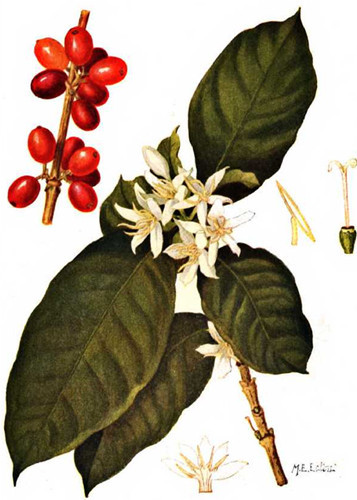
What are the conditions for growing coffee trees? Coffee is a perennial of Rubiaceae.
Coffee is a perennial evergreen shrub or small tree of Rubiaceae. It is a kind of horticultural perennial economic crop with the characteristics of fast-growing, high yield, high value and wide market. Wild coffee trees can grow to 5 to 10 meters tall, but coffee trees grown on plantations are often cut to less than 2 meters in height to increase fruit yield and facilitate harvesting. Coffee tree opposite leaves are oblong,
2016-04-07 coffee planting conditions needs what herbaceous perennial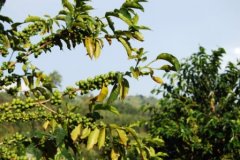
Taiwan coffee grows coffee beans Taiwan
The growth environment of boutique coffee beans also has higher requirements. Generally grow at an altitude of 1500 meters or even more than 2000 meters above sea level, with appropriate precipitation, sunshine, temperature and soil conditions. Some world-famous coffee beans also have a special geographical environment, such as the alpine clouds in the Blue Mountains, the free shade provided by the afternoon clouds in Kona, and the volcanic ash soil in Antigua.
2016-05-27 Taiwan coffee planting coffee beans boutique growth environment also have more
Boutique coffee recommends Hawaiian coffee
Hawaii (Hawaii) after nearly two centuries of efforts to grow coffee, the term Kona is almost synonymous with "quality". Hawaii has superior geographical conditions for growing coffee, but historically, the road to growing coffee has been rugged since coffee trees were first introduced to the island in 1825. Even today, it's beyond human control.
2014-12-18 Boutique coffee recommendation Hawaii after nearly two
Good average quality; aromatic and full-bodied Ethiopian coffee plantation taste characteristics
Ethiopian coffee beans grow in a near-natural environment. After years of cultivation under the same growing conditions, Ethiopian coffee beans have gradually adapted to the environment here. More than 60% of coffee beans are forest or semi-forest grown coffee. Coffee farming villages produce about 35 percent of the country's coffee.
2016-09-13 average good quality smell mellow thick ethiopian coffee estate producing area
The coffee producing area of Hawaii.
Hawaii (Hawaii) after nearly two centuries of efforts to grow coffee, the term Kona is almost synonymous with "quality". Hawaii has superior geographical conditions for growing coffee, but historically, the road to growing coffee has been rugged since coffee trees were first introduced to the island in 1825. Even today, it's beyond human control.
2015-02-16 Global Coffee Origin Hawaii
Planting conditions and distribution of coffee
What is coffee? Coffee (Coffee) is derived from the Latin word Coffea (biological word name) and belongs to a member of the Rubiaceae family. These plants are all woody plants, most of which are distributed in the tropics, with more than 500 classifications and about 6000 varieties. Most of the Coffea plants are tropical evergreen shrubs 5-6 meters high, and some can grow to more than 10 meters high.
2014-07-08 Coffee knowledge Coffee planting Coffee Distribution Coffee Encyclopedia
Boutique coffee beans recommend Hawaiian coffee
Hawaii (Hawaii) after nearly two centuries of efforts to grow coffee, the term Kona is almost synonymous with "quality". Hawaii has superior geographical conditions for growing coffee, but historically, the road to growing coffee has been rugged since coffee trees were first introduced to the island in 1825. Even today, it's beyond human control.
2015-05-14 Boutique coffee beans recommendation Hawaii coffee