“cultivation area” search results (5000)

An introduction to the New Organic Coffee Manor-- an introduction to the cultivation of Organic Coffee in Borosa Manor
Organic Coffee (Purosa Estate M10 JAS Organic) the seeds of coffee from Papua New Guinea were introduced from Jamaica, Kenya, Tanzania and other countries more than 70 years ago in the 1930s. Formal planned cultivation since the 1950s; the main producing areas are Groca and Madha in the central mountains. This Polosa farm.
2016-03-31 New Guinean Organic Coffee Manor introduction Poirot planting Papua New Guinea
Cultivation conditions of Coffee
Coffee is mainly grown in tropical and subtropical areas, which is called coffee belt (Coffee Belt). In general, in Europe and the United States, coffee produced at high altitude is more expensive and of high quality than those at lower altitude. There is a noun called coffee belt. Coffee is produced in more than 60 countries around the world, most of which are sandwiched in the Tropic of Cancer (23 degrees south and 27 minutes north).
2014-07-04 Coffee knowledge coffee tree planting conditions coffee encyclopedia
Introduction of Crystal Coffee in Cuban Coffee producing areas with humid Climate and abundant Rain Water
With fertile land, humid climate and abundant Rain Water, Cuba can be called a natural treasure land for coffee cultivation. The suitable natural conditions provide a favorable natural environment for the growth of coffee trees. Coffee is well cultivated and developed here, and the best coffee growing area in Cuba is located in the Central Mountains. Because in addition to growing coffee in this area, there are also precious minerals such as quartz and crystals.
2016-06-24 Climate moist Rain Water abundant Cuba coffee producing area introduction crystal
The natural environment in which coffee trees grow. Planting conditions of coffee trees.
In botany, coffee trees belong to the evergreen trees of the subgenus Rubiaceae, and coffee beans, commonly known as coffee beans, are actually the seeds of the fruit of coffee trees, just because they are shaped like beans, so they are called coffee beans. Climate is the decisive factor for coffee cultivation. Coffee trees are only suitable for growing in the tropics or subtropics, so the zone between latitude 25 degrees south and north is the most suitable for growing coffee. And this...
2015-11-02 Coffee tree growth natural environment planting conditions coffee botany belong to
Cultivation method of Yega Xuefei Coffee in Ethiopia
Various forms of coffee cultivation can be found in Ethiopia: everything from wild coffee forests and semi-developed land to traditionally operated plots to modern plantations. About 50% of the coffee is grown more than 1500 meters above sea level. Harrar coffee is the highest growing area of all coffee in Ethiopia. Hara coffee can be divided into long coffee.
2016-05-31 Ethiopia Yega Sheffield coffee cultivation way find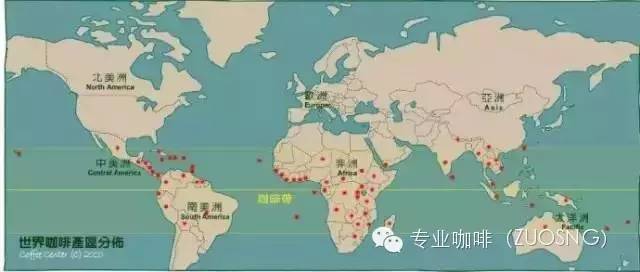
The Historical Progress of Coffee in China: how did Coffee enter China?
The history of coffee introduced into China is not long, and it was not until 1884 that coffee was first planted in Taiwan. In the mainland, the earliest coffee cultivation began in Yunnan. At the beginning of the 20th century, French missionaries brought the first batch of coffee saplings to Binchuan County, Yunnan Province, and coffee began to be grown on the mainland. In terms of natural conditions, many parts of our country, Latin America, South America, India and India
2015-12-09 Coffee China history progress decryption how to enter
The best gold zone for growing coffee in China Pu'er City, Yunnan Province
The excellent quality of Simao coffee brand Simao coffee not only depends on the formation of unique geography and special climate, but also depends on variety, cultivation, harvest, processing, production and so on. Pu'er City focuses on variety selection and technical training in coffee cultivation. Liu Biao said. Since the development of coffee industrialization in Pu'er City began in 1988, Simao has been used since coffee was planted on a large scale.
2016-06-16 China planting coffee best gold zone Yunnan Pu'er City
Flavor description of Coffee from Xidamo Chiso producing area of Ethiopia
Ethiopia has unique and different flavors, providing customers all over the world with a wide range of taste choices. In the highlands of southwestern Ethiopia, the Kaffa, Sheka, Gera, Limu and Yayu Senri coffee ecosystems are considered to be Arabica coffee.
2016-10-07 Taste full-bodied fragrant Ethiopia Dharma Shaquiso producing area coffee flavor
Introduction to the characteristics of Yunnan Tieka Coffee Flavor Flavor Manor
Tibika and Bobang coffee are the main cultivated varieties in Baoshan since the Yunnan Academy of Agricultural Sciences in 1951, and they are only planted in low-altitude areas below 1000 meters above sea level. They have won the gold medal internationally. The world's coffee (tooth sales plus) Blue Mountain Coffee is developed because of its low output (about 900 tons per year) and because its planting industry is supported by the Japanese.
2016-07-25 Yunnan pickup coffee flavor manor producing area characteristics introduction taste
Yunnan Arabica Coffee Huaguoshan Coffee Flavor Description Grind Characteristics Processing Method Taste Introduction
In the south and west of Yunnan, Pu 'er, Xishuangbanna, Wenshan, Baoshan, Dehong, Lincang and other places are the distribution areas of Yunnan Arabica coffee cultivation. As of January 1, 2012, according to the comprehensive survey of Yunnan Province, the coffee planting area in Yunnan has exceeded 800,000 mu, and it is expected that the coffee bean output will exceed 55,000 tons in this period. For the future, the blueprints of state governments in Yunnan have also been drawn:
2016-10-12 Yunnan Arabica coffee Huaguoshan Flavor Description Grind Characteristics Processing Taste
Exquisite Yunnan small grain coffee which brand of Yunnan coffee is better which brand of Yunnan coffee is better
A little knowledge of the fields. Yunnan small-grain coffee, that is, Arabica coffee, now belongs to an awkward position in the international market as well as in China. For example, coffee shops rank low in individual coffee, and the cheapest coffee is Yunnan coffee. This is an issue that cannot be avoided. Since you ask the landlord what is the difference between the main producing areas and the main producing areas, tell me about the varieties.
2016-05-03 Exquisite Yunnan small grains coffee which brand a little field land knowledge
Introduction of Nicaraguan Coffee producing area
The suitable climate provides an excellent growth environment for the cultivation of coffee. The mineral-rich pozzolanic soil provides abundant nutrients for the cultivation of coffee trees. High-quality Nicaraguan coffee is also grown in the northern and central highlands of the country. The best coffee is produced in Matagalpa (Matagalpa), which is highly respected by coffee lovers all over the world.
2016-07-20 Nicaragua coffee manor producing area Los Congo introduction suitable climate
Yunnan small Coffee, known as "fragrant Coffee", introduces the characteristics of Alpine Arabica Coffee producing areas in Yunnan, China
Coffee is a kind of beverage crop with high economic value, which is called the three largest beverages in the world together with cocoa and tea, and its output and consumption ranks first among the three beverages. Coffee is rich in protein, fat, sucrose, starch, glucose, caffeine and other substances, rich aroma and delicious taste. Coffee belongs to the family Rubiaceae.
2023-03-13 Known as fragrant coffee Yunnan small grains coffee introduction producing area China a kind of
Colombia coffee growing environment
Growing Environment Colombia's favorable climate provides a true natural pasture for coffee. Coffee trees in Colombia are mainly cultivated in the Andes mountains, on steep slopes up to 1,300 meters above sea level, where the annual temperature is about 18 degrees Celsius, the annual rainfall is 2000 to 3000 mm, the latitude is 1 - 11 15, the longitude is 72 - 78, and the specific altitude range can exceed 2.
2016-06-14 Colombia Coffee Cultivation Environment Introduction Fit
Where is the best place to grow coffee trees? where is the best place to grow coffee?
In botany, coffee trees belong to the evergreen trees of the subgenus Rubiaceae, and coffee beans, commonly known as coffee beans, are actually the seeds of the fruit of coffee trees, just because they are shaped like beans, so they are called coffee beans. Climate is the decisive factor for coffee cultivation. Coffee trees are only suitable for growing in the tropics or subtropics, so the zone between latitude 25 degrees south and north is the most suitable for growing coffee. And this...
2015-11-09 Coffee where to grow where coffee
China Yunnan coffee beans Yunnan small grain coffee China Yunnan coffee beans quotation
, fertile soil, sufficient sunshine, rich rainfall and large temperature difference between day and night, these unique natural conditions form the particularity of Yunnan small grain coffee taste strong but not bitter, fragrant but not strong, slightly fruity. As early as the 1950s, Yunnan small seed coffee was very popular in the international coffee market and was rated as the top grade of coffee. The history of coffee cultivation in Yunnan can be traced back to 1892.
2016-05-04 China Yunnan coffee beans small grains coffee quotation soil fertile sunshine sufficient
The Development of Coffee cultivation in Laos Coffee History in Laos
Coffee in Laos has gone through a lot of development in the past 20 years. The speed of development in the past 20 years is faster than that in the past 80 years. The coffee history of Laos can be traced back to 100 years ago. At that time, France was the colonial ruler of Vietnam, Cambodia and Laos, and they began to experiment with growing various crops in these areas. Coffee was quickly found in farmers in Vietnam and Laos.
2015-09-14 Laos coffee cultivation development course history
History of Coffee Development in Foreign countries Coffee cultivation in Laos
Coffee in Laos has gone through a lot of development in the past 20 years. The speed of development in the past 20 years is faster than that in the past 80 years. The coffee history of Laos can be traced back to 100 years ago. At that time, France was the colonial ruler of Vietnam, Cambodia and Laos, and they began to experiment with growing various crops in these areas. Coffee was quickly found in farmers in Vietnam and Laos.
2015-06-09 Foreign countries Coffee Development History Laos cultivation Development course
Coffee tree history coffee morphological characteristics coffee cultivation techniques
Coffee tree is a shrub or small tree of Rubiaceae; leaves opposite, leathery, long oval; every March, branches will emerge white flowers, petals spiral arrangement, flower center around the petals jump, a closer look, really like childhood play with the small windmill, issued bursts of jasmine fragrance; fruit is oval, berry, dark red, hidden two seeds, that is, we are familiar with coffee
2016-05-26 coffee history morphological characteristics cultivation techniques
General knowledge of Fine Coffee the Development of Coffee cultivation in Laos
Coffee in Laos has gone through a lot of development in the past 20 years. The speed of development in the past 20 years is faster than that in the past 80 years. The coffee history of Laos can be traced back to 100 years ago. At that time, France was the colonial ruler of Vietnam, Cambodia and Laos, and they began to experiment with growing various crops in these areas. Coffee was quickly found in farmers in Vietnam and Laos.
2014-12-11 Boutique coffee common sense Laos cultivation development course past 20 years