“cultivated” search results (13701)

Detailed Analysis of four cultivation Systems of Coffee in Ethiopia
Forest coffee (Forest Coffee): wild coffee, which accounts for 10% of Ethiopia's national output, is distributed in the wild coffee forest areas of the west and southwest, also known as the Kafa forest. The dense trees here provide the most natural shade for coffee trees and do not need manual care. Mother Earth is in charge of birth, aging, sickness and death, and coffee farmers can go directly to the woodland to harvest. Hansen
2015-02-12 Ethiopia Coffee four cultivation system detail Analysis Forest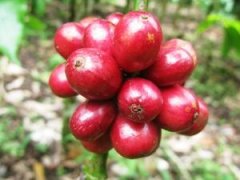
Detailed Analysis of four cultivation Systems of Coffee in Ethiopia
Forest coffee (Forest Coffee): wild coffee, which accounts for 10% of Ethiopia's national output, is distributed in the wild coffee forest areas of the west and southwest, also known as the Kafa forest. The dense trees here provide the most natural shade for coffee trees and do not need manual care. Mother Earth is in charge of birth, aging, sickness and death, and coffee farmers can go directly to the woodland to harvest. Hansen
2015-10-22 Ethiopia Coffee four cultivation system detail Analysis Forest
Cultivation techniques of small Coffee cultivation of Coffee beans in Yunnan Province
Disease control: 1. Coffee rust is the main disease of coffee, the most harmful, the damaged plants, light reduced yield, heavy death. Coffee rust is mainly harmful to leaves and sometimes to young fruits and twigs. After the leaves were infected, many light yellow spots appeared at first and enlarged in the form of water stains, followed by orange-yellow powdery spores on the back of the leaves, and there was a light green halo around the disease spots, and the disease spots in the later stage.
2015-02-16 Small grains coffee cultivation techniques Yunnan coffee beans planting disease control
A brief History of Coffee cultivation in Costa Rica Coffee Manor
Coffee was first introduced in 1720 according to CR official data. Baidu sources show that 1729 were imported from Cuba. In short, coffee has taken root in CR in the 18th century. It was first planted in the central valley (central valley). In the 19th century, the government vigorously promoted the cultivation of coffee, including the allocation of land as long as it was willing to cultivate coffee, and that it could become a landowner after five years of cultivation.
2016-06-06 Costa Rica coffee manor brief history planting earliest introduction time
Detailed Analysis of four cultivation Systems of Ethiopian Fine Coffee
According to the following four different modes of production, Ethiopian coffee can be divided into nine major coffee producing areas, including five boutique coffee areas: Sidamo, Yegashefi, Harald, Lim and Lekampidi, and four general commercial bean producing areas: Gemma, Irugbagbo, Tibby and Bekaa. The sun or water washing methods are used in each district, and different treatment methods also affect the flavor.
2015-11-27 Ethiopia boutique coffee big four cultivation system detail analysis
Italian combination of beans, fine coffee, bean cultivation and bean awakening methods. Time of bean cultivation, fine coffee
Bean cultivation: freshly roasted coffee beans emit carbon dioxide, making the pressure in the package higher than an atmospheric pressure, which helps to integrate aromatic substances with oils, making all the aromatic substances in the coffee beans easy to extract. The common one-way breather valve on the coffee bean bag is used to discharge the excess carbon dioxide to prevent the bean bag from being supported by carbon dioxide.
2016-07-01 Italian style blending boutique coffee beans wake up beans method time baking
The latest news of the world coffee industry: the decline of coffee cultivation in Costa Rica
According to the Costa Rican "financier" newspaper reported on December 14. The planting area of coffee in Colombia has decreased by 6.4% in the past 30 years. It was 89881 hectares in 1984 and only 84133 hectares remained in 2015. Coffee gardens have to give up their land to real estate, especially in metropolitan areas. At the same time, the changes in coffee prices in the world have gradually reduced the profits of coffee cultivation, which are all placed on the main side of the coffee garden.
2015-12-23 World Coffee Industry latest Information Costa Rica farming decline Goss
Detailed Analysis of four cultivation Systems in Coffee producing areas of Ethiopia
Forest coffee (Forest Coffee): wild coffee, which accounts for 10% of Ethiopia's national output, is distributed in the wild coffee forest areas of the west and southwest, also known as the Kafa forest. The dense trees here provide the most natural shade for coffee trees and do not need manual care. Mother Earth is in charge of birth, aging, sickness and death, and coffee farmers can go directly to the woodland to harvest. Hansen
2015-12-25 About Ethiopia coffee producing areas four cultivation system detailed analysis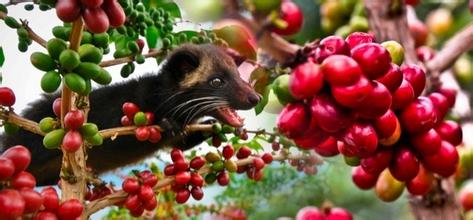
Where is the best place for coffee trees to grow and grow? Requirements for planting conditions of boutique coffee
In botany, coffee trees belong to the evergreen trees of the subgenus Rubiaceae, and coffee beans, commonly known as coffee beans, are actually the seeds of the fruit of coffee trees, just because they are shaped like beans, so they are called coffee beans. Climate is the decisive factor for coffee cultivation. Coffee trees are only suitable for growing in the tropics or subtropics, so north and south latitudes
2022-06-03 Coffee the most suitable where growth planting botany belongs to
History of coffee tree cultivation Importance of bean grinder
In fact, Arabs began growing coffee in 525 BC, and chewing roasted coffee beans became popular in Arabia. In 890 AD, Arab merchants sold coffee beans to Yemen, and Yemen made coffee beans into a beverage for the first time. In the 15th century, coffee was introduced into Europe, Asia, and soon into America. By the 18th century, the tropics and subtropics of the globe were widespread.
2016-06-07 coffee cultivation history grinder importance actually 525 BC
Basic knowledge of coffee beans comparison of basic data of coffee bean varieties
Suitable cultivation conditions: Arabica variety (Arabica) is suitable for plateau cultivation, Robesta variety (Robusta) is suitable for lowland cultivation, and Liberian variety (Liberica) is suitable for minimum cultivation. Production: the Arabica variety (Arabica) accounts for about 70-80% of the world's total output; the Robesta variety (Robusta) accounts for about 20-30% of the world's total output of Liberian varieties (Liberica)
2015-03-04 Coffee beans basic knowledge varieties basic information comparison suitability cultivation conditions pull
Detailed analysis of forest and semi-forest system of four major cultivation systems of Ethiopian coffee
Forest coffee (Forest Coffee): wild coffee, which accounts for 10% of Ethiopia's national output, is distributed in the wild coffee forest areas of the west and southwest, also known as the Kafa forest. The dense trees here provide the most natural shade for coffee trees and do not need manual care. Mother Earth is in charge of birth, aging, sickness and death, and coffee farmers can go directly to the woodland to harvest. Hansen
2015-04-01 Ethiopia Coffee Big four cultivation system detail Analysis Forest
Cultivation techniques of small-grain coffee soil management of coffee cultivation
Weeding, covering the young coffee garden, weeds are easy to breed, especially in the rainy season, weeding should be done once a month. If the labor force is sufficient, clean the grass should be removed first. Adult coffee garden can be weeded once every 2 to 3 months. If you use herbicides, you should be careful not to spray on the branches and leaves of coffee, and it is more important and prudent to use them in young coffee gardens. Coffee has shallow roots and is vulnerable to adverse climatic conditions such as high temperature and drought.
2015-02-16 Small grains coffee cultivation techniques planting soil management weeding mulching young
Basic information on coffee varieties
Suitable cultivation conditions: Arabica variety (Arabica) is suitable for plateau cultivation, Robesta variety (Robusta) is suitable for lowland cultivation, and Liberian variety (Liberica) is suitable for minimum cultivation. Production: the Arabica variety (Arabica) accounts for about 70-80% of the world's total output; the Robesta variety (Robusta) accounts for about 20-30% of the world's total output of Liberian varieties (Liberica)
2014-07-17 Coffee knowledge coffee varieties coffee encyclopedia
Introduction of cultivation and species of Coffee Tree
Cultivation techniques require that the origin of coffee trees [4] is in Ethiopia in Africa. In botany, coffee trees belong to the evergreen trees of the subgenus Rubiaceae, and coffee beans, commonly known as coffee beans, are actually the seeds of the fruit of coffee trees. They are called coffee beans only because they are shaped like beans. Climate is the decisive factor for coffee cultivation, and coffee trees are only suitable for growing in the tropics or subheat.
2016-06-13 Coffee cultivation introduction species cultivation techniques requirements Origin Africa
Various coffee cultivation methods the flavor of Ethiopian coffee
The origin of the coffee tree is Ethiopia in Africa. In botany, coffee trees belong to the evergreen trees of the subgenus Rubiaceae, and coffee beans, commonly known as coffee beans, are the seeds of the fruit of coffee trees, just because they are shaped like beans, so they are called coffee beans. Climate is the decisive factor for coffee cultivation. Coffee trees are only suitable for growing in the tropics or subtropics, so latitude 25 is south and north.
2016-05-24 Various coffee cultivation ways Ethiopia flavor origin Africa
To what extent has coffee cultivation developed in China?
The unique geographical location of the rise of coffee in China is that the west and south of Yunnan Province are located between the 15th latitude and the Tropic of Cancer, most of the areas are 1000-2000 meters above sea level, and the topography is dominated by mountains and slopes. and ups and downs, fertile soil, sufficient sunshine, rich rainfall, large temperature difference between day and night. International form and government support the increase in international and domestic demand for coffee
2016-08-01 China coffee planting in the end to what extent the rise
Cultivation of Arabica beans in China cultivation of Arabica coffee beans
The planting situation in China Arabica is deeply loved by Chinese people with a short history of coffee contact because of its strong fruity aroma. it was introduced to China by missionaries in the 19th century. It is widely planted in Panzhihua, Sichuan, and the dry-hot valley of the Jinsha River, which is more than 1000 meters above sea level in western Yunnan. The sunshine time in this area is long, and there is a great temperature difference between day and night. The local people solve the lack of seasonal rainfall by diverting water up the mountain.
2016-03-28 China rabbi Kadou planting situation coffee beans
Comparison of basic data of Fine Coffee varieties
Suitable cultivation conditions: Arabica variety (Arabica) is suitable for plateau cultivation, Robesta variety (Robusta) is suitable for lowland cultivation, and Liberian variety (Liberica) is suitable for minimum cultivation. Production: the Arabica variety (Arabica) accounts for about 70-80% of the world's total output; the Robesta variety (Robusta) accounts for about 20-30% of the world's total output of Liberian varieties (Liberica)
2014-11-26 Coffee knowledge coffee common sense coffee varieties
Cultivation techniques of coffee trees how would you like your latte coffee milk foam to be beaten?
The cultivation technology editor requires that the origin of coffee tree [4] is in Ethiopia in Africa. In botany, coffee trees belong to the evergreen trees of the subgenus Rubiaceae, and coffee beans, commonly known as coffee beans, are actually the seeds of the fruit of coffee trees. They are called coffee beans only because they are shaped like beans. Climate is the decisive factor for coffee cultivation. Coffee trees are only suitable for growing in the tropics or
2016-06-12 Coffee cultivation techniques Editors requirements Origin Africa