“conditioning” search results (14055)
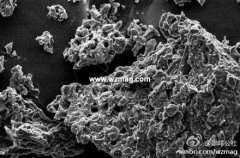
Ground coffee powder under 200UM microcosmic condition
Grind coffee powder in 200UM state to understand the micro-state of coffee powder more intuitively. Microscopically ground coffee powder, there are always large and small, it seems that the absolutely uniform coffee powder is only an ideal state.
2014-09-12 Coffee knowledge coffee grinding coffee powder
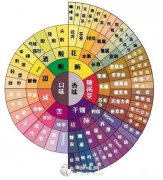
Relationship between Coffee Taste and extraction conditions in Coffee Encyclopedia
Coffee is the art of pursuing balance, the extraction law of coffee taste from sour to bitter: 1, shallow roasting (acid) to deep roasting (bitter) 2, rough grinding (sour) to fine grinding (bitter) 3, coffee powder less (acid) to more (bitter) 4, water temperature low (acid) to high water temperature (bitter) 5, extraction speed fast (acid) to slow (bitter) 6, more extraction (acid) to less extraction (bitter).
2014-09-19 Coffee knowledge coffee taste coffee extraction
Planting conditions of Coffee trees
Coffee belt: coffee can not be grown in any environment, because it is originally a plant growing in a tropical rain forest, and in phylogeny, it forms the habit of requiring calm wind, cool, shaded or semi-shaded and humid environment. We call the strips on both sides of the equator between latitudes 25 degrees south and north suitable for the growth of coffee trees as coffee belts. Temperature: the requirement for temperature varies with the species of cultivation, small
2016-06-06 Coffee planting conditions coffee is in any environment can be planted because of its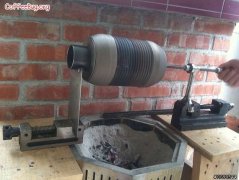
Introduction to the steps of roasting hand net Coffee roasting hand net made by Taiwan coffee players
Since my coffee consumption is very self-conscious, if I go on drinking like this, my salary will be used for coffee, so I decided to make a drum bean roaster (manual version). According to the desired conditions, I first made a list, discussed and then shaped the manuscript. The preliminary discussion conditions are as follows: the first rolling bean roaster mainly wants beans that can be baked half a pound at a time. Second, it can be manually or
2015-10-26 Hand net baking steps introduction Taiwan coffee players homemade mine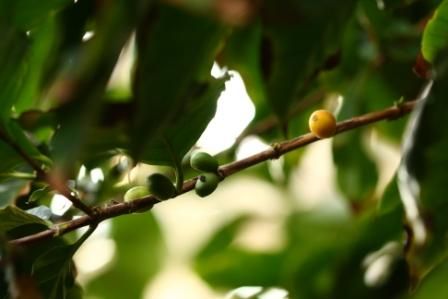
What conditions do you need to grow coffee trees? Introduction to the process from coffee tree planting to coffee bean harvest
Coffee is a perennial evergreen shrub or small tree of Rubiaceae. It is a horticultural perennial cash crop with the characteristics of fast growth, high yield, high value and wide market. The planting conditions of Coffee Coffee is a perennial evergreen shrub or small tree of Rubiaceae. It is a horticultural perennial cash crop with the characteristics of fast growth, high yield, high value and wide market. Wild
2015-12-10 Coffee planting needs what conditions coffee beans harvest process introduction
Introduction to the producing area of Papua New Guinea Coffee grown under Natural conditions
The frost in 1975 destroyed most coffee crops in Brazil, but it affected the development of the coffee industry in Papua New Guinea. * * A scheme has been implemented to subsidize rural or collective landowners to create about 20 hectares of coffee plantations. This measure has indeed increased the penetration of coffee in the local economy, and by 1990, the annual output had reached 1 million bags. However, hardly ever.
2016-06-22 Natural conditions long Papua New Guinea Coffee Origin introduction
How to grow coffee trees Which countries are most suitable for growing coffee Coffee growing conditions Introduction
Coffee trees bloom for the first time about three years old, white five-petaled tubular flowers, with a faint jasmine fragrance, dense inflorescences arranged in clusters. Flowers wither two or three days after flowering and begin to bear fruit a few months later. The fruit is a stone fruit, about 1.5 cm in diameter, initially green, then gradually yellow, mature into red, and cherry is very similar, because
2016-08-04 coffee how grow which country fit condition presentation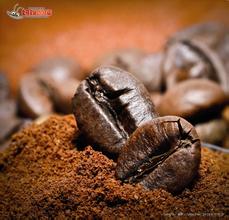
What are the conditions for producing high-quality coffee? the coffee producing areas in that country are the best.
Coffee production in Guatemala has declined relatively, at 700kg per hectare, while that in El Salvador is 900kg per hectare and that in Costa Rica is even more astonishing, at 1700 kg per hectare. The export of dangerous Dimara coffee is controlled by private companies, but the National Coffee Council (Asociacion Nacional de Cafe) controls the coffee industry.
2016-05-24 Rich high quality coffee need what condition that country producing area best
What procedures do I need to go through to open a coffee shop? What conditions are needed to open a coffee shop
Generally speaking, to set up a coffee shop, you need to go through the following formalities: first, check the name of the coffee shop at the Bureau of Industry and Commerce; second, apply for a health permit from the health and epidemic prevention department after the examination and approval of the name, the required materials: 1, the application report; 2, the application for health permit from the Health Bureau; 3, the photocopy of the notice of pre-approval of the enterprise name; 4, the list of health management organizations and each
2015-11-04 One coffee shop need what procedures conditions generally speaking open a
Introduction to Fraijanes guat of Antigua Coffee producing area in Guatemala with rich geological conditions
Antigua coffee can be traced back to the Mayan civilization. Due to the eruption of the volcano, the soil here is more nutritious, and the sufficient sunlight and moisture also make the coffee produced excellent quality. Most importantly, the residents here insist on growing Arabica bourbon coffee, although the yield is small, but the texture is better. Because the residents of Antigua grow coffee in a large area,
2016-06-23 With rich geological conditions Guatemala Antioch coffee origin introduction F
Introduction of fine Hawaiian Kona coffee with very suitable climatic conditions
The earliest settlers in Hawaii arrived here between 300 and 400 AD, and historians speculated that they were from the Marcos Islands. People are scattered into different tribes that live on the island and are led by hereditary chiefs. The earliest Hawaiian residents created the rich musical culture of Hawaii, although not many words have been preserved. On the other hand, the Europeans found that Hawaii was a couple.
2016-06-24 Climate conditions very suitable boutique USA Hawaii Kona coffee introduction
Coffee planting conditions Coffee planting to Coffee Bean treatment
The more common distinguishing methods for roasting coffee beans are cinnamon roasting (Cinnamon Roast), metropolitan roasting (City Roast), universal roasting (Full-City Roast), Viennese roasting (Vienna Roast), Italian roasting (Italian Roast) and French roasting (French Roast) selection of raw beans, master the characteristics and structure of the roaster, repeat patiently
2016-05-24 Coffee planting conditions coffee beans treatment roasting common points
How to distinguish gourmet coffee Gourmet coffee
Recently, when you visit a coffee shop or shop in a supermarket, you may find that many coffee products are called gourmet coffee. The halo of this title attracts many coffee fans to buy it. But what kind of coffee can be called gourmet coffee? It is rather complicated to answer this question. You may have noticed that the last time you
2014-07-25 Distinguish gourmet coffee gourmet coffee
Introduction to the characteristics of Peruvian Organic Coffee Flavor and Fine Coffee beans
Peru's finest coffee is produced in Chaximayo, Cusco, Note and Puno. Most Peruvian coffee is grown under natural conditions, but it is also difficult to confirm the cultivation of all coffee trees. Coffee grown under natural conditions costs 10% more than others and is exported to the United States and Japan. The quality of Peruvian coffee is comparable to that of any kind of coffee in Central or South America. Peru
2016-08-10 Peru organic coffee flavor taste manor producing area characteristics boutique coffee beans
Introduction to the growth environment of Jamaican coffee producing area, which is one of the most favorable coffee growing conditions.
In 1981, about 1500 hectares of land in Jamaica was reclaimed for coffee cultivation, followed by investment in another 6000 hectares of coffee land. In fact, today's Blue Mountain area is a small area with a planting area of only 6000 hectares, and not all coffee marked with the words Blue Mountain can be grown there. Another 12000 hectares of land is used to grow the other two types of coffee (non-
2016-06-28 Planting conditions superior coffee one Jamaica producing area growth environment introduction
Cultivation conditions of three native species of coffee beans
Coffee is mainly divided into three categories: Arabica (Arabica), Robusta (Robusta) and Liberia (Liberica), but Arabica and Robsta are mostly in circulation in the market. No matter what it is, it has its advantages and disadvantages, and its purpose and use are not the same. There are about 40 species of coffee plants, but only coffee beans with commercial value can be produced.
2016-05-25 Coffee beans three native coffee cultivation conditions
Introduction of Panamanian coffee producing areas with rich coffee growing conditions
The microclimate of the Panamanian highlands is the most important resource that makes Panamanian coffee unique. The most important resource that makes Panamanian coffee unique is its microclimate. The east-west environment of the Republic of Panama allows cold air to flow through the Central Mountains and converge above 6500 feet, creating a variety of microclimates in the Boquete and Volcn Candela regions.
2016-06-23 Have rich coffee planting conditions Panama producing areas introduction high
Nestle Coffee and JDE Coffee are accused of using "slave" workers to pick coffee beans.
Nestl é and Jacobs Douwe Egberts (JDE), the world's two largest coffee companies, have admitted that their coffee beans may have been picked and harvested by slave workers on Brazilian farms, the Daily Mail reported. Reported that these slave-like labor income is extremely low, working conditions are poor, but also face the potentially deadly threat of highly toxic pesticides. Prior to this, the Dutch media and Denmark
2016-08-09 Nestle coffee JDE finger slave labor coffee beans