“coffee fruit planting” search results (6000)

Cultivation techniques of small-grain coffee: multi-dry shaping and cultivation
Multi-dry shaping is a method that uses the first-order branch as the main fruiting branch. The purpose of plastic surgery is to cultivate multiple trunks and grow a large number of robust primary branches, and the multi-trunk trees will not be topped. As a result, when the yield decreases after 3-5 years, the new trunk will be replaced. ① culture multi-stem method oblique planting method: when planting, the seedlings are oblique, generally at an angle of 30-60 degrees with the ground. Oblique planting can be suppressed
2015-10-07 Small grains coffee cultivation techniques multi-dry plastic culture utilization one
Introduction to the altitude of planting Environment in Yunnan Tieka Coffee planting Manor
Bourbon: this variety is derived from the iron pickup and was expanded by the French in 1708 on the island of Bourbon (now known as Reunion). Bobang also has a beautiful aroma and rich taste, higher yield and growth than iron pickup, suitable for planting in an area of 12002000 meters, but less resistant to diseases and pests, and more sensitive to strong winds and heavy precipitation. Wave
2016-07-15 Yunnan pickup coffee planting manor environment altitude introduction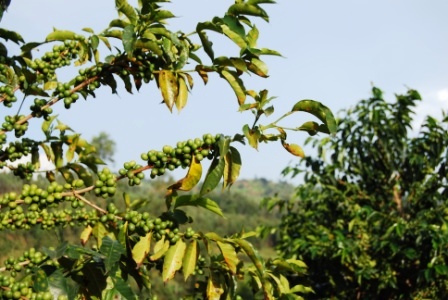
The flavor of red apple and cherry fruit washed by Muxiui treatment plant in western Rwanda
Rwanda can be said to be a fast-growing boutique coffee producer in East Africa recently. Apart from the vivid memories of its sad story of the Luanda Holocaust, the quality of its boutique coffee has also improved very rapidly. This year, we have tested several fresh, very beautiful and elegant acids worthy of Rwanda. Like many African countries, Rwandan coffee is mainly produced by small farmers every year.
2016-07-19 Wanda Western Province Mushu treatment Plant Water washing Red Apple Cherry Fruit Flavor
Introduction of Yunnan small Grain Coffee with good quality in China
Lujiangba in Baoshan, Yunnan Province is a unique dry and hot valley climate in Yunnan Province and even the whole country, which is very suitable for the growth of Arabica (small grain coffee). Lujiang Dam, Longyang District, is located at the eastern foot of Gaoligong Mountain and on both sides of Nujiang River. it is located at 98449905 east diameter, 24462533 north latitude and 3510 meters above sea level. most of the small grain coffee planting area is in the area of 8001200 meters above sea level, and a small part has been planted.
2016-07-11 National quality good Yunnan small grains coffee introduction Baoshan Lujiang specialty
Introduction to the characteristics of Panamanian Kasha Coffee Flavor Manor
There are three ways of plantation: sunshine plantation, full shade plantation and semi-shade plantation. Plantations with more than 50 plants per hectare are fully shaded plantations, 25-50 plants are semi-shaded plantations, and less than 25 plants are called sunshine plantations. What is the effect of shading and shading on coffee in the plantations of the two neighbors with the same planting conditions? Shade plantations can slow down coffee
2016-08-05 Perfume fragrance Bana Marca coffee flavor taste manor producing area characteristics
The life journey of coffee trees, from the planting of coffee trees to the harvest of coffee beans
(1) the seedling stage is the period from the germination of seeds (or cuttings or grafting) to the emergence of seedlings (the stage of raising seedlings in the nursery), about 0.5-1.5 years. After the coffee seeds were sown, the cotyledons began to be unearthed after a period of germination, which took about 30-100 days, and the length of time was closely related to temperature and humidity. Cotyledons must be removed after germination
2016-08-15 Coffee life journey planting coffee beans harvest seedling from seeds cuttings
Planting conditions of Coffee trees
The origin of the coffee tree is Ethiopia in Africa. In botany, coffee trees belong to the evergreen trees of the subgenus Rubiaceae, and coffee beans, commonly known as coffee beans, are actually the seeds of the fruit of coffee trees. They are called coffee beans only because they are shaped like beans. Climate is the decisive factor for coffee cultivation. Coffee trees are only suitable for growing in the tropics or subtropics, so latitude 25 degrees south and north.
2014-07-09 Coffee tree planting coffee tree planting conditions coffee beans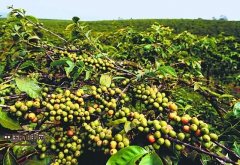
Common sense of Coffee planting requirements and conditions of Coffee trees
The origin of the coffee tree is Ethiopia in Africa. In botany, coffee trees belong to the evergreen trees of the subgenus Rubiaceae, and coffee beans, commonly known as coffee beans, are actually the seeds of the fruit of coffee trees. They are called coffee beans only because they are shaped like beans. Climate is the decisive factor for coffee cultivation. Coffee trees are only suitable for growing in the tropics or subtropics, so latitude 25 degrees south and north.
2015-01-31 Coffee common sense planting summation conditions coffee origin Africa Ethiopia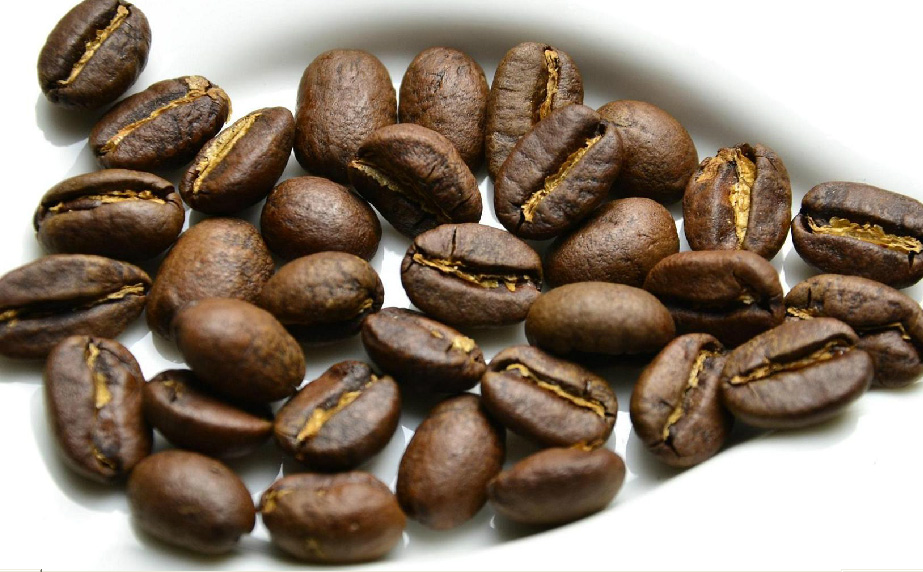
World fine coffee beans: Ethiopia Jiedipu Cocona processing plant washing Ye Jia Xue Fei G1
Gedeb is an area located 60 km south of the town of Yegashefi, named after the local Gedeb people. The Kokanna processing plant located in the town of Kokanna concentrates coffee berries acquired near Gedeb for fine washing and export under the name Gedeb. The coffee fruits collected here are all produced in the highland of about 1900 meters. The processing plant strictly selects the ripe red fruits.
2015-12-24 world boutique coffee beans ethiopia jedi cocoa processing plant washing ye
Introduction to the planting method of Coffee Tree where is the origin of coffee tree
The origin of the coffee tree is Ethiopia in Africa. In botany, coffee trees belong to the evergreen trees of the subgenus Rubiaceae, and coffee beans, commonly known as coffee beans, are the seeds of the fruit of coffee trees, just because they are shaped like beans, so they are called coffee beans. Climate is the decisive factor for coffee cultivation. Coffee trees are only suitable for growing in the tropics or subtropics, so latitude 25 is south and north.
2016-07-05 Coffee planting method introduction origin where coffee Africa Egypt
The planting and cultivation of Coffee Tree Seedling which country has the best coffee planting area?
Coffee fruit contains two seeds, namely coffee beans. The two beans are connected face to face with each other on one side of the plane. Each coffee bean has a thin outer film, which is called silver skin, and its outer layer is covered with a yellow outer skin, called endocarp. The whole coffee bean is wrapped in a sticky pulp to form coffee pulp, which is soft and sweet.
2016-07-30 Coffee growth habits seedlings planting cultivation which country producing area
Costa Rican Marcho Manor Sun Coffee cooked Bean Tara Pearl production area Saint Rose processing Plant
Coffee bean details: country: Costa Rica Grade: SHB production area: Tara Pearl altitude: 1900 m treatment: sun varieties: red Kaduai producer: Machu Manor Flavor: berries, yellow fruit notes, apples, tropical fruit aftertaste is located in the high-altitude Macho estate in Tara Zhu producing area, run by the Naranjo family. The Naranjo family has grown coffee beans.
2015-07-24 Costa Rica Machu Manor Sun Coffee cooked beans Tara producing area Rose
How much is the coffee bean? the price of a jin of coffee and raw beans is Yega Ficher kochere.
Coffee seeds cannot be grown directly with coffee fruits picked from coffee trees. Peeling coffee fruits is like planting peanuts. If you plant a peanut with a shell in the soil, it cannot sprout. You must plant peanuts. It is the same with medium coffee. If you have coffee fruit in your hand, you can first bask it in the sun and shake it until it is shaken inside.
2016-04-15 Coffee beans less money one jin coffee raw beans price Yega Shefico Cher k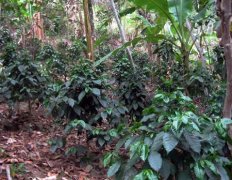
The production of coffee basic knowledge and high-quality coffee beans
Coffee trees take 3-5 years from planting to fruiting. 6-10 years of coffee trees are the most likely to bear fruit, about 15-20 years, is the harvest period. Coffee trees are usually bred in nurseries and grow into saplings, and then moved to coffee farms a year later, in full compliance with the way the Arabs planted and cultivated coffee trees. Coffee trees will continue to take root downward and upward in the first four or five years of their growth.
2014-12-28 Coffee basics common sense boutique coffee beans production coffee planting results 3-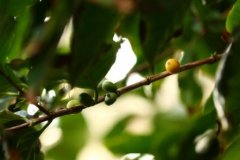
The planting method of coffee tree the main role of coffee beans in the country of origin
Coffee is a perennial evergreen shrub or small tree of Rubiaceae. It is a horticultural perennial cash crop with the characteristics of fast growth, high yield, high value and wide market. Wild coffee trees can grow to a height of 5 to 10 meters, but coffee trees planted on the manor are often cut to a height of less than 2 meters in order to increase the amount of fruit and facilitate harvesting. The opposite leaves of coffee trees are long oval.
2016-03-08 Coffee planting mode condition origin coffee beans main function
Introduction to the characteristics of flavor and taste varieties of Honduran coffee beans in planting environment
The granules of coffee beans in Honduras are large in shape, uniform in size and glossy in color. In order to facilitate harvesting, farmers will prune the coffee trees to no more than 150 centimeters, because if they grow too high, they have to set up ladders to pick, which is not only time-consuming, but also may damage the trees by bending branches. As the ripening period of each fruit of the coffee bean is different, it is necessary to keep the coffee bean in good condition.
2016-10-19 Honduras coffee beans flavor taste variety characteristics planting environment grinding
Organ classification of coffee
Coffee is a shallow root crop, and the plants propagated with seeds have conical roots. Root system refers to the general name of root. The root morphological distribution and depth of shade varieties / soil conditions and agricultural technical measures are different. From the point of view of varieties, the roots of small / medium grain species are shallower, while those of large grain species are deeper. Under normal circumstances, there is a thick and short taproot and many well-developed lateral roots. Yunnan small-grain coffee has a 4-year-old fruit.
2014-06-16 Coffee beans coffee organs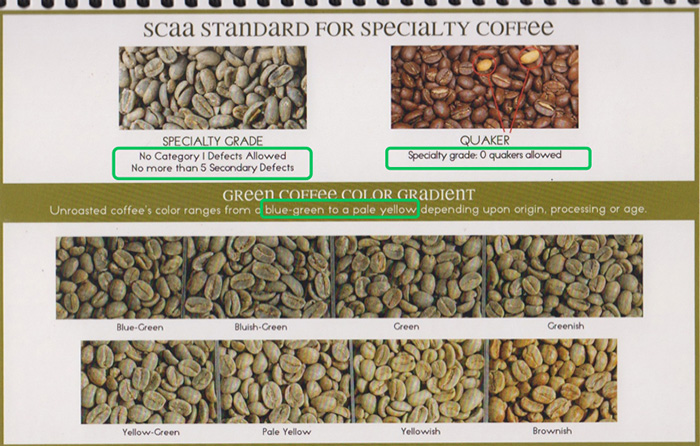
Boutique coffee beans: the standard of SCAA pecialty Coffee boutique coffee raw beans
The raw bean defects of SCAA can be divided into two types: I and II. The requirement for premium coffee grade (specialty coffee) is: 1. There are no class I defects; 2. No more than 5 II class defects 3. There can be no "quaker" (0 quaker) Quick beans in cooked coffee beans. 4. The color range of raw coffee beans is pale yellow (light yellow), yellow-green (
2015-12-08 Boutique coffee beans SCAA pecialty Coffee coffee
What conditions do coffee trees need for planting? do they have high requirements on local climate?
The origin of the coffee tree is Ethiopia in Africa. In botany, coffee trees belong to the evergreen trees of the subgenus Rubiaceae, and coffee beans, commonly known as coffee beans, are the seeds of the fruit of coffee trees, just because they are shaped like beans, so they are called coffee beans. Climate is the decisive factor for coffee cultivation. Coffee trees are only suitable for growing in the tropics or subtropics, so latitude 25 is south and north.
2016-05-31 Coffee planting need what conditions place climate requirements whether high not high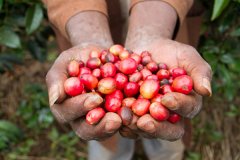
Growth Environment and characteristics of Coffee trees Coffee planting
Coffee gives the public the impression that it is black, bitter and excited after drinking sleepless beverages. The coffee beans we see in the coffee shop are brown, roasted beans and amber. Coffee comes from coffee beans, which are harvested and processed from the fruits of coffee trees. Coffee trees grow at the center of the equator, south.
2015-11-02 Coffee growth environment characteristics cultivation coffee mass like black bitter