“at the end of the century” search results (900)

Introduction to the characteristics of Hawaiian Kona coffee boutique coffee flavor and taste manor
At the end of the 18th century, Hawaiian chief Kamehameha conquered other islands with cannons, established the Hawaiian dynasty and became King Kamehamei I. The Xia dynasty began to split after the death of King Kamehamei, part of which was ruled by his beloved wife, Queen Cayahumanu. Queen Kayahumanu has a strong style, abolishing the long-standing Karp system and Xu.
2016-08-20 Hawaii Kona coffee boutique flavor taste manor characteristics introduction century
The sanitary condition at the end of the cat coffee trend is worrying.
[global Network Comprehensive report] according to the Daily Mail of October 8, people have different opinions about cat coffee. Some coffee shops with furry cats always give people a sense of comfort and comfort. In some cat cafes, the coffee is always mixed with cat hair, which deters many customers. The origin of cat coffee at the end of last century
2015-10-10 Cat Coffee flow end Sanitation condition worrying World wide Web Comprehensive
Basic knowledge of Coffee and Japanese Fine Coffee Culture
As early as the end of the 17th century, the Dutch brought coffee to Asia in the early 18th century, and coffee was soon introduced to Japan. Before and after the Meiji Restoration, Japan advocated total westernization, and the coffee culture with Dutch flavor took root in Japan. During the Taisho period (1879-1926), due to the pervasive atmosphere of freedom and democracy, fresh and luxuriant culture, cafes have been very prosperous. But with the Japanese army,
2015-07-27 Coffee Japan boutique coffee culture basic common sense as early as at the end of the 17th century
Introduction of Indonesian Coffee Flavor characteristics of manors in Indonesian coffee producing areas Kahayang Gan Manor
The prosperity of coffee in Indonesia was not sustainable, coffee production was fatally hit at the end of the 18th century, and leaf rust, originally found in West Java, spread rapidly, destroying the Arabica coffee estate in Indonesia. The leading position of the coffee trade was replaced by the American producing countries. However, it is worth mentioning that the leaf rust disaster did not affect the eastern Indonesian producing areas, namely, Flores Island and Timor, today.
2016-07-30 Indonesia Coffee Flavor introduction producing area Manor characteristics Kaha Yanggan
Flavor and taste of Indonesian Coffee Manor Coffee beans in Wahana Manor, Indonesia
The prosperity of coffee in Indonesia was not sustainable, coffee production was fatally hit at the end of the 18th century, and leaf rust, originally found in West Java, spread rapidly, destroying the Arabica coffee estate in Indonesia. The leading position of the coffee trade was replaced by the American producing countries. However, it is worth mentioning that the leaf rust disaster did not affect the eastern Indonesian producing areas, namely, Flores Island and Timor, today.
2016-07-20 Indonesia Coffee Manor producing area Flavor Taste introduction Waha Coffee beans
Guatemala Antigua Flower God Coffee Flavor and taste characteristics introduce the boutique coffee bean manor producing area
From the 4th century to the 11th century, the Patten low Guatemalan region of Guatemala was the center of ancient Indian Mayan culture, and the ruins of many pyramids and cities left over from this period are still visible today. [7] at the end of the 11th century, Mayan culture still existed in the central highlands after the Mayan culture in the lowlands of Guatemala was eliminated. From 1871 to 1944
2016-09-22 Guatemala Antioch Flower God Coffee Flavor Taste characteristics introduction Fine products
The most recommended cafe in the world-- Le Procope
The Le Procope Cafe, located at 13 Rue Saint-Germain on the left bank, opened in 1686 and was the originator of the Paris Cafe. Many high-end figures were associated with Prokop Cafe at that time, acting as VIP-class hardcore coffee drinkers here, where Rousseau, Volt and Diderot drank coffee in the 18th century, and Zola in the 19th century.
2014-06-24 Coffee shop Le Procope
Uganda coffee varieties producing area characteristics boutique coffee beans flavor estate introduction
There was an emirate called Kitara in western Uganda in the 13th century AD. In the thirteenth and fourteenth centuries, the country was conquered by the nomadic tribe of the Bachivezi. From the end of the 15th century to the beginning of the 16th century, the Luo people originally residing in southern Sudan moved south to replace the rule of the Bachiwezi people and established the Kingdom of Bunoro and the Babito Dynasty in Buganda. These foreign rulers were soon employed locally as farmers
2016-09-24 Uganda coffee variety region characteristics boutique coffee beans flavor estate medium
Historical Evolution of Coffee Flavor characteristics in Rwanda
Clans began to form kingdoms in the 15th century, and in 1700 there were eight kingdoms in Rwanda. The Kingdom of Rwanda, ruled by the Tutsi Nyiginya clan, grew gradually in the mid-18th century and reached its peak under the rule of King Kigali IV in the 19th century. Between 700 BC and 1500 AD, some Bantu groups moved to Rwanda to destroy forests and open up wasteland.
2016-05-29 Rwanda coffee flavor characteristics historical evolution gens 15th century beginning knot
Real mellow thickness of Ugandan coffee flavor taste manor characteristics of boutique coffee beans
There was an emirate called Kitala in present-day western Uganda before the 13th century AD. In the 13th and 14th century, the nomadic Bachwezi conquered the country. From the end of the 15th century to the beginning of the 16th century, the Luo people who originally lived in southern Sudan went south to replace the rule of the Bachwezi, established the kingdom of Buniolo and established the Babito dynasty in Buganda. These foreign rulers were soon engaged in local farming.
2016-09-02 Thickness Uganda coffee flavor taste manor producing area characteristics boutique
The content of caffeine in drinks should be limited to 2%.
At the end of the 19th century, coffee sales in the United States increased greatly. John Pemberton, a pharmacist in Atlanta, Georgia, has made an innovation. He used coffee as a basic ingredient to make a cold drink that relieves fatigue, creating a competitor to coffee, Coca-Cola, which contains caffeine and is made from syrup extracted from two Latin American plants. Pemberton in
2015-10-07 Material caffeine content limit within at the end of the century the United States coffee sales
The spread and Development of Coffee History
The spread and development of coffee European historians argue that there were artificially grown coffee trees for trade in Yemen in the southern Arabian Peninsula as early as 800 years ago, and there is also historical evidence that at that time, there was indeed trade across the Red Sea between Yemen and Ethiopia. Based on this, it is speculated that if the use of coffee is made by Ethiopians
2014-09-22 Coffee Culture Coffee History Coffee Communication Coffee Development
The "patrol room" of sand noodles has been changed into a coffee shop.
Built at the end of the Qing Dynasty and the beginning of the Republic of China, No. 1, a century-old cultural relic Shamian Street, which was once a French patrol house, has been enclosed and decorated recently. Tourists familiar with the matter complain that the century-old cultural relic building has been renovated three times in the past six years, thus harming the cultural relics themselves. Recently, I have seen some construction, which has been done several times before. This is a national key cultural relic. Can it withstand such troubles? Ms. Wu, a citizen, opposed yesterday.
2014-10-31 Coffee news sand noodles cafes.
Coffee Culture in Europe
Coffee formed a tradition in Europe after the development of coffee roasting technology in the Middle East at the end of the 14 th century. It was introduced through an exchange between the Ottoman Turkish Empire and the merchants of Venice, a Mediterranean trader. Coffee flourished in the 18 th century. Islamists call coffee a divine medicine given by Allah. So coffee is called coffee or cavha, which means it can bring energy to people.
2014-09-10 Coffee Culture European Coffee Culture Coffee Encyclopedia
Fine Coffee Training Culture Coffee and Japan
Coffee was brought to Asia by the Dutch at the end of the seventeenth century and early eighteenth century, and coffee was soon introduced to Japan. Around the Meiji Restoration, Japan advocated total Westernization, and the coffee culture with Dutch flavor had taken root in Japan. During the Taisho period (1879 - 1926), coffee houses flourished because of the liberal democratic atmosphere and the fresh and flourishing culture. But with the Japanese militarism
2014-12-30 boutique coffee training culture japan early seventeenth late century eighteenth century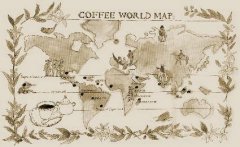
The spread of Coffee Culture
The spread of coffee into the Arab world: in 525 AD, Ethiopian troops invaded Yemen, and coffee beans were brought to Yemen by soldiers. According to records, coffee trees began to be planted in Yemen in 575 AD. Later, coffee beans were also brought to Egypt by Sudanese black slaves who were shipped to Egypt. After coffee was introduced into the Arab world, it was first used as a herb by Arabs to treat biases.
2014-09-18 Coffee Culture Coffee Communication
The Vienna Caf é, once the center of global intelligence and politics.
Although the Viennese coffee culture slogan, which I am not in the coffee shop, is on the way to the coffee shop, it can only be experienced by sitting in the coffee shop in Vienna, where drinking coffee is more than just killing time. Viennese cafe culture flourished from the end of the 19th century to the beginning of the 20th century. At that time, the cafe here was the most important social event in Vienna's cultural circles.
2016-09-07 Used to be global intelligence politics center Vienna cafe that sentence no coffee
In the coffee popular area, the British prefer to drink tea.
The British like to drink tea, but people living around Britain are keen on another kind of drink, coffee. Why did the British fall in love with that cup of tea surrounded by the coffee epidemic area?
2014-05-15 Coffee Culture UK Cafe
Where coffee is popular, Britons prefer tea?
British people love tea, but people living around Britain are keen on another drink, coffee. Northern Europe, north of Britain, is the most coffee-crazed region in the world. The five Nordic countries occupy the first, second, third, fourth and sixth positions in the coffee consumption ranking table per capita, while Belgium, which ranks eighth, faces Britain across the sea. why the British
2016-09-24 coffee pop regional british prefer tea
World coffee brands
Nestle Nescafe: coffee with a long history, founded in 1867. The Bird's Nest trademark was designed at the end of the 19th century to pray for a reduction in infant mortality in the world. UCC: founded in Japan in 1933, it is the most successful Japanese brand in the world and a guarantee of quality. Royal Copenhagen RoyalCopenhagen: has always had a high-quality evaluation of the royal Copenhagen.
2014-08-06 World Coffee Brand Nestl é Nescafe long History Founding