“also known as cherries” search results (400)

The growth habits of coffee the distribution of coffee the three main types of coffee
Coffee trees grow in national farms in tropical or subtropical regions known as coffee belts centered at the equator and between latitudes of 25 degrees south and north. At present, coffee is produced in more than 60 countries, widely distributed in South America, Central America, the West Indies, Asia, Africa, Arabia, the South Pacific and Oceania. In terms of output, Brazil, which accounts for the first place in the world, accounts for about 30%; the second
2016-05-25 Coffee growth habit distribution three major species coffee tree growing equator
Coffee basics how much do you know about coffee beans
Coffee beans grow in tropical or subtropical agricultural gardens around the equator, called coffee belts, and travel to Japan with ships. When the brown coffee beans appear in front of your eyes, they have actually gone through a variety of different circulation processes and the hands of many people. Coffee is widely distributed in South America, Central America, the West Indies, Asia, Africa, Arabia, the South Pacific and
2015-01-19 Coffee basics common sense about coffee beans know how much coffee beans are longer than red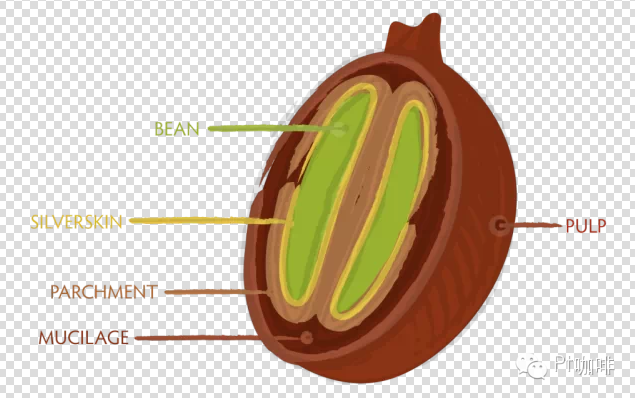
The evolution of coffee treatment: water washing, sun exposure and mixed treatment of coffee
Today, we are going to talk about the way coffee is handled. With the development of coffee today, the treatment of raw beans is mainly divided into water washing, sun exposure and the combination of the first two. Honey treatment belongs to the latter. To talk about honey treatment, we have to talk about boiling water washing and sun treatment from the coffee structure and the two oldest treatment methods. Coffee cherry structure from outside to inside: Pu
2015-12-26 Coffee treatment way evolution process washing tanning mixing today we
There are two varieties of coffee: Arabica and Robusta
At present, the main varieties of coffee grown in the world come from two original varieties: Arabica and Robusta. The planting methods, growth environment and other conditional characteristics of the two are different, and even the caffeine content is quite different.
2014-08-15 Coffee knowledge coffee varieties Arabica Robstein
Introduction to the planting method of Coffee Tree what kind of natural environment is needed to grow coffee tree
Coffee tree is a shrub or small tree of Rubiaceae; leaves opposite, leathery, long ovate; every March, the branches will appear white flowers, petals spirally arranged, the heart of flowers jump around the petals, take a closer look, really like a small windmill playing in childhood, emitting bursts of jasmine fragrance; the fruit is oval, berries, crimson, containing two seeds, that is, we are familiar with coffee
2016-07-28 Coffee planting methods introduction need what natural environment
Introduction to coffee tree knowledge
The coffee tree is native to Ethiopia in Africa. Coffee tree in botany, belongs to the Rubiaceae coffee subgenus evergreen tree, and generally known as coffee beans, in fact, coffee tree fruit seeds, only because of the shape like beans, so called coffee beans. Climate is the decisive factor for coffee cultivation. Coffee trees are only suitable for growing in the tropics or subtropics, so latitude 25 degrees north and south.
2015-02-11 Boutique Coffee Common sense Basics Introduction Origin Africa Ethiopia
Processing of fresh coffee beans
Wet treatment requires the use of specific equipment and a large amount of water. When properly operated, it can ensure that the original quality of coffee beans is better preserved, producing homogeneous coffee beans with few bad beans. As a result, coffee beans produced in this way are generally considered to be of better quality and charge higher prices. Even after careful harvest, a certain amount of underdried and undercooked coffee
2014-09-29 Processing of fresh coffee beans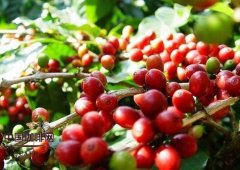
Costa Rica San Romantara Beads Creamy and Slightly Spicy
Specialty coffee is also known as specialty coffee. It refers to coffee made from green beans with excellent taste characteristics grown in a few extremely ideal geographical environments. Depending on the particular soil and climatic conditions in which they are grown, they have outstanding flavors. This type of coffee is carefully selected and graded for its hard texture, rich taste and wind.
2016-06-25 Costa Rica Romain Tara Region Cream Slightly Spice Flavor Fine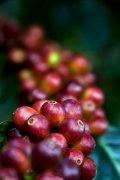
Planting and Distribution of Coffee trees with Comprehensive knowledge of Coffee
Coffee distribution: coffee trees grow in the tropical or subtropical regions of the tropical or subtropical regions with the equator as the center and between the latitudes of 25 degrees south and north. At present, coffee is produced in more than 60 countries, widely distributed in South America, Central America, the West Indies, Asia, Africa, Arabia, the South Pacific and Oceania. In terms of output, Brazil, which accounts for the largest output in the world, is about
2015-09-09 Coffee synthesis knowledge planting distribution
Coffee tree history coffee morphological characteristics coffee cultivation techniques
Coffee tree is a shrub or small tree of Rubiaceae; leaves opposite, leathery, long oval; every March, branches will emerge white flowers, petals spiral arrangement, flower center around the petals jump, a closer look, really like childhood play with the small windmill, issued bursts of jasmine fragrance; fruit is oval, berry, dark red, hidden two seeds, that is, we are familiar with coffee
2016-05-26 coffee history morphological characteristics cultivation techniques
Common sense of coffee tree
The origin of the coffee tree is Ethiopia in Africa. In botany, coffee trees belong to the evergreen trees of the subgenus Rubiaceae, and coffee beans, commonly known as coffee beans, are actually the seeds of the fruit of coffee trees. They are called coffee beans only because they are shaped like beans. Climate is the decisive factor for coffee cultivation. Coffee trees are only suitable for growing in the tropics or subtropics, so latitude 25 degrees south and north.
2014-08-08 Coffee knowledge coffee tree common sense coffee encyclopedia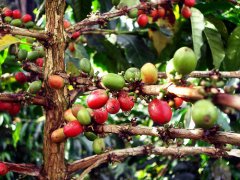
How to grow coffee berries and beans
Coffee fruit is a berry, also known as comb fruit. Oval, 9-14 mm long, young fruit green, red at maturity, purplish red. Each fruit generally has two seeds, but also one or three, showing a semi-oval, there is a longitudinal groove, called grooves. This is the past life of coffee beans, there are coffee branches, leaves, fruits, as well as dissected pulp, seeds, roasted coffee beans. What we see every day
2016-05-31 Coffee berries coffee beans how planting coffee fruit also known as combs
The forming Environment of Coffee trees
In botany, coffee trees belong to the evergreen trees of the subgenus Rubiaceae, and coffee beans, commonly known as coffee beans, are actually the seeds of the fruit of coffee trees, just because they are shaped like beans. Climate is the decisive factor for coffee cultivation. Coffee trees are only suitable for growing in the tropics or subtropics, so the zone between latitude 25 degrees south and north is generally called coffee belt or coffee area.
2015-07-30 Coffee generation environment boutique coffee botany belong to grass family subgenus evergreen
Talk about the cultivation of coffee
Coffee (Coffee) is derived from the Latin word Coffea (biological word name) and belongs to a member of the Rubiaceae family. These plants are all woody plants, most of which are distributed in the tropics, with more than 500 classifications and about 6000 varieties.
2014-08-25 Coffee knowledge coffee cultivation coffee encyclopedia
Coffee is divided into two varieties: Arabica and Robusta Coffee classification Introduction Coffee is divided into
The major coffee varieties grown worldwide today are derived from two original species: arabica and robusta. The planting methods, growth environment and other characteristics of the two are different, and even the caffeine content is also quite different. Since coffee fruits do not ripen at the same time on the same tree, high-quality coffee must be hand-picked. About 75 percent of the world's population
2016-03-16 Coffee Classified Varieties Arabica Robusta Medium
Coffee knowledge the generating environment of coffee trees
In botany, coffee trees belong to the evergreen trees of the subgenus Rubiaceae, and coffee beans, commonly known as coffee beans, are actually the seeds of the fruit of coffee trees, just because they are shaped like beans. Climate is the decisive factor for coffee cultivation. Coffee trees are only suitable for growing in the tropics or subtropics, so the zone between latitude 25 degrees south and north is generally called coffee belt or coffee area.
2014-09-16 Coffee knowledge coffee tree coffee tree growth
Starbucks is beautiful in 13 Starbucks with the most distinctive design ideas throughout Japan.
Starbucks has more than 1000 stores in Japan, of which there are 13 specialty concept stores. The so-called characteristic concept store is mainly different from other Starbucks stores in the overall design, and there are special ingenuity in the appearance and interior decoration of the building. Of the 13 stores, five are in Tokyo, one in Kamakura, two in Kyoto, one in Kobe and two in Fukuoka
2015-12-05 Buck all over the whole Japan has its own characteristics design concept three has turned over.
African Coffee Bean producing areas and characteristics Story of Starbucks Coffee Bean producing areas
To visit Hawaii, in addition to the beautiful beach, don't forget the Hawaiian coffee bean-Kona. The taste is sweet with the sour taste of wine, which is very special. The most traditional and famous coffee in Hawaii. However, due to the low production here, the surprisingly high cost, and the increasing demand for individual coffee in the United States and other places, its unit price is not only getting higher and higher, but also
2016-10-17 Africa coffee beans producing areas characteristics Buck Big three Hawaii sightseeing except for the United States
Planting requirements and conditions of Coffee trees
The origin of the coffee tree is Ethiopia in Africa. In botany, coffee trees belong to the evergreen trees of the subgenus Rubiaceae, and coffee beans, commonly known as coffee beans, are actually the seeds of the fruit of coffee trees. They are called coffee beans only because they are shaped like beans. Climate is the decisive factor for coffee cultivation. Coffee trees are only suitable for growing in the tropics or subtropics, so latitude 25 degrees south and north.
2014-08-01 Coffee planting peace conditions coffee origin Africa Ethiopia plants
Introduction to the common sense of coffee tree
The origin of the coffee tree is Ethiopia in Africa. In botany, coffee trees belong to the evergreen trees of the subgenus Rubiaceae, and coffee beans, commonly known as coffee beans, are actually the seeds of the fruit of coffee trees. They are called coffee beans only because they are shaped like beans. Climate is the decisive factor for coffee cultivation. Coffee trees are only suitable for growing in the tropics or subtropics, so latitude 25 degrees south and north.
2014-11-26 Coffee knowledge coffee tree knowledge