“Total” search results (9096)

Yunnan Pu'er Coffee introduction to Yunnan Pu'er Coffee planting Yunnan Pu'er Coffee roasting Yunnan
[output] compared with the popularity of Pu'er tea, the fame of Pu'er coffee is not commensurate with the output. Yunnan coffee production accounts for 98.8% of the country's total output; Pu'er coffee production accounts for 57.8% of Yunnan's total output; and the price of a cup of Starbucks coffee is equivalent to 25 cups of AA grade Yunnan coffee beans. [planting] in 2011, one mu of coffee trees planted in Pu'er could earn 4000 yuan and 8000 yuan. [export]
2016-03-30 Yunnan Pu'er coffee introduction planting baking output compared to Pu'er tea well-known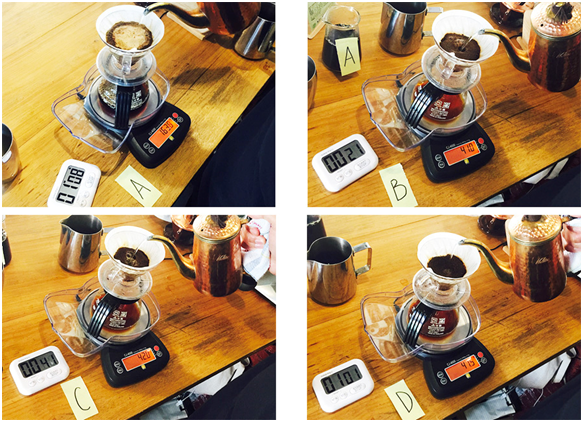
The influence of steaming or not and duration on coffee brewing (part two)
Last time we used the Smart Cup to get objective data on whether it was steaming or not and how long it lasted. Learn from the senses that with the increase of steaming time, the acidity decreases, and the sense of sweetness and stickiness increases. The overall flavor gradually moved backward, and more complex. From the display on TDS and EXT, we know that with the increase of steaming time, the values of TDS and EXT show a downward trend. And I.
2015-07-01 Steaming steaming or not duration opponent coffee influence
Coe cup meter European Chinese version explains what COE SCAA the Coffee Association has
The cup testing system introduced by BGT and Osher Coffee Alumni Association in the past two years all use the CoE competition mode. At present, the fine bean competition in various countries uses either CoE or SCAA mode, up to 9 major coffee producing countries all use the Coe cup as the national competition mode, so we decided to promote the CoE cup testing system in Taiwan. The purpose of BGT is to let barista [know boutique coffee] and use his essence.
2016-04-26 CoE cup test table Europe Chinese version description coffee will have which COE
Brazilian coffee generally refers to coffee produced in Brazil.
Brazilian coffee generally refers to coffee produced in Brazil. There is a wide variety of Brazilian coffee, the vast majority of which are unwashed and sun-dried, classified according to the name of the state of origin and the port of transport. Brazil has 21 states and 17 states produce coffee, but four of them produce the largest, accounting for 98% of the country's total output. Brazilian coffee has a low sour taste, which goes well with coffee.
2015-06-09 Brazil coffee generally refers to produced in Brazil produced in a wide variety of absolutely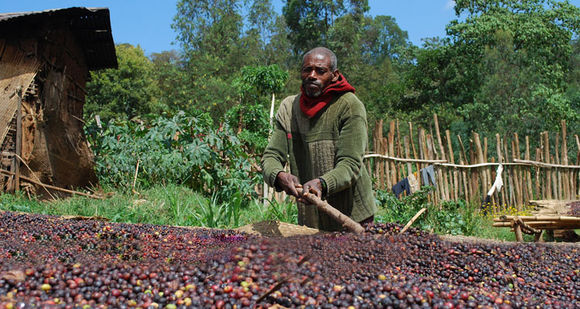
Cerrado Mineiro, the main variety of Brazilian coffee in the world coffee producing area.
Brazilian coffee generally refers to coffee produced in Brazil. There is a wide variety of Brazilian coffee, the vast majority of which are unwashed and sun-dried, classified according to the name of the state of origin and the port of transport. Brazil has 21 states and 17 states produce coffee, but four of them produce the largest, accounting for 98% of the country's total output. Brazilian coffee has a low sour taste.
2016-03-31 World Coffee producing area Brazil Major Variety Cerrado Mine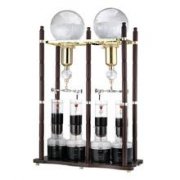
Boutique coffee pot introduction ice drop coffee pot total coffee
Low temperature extraction of coffee essence, a completely different taste feeling! Ice drop coffee is said to have been invented by Dutch immigrants on the island of Java. The structure of the ice drop pot is simple, including the upper pot, the middle pot and the lower pot. The ice in the upper pot melts into a drop of water into the middle pot containing coffee powder, and the iced coffee extracted from the lower pot is picked up. The production process is very ornamental, and it is a coffee extraction method that can best reflect the original taste of coffee.
2015-01-04 Boutique coffee maker introduction ice drop Mr. Zhuang coffee low temperature extract essence
The basic knowledge of Brazilian Coffee beans Information on the producing countries of fine coffee beans
Brazil is vividly compared to the giant and monarch of the coffee world. There are about 3.97 billion coffee trees there, and small farmers now grow 75% of Brazil's total coffee production. The number of coffee producers in Brazil is twice or even three times that of Colombia, the second largest coffee producer in the world. Brazilian coffee generally refers to coffee produced in Brazil. Types of Brazilian coffee
2015-10-14 Brazil coffee beans basics common sense boutique country of production information image local comparison
Basic knowledge of coffee beans comparison of basic data of coffee bean varieties
Suitable cultivation conditions: Arabica variety (Arabica) is suitable for plateau cultivation, Robesta variety (Robusta) is suitable for lowland cultivation, and Liberian variety (Liberica) is suitable for minimum cultivation. Production: the Arabica variety (Arabica) accounts for about 70-80% of the world's total output; the Robesta variety (Robusta) accounts for about 20-30% of the world's total output of Liberian varieties (Liberica)
2015-03-04 Coffee beans basic knowledge varieties basic information comparison suitability cultivation conditions pull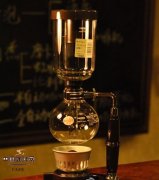
Coffee basic knowledge true and false hario siphon pot comparison total strategy
Japanese hario is the first choice for siphon pots. What's so good about it? In addition to exquisite workmanship, the last step of siphon production is to use a cold wet cloth to cool the next pot. This step is to prevent the high temperature of the next pot from causing the reflux coffee to zoom and affect the taste. Domestic glass may crack because of instant cooling. This is rarely the case with Japanese products. Also because of the excellent quality and reputation of hario, it leads to
2014-12-23 Coffee basics common sense true or false hario siphon comparison total strategy start
Three important factors of Coffee three factors affecting Coffee Flavor
So how to master these variables when making coffee, and which variables will cause the difference in the taste of coffee? Let's take a look at the three major factors that affect coffee making. First, the temperature of hot water when it comes into contact with coffee powder, hot water will accelerate the movement of various ingredients, and the speed of sour ingredients is the fastest, and the amount of movement from the center of coffee powder to the surface is basically the same in a short time.
2016-06-03 Coffee important factors influence flavor three so how master these
Introduction to the flavor and taste characteristics of El Salvador Himalayan coffee manor with beautiful sweetness
In 1998, El Salvador had a total population of 6.1 million (estimated), of which El Salvador, an Indo-European hybrid, accounted for 89 per cent, 10 per cent of Indians and 1 per cent of whites. In 2012, El Salvador had a total population of 6.090646 million, of which 90% were of mixed Indo-European race, 9% of whites, 1% of Indians, 29.7% of people aged 15 to 64, 29.7% of people aged 15 to 64, 6.6% of them aged 65 and above.
2016-08-11 Okay sweetness El Salvador Himalayas coffee manor producing area flavor taste
Where is the largest coffee producer in the world?
The largest coffee producer in the world is Brazil, which is the world's largest coffee exporter, with an average annual trade volume of US $1.38 billion in coffee beans and instant coffee in the past 40 years. In 2002, the total volume of world coffee trade was 88.7 million bags, and Brazil exported 27.99 million bags, an increase of 19.3% over 2001, accounting for 30% of the world coffee trade volume, ranking first (the second is Vietnam, with a trade volume of 1220.
2016-05-25 Where is the big coffee in the world?
When is the first peak period for the development of coffee planting industry in China?
By the end of the 1940s, according to recorded figures, there were 2173.33 hectares of rubber plantations on Hainan Island, with a total of 867600 rubber trees, with an annual output of 199,000 tons of dry rubber, more than 300,000 coffee plants and an annual output of 1 ton of coffee beans. According to a survey in the early 1950s, a large number of coffee was left in Fushan area of Chengmai County, with a total of 70,000 plants, including more than 40,000 plants in Daji Village and Fushan Farm (Hongguang Farm) 1
2015-02-07 China coffee planting industry development the first peak period when the 1940s
Four forms of growth and production of Ethiopian Coffee
Growth and production patterns: There are four growth production patterns in Ethiopia, and 95% of coffee is produced from these types or systems.
2014-08-22 Coffee knowledge Ethiopian coffee beans coffee encyclopedia coffee tree growth
The similarities and differences between latte and cappuccino
1. The ingredients of cappuccino and latte are exactly the same: milk, coffee and Espresso, except that cappuccino foam accounts for at least half of the total cup, while latte foam should not exceed 10% of the total cup. In other words, cappuccino is mainly milk foam, latte is milk-based. 2. similarities and differences in appearance. Cappuccino foam.
2015-04-20 Latte coffee cappuccino Chino similarities and differences ingredients iron
The similarities and differences between latte and cappuccino
1. The ingredients of cappuccino and latte are exactly the same: milk, coffee and Espresso, except that cappuccino foam accounts for at least half of the total cup, while latte foam should not exceed 10% of the total cup. In other words, cappuccino is mainly milk foam, latte is milk-based. 2. similarities and differences in appearance. Cappuccino foam.
2015-04-20 Latte coffee cappuccino Chino similarities and differences ingredients iron
What water is used to make coffee?
The proportion of water in a cup of coffee is about 98.5% 99%, and the extracted substances in coffee only account for 1% 1.5%, so water is a very important factor in determining the taste of coffee. Not all water is suitable for making coffee. When we drink mineral water and purified water, if we carefully compare them, we will find that the taste of mineral water will be much heavier and there will be astringency.
2015-06-10 coffee know make what cup water proportion approximate
Introduction to raw coffee beans of the American Special Coffee Association
First class: special product defect: 0-5 sample total weight: 300g sample size difference: less than 5% pencil 5%, or in the delineated typical perimeter sample total weight: 300g appreciation features: must be at least a little outstanding in the following features: taste, sour taste, taste, fragrance. Characteristics will be decided by the cooperation of both sides of the business. Through the cup test and appreciation, there are no defects. Baking difference
2015-11-30 United States Special Coffee Association Coffee Bean introduction description Grade 1 defects
Tumticha Cooperative Coffee Bean Ethiopian Yega Chefe Fine Coffee
Coffee is Ethiopia's main economic crop and the country's largest crop export and important industry. It accounts for 60% of Ethiopia's total export value and supports many small farms, as well as sugar, bananas and cotton. It is also Ethiopia's largest and important commodity export crop after oil, and it is also the largest export of Elaraby in Africa, in 1997.
2016-07-28 Tumticha Cooperative Coffee Bean Esso Biya Yega Sheffield Fine
The total strategy of coffee weight loss is very important to drink at the right time.
After the caffeine in coffee is absorbed by the body, it moves in the body to secrete adrenaline, which promotes the decomposition of fat cells in the blood and is then excreted as fatty acids. However, it should be noted that if the intake of caffeine is excessive, it will cause insomnia, excitement, rapid heartbeat and so on, which will do great harm to the body.
2016-05-26 Coffee weight loss strategy time crucial coffee medium caffeine human body