“Subtropical” search results (1174)

Introduction to the flavor and taste characteristics of El Salvador Himalayan coffee manor
Savanna climate. The plain area belongs to the tropical rain forest climate and the mountain area belongs to the subtropical forest climate. The average annual temperature is 25-28 ℃. The annual precipitation is more than 1800 mm in mountain areas and about 1000 mm in coastal areas. The rainy season is from May to October. Don't underestimate El Salvador's coffee production. In its heyday, it was the world's fourth largest coffee producer, but decades of civil war almost dragged down coffee
2016-08-06 El Salvador Himalaya Coffee Manor producing area Flavor Taste characteristics introduction
Processing of Fruit of High-quality Coffee
Coffee is the fruit of a Rubiaceae plant growing about 6000 feet above sea level, distributed on the world's narrow subtropical axis; coffee trees grow green all the year round and can grow up to 20 feet tall, and are generally controlled at 8 to 10 feet for easy harvest. It takes three to five years for the coffee tree to bear fruit. First of all, it produces small white flowers that resemble jasmine in shape and size, and then wither and bear deep fruit.
2015-01-19 Boutique coffee common sense fruit processing growing at 000 feet above sea level
Summary of processing methods and characteristics of Coffee Fruit
Coffee is the fruit of a Rubiaceae plant growing about 6000 feet above sea level, distributed on the world's narrow subtropical axis; coffee trees grow green all the year round and can grow up to 20 feet tall, and are generally controlled at 8 to 10 feet for easy harvest. It takes three to five years for the coffee tree to bear fruit. First of all, it produces small white flowers that resemble jasmine in shape and size, and then wither and bear deep fruit.
2015-03-04 Coffee common sense fruit processing methods characteristics overview coffee growth altitude
Introduction to the method of describing the Flavor of El Salvador Himalayan Coffee Manor
Savanna climate. The plain area belongs to the tropical rain forest climate and the mountain area belongs to the subtropical forest climate. The average annual temperature is 25-28 ℃. The annual precipitation is more than 1800 mm in mountain areas and about 1000 mm in coastal areas. The rainy season is from May to October. Don't underestimate El Salvador's coffee production. In its heyday, it was the world's fourth largest coffee producer, but decades of civil war almost dragged down coffee
2016-10-13 El Salvador Himalayas Coffee Manors producing areas Flavor description treatment varieties
Summary of the processing and characteristics of Coffee Fruit
Coffee is the fruit of a Rubiaceae plant growing about 6000 feet above sea level, distributed on the world's narrow subtropical axis; coffee trees grow green all the year round and can grow up to 20 feet tall, and are generally controlled at 8 to 10 feet for easy harvest. It takes three to five years for the coffee tree to bear fruit. First of all, it produces small white flowers that resemble jasmine in shape and size, and then wither and bear deep fruit.
2015-04-24 Coffee common sense fruit processing characteristics overview coffee growing in altitude 000
A Summary of the processing and characteristics of Coffee Fruit
Coffee is the fruit of a Rubiaceae plant growing about 6000 feet above sea level, distributed on the world's narrow subtropical axis; coffee trees grow green all the year round and can grow up to 20 feet tall, and are generally controlled at 8 to 10 feet for easy harvest. It takes three to five years for the coffee tree to bear fruit. First of all, it produces small white flowers that resemble jasmine in shape and size, and then wither and bear deep fruit.
2014-11-26 Coffee knowledge coffee common sense coffee fruit
What are the advantages and disadvantages of coffee? how should I drink coffee?
What's coffee? The word Coffee comes from a small town in Ethiopia called kaffa. In Greek, Kaweh means strength and passion. Tea, coffee and cocoa are called the three major drinks in the world. Coffee tree is a small evergreen tree of Rubiaceae, native to Ethiopia. Small evergreen trees or shrubs of tropical and subtropical regions. Leaves long ovate, flowers
2016-05-29 Coffee what advantages disadvantages should how coffee what is it Coffe
Introduction to the flowering and planting environment of Yunnan Hongguang coffee tree and the cost of planting beans
Coffee fruit contains two seeds, namely coffee beans. The two beans are connected face to face with each other on one side of the plane. Each coffee bean has a thin outer film, which is called silver skin, and its outer layer is covered with a yellow outer skin, called endocarp. The whole coffee bean is wrapped in a sticky pulp to form coffee pulp, which is soft and sweet.
2016-10-21 Yunnan Hongguang coffee what month flowering planting environment cost introduction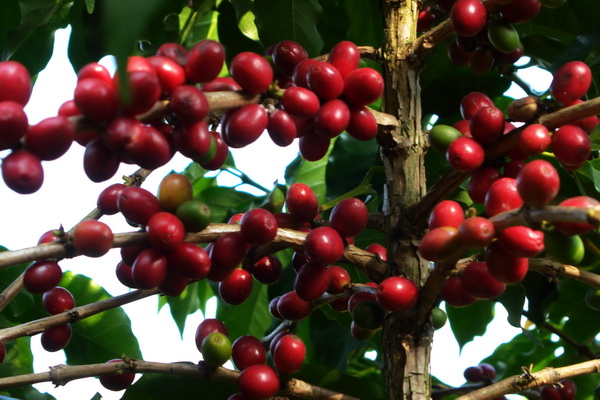
The popularity of coffee common sense coffee beans coffee tree round beans (round beans) peaberry coffee berries
Coffee tree belongs to Rubiaceae of Rubiaceae, which is a shrub or small tree. It is native to subtropical Africa or Asia. The seeds in its berries are the main raw materials of coffee. Commercially, the seeds of coffee are called coffee beans (coffee bean). There are many different species in the genus Coffea, about 25-40 species, of which Arabica (Cof) is widely cultivated.
2016-07-12 Coffee Common sense Popularization Coffee beans Round beans peaberry for short
Flavor and taste of Guatemala Coffee Manor Incht Manor Guatemala Antigua Coffee
Guatemala is located in the tropics, the northern and eastern coastal plains have a tropical rain forest climate, the southern mountains have a subtropical climate, the year is divided into two dry and wet seasons, with the wet season from May to October and the dry season from November to April of the following year. The central plateau is also the cultural center of Guatemala, where temperatures are mild all year round at an altitude of 1300 to 1800 meters, with daily temperatures between 18 and 28 ℃, and higher in January
2016-07-26 Guatemala Coffee Manor producing area Flavor palate introduction Hutt Antioch danger
General knowledge of Fine Coffee processing and characteristics of Coffee Fruit
Coffee is the fruit of a Rubiaceae plant growing about 6000 feet above sea level, distributed on the world's narrow subtropical axis; coffee trees grow green all the year round and can grow up to 20 feet tall, and are generally controlled at 8 to 10 feet for easy harvest. It takes three to five years for the coffee tree to bear fruit. First of all, it produces small white flowers that resemble jasmine in shape and size, and then wither and bear deep fruit.
2015-02-11 Boutique coffee common sense fruit processing characteristics overview growing altitude
Australia coffee growing area introduction New South Wales coffee growing area introduction
Australia Hilltop Village XF Country of Production: Australia Grade: XF Planting Area: New South Wales Brand: Hilltop Village Treatment Method: Dry ProcessAppearance: 6d/300gr, SCR17-18 Variety: Bourbon Note: Hilltop Village is located in Nimbing, New South Wales, Australia, in a subtropical climate. The planting area itself is an extinct volcano with an altitude of more than 1400 meters and has
2016-07-11 Australia coffee cultivation region presentation New South Wales estate
Introduction to the flavor of Guatemala Antigua coffee beans and Guatemalan coffee manor
Guatemala is located in the tropics, the northern and eastern coastal plains have a tropical rain forest climate, the southern mountains have a subtropical climate, the year is divided into two dry and wet seasons, with the wet season from May to October and the dry season from November to April of the following year. The central plateau is also the cultural center of Guatemala, where temperatures are mild all year round at an altitude of 1300 to 1800 meters, with daily temperatures between 18 and 28 ℃, and higher in January
2016-07-28 Guatemala Antioch coffee beans coffee manor producing area flavor introduction Guatemala horse
Coffee Tour (III) Starting from the Equator
A good cup of coffee should be made with good coffee beans, which is the basic factor that determines the taste of a cup of coffee. The selection of coffee beans is very important. The introduction above, our hand brewing equipment is ready, now, start to choose coffee beans! The world's coffee mainly grows in the equatorial center, between 25 degrees north and south latitude coffee belt, those tropical or subtropical climate
2014-09-01 Coffee aroma fine coffee
Nicaraguan Maraka Dura Coffee Flavor description, Grinding characteristics, introduction to the taste of varieties
This is because Guatemala is located in the tropics, the northern and eastern coastal plains have a tropical rain forest climate, and the southern mountains have a subtropical climate, with two dry and wet seasons a year, with the wet season from May to October and the dry season from November to April of the following year. The central plateau is also the cultural center of Guatemala, where temperatures are mild all year round at an altitude of 1300 to 1800 meters, with daily temperatures between 18 and 28 ℃.
2016-10-14 Nicaragua Maraka Raqqa Dula coffee flavor description grinding characteristics
Introduction to the characteristics of Salvadoran coffee in the manor area with volcanic El Salvador coffee flavor
The topography here is mainly mountainous and plateau, with many volcanoes. Savanna climate. The plain area belongs to the tropical rain forest climate and the mountain area belongs to the subtropical forest climate. The average annual temperature is 25-28 ℃, and the annual precipitation is more than 1800 mm in mountainous areas and about 1000 mm in coastal areas. It is rich in water resources, the rivers are short and swift, and the coffee in El Salvador accounts for 40% of the country's exports.
2016-08-03 Volcano El Salvador boutique coffee flavor taste manor producing area introduction special
Introduction to the Flavor and Taste Manor production area of Coffee growing area in Guatemala
Guatemala is located in the tropics, the northern and eastern coastal plains have a tropical rain forest climate, the southern mountains have a subtropical climate, the year is divided into two dry and wet seasons, with the wet season from May to October and the dry season from November to April of the following year. The central plateau is also the cultural center of Guatemala, where temperatures are mild all year round at an altitude of 1300 to 1800 meters, with daily temperatures between 18 and 28 ℃, and higher in January
2016-07-14 Guatemala coffee growing area flavor taste manor producing area introduction Guatemala horse
The flavor and taste characteristics of Guatemalan coffee manor with rich volcanic soil introduce Latisa Villa.
This is because Guatemala is located in the tropics, the northern and eastern coastal plains have a tropical rain forest climate, and the southern mountains have a subtropical climate, with two dry and wet seasons a year, with the wet season from May to October and the dry season from November to April of the following year. The central plateau is also the cultural center of Guatemala, where temperatures are mild all year round at an altitude of 1300 to 1800 meters, with daily temperatures between 18 and 28 ℃.
2016-08-09 Rich volcano soil Guatemala coffee manor producing area flavor taste special
Introduction of Guatemala Coffee Manor LaTisha Manor Guatemala Cloud Manor
Located in the tropics, there are many volcanoes in the territory, the northern and eastern coastal plains have a tropical rain forest climate, and the southern mountains have a subtropical climate. The year is divided into two dry and wet seasons, with the wet season from May to October and the dry season from November to April of the following year. The annual precipitation is 2000-3000 mm in the northeast and 500-1000 mm in the south. Forests account for half of the country's area and are the best latitude for coffee production.
2016-07-20 Guatemala Coffee Manor producing area introduction Ratti Cloud location Tropical Environment
Coffee planting History-introduction to planting conditions and methods
Although Arabs ban the export of coffee seeds, they are indeed very open inside. The first coffee houses known as Kavin Kahn opened in Mecca, and for the first time in human history, anyone who spent a cup of coffee could go in and sit in a comfortable environment to do business and date. Coffee enters Asia. Arabs fail to make coffee.
2016-10-17 Coffee planting history conditions methods types introduction