“Rot” search results (441)

The Bolivian coffee producing area of Tibica, which produces excellent coffee varieties.
Arabica coffee cannot be grown in cold places above 2000 meters above sea level. if the altitude is too high, coffee trees will frost because the temperature is too low. So Bolivian coffee is mainly grown in the Yungas region northeast of La Paz. It borders the Amazon basin and is about 1500-2500 meters above sea level with an average annual temperature of about 10-15 ℃. Therefore, it ensures the growth of coffee.
2016-07-02 Production excellence coffee grower Tiby Bolivia producing area
How to judge whether the raw coffee beans are fresh from the appearance? Judgment on the appearance of coffee beans
From the fruit state of coffee beans when they are picked from the tree to the state of raw beans that can be baked, the moisture content of coffee beans will be controlled between 9% and 13%, and it is not easy to bake if the water content is too high or too low. Generally, we get newly collected raw beans with water washing treatment, the moisture content is usually about 11.5% to 12.5%, half-washed Mantenin may reach 13%, and half-washed Brazil is 11% ~ 12% per day.
2015-09-14 How appearance judgment coffee raw beans whether fresh coffee beans
Bolivia Coffee How to taste Growing environment Producing area Price Flavor Description Introduction
Arabica coffee cannot be grown at altitudes higher than 2000 meters, and if the altitude is too high, the coffee trees will freeze due to the low temperature. Bolivian coffee is mainly grown in the Yungas region northeast of La Paz. Bordering the Amazon River basin, it is about 1500-2500 meters above sea level and has an average annual temperature of about 10-15 ° C. Therefore, coffee growth is guaranteed.
2016-09-19 Bolivia coffee taste how grow environment region price flavor
Has a unique Bolivian coffee growing environment to introduce boutique coffee.
The early Bolivian coffee was of low quality and the market was very poor. Usually the picked coffee fruit is bumped all the way to the processing plant after a simple peeling treatment. Due to the imperfect infrastructure, the traffic is underdeveloped. Coffee farmers have to overcome the rugged mountain road and transport the beans to the higher altitude area of La Paz for washing. If the coffee fruit can not be delivered to the processing in time
2016-07-02 Youde Tiandu thick Bolivia coffee planting environment introduction boutique
Introduction of Alabica Coffee producing area in Bolivia by Water treatment method
Coffee is rich in oils, fatty acids and other compounds. All of these chemicals are collectively referred to as soluble substances that give flavor to coffee. They are extracted from coffee powder during brewing. When the coffee bean is roasted, the strong heat evaporates the water in the center of the bean, and the volatile oily substance is extracted to cover the outer surface of the bean. But this kind of material, technically,
2016-06-29 Water treatment Bolivia rabbi coffee producing area introduction rich oil
Introduction to the taste of Bolivian boutique coffee beans with rich and unique aroma
Bolivia not only has a unique growing environment, but also has an excellent coffee variety Typica. In the past two hundred years, the main variety of coffee in Yanggas area is the ancient Tibica. Tibica coffee has a balanced and soft flavor, with lively aroma and rich sour taste. Unfortunately, the low production of Tibika and its poor disease resistance make Bolivia's
2016-07-13 Aroma rich unique Bolivia boutique coffee beans flavor taste introduction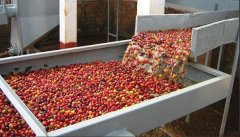
Introduction to the treatment of Coffee beans-- washing treatment (Washed)
Because there was no sufficient sunshine in the West Indies, the Dutch introduced water washing, also known as WIB, around 1740, which is different from the traditional sun method, also known as OIB. Coffee beans exported from Java are often marked with WIB, which means washed beans. The treatment steps of the water washing method are as follows: 1. Select beans: put the harvested fruit in the water tank and soak for about 24 hours. At this time
2016-03-08 Coffee beans treatment way introduction washing Washed because India group
Snow vein Manor of Bolivian Coffee Manor in perennial low temperature Environment
The early Bolivian coffee was of low quality and the market was very poor. Usually the picked coffee fruit is bumped all the way to the processing plant after a simple peeling treatment. Due to the imperfect infrastructure, the traffic is underdeveloped. Coffee farmers have to overcome the rugged mountain road and transport the beans to the higher altitude area of La Paz for washing. If the coffee fruit can not be delivered to the processing in time
2016-06-27 Perennial low temperature environment Bolivia coffee manor producing area snow vein
Seven steps of washing method for the treatment of raw beans
Because there was no sufficient sunshine in the West Indies, the Dutch introduced water washing, also known as WIB, around 1740, which is different from the traditional sun method, also known as OIB. Coffee beans exported from Java are often marked with WIB, which means washed beans. The treatment steps of the water washing method are as follows: 1. Select beans: put the harvested fruit in the water tank and soak for about 24 hours. At this time
2015-03-11 Raw beans treatment method washing seven steps because India Islands region
Flavor description of Bolivian Rosa Coffee Bean Story of Bolivian Rosa Variety producing area
The early Bolivian coffee was of low quality and the market was very poor. Usually the picked coffee fruit is bumped all the way to the processing plant after a simple peeling treatment. Due to the imperfect infrastructure, the traffic is underdeveloped. Coffee farmers have to overcome the rugged mountain road and transport the beans to the higher altitude area of La Paz for washing. If the coffee fruit can not be delivered to the processing in time
2016-10-14 Bolivia Rose Summer Coffee Flavor description Price Variety producing area taste Special
Origin and History of Coffee
Legend has it that in the sixth century AD, a shepherd in Ethiopia found his sheep jumping around all of a sudden. He observed carefully that the sheep had this excited reaction after eating only a red fruit. He tried to share this fruit with others, and all of them felt refreshed and refreshed after eating it. Therefore, this fruit was used as a refreshing medicine.
2015-10-07 Coffee Origin History Turbulence Legend AD 6th Century Iso Biya Shepherd
The method of dealing with high-quality coffee beans
There are a pair of oval seeds in the center of the fruit of the coffee tree, which are covered with exocarp, endocarp and pulp. Ripe fruit will rot in a short period of time without treatment, so the purpose of refining is to enable coffee beans to be preserved for a long time, easy to store and circulate.
2014-07-09 Coffee knowledge coffee bean processing coffee encyclopedia
Costa Rican coffee has a unique flavor due to its high art and daring coffee technology.
Costa Rica mostly uses water washing treatment, and in recent years there has also been an alternative half-sun treatment (Miel) or Honey Coffee, which can be translated as sweet as honey treatment. The coffee that Costa Rica boasts is as sweet as honey, but it is quite eye-catching when it is Honey Coffee on the sacks. It has improved the Brazilian half-sun method to increase sweetness, with the emphasis on keeping the sticky beans as intact as possible.
2015-12-28 Costa Rica coffee talent big craft flavor unique
Coffee knowledge-about planting
The planting techniques of herbal coffee are as follows:
2014-05-23 Coffee knowledge coffee cultivation
Introduction to the taste grindability of high-quality coffee beans
Rwanda's economy is dominated by agriculture. The population engaged in agriculture and animal husbandry accounts for 92% of the country's population. The main cash crops are coffee, tea and cotton. Because it is an agricultural and animal husbandry country, coupled with the loss of many young workers caused by the genocide in 1994, it is a huge blow to a country that is not already rich, and Rwanda is still a backward country. Luwang after the Civil War
2016-09-28 Rwanda coffee flavor description variety characteristics boutique coffee beans taste research
Bolivian Coffee with low quality in the early days introduces the Yangas production in the northeast of La Paz, the snow vein manor.
Bolivia is 1/3 of the Andean mountains, rugged terrain, mainly road transport, accounting for more than 85% of transportation. The main railway and road networks are concentrated in the west, and remote areas rely on air communication. But road coverage is the lowest in South America. And there is also the Ronggas Highway, the world's first insurance road known as the road to death. There is no developed economy here. It is the poorest in South America.
2016-07-05 Early quality underneath Bolivia coffee introduction snow vein manor La Paz
Bolivian Coffee with low quality in the early days introduces the Yangas production in the northeast of La Paz, the snow vein manor.
Bolivia is 1/3 of the Andean mountains, rugged terrain, mainly road transport, accounting for more than 85% of transportation. The main railway and road networks are concentrated in the west, and remote areas rely on air communication. But road coverage is the lowest in South America. And there is also the Ronggas Highway, the world's first insurance road known as the road to death. There is no developed economy here. It is the poorest in South America.
2016-07-05 Early quality underneath Bolivia coffee introduction snow vein manor La Paz
Do you want to refrigerate the open coffee partner?-the ratio of coffee to partner
The sweetness of coffee and sugar cubes, granulated sugar, fine granulated rock sugar, black granulated sugar and coffee sugar make a richer coffee taste journey. You can follow your favorite coffee style to find the sweetness that suits you: the purpose of adding sugar to coffee is to ease the bitterness and create a completely different flavor depending on the amount of sugar. 1. Powdered sugar: it belongs to a kind of essence
2016-10-17 Open coffee companion refrigerated proportion cube sugar granulated sugar fine grain rock sugar
High quality, sour rich Bolivian coffee plantation flavor varieties
The legal capital, seat of the Supreme Court, has a population of 284,000 and an altitude of 2790 meters. Founded in 1538, the city was formerly known as Chuquisaca. In 1809 the city was the scene of South America's first insurrection against Spanish rule. Bolivia declared independence here in 1825. It was designated as the capital in 1826. In 1839, it was renamed Sucre in honor of Bolivia's second president, General Antonio Jose Sucre.
2016-09-13 Quality Acidity Abundance Bolivia Coffee Manor Region Flavor Variety Medium
Colombian coffee producing area Colombian coffee flavor
Costa Rica has a high status. In 1897, citizens of the capital witnessed the completion of the National Theater donated by coffee tycoons. Coffee wealth brings stability to Costa Rica's politics, economy and democracy, which is rare in Central American countries. In addition, Colombia has a law that only allows the planting of Arabica, and Robasta is contraband in its territory, which is the only innovation seen in the world. Costa Rica
2016-05-25 Colombia Coffee Origin Flavor Costa Rica status Sublime 1897