“Robsta” search results (390)
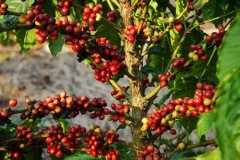
The process from fruit to raw coffee beans from harvest to delivery
A coffee tree can harvest 3-5 kg of fruit, and raw coffee beans account for 1. 5% of the fruit quality. Going from fruit to raw coffee beans is really a time-consuming and laborious task. Arabian, Robusta and Liberian Arabian coffee account for about 2% of the world's coffee production. The plant is not suitable for high temperature, low temperature, more rain and less rain. Coffee beans are oval and flat, with high quality
2015-08-24 Fruit coffee beans get delivery process one coffee tree can harvest 3-
Introduction of Flavor description treatment methods and Grinding degree in Mantenin Coffee producing area in Indonesia
Java, the oldest producing area, continues its reputation from the glory days of Indonesian coffee in the 18th century. Java coffee is still reminiscent of high-quality delicacy, when the most famous blend is Java coffee with Yemeni mocha. In addition, Java also has a very famous old coffee Aged coffee, or monsoon coffee Monsooned coffee. Sue
2016-09-27 Indonesia Mante coffee producing area flavor description treatment way method
The growth of a coffee bean from fruit to raw coffee bean
A coffee tree can harvest 3-5 kg of fruit, and raw coffee beans account for 1. 5% of the fruit quality. Going from fruit to raw coffee beans is really a time-consuming and laborious task. Arabian, Robusta and Liberian Arabian coffee account for about 2% of the world's coffee production. The plant is not suitable for high temperature, low temperature, more rain and less rain. Coffee beans are oval and flat, with high quality
2015-03-20 Fruit coffee beans one growth coffee tree can harvest 3-5 kg
The growing Environment and characteristics of Coffee trees
Coffee gives the public the impression that it is black, bitter and excited after drinking sleepless beverages. The coffee beans we see in the coffee shop are brown, roasted beans and amber. Coffee comes from coffee beans, which are harvested and processed from the fruits of coffee trees. Coffee trees grow at the center of the equator, south.
2015-02-11 Boutique coffee common sense growth environment characteristics public like black
Introduction to the flavor of Ugandan coffee beans, which is quite different from other East African countries in flavor characteristics.
Mbale on the eastern side of Mount Elgon and other producing areas on the western side near the border of the Democratic Republic of the Congo have the export name Wugar. The official ranks are Oaganic (Organic), Bugisu AA, Bugisu A, Bugisu B, Bugisu PB, Wugar, Drugar and other unlisted grades. To find a good Ugandan coffee, you must first recognize BugisuAA and A.
2016-06-28 Flavor characteristics East Africa others countries of origin differences large Uganda coffee beans medium
Sunburn treatment of Shumawa Manor in Costa Rica, is the Vera sa odd species Robusta or Elaraby?
Global coffee bean tree species are mainly divided into: Arabica and Canephora, of which Arabica coffee beans account for more than 100 coffee varieties of 70%80%coffee. The more common coffee varieties are: Arabica Arabica, with outstanding personality and unique flavor, is the main force of boutique coffee, mainly used in coffee shop management and high-end coffee market supply; Robsta
2016-04-22 Costa Rica Shumawa Manor Solar processing Vera Saatchi Robbs
The growth habits of coffee the distribution of coffee the three main types of coffee
Coffee trees grow in national farms in tropical or subtropical regions known as coffee belts centered at the equator and between latitudes of 25 degrees south and north. At present, coffee is produced in more than 60 countries, widely distributed in South America, Central America, the West Indies, Asia, Africa, Arabia, the South Pacific and Oceania. In terms of output, Brazil, which accounts for the first place in the world, accounts for about 30%; the second
2016-05-25 Coffee growth habit distribution three major species coffee tree growing equator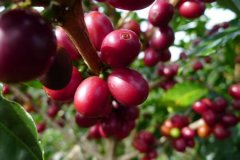
The process from fruit to raw coffee beans the basis of coffee beans
A coffee tree can harvest 3-5 kg of fruit, and raw coffee beans account for 1. 5% of the fruit quality. Going from fruit to raw coffee beans is really a time-consuming and laborious task. Arabian, Robusta and Liberian Arabian coffee account for about 2% of the world's coffee production. The plant is not suitable for high temperature, low temperature, more rain and less rain. Coffee beans are oval and flat, with high quality
2015-06-06 Fruit coffee beans process base one coffee tree can harvest 3-5 kg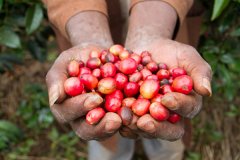
Growth Environment and characteristics of Coffee trees Coffee planting
Coffee gives the public the impression that it is black, bitter and excited after drinking sleepless beverages. The coffee beans we see in the coffee shop are brown, roasted beans and amber. Coffee comes from coffee beans, which are harvested and processed from the fruits of coffee trees. Coffee trees grow at the center of the equator, south.
2015-11-02 Coffee growth environment characteristics cultivation coffee mass like black bitter
Introduction of Ugandan Coffee beans with mild Climate and suitable for growing Coffee
Uganda is a landlocked country in eastern Africa, straddling the equator, bordering Kenya to the east, Tanzania and Rwanda to the south, the Democratic Republic of the Congo to the west and Sudan to the north. Most of the territory is located in the Central African Plateau, with lakes, with an average elevation of 1000,000,000 meters above sea level. There are many lakes and plateaus in the mountains, which are known as the water villages of the plateau. The western branch of the East African Rift Valley runs through the western border, with many rivers and lakes at the bottom of the valley. There is a Victor in Uganda.
2016-06-23 Climate mild suitable planting coffee Uganda coffee beans introduction Robbins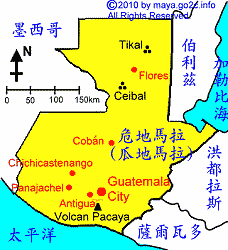
Is the Guava Plain Manor in the New Oriental region of Guatemala Robusta or Arabica?
Global coffee bean tree species are mainly divided into: Arabica and Canephora, of which Arabica coffee beans account for more than 100 coffee varieties of 70%80%coffee. The more common coffee varieties are: Arabica Arabica, with outstanding personality and unique flavor, is the main force of boutique coffee, mainly used in coffee shop management and high-end coffee market supply; Robsta
2016-04-22 Guatemala New Oriental producing areas Guava Plains Manor Robes Booth and
Tanzania coffee bean flavor taste manor area introduces the characteristics of Tanzanian coffee beans
The most interesting thing to talk about about Tanzanian coffee beans (hereinafter referred to as TZ) is Kilimanjaro AA, followed by PB. Come out of these, no matter how much introduction about TZ is really very few. When Pangu came out, in 1898, bourbon coffee was introduced by Catholic priests to the Kilimanjaro region of Tanzania. And then there's K.
2016-07-20 Tanzania coffee beans flavor taste manor producing area introduction characteristics about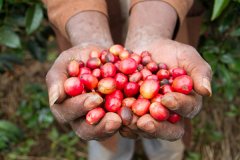
Three native species of coffee: Arabica, Robusta and Liberia
Coffee belongs to the evergreen shrub of the genus Rubiaceae, which is centered in the tropics. There are about 6000 species of Rubiaceae belonging to 500 genera. Coffee has always been considered to have certain effects, such as invigorating the stomach, waking up the brain, stopping bleeding, dissipating heat, strengthening the body and so on. There are about 40 species of coffee plants, but the only ones that can produce coffee beans of commercial value are Arabica, Robusta and Libby.
2015-11-02 Coffee three native rabbi card species Robbs booth Libby subspecies
Flavor and taste of Ugandan coffee beans the manor area introduces the types and taste of coffee beans.
Origin: Uganda product model: AA.A2.BP.B4.CS Organic Uganda Burkinsu uganda bugisu AA 18 mesh Uganda is a landlocked country in eastern Africa, across the equator, bordering Kenya in the east, Tanzania and Rwanda in the south, the Democratic Republic of the Congo in the west and Sudan in the north. Most of the territory is located in the Central African Plateau, with lakes, with an average elevation of 1000-1200 meters. There are many lakes and plateaus in the mountains.
2016-07-22 Uganda coffee beans flavor taste manor producing area introduction category and origin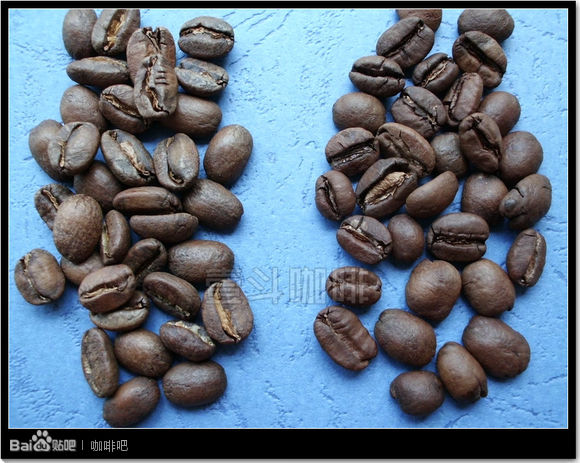
Does the Red Honey treatment of Fire Phoenix Manor in the Valley of Central Costa Rica be Robusta or Arabica?
Global coffee bean tree species are mainly divided into: Arabica and Canephora, of which Arabica coffee beans account for more than 100 coffee varieties of 70%80%coffee. The more common coffee varieties are: Arabica Arabica, with outstanding personality and unique flavor, is the main force of boutique coffee, mainly used in coffee shop management and high-end coffee market supply; Robsta
2016-04-22 Costa Rica Central Valley Fire Phoenix Manor Red Honey processing Robbs cloth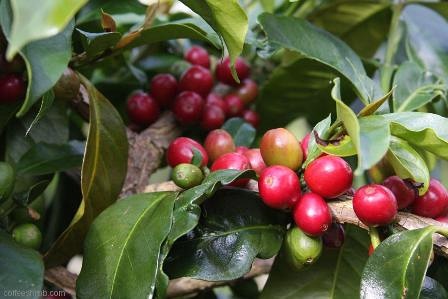
Is the washing of Tarazu Diamond Villa Garden in Costa Rica Robusta or Arabica?
Global coffee bean tree species are mainly divided into: Arabica and Canephora, of which Arabica coffee beans account for more than 100 coffee varieties of 70%80%coffee. The more common coffee varieties are: Arabica Arabica, with outstanding personality and unique flavor, is the main force of boutique coffee, mainly used in coffee shop management and high-end coffee market supply; Robsta
2016-04-22 Costa Rica Tara Pearl Diamond Stone Hill Manor Water washing Robes Booth or
Growing Environment and characteristics of Coffee trees with knowledge of Coffee planting
Coffee gives the public the impression that it is black, bitter and excited after drinking sleepless beverages. The coffee beans we see in the coffee shop are brown, roasted beans and amber. Coffee comes from coffee beans, which are harvested and processed from the fruits of coffee trees. Coffee trees grow at the center of the equator, south.
2014-11-26 Coffee knowledge coffee planting coffee trees
Characteristics of Iron pickup and bourbon varieties and treatment of Tarazhu Coffee beans in Costa Rica
Global coffee bean tree species are mainly divided into: Arabica and Canephora, of which Arabica coffee beans account for more than 100 coffee varieties of 70%80%coffee. The more common coffee varieties are: Arabica Arabica, with outstanding personality and unique flavor, is the main force of boutique coffee, mainly used in coffee shop management and high-end coffee market supply; Robsta
2016-04-22 Pickup or bourbon coffee beans price Costa Rica Tara pearl diamond stone mountain
Coffee carving skills the growth environment and characteristics of coffee trees
Coffee beans are fresh and green coffee raw beans, which are obtained by removing red pulp, peel and silver skin from coffee fruit. The structure of coffee fruit is composed of outer skin, pulp, endocarp, silver skin and seeds. The shape is oval, usually the fruit of coffee is composed of two oval seeds opposite each other, and the other side is flat, so it is called flat bean, but it is also made up of
2016-06-12 Coffee carving skills growth environment characteristics coffee beans coffee fruit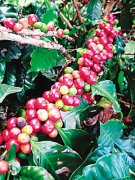
Coffee theory how much basic knowledge do you know about coffee?
Arabica is just a big division of the coffee tree pedigree. When it comes to the coffee tree pedigree, it is as long and complex as the genealogy, and the coffee beans produced by each different coffee tree have its own special flavor. At present, the three most important and productive coffee trees in the world are genealogies: Arabica, Robusta and Liberika. And it belongs to Arabica.
2016-05-31 Coffee theory know how much basic knowledge rabbi just coffee tree species spectrum