“Resistance” search results (2578)

What does the tree species of coffee look like?
The coffee beans we usually see are red fruits on trees, seeds without peel and pulp. It is a kind of plant, so there will naturally be different tree species, just as there are many kinds of apples. There are two main categories visible in the market: Arabica and Robusta (rough flavor, caffeine more than twice as high as Arabica, not a boutique coffee variety. But in recent years, India
2015-04-14 Coffee tree species what kind?
The Tree species of Coffee Han Huaizong teacher "Coffee"
The coffee beans we usually see are red fruits on trees, seeds without peel and pulp. It is a kind of plant, so there will naturally be different tree species, just as there are many kinds of apples. There are two main categories visible in the market: Arabica and Robusta (rough flavor, caffeine more than twice as high as Arabica, not a boutique coffee variety. But in recent years, India
2015-07-10 Coffee tree species Han Huaizong teacher coffee science
The species of coffee trees planted with coffee beans.
The coffee beans we usually see are red fruits on trees, seeds without peel and pulp. It is a kind of plant, so there will naturally be different tree species, just as there are many kinds of apples. There are two main categories visible in the market: Arabica and Robusta (rough flavor, caffeine more than twice as high as Arabica, not a boutique coffee variety. But in recent years, India
2015-01-27 Coffee tree species coffee beans planting species we usually see coffee raw beans
The planting of coffee trees
When tasting a single cup of coffee, you will see some information about the variety in addition to the country, region and geographical and climatic conditions. Such as Arabica, Robusta, Bourbon and so on.
2014-07-22 Coffee knowledge coffee trees coffee cultivation coffee encyclopedia
Bolivia Coffee Bean planting Environment Manor production area introduces Yonka, northeast of La Paz, snow vein manor.
Bolivia not only has a unique growing environment, but also has an excellent coffee variety Typica. In the past two hundred years, the main variety of coffee in Yanggas area is the ancient Tibica. Tibica coffee has a balanced and soft flavor, with lively aroma and rich sour taste. Unfortunately, the low production of Tibika and its poor disease resistance make Bolivia's
2016-07-04 Bolivia coffee beans planting environment manor producing area introduction snow vein La Paz
99% of people drink coffee at the wrong time.
Sleepy-eyed to the office, do you want to have a cup of coffee to cheer you up? But is this really the right time? Often drink coffee at the wrong time, but also produce drug resistance?! Many friends say, I love coffee, the first thing I do when I get up is to drink coffee! But today! Coffee gentleman wants to make you more knowledgeable, the first thing to do when you get up is: open your eyes! Open your eyes, okay?! Ha ha! Get to the point
2015-08-05 99% all in wrong time coffee sleep dim walk to the company right?
Arabica beans-- A family "genealogy" like rising day and moon
Arabica, (scientific name Coffea arabica, Coffee Arabica), also known as Arabica coffee, is an indigenous species of coffee grown on the Abyssinia Plateau of Ethiopia (present-day Ethiopian Plateau). According to textual research, it is the first artificially cultivated coffee variety in the world, one of the most important coffee tree species, and occupies the global coffee.
2014-08-29 Arabica bean
Strong acid-rich Kenyan coffee flavor manor introduction Berman manor
This Kenyan native species was created by Scott Laboratories in 1930, known as SL for short. Agronomists wanted to find a kind of bourbon with high yield and resistance to diseases and insect pests, and obtained SL28 through experiments. SL28 is a genetic variant with a mixed pedigree of French missionaries, mochas and Yemens Tibica. The goal of breeding SL28 was to produce both in large quantities and in large quantities.
2016-07-05 Strong rich sour Kenya coffee flavor taste manor introduction Berman
Small coffee Coffea arabica Linn Arabica coffee
Small coffee Coffea arabica L. Coffea arabica Linn. Sp. Pl. one hundred and seventy two。 1753; A. Cheval. Op. Cit. 196; A. E. Haarer, op. Cit. 13; Flora of Hainan 3: 349. 1974; Atlas of higher plants in China 4: 285, figure 5929. 1975; Tree Map of Yunnan, Volume 2: 1151. 1991. Small trees or large shrubs, 5-8 m tall
2014-06-30 Small coffee beans Arabica coffee boutique coffee beans
Soft acidity and citrus flavor of Yega Chefevoca Coffee Manor
Bake the medium-deep baked Yirgacheffe over low heat for 17 minutes, turn off the heat and glide for half a minute, then cool the beans and blow off the silver skin. there is a slight oil on the surface of the coffee beans and the beans are black and brown. The beans are very light, and the resistance is very high when using hand coffee grinding.
2016-09-18 Soft sour citrus Yega Sheffield Waka coffee flavor taste manor
Introduction to the flavor and taste of Bolivian coffee manor the origin of Bolivian coffee beans in Xuemai manor
Bolivia not only has a unique growing environment, but also has an excellent coffee variety Typica. In the past two hundred years, the main variety of coffee in Yanggas area is the ancient Tibica. Tibica coffee has a balanced and soft flavor, with lively aroma and rich sour taste. Unfortunately, the low production of Tibika and its poor disease resistance make Bolivia's
2016-07-21 Bolivia coffee manor producing area flavor taste introduction snow vein coffee beans
How many varieties of coffee beans are there?
1. Typica: the oldest native variety of Ethiopia (birthplace of coffee), with elegant flavor, weak physique, poor disease resistance and low yield. the well-known Mantenin in Indonesia, Blue Mountain in Jamaica, elephant beans in Cuba, Hawaii Kona, Yunnan small grains, geisha, etc., are all derived varieties of Ironpickup, which are large, pointed oval or thin.
2016-05-31 Coffee beans variety how many pickup Typica Esso Pia coffee
Four principles to be followed by Espresso
(1) the quantity of coffee beans must be standard, generally 14-16 grams per cup, using good quality deep-roasted coffee beans. (2) the grinding powder should be of appropriate particle size, not too coarse or too fine. Coffee beans are too coarse or too fine to make thick and delicious espresso. When the coffee powder is too coarse, the gap in the filter bowl is too big, the resistance to water is not enough, and the coffee flow rate is too fast, which is easy to cause extraction.
2014-08-26 Coffee knowledge Espresso principles to follow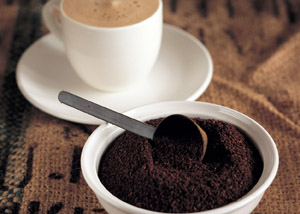
Washed coffee beans in America introduction to Costa Rican goddess manor coffee beans
Produce organic fertilizer that can enhance the disease resistance of coffee, and the soil is suitable for California earthworms. When the coffee fruit is ripe, it is picked by hand, and only the ripe red-purple berries are picked. The processing method of raw coffee beans is washed with water, which is treated at a very unique constant temperature. The degree of fermentation makes the clarity and complexity of coffee get an excellent balance, and its flavor shows better stability. Geisha (roses)
2016-06-20 America washing coffee beans Costa Rica goddess manor introduction production increase
Introduction of Berman Manor in the Central Mountain area of Nyeri
The high concentration of phosphoric acid soil in Kenya gives birth to the special sour spirit of Kenyan beans, which is different from bourbon beans in Central and South America. This Kenyan native species was created by Scott Laboratories in 1930, known as SL for short. Agronomists wanted to find a kind of bourbon with high yield and resistance to diseases and insect pests, and obtained SL28 through experiments. SL28 owns France as a genetic variant.
2016-07-04 Kenya coffee producing areas introduction Nyeri Central Dashan region Berman
Introduction of Bolivian Coffee Flavor Manor with unique planting Environment
Bolivia not only has a unique growing environment, but also has an excellent coffee variety Typica. In the past two hundred years, the main variety of coffee in Yanggas area is the ancient Tibica. Tibica coffee has a balanced and soft flavor, with lively aroma and rich sour taste. Unfortunately, the low production of Tibika and its poor disease resistance make Bolivia's
2016-07-13 Ownership unique planting environment Bolivia coffee flavor taste manor
4 principles to follow when making a cup of Espresso
(1)The amount of coffee beans must be standard, generally 14-16 g/cup, using high-quality deep-roasted coffee beans. (2)The grinding powder shall be selected with appropriate particle size, not too coarse or too fine. Coffee beans are ground too coarse or too fine to make thick and delicious espresso coffee. When the coffee powder is ground too coarse, the coffee gap in the filter bowl is too large, the resistance to water is not enough, and the coffee flow is too fast, which is easy to cause extraction.
2015-04-16 Make One Cup Espresso Follow Four Principles
The best coffee in the world
When tasting single-origin coffee, you will see some information about the variety in addition to the country of origin, production area and geographical and climatic conditions. Arabica, Robosta, Bourbon, etc. For coffee flavor, of course, the difference in the production area is relatively large. Variety differences become interesting when discussing the variety of beans produced in the same region.
2014-11-19 Coffee knowledge Fine coffee learning Coffee varieties
Introduction of Arabica coffee VS Robusta coffee
Arabica species VS Robusta species as a crop, tree species and planting environment are the basic factors for the good ring of coffee beans. At present, the coffee beans in circulation in the coffee market are Arabica (Coffea Arabica) or Robusta (Coffea Robusta). Generally speaking, Arabica coffee trees have fragile vitality and low resistance to diseases and insect pests.
2015-11-09 Introduction boutique coffee rabbi card seed Robbs booth Rob
Coffee Coffee Coffee introduction to Arabica species
Arabica species VS Robusta species as a crop, tree species and planting environment are the basic factors for the good ring of coffee beans. At present, the coffee beans in circulation in the coffee market are Arabica (Coffea Arabica) or Robusta (Coffea Robusta). Generally speaking, Arabica coffee trees have fragile vitality, low resistance to diseases and insect pests, and requirements for planting environment.
2015-06-12 Coffee classification boutique introduction rabbi card species Robbins Booth