“North Africa” search results (1000)

Tanzania Coffee Flavor description, Grinding degree treatment, Price introduction of Fine Coffee beans
Coffee growing areas in Tanzania, Africa, coffee is produced in the soil-rich East African Rift Valley and is an outstanding representative of high-quality coffee from this region. Its refreshing acidity and medium mellowness complement sweet citrus and floral aromas. This coffee tastes great whether it's a hot drink or iced coffee. Paired with oranges or berries, it highlights the bright flavor of Mount Kiliman.
2016-10-15 Tanzania coffee flavor description grinding processing price boutique coffee beans
Introduction to the flavor and taste of Ethiopian Yega Snow Fay Adordo Coffee, which is not strong in import.
In February 1977, Lieutenant Colonel Mengistu Haier Maryam (MENGISTU HAILE MARIAM) launched a military coup and served as Chairman of the interim military Administrative Council and head of State. In 1979, the Ethiopian Labor people's Party Organization Committee, dominated by soldiers, was established to implement an one-party system. In 1984, the Ethiopian Workers' Party was formed according to the Soviet Communist Party model. Mengistu, September 1987
2016-09-08 Entrance strong Ethiopia Yega Sheffield Duoduo coffee flavor taste
The world's major coffee producing areas introduce the basic knowledge of fine coffee coffee beans represented by all continents
Coffee comes from coffee beans, which are harvested and processed from the fruit of trees. Coffee trees grow at the center of the equator, between latitudes of 25 degrees south and north, and are called the homes of tropical or subtropical countries called coffee belts. At present, there are about 60 coffee-producing countries. Coffee is produced in South America, Central America, the West Indies, Asia, Africa, Arabia, the South Pacific and
2016-04-29 World main coffee producing area introduction boutique knowledge continent representative
Coffee planting conditions
The origin of the coffee tree is Ethiopia in Africa. In botany, coffee trees belong to the evergreen trees of the subgenus Rubiaceae, and coffee beans, commonly known as coffee beans, are the seeds of the fruit of coffee trees, just because they are shaped like beans, so they are called coffee beans. Climate is the decisive factor for coffee cultivation. Coffee trees are only suitable for growing in the tropics or subtropics, so latitude 25 is south and north.
2016-06-04 Coffee cultivation conditions coffee origin Africa Ethiopia botany genus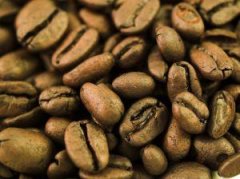
Where is the basic knowledge of boutique coffee?
Coffee trees grow in tropical or subtropical agricultural gardens centered around the equator and called coffee belts. Most of the coffee production is between the Tropic of Cancer, 25 degrees north of the tropical or subtropical equator and 30 degrees south of the equator. An area with an annual average temperature of 16-25 degrees Celsius, no Frosts Descent and rainfall of 1600-2000 mm. At present, coffee is mainly produced by seven countries.
2015-03-04 Boutique coffee basic knowledge where tree grow equator center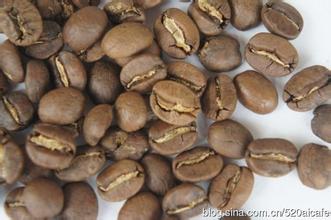
Zimbabwe coffee beans from Africa have a soft and smooth taste with rich fruity flavor.
Coffee cultivation in Zimbabwe (Zimbabwe) began relatively recently, in the 1960s, when farmers in southern Africa set up coffee plantations. Coffee cultivation in Zimbabwe is mainly concentrated in the eastern highlands near Mozambique, mainly by the Chimanimani Mountains and the northward Nyanga Mountains.
2015-12-31 Africa producing areas Zimbabwe coffee beans with taste smooth rich
Coffee common sense what is a coffee belt (COFFEE WORLD MAP)
Coffee trees grow in tropical or subtropical agricultural gardens centered around the equator and called coffee belts. Most of the coffee production is between the Tropic of Cancer, 25 degrees north of the tropical or subtropical equator and 30 degrees south of the equator. An area with an annual average temperature of 16-25 degrees Celsius, no Frosts Descent and rainfall of 1600-2000 mm. At present, coffee is mainly produced by seven countries.
2014-11-11 Coffee knowledge coffee common sense coffee belt
Introduction to the birthplace of coffee in Africa-birthplace of Robusta, Uganda
Uganda is the birthplace of Robusta in Africa, just as Ethiopia is the birthplace of Arabica coffee, which was first found in Uganda. So far, Uganda has a history of growing coffee for more than 100 years. The output ranks second in Africa, after Ethiopia. At the same time, Uganda is one of the few major countries in Africa dedicated to the production of organic coffee. Wu
2016-06-21 Africa Coffee Origin introduction Uganda Robbs Booth
Introduction to the honey-like sweet aroma of Ethiopia's Yega Sheffield Adorto Coffee Flavor Manor
In February 1977, Lieutenant Colonel Mengistu Haier Maryam (MENGISTU HAILE MARIAM) launched a military coup and served as Chairman of the interim military Administrative Council and head of State. In 1979, the Ethiopian Labor people's Party Organization Committee, dominated by soldiers, was established to implement an one-party system. In 1984, the Ethiopian Workers' Party was formed according to the Soviet Communist Party model. Mengistu, September 1987
2016-09-03 Honey aroma Ethiopia Yega Sheffield blossoming coffee flavor taste
Introduction to the flavor and taste characteristics of Burman Manor Coffee Manor in Kenya
Kenya is 5.82646 billion square kilometers across the equator, bordered by Somalia to the east, Ethiopia and the Republic of South Sudan to the north, Uganda to the west and Tanzania to the south. The southeast is bordered by the Indian Ocean, with a coastline of 536 kilometers. [3] the coastal areas are plains, and most of the rest are plateaus with an average elevation of 1500 meters. Kenya's highest peak in the East African Rift Valley, Kenya.
2016-08-11 Taste rich beautiful Kenny Abel manor coffee producing area flavor characteristics
Introduction to the flavor and taste characteristics of Ethiopian coffee manor with soft acidity
There are mainly mountain plateaus in Ethiopia, and the central and western regions are the main part of the plateau, accounting for 2% of the whole territory. The East African Rift Valley runs through the whole territory, with an average elevation of nearly 3000 meters, which is known as the roof of Africa. The terrain around the plateau is gradually declining. The Darol depression in the north fell to 113 meters below sea level, the lowest point in the country. A narrow banded plain along the coast of the Red Sea
2016-08-16 Acidity softness Ethiopia coffee manor producing area flavor taste characteristics
Basic knowledge of boutique coffee definition of coffee belt
Most of the coffee production is between the Tropic of Cancer, 25 degrees north of the tropical or subtropical equator and 30 degrees south of the equator. An area with an annual average temperature of 16-25 degrees Celsius, no Frosts Descent and rainfall of 1600-2000 mm. At present, coffee is mainly produced in more than 70 countries. The Big self is located at an altitude of 300,400m, sometimes between 2000 and 2500 meters above sea level.
2014-12-30 Boutique Coffee Basics definition place of production most Equator Beihui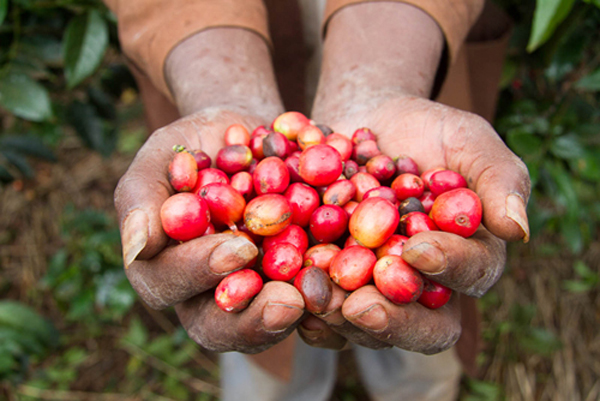
The most detailed introduction to coffee beans in the world. Coffee beginners must see the knowledge points
Coffee comes from coffee beans, which in turn are harvested and processed from the fruits of trees. Coffee trees grow at the equator as the center, between 25 degrees north and south latitude, known as the coffee belt tropical or subtropical countries home, coffee production countries currently have about more than 60 countries, coffee production in South America, Central America, West Indies, Asia, Africa, Arabia, South Pacific and
2015-12-02 world coffee beans most detailed detailed introduction beginner coffee must-see knowledge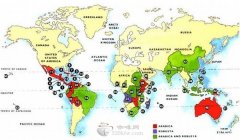
Coffee belt coffee trees grow at the center of the equator
Coffee trees grow in tropical or subtropical agricultural gardens centered around the equator and called coffee belts. Most of the coffee production is between the Tropic of Cancer, 25 degrees north of the tropical or subtropical equator and 30 degrees south of the equator. An area with an annual average temperature of 16-25 degrees Celsius, no Frosts Descent and rainfall of 1600-2000 mm. At present, coffee is mainly produced by seven countries.
2014-09-13 Coffee knowledge coffee belt coffee tree growth
Boutique Coffee Science detailed explanation of Coffee Belt (COFFEE WORLD MAP)
Coffee trees grow in tropical or subtropical agricultural gardens centered around the equator and called coffee belts. Most of the coffee production is between the Tropic of Cancer, 25 degrees north of the tropical or subtropical equator and 30 degrees south of the equator. An area with an annual average temperature of 16-25 degrees Celsius, no Frosts Descent and rainfall of 1600-2000 mm. At present, coffee is mainly produced by seven countries.
2014-10-18 Coffee knowledge boutique coffee science coffee belt
Explanation of some coffee terms (end)
Tannin: commonly known as (tannin acid), it is simply the source of the astringency of coffee. Excessive extraction can be particularly marked by the production of tannins. Tannins can promote gastric juice secretion and eliminate free radicals. Free radicals: free radicals, harmful compounds produced in the oxidation of the body, with strong oxidation, can damage the tissues and cells of the body, and then cause chronic diseases and aging effects.
2014-08-22 Coffee knowledge coffee words
Coffee Belt (COFFEE WORLD MAP) Coffee trees grow around the equator
Coffee trees grow in tropical or subtropical agricultural gardens centered around the equator and called coffee belts. Most of the coffee production is between the Tropic of Cancer, 25 degrees north of the tropical or subtropical equator and 30 degrees south of the equator. An area with an annual average temperature of 16-25 degrees Celsius, no Frosts Descent and rainfall of 1600-2000 mm. At present, coffee is mainly produced by seven countries.
2015-09-12 Coffee COFFEE WORLD MAP tree longer than equator for
Soft acidity of Tanzanian coffee flavor taste manor characteristics of boutique coffee beans
Over the years, China has helped Tanzania implement a large number of economic aid projects, the most famous of which is built by Chinese capital, personnel and technology. Imports from China already account for 15% of Tanzania's total imports. China is playing a more and more important role in the future development of Africa. China's assistance to the economic development of Tanzania is a good example. I believe that in the near future
2016-08-09 Soft acidity Tanzania coffee flavor taste manor producing area characteristics essence
Who invented coffee flavor wheel? the origin of coffee flavor wheel?
The Africans invented it! Coffee is native to Ethiopia. It was used as a beverage in North Africa and West Asia for hundreds of years before it was introduced into Europe in the 17th century. Coffee plantations have been set up in all hot and humid parts of the world, and coffee has become a popular drink. But it takes a lot of days to make a pot of delicious coffee. Coffee beans must be ground into fine powder. Preferably more.
2015-11-09 Coffee flavor invention origin African coffee produced in Ethiopia
Taste of Tanzanian Coffee with Sweet Flavor introduction to Fine Coffee in Manor
Tanzania covers an area of 945087 square kilometers, of which Zanzibar is 2657 square kilometers. It consists of the mainland, Zanzibar and more than 20 small islands. Located in eastern Africa and south of the equator, the continent is bounded by the Indian Ocean to the east, Zambia, Malawi and Mozambique to the south, Rwanda, Burundi and the Democratic Republic of the Congo to the west, and Kenya and Uganda to the north. The coastline of the mainland is 840 kilometers long. [5
2016-09-01 Sweet fragrant Tanzania coffee flavor taste manor producing area characteristics