“Liberia” search results (547)
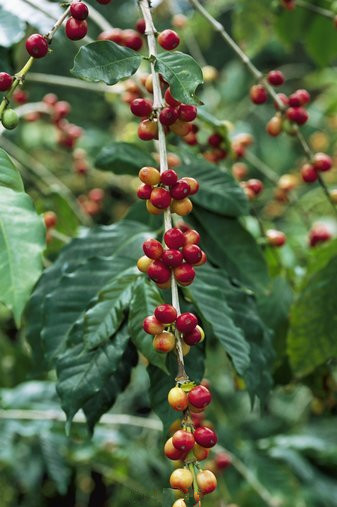
Coffee terminology introduces Arabica species (coffee arabica)
Arabica species (coffee arabica): together with Robsta species and Leiberia species, they are called the three primary species of coffee. Native farming is Ethiopia. It has the best quality among the three original species. It is mainly planted in the highlands.
2015-02-25 Coffee terminology introduction rabbi card coffee arabica
Introduction to Librika Coffee beans
Liberica coffee beans: large shrubs or small trees, 6-15 m tall; dark brown bark; branches spreading, hard and straight. Leaves opposite, leathery, elliptic or Obovate-elliptic, 15-30 cm long, tip mucronate, base broadly cuneate, margin entire, rarely microwave, often with small pores in lower vein axils; petiole 8-20 mm long; stipules broadly triangular, 3-4 mm long, tip obtuse, rarely convex
2015-04-16 Libby Rika coffee beans boutique introduction shrubs Joe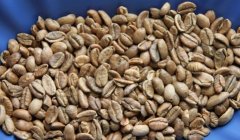
Produced in Hainan, China: Liberica coffee beans
Liberica coffee beans: large shrubs or small trees, 6-15 m tall; dark brown bark; branches spreading, hard and straight. Leaves opposite, leathery, elliptic or Obovate-elliptic, 15-30 cm long, tip mucronate, base broadly cuneate, margin entire, rarely microwave, often with small pores in lower vein axils; petiole 8-20 mm long; stipules broadly triangular, 3-4 mm long, tip obtuse, rarely convex
2015-06-01 China Hainan Libby Rika Coffee beans shrubs Joe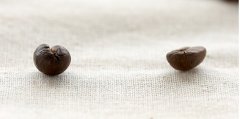
Geisha Coffee Coffee extract from Elaraby Cafe and Busta Pink Coffee
Elaraby and Busta Arabica and Arabica account for 2/3 of the world's coffee production. Growing up in high, low, rainy and rainy areas, beans are shoulder-flat, characterized by fragrance and good quality. "Busta" is bitter but not sour, and the smell is not very good, so it is mixed into coffee. Yes.
2016-04-18 Rabbi Zucca Busta cloth Powder Coffee geisha extract pull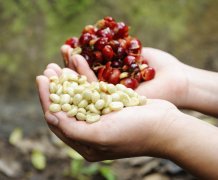
What are the three primary beans of coffee?
Coffee is mainly divided into three categories: Arabica (Arabica), Robusta (Robusta) and Liberia (Liberica), but Arabica and Robsta are mostly in circulation in the market. No matter what it is, it has its advantages and disadvantages, and its purpose and use are not the same. There are about 40 species of coffee plants, but only coffee beans with commercial value can be produced.
2016-05-06 Coffee three big native what coffee main divided into big category rabbi card species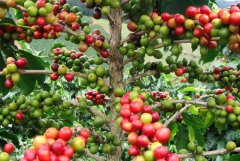
One of the original varieties of Libyan coffee beans
The Liberian species (scientific name Coffea liberica) West Africa is the origin of Liberian coffee. It has a strong adaptability to high or low temperature, humidity or dry environment, but it is not resistant to leaf rust and its flavor is worse than that of Arabica, so it is only traded or planted in some West African countries (Libya, C ô te d'Ivoire, etc.).
2016-05-06 Libya Coffee beans Coffee Native Variety one Libby subspecies Scientific name C.
Guatemala-Vivette Nango
Guatemalan coffee is deeply bitter and fragrant. The coffee produced in the highland is mellow and has a good sour taste. It is well received and is the best material for blended coffee. Coffee variety: Arabica (Arabica): accounts for 85% of total coffee production, including Brazil, Colombia, Guatemala, Ethiopia and so on. Beans are turquoise, beans are thin and have special fragrance and sweetness
2016-06-03 Guatemala Viv Tenan coffee depth fragrance mouth
Introduction of bitter, fragrant and delicious Guatemalan coffee
Bitter and fragrant, taste good highland coffee mellow and with a good sour taste, well received, is the best material for mixed coffee. Coffee variety: Arabica (Arabica): accounts for 85% of total coffee production, including Brazil, Colombia, Guatemala, Ethiopia and so on. Beans are turquoise, beans are thin, have special aroma and sweet acid, and are mixed with other coffee
2016-06-18 Fragrant taste Guatemala coffee introduction fragrance high real estate real estate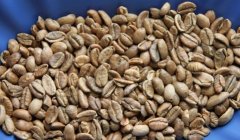
China Hainan Coffee Beans Librika Coffee Beans
Coffee beans: large shrubs or small trees, 6-15 m tall; bark dark brown; branches spreading, hard and straight. Leaves opposite, leathery, elliptic or obovate-elliptic, 15-30 cm long, apex mucronate, base broadly cuneate, margin entire, rarely wavy, often with pits in lower vein axils; petiole 8-20 mm long; stipules broadly triangular, 3-4 mm long, apex obtuse, rarely convex
2014-11-11 Coffee knowledge China Hainan coffee beans Liberica coffee beans
Bitter, fragrant, delicious Guatemalan coffee introduces Ladisha Manor
Guatemalan coffee is deeply bitter and fragrant. The coffee produced in the highland is mellow and has a good sour taste. It is well received and is the best material for blended coffee. Coffee variety: Arabica (Arabica): accounts for 85% of total coffee production, including Brazil, Colombia, Guatemala, Ethiopia and so on. Beans are turquoise, beans are thin and have special fragrance and sweetness
2016-06-27 Fragrant taste Guatemala coffee introduction Larty manor
Introduction of bitter, fragrant and delicious Guatemalan coffee beans
Bitter and fragrant, taste good highland coffee mellow and with a good sour taste, well received, is the best material for mixed coffee. Coffee variety: Arabica (Arabica): accounts for 85% of total coffee production, including Brazil, Colombia, Guatemala, Ethiopia and so on. Beans are turquoise, beans are thin, have special aroma and sweet acid, and are mixed with other coffee
2016-06-27 Fragrant taste Guatemala coffee beans introduction fragrance high real estate real estate
Coffee botany knowledge
The botanical description of coffee is: "Coffee is Rubiaceae, coffee, evergreen shrubs or small trees."
2014-06-12 Coffee knowledge Coffee botany Coffee encyclopedia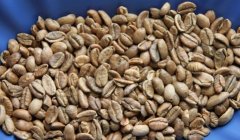
Liberica coffee beans made in Hainan, China
Liberica coffee beans: large shrubs or small trees, 6-15 m tall; dark brown bark; branches spreading, hard and straight. Leaves opposite, leathery, elliptic or Obovate-elliptic, 15-30 cm long, tip mucronate, base broadly cuneate, margin entire, rarely microwave, often with small pores in lower vein axils; petiole 8-20 mm long; stipules broadly triangular, 3-4 mm long, tip obtuse, rarely convex
2015-10-13 Libby Rika Coffee beans China Hainan Origin Irrigation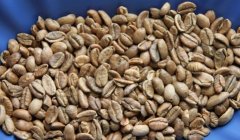
China Hainan boutique coffee beans Liberica coffee beans
Liberica coffee beans: large shrubs or small trees, 6-15 m tall; dark brown bark; branches spreading, hard and straight. Leaves opposite, leathery, elliptic or Obovate-elliptic, 15-30 cm long, tip mucronate, base broadly cuneate, margin entire, rarely microwave, often with small pores in lower vein axils; petiole 8-20 mm long; stipules broadly triangular, 3-4 mm long, tip obtuse, rarely convex
2014-12-28 China Hainan boutique coffee beans Libby Rika irrigation
The planting temperature of coffee tree is between 15 degrees and 25 degrees.
The origin of the coffee tree is Ethiopia in Africa. In botany, coffee trees belong to the evergreen trees of the subgenus Rubiaceae, and coffee beans, commonly known as coffee beans, are actually the seeds of the fruit of coffee trees. They are called coffee beans only because they are shaped like beans. Climate is the decisive factor for coffee cultivation. Coffee trees are only suitable for growing in the tropics or subtropics, so latitude 25 degrees south and north.
2015-10-07 Coffee planting condition temperature between 15 degrees -25 degrees between coffee
The botany of fine coffee.
Coffee is a kind of Rubiaceae. The classification of coffee plants is very complex, and there are many variants and strains. Two of the most representative and commercially practical coffee are Arabica coffee and Canifra coffee, both of which have a large number of varieties. The coffee variety, also known as Robusta, is a high-yield variant of Canifula coffee. Other kinds of coffee trees
2014-10-16 Coffee knowledge boutique caffeine coffee botany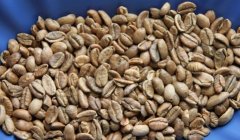
China's boutique coffee beans Hainan produces libirika coffee beans
Liberica coffee beans: large shrubs or small trees, 6-15 m tall; dark brown bark; branches spreading, hard and straight. Leaves opposite, leathery, elliptic or Obovate-elliptic, 15-30 cm long, tip mucronate, base broadly cuneate, margin entire, rarely microwave, often with small pores in lower vein axils; petiole 8-20 mm long; stipules broadly triangular, 3-4 mm long, tip obtuse, rarely convex
2014-09-29 Coffee knowledge Chinese coffee beans Hainan coffee beans Liberica coffee beans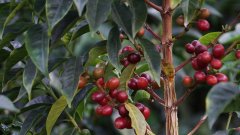
Types and characteristics of Coffee trees knowledge about Coffee trees
A single coffee tree but in places where coffee is artificially planted, people cut off the branches at the top of the coffee tree when it grows to three meters high, so that the coffee tree does not grow too high, so that it can be picked during harvest. According to the botanical classification, the coffee tree belongs to the domain: eukaryotic domain, Eukaryote kingdom: plant kingdom, Plantae phylum: angiosperm phylum, Magnoliophyta class.
2016-05-14 Coffee species characteristics about knowledge individual plant coffee is planted artificially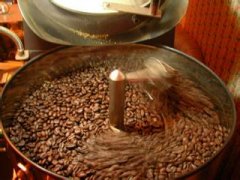
The planting conditions of high-quality coffee beans and common sense coffee trees
The origin of the coffee tree is Ethiopia in Africa. In botany, coffee trees belong to the evergreen trees of the subgenus Rubiaceae, and coffee beans, commonly known as coffee beans, are actually the seeds of the fruit of coffee trees. They are called coffee beans only because they are shaped like beans. Climate is the decisive factor for coffee cultivation. Coffee trees are only suitable for growing in the tropics or subtropics, so latitude 25 degrees south and north.
2015-02-25 Boutique coffee beans common sense coffee planting conditions origin Africa Egypt
Knowledge of coffee botany
There are more than 60 kinds of coffee, but there are roughly two varieties of coffee grown commercially on a large scale, one is Arabica, accounting for about 70 percent of the world's coffee planting area, and the other is Robasta, accounting for about 30 percent of the world's coffee planting area.
2014-07-04 Knowledge of coffee encyclopedia of coffee botany