“Learn” search results (2947)
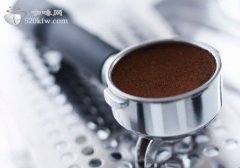
Learn about coffee grounds
The wonderful use of coffee grounds: there are many people will use the oven to bake delicious bar, the oven after many times, the inside has been greasy, strange smell mixed, take a plate of coffee grounds baked in the oven, that is, can effectively remove the residual smell of food in the oven
2014-08-21 Understand coffee magic use a lot of people can use oven baking delicious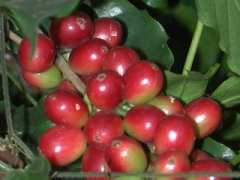
Learn about coffee fruits
I took some pictures of coffee fruits. Share it.
2014-08-29 Coffee fruit coffee fruit production coffee encyclopedia
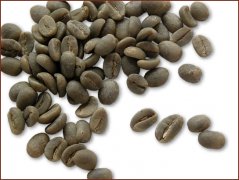
Learn about Mavis bank Peaberry of raw beans in Blue Mountain Garden, Jamaica.
Jamaica Blue Mountain Mavis bank green beans Peaberry raw beans only about 2% of Blue Mountain coffee producing Peaberry, to buy this kind of coffee beans depends on time and luck. Be careful to take a sip of coffee, temporarily can not find more words to describe, only think of two words: perfect. The taste of Peaberry is enhanced in terms of bitterness and astringency, generally in the Blue Mountains.
2014-09-05 Raw beans in Blue Mountain Garden Jamaica
Learn how to operate coffee cups
Upping is the process of tasting coffee in a professional way and making an evaluation, which is often referred to as cupping. Cup test is the best way to taste the original taste of coffee beans, is the basis for understanding coffee beans, but also the basis for comprehensive bean blending
2014-10-11 Coffee knowledge Fine coffee learning Coffee cup testing
Fine Coffee Learn Global Coffee Production Zone
That is, coffee production zone, between 25 degrees north latitude to 30 degrees south latitude, including central, west Africa, central Southeast Asia, the Pacific Ocean, Latin America, the Caribbean Sea many countries. Global coffee cultivation is concentrated in this belt because of temperature constraints. Coffee trees are very vulnerable to frost damage, latitude north or south is not suitable, only tropical areas are suitable, the heat of this area
2014-10-11 Coffee knowledge Fine coffee learning Coffee belt Coffee production belt
Fine coffee learn why pure coffee is bitter.
Thomas Hoffman of the University of Science and Technology in Munich, Germany, and his colleagues broke up with the brewed coffee again. After operating mass spectrometer analysis, Hoffman dissected one of its molecules, chlorogenic acid lactone, which is the differentiation product of chlorogenic acid (found in almost all plants). Hoffman's team then equipped a series of divergent coffees and measured them separately.
2014-10-13 Coffee knowledge boutique coffee pure coffee
Learn about coffee knowledge collection
Brazil (South America) Santos Coffee: The taste is mellow, neutral, can be boiled directly, or mixed with other types of coffee beans, it is also a good choice. II. Colombia (South America) Mantenin: Rich and solid in taste, with a pleasant sour taste. Aroma mellow, moderate acidity, rich sweetness is very interesting, suitable for deep baking, exudes a thick
2014-10-14 Coffee knowledge coffee knowledge fine coffee learning
High-quality coffee to learn what is old coffee
Traditional coffee is generally shipped to consumer countries, and adventurous trips sometimes take months, so that the coffee is exposed to very hot and humid cabins, giving it a different flavor, which is what we call old coffee. In recent years, old coffee or old coffee has been kept in the warehouse for some years. This ripening process causes the acidity of coffee beans to decrease and the viscosity to increase.
2014-10-15 Coffee knowledge boutique coffee aged coffee
Boutique coffee learn what is chicory coffee
Chicory, an evergreen plant from Europe, was brought to North America in 1700. Fresh young leaves can be used for raw food in salads, while old leaves are bitter and can be boiled in water and eaten. But it is famous for its close relationship with coffee, which was once difficult to obtain or expensive in history. In these days, people usually roasted chicory as coffee.
2014-10-15 Coffee knowledge boutique coffee chicory coffee
Boutique coffee learn what is wet coffee
This kind of coffee is peeled and separated from the pulp when the beans are still wet. Most of the world's most famous coffee is wet-processed to strengthen its acidity. In traditional wet processing, the coffee skins are separated and the peeled coffee beans are placed in a container so that the enzyme loosens the sticky peel or mucus (fermentation), and the loose fruit is then washed off (washed).
2014-10-15 Coffee knowledge boutique coffee wet coffee
Boutique coffee learn what is pea coffee
Pea-shaped coffee beans (also known as Caracol) are small, round, bean-shaped fruits, usually shaped in two halves, but this bean is a whole, growing in the center of the coffee fruit. Pea coffee beans are usually separated from ordinary beans and sold as distinct coffee beans. They are popular in Japan at high prices.
2014-10-15 Coffee knowledge boutique coffee pea coffee
Fine Coffee learn what Shadow Coffee is
Shaded coffee is coffee that grows in the shade of the awning (shade is formed by local mixed trees). Traditional Arabica coffee grows in shady places in Mexico, Central America, Colombia, Peru and Venezuela and other countries of the world, including India and Indonesia, as well as many parts of Africa. Other Arabica coffee grows in sunny or near-sunny areas. Because of this
2014-10-15 Coffee knowledge boutique caffeine shadow coffee
Fine Coffee Learn the wonderful use of coffee grounds you didn't know
1. Remove odor from refrigerator; 2. Reduce fat; 3. Remove smell from hands; 4. Make nutritious compost; 5. Make hair more shiny; 6. Use as a natural dye; 7. Keep fireplaces clean; 8. Remove dead skin; 9. Drive away ants; 10. Keep your garden free from cats; 11. Repellent fleas; 12. Repair furniture scratches; 13. Use as a car air freshener.
2014-10-17 Coffee knowledge Fine coffee science Coffee grounds effect
Boutique coffee learn the taste map of coffee
Taste map: with regard to taste map, coffee and red wine are often used in tasting. Taste refers to the ability to sense the taste of substances, including the taste of food, certain minerals and toxic substances, which is close to the sense of smell, which is also chemically induced.
2014-10-23 Coffee knowledge boutique caffeine taste map
Fine Coffee Learn Coffee Origin Suriname
Suriname was the first country in South America to grow coffee, and Norway was once a major importer of coffee products from Suriname. Today, however, the country produces very little and is mentioned here only for historical reasons. The Dutch, who settled Suriname in 1667, introduced coffee trees from Java in the early 18th century. The first coffee trees were donated by the mayor of Aspen to a
2014-10-23 Coffee knowledge Fine coffee learning Coffee origin Suriname
Fine Coffee Learn Coffee Origin Ecuador
Probably the highest arabica coffee growing country in the world. Arabica coffee trees were first introduced to Ecuador in 1952, and their coffee quality is very good, especially when harvested in early June. Ecuadorian coffee beans can be divided into Galapagos (Galapagos) and Gigante (Gigante) two varieties, both have large particles, heavy portions of characteristics. Ecuadorian coffee by quality
2014-10-23 Coffee knowledge Fine coffee learning Coffee origin Ecuador