“Cote d'Ivoire” search results (44)
Knowledge of coffee botany basic knowledge of fine coffee
According to the botanical description of coffee: coffee is Rubiaceae, coffee genus, perennial evergreen shrubs or small trees. There are more than 60 types of coffee classified, but there are roughly two varieties of coffee grown commercially on a large scale, one is Arabica, accounting for about 70 percent of the world's coffee planting area, and the other is Robasta, accounting for about 30 percent of the world's coffee planting area. According to our country
2015-01-29 Coffee Botany knowledge Fine goods basic knowledge description Grass
Coffee botany is mainly divided into the following five varieties
There are more than 60 types of coffee classified, but there are roughly two varieties of coffee grown commercially on a large scale, one is Arabica, accounting for about 70 percent of the world's coffee planting area, and the other is Robasta, accounting for about 30 percent of the world's coffee planting area. According to our national standards, the classification of coffee is mainly divided into the following five varieties. 1. Small seed coffee, that is, Arabian species. Original production
2015-07-28 Coffee botany mainly divided into the following a variety
Which kind of coffee tastes better Guatemala Antigua coffee boutique coffee beans Guatemalan coffee beans
But if you add in the hybrids of Arabica and robusta, such as the variety Columbia (Variedad Colombia), which is the main variety of Colombian coffee, with 1/4 robusta pedigree, the classification of secondary coffee beans that are resistant to leaf rust and have high yields and mutations will be more complicated. Some Arabica coffee beans are quite close to the native species, and there are also
2016-05-22 Which one coffee comparison delicious Guatemala Antioch boutique coffee beans if again
Introduction of major coffee producing areas in the world
Indonesia (Indonesia) well-known representative coffee: Java (Java), Sumatra Manning (Sumatra Mandheling) India (India) well-known representative coffee: monsoon Monsooned Malabar (Vietnam) Vietnam (Vietnam) well-known representative coffee: Vietnamese coffee Africa Yemen (Yemen) well-known representative coffee: Mokamatari (Mocha Mattari) Ethiopia
2016-05-25 World main coffee producing area introduction Indonesia well-known
Where are the major coffee producing areas around the world?
Asian Indonesia (Indonesia) well-known representative coffee: Java (Java), Sumatra Manning (Sumatra Mandheling) India (India) well-known representative coffee: monsoon Monsooned Malabar (Vietnam) Vietnam (Vietnam) well-known representative coffee: Vietnamese coffee Africa Yemen (Yemen) well-known representative coffee: Mokamatari (Mocha Mattari)
2016-06-01 All over the world major coffee producing areas where Asia Indonesia Indone
Low yield coffee cultivation conditions Cultivation process and method Introduction
West Africa is the origin of Liberian coffee. It has strong adaptability to various environments such as high temperature or low temperature, humidity or dryness. It is not resistant to leaf rust and its flavor is worse than Arabica. Therefore, it is only traded domestically in some West African countries (Libya, Cote d'Ivoire, etc.) or planted for research. Coffee circulating in the world market
2016-06-30 estate coffee cultivation condition process method presentation west africa libby
Quality Coffee Certification Organization UTZ Certified quality Coffee Certification
In Mayan language, UTZ means quality. UTZ Certification body is an independent organization that certifies all kinds of quality coffee, tea and cocoa in the world. UTZ certification, also known as good coffee (tea / cocoa) certification, refers to the responsible coffee (tea / cocoa) mark recognized by UTZ after the production of coffee (tea / cocoa) has passed environmental, social and economic independent audit standards. UTZ certification
2015-10-24 Boutique Coffee Certification Organization UTZ Certified quality elegant
Three native species of coffee, Liberian species, Robusta species, Arabica species.
Coffee, we generally refer to the finished product: the coffee we drink, also refers to coffee beans. Coffee belongs to the evergreen shrub of the genus Coffee of Rubiaceae. Coffee has some medicinal effects, such as waking up the brain, strengthening the stomach, stopping bleeding, dissipating heat, strengthening the body, etc., hee hee, if anyone is blinded by love, have a cup of coffee to wake up! There are about 40 species of coffee plants, but they can produce commercially valuable
2015-06-05 Coffee three native Libby subspecies Robes Booth seed rabbi card species
A variety of coffee, Arabica, Karobsta, Lubebeca
Coffee beans (Coffee Bean) can be divided into three types, namely Arabica-coffee contains caffeine of about 1% per cent by weight. Generally speaking, the better quality and more expensive coffee beans come from coffee beans grown by Elaraby. It accounts for 3/4 of the world's output and is of good quality, because the coffee tree itself is sensitive to heat and humidity.
2015-10-26 Coffee variety rabbi Carlo Busta rupee coffee beans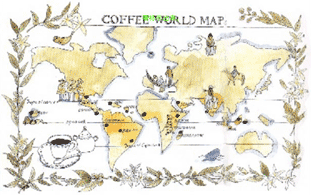
Three major coffee farms in the world: a detailed explanation of coffee in African coffee estates and major producing areas
When it comes to Africa, people's first impressions are: desert, drought, tribe, poverty, mystery and so on. Because of its climatic environment, it has become a paradise for the growth of coffee trees. Coffee production in Africa the first coffee tree in the world was found in the Horn of Africa. Local indigenous tribes often grind the fruit of coffee and knead it with animal fat to make many balls.
2015-12-26 World Big three Coffee Manor Africa Major producing areas detailed explanation
Boutique coffee beans: coffee genealogy (variety knowledge popularization post) basic knowledge of coffee introduction
From Ethiopia to East Africa, coffee varieties have experienced about 1300 years of development and evolution. Experienced Yemen, India, Java, the Netherlands, Paris, Bourbon, Martinique Island, Haiti, Mexico, Brazil and other Central and South American countries. Coffee is an evergreen shrub of the genus Rubiaceae of Gentianaceae. The general classification of coffee is: Arabica iron.
2015-12-02 Boutique coffee beans coffee genealogy variety knowledge popularization introduction basic knowledge
What are the main coffee producing areas? where is the origin of famous coffee?
Coffee comes from coffee beans, which are harvested and processed from the fruit of trees. Coffee trees grow at the center of the equator, between latitudes of 25 degrees south and north, and are called the homes of tropical or subtropical countries called coffee belts. At present, there are about 60 coffee-producing countries. Coffee is produced in South America, Central America, the West Indies, Asia, Africa, Arabia, the South Pacific and
2016-05-23 Coffee major producing areas all have which famous origin where coffee is from
Detailed Analysis of the components of High-quality Coffee beans
★ volatile compounds: volatile compounds are the main source of coffee flavor, especially important for coffee quality. There are many kinds of volatile substances in coffee, and their existence will affect the aroma quality of coffee. Its main source is derived from non-volatile substances in raw beans which are disconnected or derived after reaction in the process of roasting. The role of thermal decomposition, other reactions, or compositions, such as sugar.
2014-12-30 Boutique coffee beans common sense ingredients details analysis volatility substances coffee wind
Boutique Coffee introduced in Santo Domingo Coffee Manor, Dominica
Catuaikadu Aikadu Aikadu Aica Dewey (caturra Kaddura and mondunovo New World artificial hybrid coffee varieties. The tree height of caturra is shorter than that of mundonovo, and the improved height is more convenient to harvest after mixing. The sweetness performance is similar to that of cattura, and there is a great correlation between fertilization techniques. The planting density is high, the proper fertilization can have high production capacity, and the trees can endure operation.
2016-07-01 Dominica Santo Mingo Coffee Manor producing area introduction boutique catu
What are the three major coffee producing areas in the world? Arusha Coffee Manor.
Mexican coffee production is concentrated in the south near Guatemala, with mountains running through the east and west, making its mountains tilted, making it an ideal terrain for coffee cultivation. Coffee cultivation is still common. According to the order, the highland is classified into three kinds of high-yield coffee: Arudora, Prima, Rabad and Barnabad. Coffee beans range in size from medium to large, with appearance and fragrance.
2016-06-14 World Big three Coffee producing area Arusha Manor
Introduction to the main Coffee producing areas in the World
Coffee comes from coffee beans, which are harvested and processed from the fruit of trees. Coffee trees grow at the center of the equator, between latitudes of 25 degrees south and north, and are called the homes of tropical or subtropical countries called coffee belts. At present, there are about 60 coffee-producing countries. Coffee is produced in South America, Central America, the West Indies, Asia, Africa, Arabia, the South Pacific and
2015-04-14 Coffee basics common sense world major producing areas introduction coffee is from coffee beans
Comparison of regional characteristics of coffee beans in coffee producing areas / coffee bean producing areas in the world
Coffee has an inexplicably strong attraction to both literati and gluttons. Since you are so curious or passionate, let's take a look at which parts of the world produce coffee. The most complete knowledge of coffee producing areas in the world! Tools / raw materials the world's most important quality coffee producing areas / step 1, Asia 1. Indonesia (Indonesia) well-known representative coffee: claw
2016-05-22 World coffee producing areas coffee beans regions characteristics contrast no matter
Introduction of major coffee producing areas in the world Central and South American coffee beans, African coffee beans, Asian coffee beans
[introduction] Coffee comes from coffee beans, which are harvested and processed from the fruit of trees. Coffee trees grow at the center of the equator, between latitudes of 25 degrees south and north, and are called coffee belts in the homes of tropical or subtropical countries. at present, raw coffee comes from coffee beans, which are harvested and processed from the fruits of the trees. Coffee trees grow at the center of the equator.
2016-04-22 World main coffee producing areas introduction Central and South America coffee beans Africa Asia
Detailed Analysis of Coffee Bean ingredients basic knowledge of Fine Coffee
Moisture: the water content of coffee beans varies greatly with different processing stages and products. The moisture content of wet coffee beans with film is about 50%, while that of dried raw coffee beans is about 10%-13%. The water content of roasted coffee beans is only less than 5%. The existence of water in coffee beans is the same as other kinds of food and beverages, because it contains a considerable amount of hydration colloid macromolecules.
2015-06-06 Coffee beans ingredients details analysis boutique coffee basics common sense moisture
Introduction of major coffee producing areas in the world
Coffee comes from coffee beans, which are harvested and processed from the fruit of trees. Coffee trees grow at the center of the equator, between latitudes of 25 degrees south and north, and are called the homes of tropical or subtropical countries called coffee belts. At present, there are about 60 coffee-producing countries. Coffee is produced in South America, Central America, the West Indies, Asia, Africa, Arabia, the South Pacific and
2014-08-15 Coffee knowledge world coffee producing areas coffee bean producing areas