“China Tropical” search results (900)

"China Tropical and Subtropical Rare Plant Base"
Strengthen scientific research and reasonable arrangement. It is suggested that in the process of implementing ecological coffee garden construction, increase the planting intensity of precious tree species and dominant tree species suitable for planting in coffee garden. In the process of implementing ecological transformation of existing coffee garden, organically combine ecological coffee garden construction with precious tree species planting, based on making Pu 'er a precious plant (rare timber) in tropical and subtropical regions of China.
2014-07-30 China Tropical Subtropical Precious Plant Base Strengthening Scientific Research Rational Safe
Coffee: a commodity to be awakened by the Chinese factor
Elegant and romantic Starbucks, mellow cafes. What you may not imagine is that behind the quiet and pleasant scene is the choppy coffee market.
2014-07-10 Coffee news coffee prospect in China coffee industry trend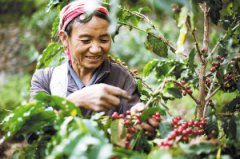
Yunnan Coffee and Chinese Coffee Market
Coffee trees need high altitude, tropical climate and fertile soil to grow the best coffee beans. Such climatic conditions on earth surround the equator, about between 25 degrees north latitude and 30 degrees south latitude. This zone, commonly known as the golden coffee belt, belongs to tropical and subtropical regions and is technically called coffee belt. When it comes to coffee in the world, let's talk about Chinese coffee first.
2016-06-07 Yunnan Coffee China Market need High altitude altitude Tropical Climate
Tropical African Coffee Bean Elgon Mountain area, Uganda, which produces Robart Coffee beans
The cultivation of coffee in Uganda is all small-scale family operation. The livelihood of 25% of the population is closely related to coffee production. About 500000 farms grow coffee, but mainly Robster. Robster accounts for 90% of coffee production, and the remaining 1 is Arabica coffee. Arabica and Live Buster are harvested from October to February of the following year. Ugandan coffee
2016-06-22 Tropical Regional Africa Coffee Bean Uganda Robbins producing area El Elg
History of introduction and expansion of Coffee in early China (1)
1. The introduction of Ruili Jingpo Nongxian Coffee was recorded in 1914. In April 1996, it was compiled by the compilation Committee of Ruili City Chronicles of Yunnan Province. The fifth coffee section on page 383 of Ruili City Chronicles published by Sichuan Dictionary Publishing House recorded that as early as 1914, the Jingpo people have been introduced from Myanmar to Nongxian Township for cultivation. Yunnan Provincial Chronicles, Volume 39, Chapter 3 of the Local Series of the people's Republic of China
2015-04-28 Early China coffee introduction expansion about Ruili Jingpeng
The History of Coffee introduction and expansion in China in the early stage (1)
1. The introduction of Ruili Jingpo Nongxian Coffee was recorded in 1914. In April 1996, it was compiled by the compilation Committee of Ruili City Chronicles of Yunnan Province. The fifth coffee section on page 383 of Ruili City Chronicles published by Sichuan Dictionary Publishing House recorded that as early as 1914, the Jingpo people have been introduced from Myanmar to Nongxian Township for cultivation. Yunnan Provincial Chronicles, Volume 39, Chapter 3 of the Local Series of the people's Republic of China
2014-12-01 Coffee history common sense early China introduction expansion about Ruili Jingpolong
World Coffee Bean Certification Tropical Rain Forest Alliance Certification Coffee Frog beans detailed introduction
Rainforest Alliance certified coffee frog beans Rainforest Alliance certification rainforest certification logo has an obvious frog, Rainforest Alliance certified coffee, also known as frog beans. Rainforest Alliance RA (Rainforest Alliance) certification refers to a farm that meets the standards set by the Rainforest Alliance, and the Alliance will conduct research on the farm and its surrounding ecosystems.
2016-01-04 World coffee beans certification tropical rainforest alliance coffee frogs details introduction
History of introduction and expansion of Coffee in China in the early stage of Coffee Development (1)
1. The introduction of Ruili Jingpo Nongxian Coffee was recorded in 1914. In April 1996, it was compiled by the compilation Committee of Ruili City Chronicles of Yunnan Province. The fifth coffee section on page 383 of Ruili City Chronicles published by Sichuan Dictionary Publishing House recorded that as early as 1914, the Jingpo people have been introduced from Myanmar to Nongxian Township for cultivation. Yunnan Provincial Chronicles, Volume 39, Chapter 3 of the Local Series of the people's Republic of China
2015-03-09 China Coffee Development course early introduction expansion about Ruili Jingpeng
History of Coffee planting in the early stage of Coffee introduction and expansion in China (2)
1. The presentation of the respective expressions and questions of Zhu Kula Coffee 1.1 I remember that it was still the spring of 1995, when Professor Mao Genhai of the former South China Hot farming Academy and I visited Xishuangbanna, Yunnan Province. I had the honor to see the review and prospect of Yunnan coffee development published in the third issue of Tropical crop Science and Technology in 1994 by Huang Junxiong and Zhang Xingcan, Institute of Tropical and Subtropical Economic crops, Yunnan Academy of Agricultural Sciences
2014-10-14 Coffee knowledge coffee cultivation Chinese coffee
The introduction of Ruili Jingpo Nongxian coffee was recorded in 1914.
In April 1996, compiled by the compilation Committee of Ruili City Chronicles of Yunnan Province, the fifth coffee section on page 383 of Ruili City Chronicles published by Sichuan Dictionary Publishing House recorded that as early as 1914, the Jingpo nationality had been introduced from Myanmar to Nongxian Township for cultivation. The local series of books of the people's Republic of China, Records of Yunnan Province, Volume 39, Records of Land Reclamation, Chapter 3, Section 2, Coffee is recorded: the cultivation of coffee in China began in 1884.
2015-02-07 About Ruili Jingpeng coffee introduction 1914 records
Chinese Coffee Development Agricultural Research Institutes promote Chinese Coffee
At this point, the author's mood is agitated and dignified. Today, when Chinese coffee, especially Yunnan small-grain coffee, has developed to large-scale industrialization through the persistent cultivation of several generations of Chinese mainland and after several ups and downs, it is not easy to be rated as a first-class product by the International Coffee Organization (ICO). The author believes that Yunnan small-grain coffee can quickly rise in Chinese mainland and China's agricultural scientific research.
2015-02-07 China coffee development agriculture scientific research institutes boost author draft so far heart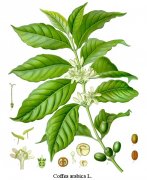
Coffee cultivation technique A tropical cash crop that is easy to cultivate
Coffee, cocoa and tea are called the three major beverages in the world, and their output, consumption and output value all rank first. In addition to being used as a beverage, coffee can also extract caffeine and coffee oil; in medicine, it can be used as an anesthetic, stimulant and diuretic cardiotonic agent. Coffee pulp can be used to make wine, vinegar, pectin and molasses; dried pulp can be used as animal feed; dried fruit shell can be used as fertilizer and burning
2015-10-07 Coffee cultivation techniques one easier cultivation tropical cash crops overview coffee
Coffee planting conditions Coffee planting techniques in China
In the 19th century, coffee was grown almost all over the country, followed by a coffee boom that lasted nearly a century. The extensive cultivation of coffee has brought wealth and prosperity to Brazil. At the beginning of the 20th century, Brazil accounted for more than 75% of the world's total coffee production, thus winning the reputation of the coffee kingdom. Coffee is one of the important pillars of Brazil's national economy. The whole country
2016-07-16 Coffee planting conditions China Technology 19th Century Brazil several
The History of Coffee introduction and expansion in China in the early stage (2)
1. The presentation of the respective expressions and questions of Zhu Kula Coffee 1.1 I remember that it was still the spring of 1995, when Professor Mao Genhai of the former South China Hot farming Academy and I visited Xishuangbanna, Yunnan Province. I had the honor to see the review and prospect of Yunnan coffee development published in the third issue of Tropical crop Science and Technology in 1994 by Huang Junxiong and Zhang Xingcan, Institute of Tropical and Subtropical Economic crops, Yunnan Academy of Agricultural Sciences
2014-12-01 Coffee History Common sense early China introduction expansion Zhu Kula
The respective expressions and questions of the introduction years of Zhukula Coffee in Chinese Coffee Culture
1.1 I remember that it was still the spring of 1995, when Professor Mao Genhai of the former South China Hot farming Academy and I went to Xishuangbanna, Yunnan Province. I had the honor to see Huang Junxiong and Zhang Xingcan, Institute of Tropical and Subtropical Coffee, Yunnan Academy of Agricultural Sciences, published a paper on the development of Yunnan coffee in 1994 in the third issue of Tropical crop Science and Technology, from which we got the information about the earliest introduction of Yunnan coffee.
2015-02-07 China coffee culture Zhu Kula coffee introduction age respective topics
Coffee growing belts are located in the tropics between the Tropic of Cancer
Most of the world's coffee producing areas are located in the tropics between the Tropic of Cancer, which we call the Coffee Belt or Coffee Zone. As a tropical cash crop, coffee trees grow in the coffee belt with excellent climatic conditions, where direct sunlight all year round, abundant heat and abundant rainfall, and the annual average temperature is above 20℃. but the high temperature
2015-04-23 coffee cultivated located tropic of capricorn inter tropical regional global most
Fruit bomb aricha African Coffee Ye Jia Xuefei China Coffee Trading Network
Origin: Gedeo Zone varieties: Typica and local native species treatment methods: Natural sensory description: honey-like tropical ripe fruit aroma, slightly taffy flavor Origin Summary: Gedeo Zone is located 4 kilometers west of Yecheville, planting elevation 1950-2100 meters, coffee from November to February of each year is sent to Kebel owned by Surafel Birhanu.
2016-04-21 Fruit bomb aricha Africa Coffee Yega Sheffield China Trade
Lincang coffee industry has entered the "boutique era"
The award ceremony of China's Lincang boutique coffee bean demonstration zone was held in Kunming yesterday. The China Fruit Circulation Association awarded the title of China Lincang boutique coffee bean demonstration zone to support Lincang's development of boutique coffee bean planting and processing industry in order to become bigger and stronger. Lincang Tropic of Cancer passes through the border, which is located in the gold belt of world coffee production, with low latitude, high altitude, tropical and subtropical climate,
2014-06-10 Coffee industry the era of boutique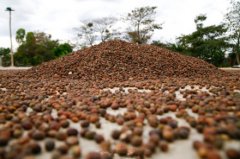
The coffee growing belt lies in the tropics between the Tropic of Cancer and the Tropic of Cancer.
Most of the coffee producing areas in the world are located in the tropics between the Tropic of Cancer and the Tropic of Cancer, which we call the coffee belt and Coffee Belt or Coffee Zone in English. As a tropical cash crop, coffee trees grow in coffee belts with excellent climatic conditions, where the sun shines all the year round, is rich in calories and Rain Water, and the annual average temperature is above 20 ℃. But the high temperature
2015-01-19 Coffee planting located Tropic of Cancer occasional tropical regional global most
The coffee growing belt is located in the tropics between the Tropic of Cancer and the Tropic of Cancer.
Most of the coffee producing areas in the world are located in the tropics between the Tropic of Cancer and the Tropic of Cancer, which we call the coffee belt and Coffee Belt or Coffee Zone in English. As a tropical cash crop, coffee trees grow in coffee belts with excellent climatic conditions, where the sun shines all the year round, is rich in calories and Rain Water, and the annual average temperature is above 20 ℃. But the high temperature
2015-10-20 Coffee planting producing areas located in Tropic of Cancer occasional tropical regional global large