“Chemist” search results (150)
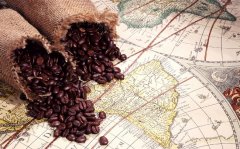
World Coffee History Ethiopian Shepherds find Red Coffee fruits
In the sixth century, Ethiopian shepherds discovered red coffee fruits. In the eleventh century, Arab merchants spread coffee to Europe. In the 16th century, Franz Geora Kolschitzky, a Viennese, established the first coffee shop in Europe. He also started the trend of drinking coffee with milk. In 1554, coffee in Istanbul became black gold, and it was very popular with Ethiopian shepherds in the sixth century.
2015-09-16 World Coffee History Yesso Biya Shepherd Discovery Red Fruit VI
Introduction of boutique coffee brand culture the latest introduction of Nestle Coffee
The origin of the Nestle Group can be traced back to Switzerland in 1866. In 1867, Mr. Henry Nestle, a Swiss chemist, was the first to invent the world's first baby food, milk cereal. One day, a friend who was a doctor brought a baby born a month prematurely. He couldn't eat and was so weak that he was abandoned. Mr. Henry Nestle took in the child and fed him.
2015-12-15 Boutique Coffee Brand Culture introduction Nestle latest Group Origin
Nescafe Brand Culture Nescafe Company Profile
The origins of the Nestlé Group can be traced back to Switzerland in 1866. In 1867, Swiss chemist Henry Nestle pioneered the world's first baby food, milk cereal. One day, a doctor friend brought in a baby a month premature. He could not eat and was so weak that he was abandoned. Mr. Henry Nestle took the boy in and fed him
2015-12-28 Nestle Coffee Brand Culture Introduction Company Profile Group Origin May
What are the nine coffee bean producing areas in Ethiopia
Yega Xuefei: 1800 meters above sea level, 2000 meters above sea level; what Yega Xuefei means is to let us settle down in this wetland. Dr. Yeli, a coffee chemist in 2003, even pointed out that some aromatic ingredients of Yega Xuefei can also be found in Chanel No. 5 perfume! Yega Xuefei is affiliated to the Sidamo producing area, which is independent because of its special flavor, including Wenago, Kochere, Gelena/Abaya and so on.
2016-05-03 Esso Biya nine coffee beans producing areas which ones
World Coffee History in the sixth Century Ethiopian shepherds discover red coffee fruits
In the sixth century, Ethiopian shepherds discovered red coffee fruits. In the eleventh century, Arab merchants spread coffee to Europe. In the 16th century, Franz Geora Kolschitzky, a Viennese, established the first coffee shop in Europe. He also started the trend of drinking coffee with milk. In 1554, coffee in Istanbul became black gold, and it was very popular with Ethiopian shepherds in the sixth century.
2015-01-26 World Coffee History sixth Century Yesso Bia Shepherd Discovery Red Fruit
Coffee dissemination chronology
Coffee spread to Arabia (eleventh century), Egypt, Syria. (13th century) Damascus (16th century) Europe (17th century) the first people to plan to grow and eat coffee were Arabs. At the beginning of the eleventh century, people in the Arab region boiled coffee into soup or dried it and then boiled it as stomach medicine. Because Muslim precepts are strict and alcohol is strictly forbidden, Muslims
2014-07-01 Coffee spread Coffee History
Coffee dissemination chronology
Arab (eleventh century) Egypt, Syria (13th century) Damascus (16th century) Europe (17th century) the earliest people who planned to grow and eat coffee were Arabs. At the beginning of the eleventh century, people in the Arab region boiled coffee into soup or dried it and then boiled it as stomach medicine. Because of the strict Muslim precepts and forbidden to drink alcohol, Muslims
2016-10-19 Coffee spread chronology Arab first Century Egypt Syria . Thirteen
The three deadly sins of instant coffee do not drink instant coffee
Instant coffee is not recognized by the traditional coffee industry in many cases because inferior coffee beans are often used in industrial production, and other harmful residues may be left in the production process. In addition, instant coffee is often inappropriate in roasting coffee beans, which can not fully reflect the aroma of coffee beans. The history of instant coffee in 1901, just
2015-03-13 Instant coffee Sanzong no drink fast
Basic knowledge of fine coffee in coffee communication period chronology
Coffee spread to Arabia (eleventh century), Egypt, Syria. (13th century) Damascus (16th century) Europe (17th century) the first people to plan to grow and eat coffee were Arabs. At the beginning of the eleventh century, people in the Arab region boiled coffee into soup or dried it and then boiled it as stomach medicine. Because Muslim precepts are strict and alcohol is strictly forbidden, Muslims
2015-06-18 Coffee communication chronology boutique basics common sense coffee Arab I
The spread footprint of Coffee basic knowledge about Coffee
As far back as the sixth century AD, Arabs first discovered coffee by virtue of their innate wisdom. In 1616, Dutch merchants secretly brought coffee seeds to Europe. From then on, coffee became uncontrollably popular all over the world, giving birth to a coffee culture with different styles in different countries. As a part of modern civilization, coffee is no longer limited to the ancient medicinal value, but also an expression of leisure and elegance.
2014-09-11 Coffee knowledge coffee basics coffee dissemination coffee footprint
Coffee aroma coffee wine coffee roast coffee beans how to bake roast curve
Mercaptan has produced deep-baked fragrance since 1962, when two Nobel laureates, Reichstein and Stottinger, pointed out that uran, mercaptan, and alkylpyrazine. After Diketone is the key point to make coffee aroma, in fact, scientists have made great progress in this area over the years. Thomas Palerman (Thomas), a chemist from the world-renowned Kraft Foods Company (Kraft Foods).
2016-06-17 Coffee aroma wine roasting coffee beans how curve mercaptan make deep roast
Three deadly sins of falling in love with fine coffee and staying away from instant coffee
Instant coffee is not recognized by the traditional coffee industry in many cases because inferior coffee beans are often used in industrial production, and other harmful residues may be left in the production process. In addition, instant coffee is often inappropriate in roasting coffee beans, which can not fully reflect the aroma of coffee beans. The history of instant coffee in 1901, just
2015-01-04 Fall in love boutique coffee far away instant Sanzong due to industrialization
The study shows that coffee grounds can remove the toxic smell of dirt.
There is good news for coffee lovers around the world: the large amount of coffee grounds they throw away helps remove the toxic smell of dirt. Now the common practice is to use activated carbon.
2014-04-27 Research shows that coffee dregs removal dirt poison odor global coffee
The history of instant coffee
Instant coffee is not recognized by the traditional coffee industry in many cases because inferior coffee beans are often used in industrial production, and other harmful residues may be left in the production process.
2014-06-04 Coffee culture coffee knowledge instant coffee
Coffee and China
Speaking of the three major daily drinks of human beings: coffee, wine and tea, coffee is an out-and-out novelty that has the shallowest fate with the Chinese. Chinese people understand and come into contact with coffee should be regarded as the first batch of diplomats, people studying abroad and Chinese compradors at the end of the 19th century.
2014-08-25 Coffee knowledge Coffee and China Chinese Coffee Market
The key components of coffee grounds can absorb sulfur.
Researchers at the City University of New York report that coffee grounds can absorb hydrogen sulfide gas and sulfur well.
2014-08-27 Coffee knowledge coffee function coffee health coffee grounds use
Coffee grounds can remove the toxic smell of dirt.
Coffee lovers around the world have good news: the amount of coffee grounds they throw away helps remove the toxic smell of dirt. Coffee grounds can absorb hydrogen sulfide gases, which are often responsible for the foul smell, researchers at the city university of new york report in the american journal hazardous materials. It is now common practice to use activated carbon in
2015-03-06 coffee grounds removeable dirt toxic odor usefulness global aficionado
Foldable four-cup silicone thermos (SlickBoil)
The four-cup silicone kettle launched by Cuissential adds another twist to the silicone product. Unlike the traditional hot water kettle, it can not only squeeze and fold to save space when not in use, but also does not contain BPA.
2014-06-09 Four cups silicone kettle SlickBoil
Coffee grounds can remove the toxic smell of dirt.
There is good news for coffee lovers around the world: the large amount of coffee grounds they throw away helps remove the toxic smell of dirt. In the American Journal of Hazardous Materials, researchers at the City University of New York published a study saying that coffee grounds can absorb hydrogen sulfide gases, which are often caused by the fact that the dirt smells so bad. Now the common practice is to use activated carbon.
2014-08-06 Coffee knowledge coffee grounds toxic odor coffee grounds effect
Coffee action coffee grounds help to remove toxic odor
There is good news for coffee lovers around the world: the large amount of coffee grounds they throw away helps remove the toxic smell of dirt. In the American Journal of Hazardous Materials, researchers at the City University of New York published a study saying that coffee grounds can absorb hydrogen sulfide gases, which are often caused by the fact that the dirt smells so bad. Now the common practice is to use activated carbon.
2015-01-16 Coffee action help remove toxic odor global coffee lover good