“Andes” search results (1745)

Columbia Coffee Manor introduction to Lazmus Manor in the Andes
To really understand the flavor changes and product differences of coffee beans is to understand the production place and growers, different manors with different flavors, or different flavors on different hills of the same manor, and the story behind each coffee bean is what the fragrance wants to know. It can be traced back to which plot of the estate where the beans came from, or which cooperative or which farmer, chasing the flavor of the region. To
2016-07-04 Columbia Coffee Manor introduction Andes Mountains Raz Moss Real
Produced in the Ecuadorian Arabica Coffee San Cristobal region of the Andes
Because of the unique role of the Galapagos Islands in the course of history, the Government of Ecuador has designated the Galapagos Islands as a national park, the land is no longer allowed to be reclaimed as new agricultural land, and the introduction and use of chemical fertilizers, pesticides, herbicides and other chemicals are strictly prohibited, so coffee produced in the Galapagos Islands is recognized as a natural product. It's increasing. The best Arabica coffee.
2016-07-02 Produced in Andes Ecuador Arabia Coffee Crystal Val producing areas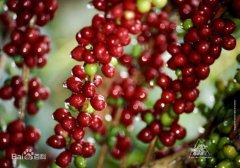
Water washing treatment of Santa Rita coffee beans in micro-producing areas of the Andes Mountains
The history of coffee cultivation in Nigeria can be traced back to the Spanish colonial era in the 16th century, and there are many theories about the history of coffee in Colombia: first, it is said to have come from the island of Haiti in the Caribbean and from El Salvador in Central America. Second: in 1808, a priest introduced coffee beans to Colombia for the first time from the French Antilles via Venezuela. One of them is
2016-05-08 Biya Santa Rita coffee raw beans quality Andes mountains producing areas washing
Introduction to the flavor and taste characteristics of Ecuadorian coffee manor with a long lingering aftertaste
Central mountain: after entering Ecuador from Colombia, the Andes is divided into the eastern and western Cordillera mountains, with a plateau high in the north and low in the south, averaging between 2500 and 3000 meters above sea level. The Andes run through the middle of the border. The ridges crisscross, dividing the plateau into more than ten intermountain basins. The most important are the Quito basin and the Cuenca basin in the south. Volcanic crowds in the territory
2016-09-01 Aftertaste long time entanglement Ecuador coffee manor producing area flavor taste special
Columbia Coffee Manor Hope Manor Coca Cauca Columbia Coffee beans in the Andes
HernandoTapasco's team, the lead botanist, set up a climate station on the estate to track weather data and help make harvest decisions. The data on the farm were collected continuously and analyzed once a week. After harvest, they will compare weather data, production data and cup test data and analyze the correlation. The harvesters of Rose Summer are strictly trained to harvest only ripe cherries
2016-07-18 Columbia Coffee Manor Hope Cauca Andes Mountains
Columbia Cafe introduces Lazmus Manor Cauca Cauca Andes
Herry Rojas Alvarez has been engaged in coffee cultivation for 35 years. His parents began to teach him to love coffee and contribute to the coffee field when he was young, and now he has finally become one of the coffee experts who can cultivate high quality coffee. This is the second time he has participated in Cup of Excellence, and this time he has passed the online competition.
2016-07-06 Columbia Coffee introduction Raz Moss Manor Cauca Ann
Micro-producing areas of high quality imported raw beans in the Andes, Santa Rita, Colombia
Boutique coffee is fresh coffee. Whether it's food or drink, of course, the fresh the better, and so is boutique coffee. High-quality coffee should keep the coffee beans fresh before making, including the preservation of baked beans, and grind the coffee beans into powder before making, which is also to retain its original and best flavor. And the way of making hand-made coffee is such a way to make high-quality coffee.
2016-06-27 Colombia Santa Rita quality imports raw beans Andes mountains producing areas boutique
Introduction to the main varieties of Colombian Coffee Lazmus Manor in the Cauca Andes
No matter in terms of yield or texture, Colombian coffee is first produced by Medellin, which is characterized by full granules, rich nutrition, moderate acidity, good balance, rich aroma and soft taste. In addition to Medellin, the provincial capitals of two neighboring provinces in the south, Armenia and Manizales, are also famous coffee producers
2016-07-11 Columbia Coffee Major Variety introduction Cauca Andes
Peruvian coffee with elegant mild acidity Flavor Description Roast Degree Taste Variety Manor Introduction
Peru is located in the west of South America, with a coastline of 2254 kilometers. The Andes runs through the north and south, and the mountains account for 1/3 of the country's area. They belong to the tropical desert area, and the climate is dry and mild. Peruvian coffee is mostly grown at the foot of the Andes, where it is rich in quality traditional Central American coffee beans. Peruvian coffee beans produced in Chanchamayo in the center and Cuzco in the south
2016-10-08 Elegant Mild Acidity Peruvian Coffee Flavor Description Roast Degree Taste
Introduction to the characteristics of Santa Cruz Manor
Central mountain: after entering Ecuador from Colombia, the Andes is divided into the eastern and western Cordillera mountains, with a plateau high in the north and low in the south, averaging between 2500 and 3000 meters above sea level. The Andes run through the middle of the border. The ridges crisscross, dividing the plateau into more than ten intermountain basins. The most important are the Quito basin and the Cuenca basin in the south. There are many volcanoes in the territory.
2016-08-24 Ecuador coffee flavor taste manor producing area characteristics introduction Crewe medium
Introduction to the characteristics of coffee flavor and taste of Santa Cruz Manor in Ecuador
After entering Ecuador from Colombia, the Andes is divided into the eastern and western Cordillera mountains, with a high plateau in the north and a low plateau in the south, with an average elevation of between 2500 meters and 3000 meters. The Andes run through the middle of the border. The ridges crisscross, dividing the plateau into more than ten intermountain basins. The most important are the Quito basin and the Cuenca basin in the south. There are many volcanoes and earthquake frequency in the territory.
2016-09-03 Unique flavor Ecuador Crewe manor coffee taste producing area special
Introduction of Ecuador Galapagos Coffee Flavor Manor with unique flavor
Central mountain: after entering Ecuador from Colombia, the Andes is divided into the eastern and western Cordillera mountains, with a plateau high in the north and low in the south, averaging between 2500 and 3000 meters above sea level. The Andes run through the middle of the border. The ridges crisscross, dividing the plateau into more than ten intermountain basins. The most important are the Quito basin and the Cuenca basin in the south. Volcanic crowds in the territory
2016-08-29 Unique flavor Ecuador Lapa Goss coffee taste manor production
Ecuadorian Coffee with Special aroma Manor introduces Galapagos Coffee
The Republic of Ecuador is located in northwestern South America. It is bordered by Colombia in the northeast, Peru in the southeast and the Pacific Ocean in the west. It covers an area of 256370 square kilometers and the coastline is about 930km long. The equator runs through the north of the border, and Ecuador means the central mountain of the Spanish equator: after Colombia entered Ecuador, the Andes is divided into the East and West Cordillera Mountains.
2016-08-22 Have special aroma Ecuador coffee flavor taste manor introduction pull
Introduction to the characteristics of Santa Cruz Manor
Central mountain: after entering Ecuador from Colombia, the Andes is divided into the eastern and western Cordillera mountains, with a plateau high in the north and low in the south, averaging between 2500 and 3000 meters above sea level. The Andes run through the middle of the border. The ridges crisscross, dividing the plateau into more than ten intermountain basins. The most important are the Quito basin and the Cuenca basin in the south. Volcanic crowds in the territory
2016-08-26 Ecuador coffee flavor taste manor producing area characteristics introduction Crewe medium
The Peruvian Coffee Flavor with good aroma describes the Historical Origin and Cultural course of Peruvian Coffee
Peruvian coffee cultivation history is not long, but as a rising star, Peruvian coffee is gradually opening up its popularity and entering the international market. Peru is located in western South America, with a coastline of 2254 kilometers. The Andes runs from north to south, and the mountains account for 1% of the country's area. it belongs to the tropical desert region with a dry and mild climate. Peruvian coffee is mostly grown at the foot of the Andes, where it is abundant.
2016-09-19 Aroma good Peru coffee flavor description history origin culture course
Unique taste of Ecuadorian Coffee Manor characteristics, flavor and taste of Santa Cruz Manor
Central mountain: after entering Ecuador from Colombia, the Andes is divided into the eastern and western Cordillera mountains, with a plateau high in the north and low in the south, averaging between 2500 and 3000 meters above sea level. The Andes run through the middle of the border. The ridges crisscross, dividing the plateau into more than ten intermountain basins. The most important are the Quito basin and the Cuenca basin in the south. There are many volcanoes in the territory.
2016-08-24 Unique flavor Ecuador coffee manor producing area characteristics taste introduction
Medium texture description of Peruvian Coffee Flavor method of Grinding of Fine Coffee beans in producing areas
Peru is located in western South America, with a coastline of 2254 kilometers. The Andes runs from north to south, and the mountains account for 1% of the country's area. it belongs to the tropical desert region with a dry and mild climate. Peruvian coffee is mostly grown at the foot of the Andes, where it is rich in traditional Central American top coffee beans. Peru is a huge and diverse land for them to produce a large number of different kinds.
2016-09-27 Medium texture Peru coffee flavor description producing area boutique coffee beans grinding
The soft taste of Colombia coffee growing area Introduction to the Andes Hope Manor
The first estate Herrera bought back home was La Esperanza in Trujillo, very close to their grandfather's original farm, which now serves as regional headquarters. The estate itself is 100% organic, with coffee trees of different varieties including Colombia, Castillo, Caturra and more than 14000 organic roses. Herrera is coming up in Trujill.
2016-07-06 Taste Soft Colombia Coffee Region Planting Introduction Andes
Balanced acidity and fragrant coffee manor in Ecuador introduce the flavor and taste characteristics of Hassan.
West coast: including coastal plains and foothills, high in the east and low in the west, generally below 200 meters above sea level, with some hills and low mountains at an altitude of 600 to 700 meters. Belongs to the tropical rain forest climate, the southernmost end begins to transition to the savanna climate. The average annual precipitation decreases from more than 3000 mm to about 500mm from north to south. Central Mountains: the Andes enter Ecuador from Colombia
2016-08-16 Acidity balance aroma fragrance Ecuador coffee manor producing area flavor mouth
Introduction to the flavor and taste characteristics of coffee from Santa Cruz Manor, Ecuador, which tastes very balanced and refreshing.
After entering Ecuador from Colombia, the Andes is divided into the eastern and western Cordillera mountains, with a high plateau in the north and a low plateau in the south, with an average elevation of between 2500 meters and 3000 meters. The Andes run through the middle of the border. The ridges crisscross, dividing the plateau into more than ten intermountain basins. The most important are the Quito basin and the Cuenca basin in the south. There are many volcanoes and frequent earthquakes in the territory.
2016-09-02 Taste very balanced fresh Ecuador Crewe Manor Coffee Flavor mouth