“Acid” search results (9317)

Any of several acids in roasted coffee.
There are mainly the following kinds of acids in roasted coffee-Zheng Wei (Italian Coffee University). According to the first edition of the chemistry of quality, there are mainly the following acids in roasted coffee: formic acid is the most in shallow roasting, and acetic acid decreases with the deepening of deep roasting, and decreases with the deepening of deep roasting.
2015-02-11 Coffee ingredients roasting good medium several roasted coffee
Any of several acids in roasted coffee.
There are mainly the following kinds of acids in roasted coffee-Zheng Wei (Italian Coffee University). According to the first edition of the chemistry of quality, there are mainly the following acids in roasted coffee: formic acid is the most in shallow roasting, and acetic acid decreases with the deepening of deep roasting, and decreases with the deepening of deep roasting.
2015-06-09 Coffee beans roasted OK Coffee medium several
Introduction to the types, varieties, taste and flavor of coffee beans
Mantenin (Indonesia, Sumatra, Asia) Acid 0 Glycerol 3 Alcohol 3 aroma 3 characteristic Flavor Blue Mountain (Jamaica, Central America, West Indies) Acid 1 Gump 3 bitter Alcohol 3 aroma 3 the highest quality Columbia (Colombia, South America) Acid 2 Glycerol 3 bitter Alcohol 3 aroma 2 most Standard quality Mocha (Isbiya, Africa) Acid 3 Glycine 2 bitter 1 Alcohol 2 aroma 2 characteristic Flavor Clemangaro (Tanzania)
2016-06-01 Coffee beans species varieties taste flavor introduction Mante Indonesia Sumanda Asia
The acid in roasted coffee
The main types of acids in roasted coffee are as follows:
2014-06-14 Coffee knowledge coffee roasting coffee acidity
There are mainly several kinds of acids in roasted coffee.
Formic acid is the most in shallow baking, and acetic acid is the most in shallow baking with the deepening of deep baking. with the deepening of deep baking, pyruvate and baking degree-independent lactic acid and baking degree-independent malic acid are the most in shallow baking, and citric acid is the most in shallow baking with the deepening of deep baking.
2015-03-25 Baking coffee medium acid there should be the following several kinds formic acid light
About the acid in coffee
Whether there should be acid in coffee and what is the charming acid in coffee.
2014-05-14 Coffee knowledge caffeic acid coffee salon
Where does the bitterness and acid of coffee come from?
To solve this mystery, Thomas Hofmann, a scientist at the Technical University of Munich in Germany, decided to investigate the bitter taste of coffee. He filtered the brewed coffee and found that some of the smallest molecules tasted the most bitter. So he ran a series of experiments using mass spectrometry, and identified one of them as chlorogenic acid lactone.
2015-09-10 Coffee is from came in order to untangle this troubled years Germany Tec
Coffee flavor tasting: where does the "bitter" and "sour" in coffee come from?
Bitterness: caffeine is the best known bitter ingredient in coffee, but caffeine actually accounts for up to 10% of the bitter taste. This can be understood from the fact that the concentration of caffeine in roasted beans is not affected by the degree of roasting, and that non-caffeine also tastes bitter. So where does the remaining 90% of the bitterness come from? One of the sources of coffee bitterness is brown pigment. Brown pigment
2015-12-14 Coffee flavor taste where does it come from bitterness coffee ingredients people
The taste of all kinds of coffee beans introduces the characteristics of coffee beans
Mantenin (Indonesia, Sumatra, Asia) Acid 0 Glycerol 3 Alcohol 3 aroma 3 characteristic Flavor Blue Mountain (Jamaica, Central America, West Indies) Acid 1 Glycerol 3 bitter Alcohol 3 aroma 3 the highest quality Columbia (Colombia, South America) Acid 2 Glycerol 3 bitter Alcohol 3 aroma 2 most Standard quality Mocha (Isbiya, Africa) Acid 3 Glycine 2 bitter 1 Alcohol 2 aroma 2
2016-06-08 All kinds of coffee beans taste introduction characteristics Mante Indonesia Sumanda Asia special
Dried coffee beans
Sun-cured coffee beans are more acidic than water-washed beans, especially aminobutyric acid, but water-washed coffee is often sour in the sun. This is because coffee beans are dehydrated for a long time in the process of sun drying, and enzymes decompose glutamic acid into aminobutyric acid. Although the content of aminobutyric acid in washed beans is lower than that in sun-dried beans, but citric acid, acetic acid and other acid mouth
2014-06-06 Coffee beans caffeine
Health hints that obese people can drink black coffee
Because people who drink coffee every day have significantly lower fasting and postprandial blood sugar than non-drinkers, so drinking coffee can prevent diabetes? Coffee can prevent diabetes because it contains chlorogenic acid. studies have found that drinking coffee can prevent diabetes mainly because coffee is rich in the antioxidant chlorogenic acid. Chlorogenic acid is an organic acid that reduces intestine by inhibiting glucosidase.
2015-08-25 Health hint obese drinkable coffee
What is the taste of coffee beans? what is the origin of coffee? coffee producing areas.
Mantenin (Indonesia, Sumatra, Asia) Acid 0 Glycerol 3 Alcohol 3 aroma 3 characteristic Flavor Blue Mountain (Jamaica, Central America, West Indies) Acid 1 Glycerol 3 bitter Alcohol 3 aroma 3 the highest quality Columbia (Colombia, South America) Acid 2 Glycerol 3 bitter Alcohol 3 aroma 2 most Standard quality Mocha (Isbiya, Africa) Acid 3 Glycine 2 bitter 1 Alcohol 2 aroma 2
2016-05-27 Coffee beans taste everything what coffee origin producing area Mante Indonesia Sumen
Treatment of nutty coffee and red wine-how many treatments are there for coffee
Sasa described in the competition: select Rume Sudan from Las Nubes, Colombia, put the coffee fruit in a sealed metal container for anaerobic fermentation, and purposefully control the pH value of the fermentation process, the type and number of bacteria involved in the fermentation and other variables. The processor injects carbon dioxide into the container to prevent oxidation from producing volatile acid.
2016-10-17 Fruity coffee red wine handling how much
Basic knowledge of sour coffee in roasted coffee
There are mainly the following kinds of acids in roasted coffee: formic acid is the most in shallow roasting, and acetic acid decreases gradually with the deepening of deep roasting. With the deepening of deep baking, pyruvate and baking degree independent lactic acid and baking degree independent malic acid are the most, while citric acid decreases with the deepening of deep roasting.
2015-01-28 Baking okay coffee medium basics common sense baking
"Coffee roaster companion" the chemical substances of raw beans the structure and changes of coffee beans
Chapter 2: chemical substances of raw beans author: Scott Rao translator: Huaxia coffee raw beans are strong and green seeds, 50% of which are different forms of carbohydrates, and the other 50% are composed of water, proteins, lipids, acids, and various biological bases. Coffee roasters can bake good coffee without knowing the many chemicals in raw beans, but
2016-04-28 Coffee roaster companions raw beans chemicals substances coffee beans institutions changes chapter 2
Fine coffee common sense Your coffee acid is not sour
Among my Chinese coffee friends, they sometimes ask if your coffee is sour. Or I don't like sour coffee, etc. At first I was full of doubts and felt very strange, but later I gradually understood that the so-called acid is not that acid. haha, it turns out that Acidity is often used in our coffee tasting terms. Chinese translation is acidity, which is often misunderstood as acidity in acid value or thinking of lemon
2014-11-17 Coffee knowledge coffee knowledge caffeic acid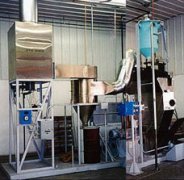
General knowledge of coffee bean baking equipment and roasting theory of coffee beans
In addition to the degree of baking is divided into factions, even the roaster also has a family view. At present, there are two major professional roasters, one is the traditional rolling furnace (Drum Roaster), and the other is the newly developed hot gas furnace (Air Roaster). The former is heated by gas across the bottom of the furnace, while the metal blades in the furnace keep stirring the beans, while the latter bakes the beans with high-temperature hot air flow.
2015-07-06 Coffee beans roasting common sense equipment and theory except for baking factions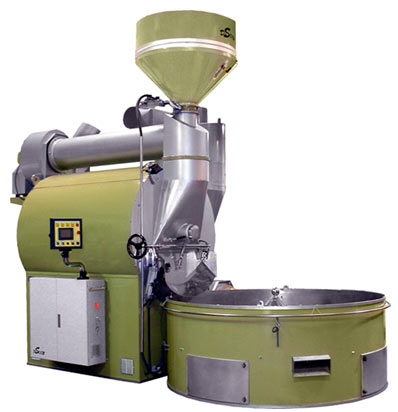
Introduction to the main points of coffee roasting knowledge: coffee bean roasting theory (3)
In addition to the degree of baking is divided into factions, even the roaster also has a family view. At present, there are two major professional roasters, one is the traditional rolling furnace (Drum Roaster), and the other is the newly developed hot gas furnace (Air Roaster). The former is heated by gas across the bottom of the furnace, while the metal blades in the furnace keep stirring the beans, while the latter bakes the beans with high-temperature hot air flow.
2015-12-16 Coffee roasting knowledge essentials introduction coffee beans theory except factions
Description of Coffee Bean Flavor with Nicaraguan Red Wine introduction to the region of Manor production
Nicaraguan coffee estate acetic acid fermentation: cleaner, lively acid, brighter acid, citric acid lactic acid fermentation: taste more round, less clean than acetic acid fermentation, higher alcohol thickness, malic acid / tartaric acid before, the treatment plant is passed down from generation to generation manual operation, such as biting to feel the degree of fermentation of coffee beans, and so on. This kind of fermentation
2016-10-21 Nicaragua Red Wine processing Coffee beans Flavor description Grinding characteristics Manor
Roasting techniques for the treatment of raw coffee beans: coffee bean roasting theory (3) detailed introduction
In addition to the degree of baking is divided into factions, even the roaster also has a family view. At present, there are two major professional roasters, one is the traditional rolling furnace (Drum Roaster), and the other is the newly developed hot gas furnace (Air Roaster). The former is heated by gas across the bottom of the furnace, while the metal blades in the furnace keep stirring the beans, while the latter bakes the beans with high-temperature hot air flow.
2015-12-18 Coffee raw beans treatment methods roasting techniques coffee beans theory details