“3.5” search results (2473)

Brazil is the world's largest coffee producer with a long history of coffee production.
Brazil (Brazil) aroma 3 minutes brightness 3.5 minutes mellow flavor 4 minutes aftertaste 4 points suitable for baking: City/Full city/Espresso used as Espressode beans should not be baked too deep, because the producing area is low altitude, the bean density is low, the pot under deep baking produces coke bitterness, it is best to start the pot before the second explosion. As for high-grade Brazilian beans, they can have a wider range of baking patterns.
2016-06-14 Brazil the world big coffee producing country long history delivery date output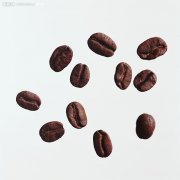
Brazil's largest coffee producer in the world, Brazilian boutique coffee with coffee beans is extremely smooth.
Brazil (Brazil) aroma 3 minutes brightness 3.5 minutes mellow flavor 4 minutes aftertaste 4 points suitable for baking: City/Full city/Espresso used as Espressode beans should not be baked too deep, because the producing area is low altitude, the bean density is low, the pot under deep baking produces coke bitterness, it is best to start the pot before the second explosion. As for high-grade Brazilian beans, they can have a wider range of baking patterns.
2016-07-06 Brazil the world big coffee producing country boutique blending coffee beans extremely
Introduction to the method of describing the Flavor of Cerro Asul, a single Coffee of Hope Manor in Colombia
Colombia hopes to describe the flavor of manor coffee. Colombian coffee is mainly small-grain coffee. Plants are small trees or large shrubs, 5-8 m tall, usually much branched at base; old branches gray-white, nodes dilated, young branches glabrous, compressed. Leaves thinly leathery, ovate-lanceolate or lanceolate, 6-14 cm long and 3.5-5 cm wide, tip long acuminate, acuminate part 10-1 long
2016-10-24 Columbia Hope Manor Rose Summer Coffee single Pint Roasu Flavor description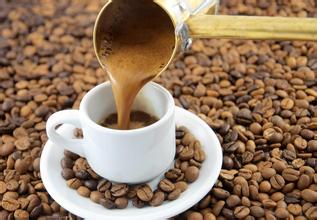
Introduction to the taste of story grinding scale of Latin American coffee beans
South American countries have switched to altitude classification, and only Colombia maintains this traditional classification system, which many Colombian coffee makers have recognized and have begun to demand a change in the classification system. Colombia's famous producing areas include Medellin, Armenia and Manisales, so the word MAM is sometimes seen on coffee bags.
2016-10-20 Latin America coffee beans characteristics flavor country of origin grinding scale
Introduction to the flavor and taste characteristics of the fragrant and pure El Salvador boutique coffee bean manor.
Today, this coffee accounts for 40% of the country's exports. 35% of the extra hard beans of the best coffee are exported to Germany from January to March. In the early 1990s, guerrilla warfare greatly damaged the country's national economy, reducing coffee production from 3.5 million bags in the early 1970s to 2.5 million bags in 1990-1991. The eastern part of the country was most affected by guerrilla warfare, and many farmers and workers were forced
2016-09-12 Aromatic authentic El Salvador boutique coffee beans manor producing area flavor taste
Costa Rican Coffee varieties with strong Flavor introduction to Fine Coffee
In 1729, coffee was introduced into Costa Rica from Cuba. Today, its coffee industry is one of the well-organized industries in the world, with an output of 1700 kg per hectare. Costa Rica has only 3.5 million people but 400m coffee trees, and coffee exports account for 25 per cent of the country's total exports. The volcanic soil of Costa Rica is very fertile and has good drainage.
2016-09-18 Flavor rich Costa Rica coffee variety taste producing area description boutique
Introduction to the unique and strong flavor and taste characteristics of Costa Rican coffee manor
Coffee was introduced into Costa Rica from Cuba in 1729. Today, its coffee industry is one of the well-organized industries in the world, with a yield of 1700 kg per hectare. Costa Rica has only 3.5 million people but 400m coffee trees, and coffee exports account for 25 per cent of the country's total exports. The volcanic soil of Costa Rica is very fertile and well drained, especially in the central part.
2016-09-07 Aroma unique strong Costa Rica coffee manor producing area flavor taste
Paradise Bird Manor in the Wiki Valley of Papua New Guinea Coffee region
Suitable for baking: Full city/Espresso full city, if you want to get a thick flavor like dark chocolate, you can even enter the dense area of the second explosion! The taste of Indian coffee is very mild, very low in intensity and acidity, with some spicy flavor, and, of course, the common local flavor of Asian beans. India is usually used to mix with Espresso recipes.
2016-07-02 Papua New Guinea coffee producing areas wikis valleys birds of paradise manors
Introduction to the Grinding Calibration of Japanese hand-made Coffee
The biggest difference is that the American hand flushes the coffee powder with a stirring stick, which is similar to the way we make siphon pots, or stir-fry with heavy water, while Japanese, Korean, Taiwan and domestic hand-made coffee only uses water to draw circles. Coffee powder is rarely stirred with sticks or bamboo slices. Hand flush American style, Japanese style and other genre techniques, after watching the change of hand flush master American style: large current, strong water column, impact turn
2016-10-17 Japanese style hand brewing coffee grinding scale introduction thickness numerical value large difference
Introduction to the characteristics of Coffee Flavor description and Grinding degree varieties in Costa Rica Yersalo Coffee
Coffee was introduced into Costa Rica from Cuba in 1729. Today, its coffee industry is one of the well-organized industries in the world, with a yield of 1700 kg per hectare. Costa Rica has only 3.5 million people but 400m coffee trees, and coffee exports account for 25 per cent of the country's total exports. The volcanic soil of Costa Rica is very fertile and well drained, especially in the central part.
2016-10-12 Costa Rica Elsa Luo Coffee Coffee Flavor description Grinding Variety production
Ugandan Coffee Flavor Ugandan Coffee Taste introduction to Ugandan coffee producing areas
Uganda's coffee production ranks first in Africa, accounting for more than 70% of its total exports. Uganda is also the hometown and main producing area of Robes specialty coffee. In the 1960s, Ugandan coffee production remained at 3.5 million bags a year. By the mid-1980s, coffee production had dropped to 2.5 million bags a year, mainly for political reasons. But now coffee production is on the rise again, which is large at present.
2016-07-27 Uganda coffee flavor taste introduction producing area output non-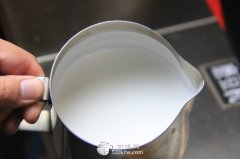
The knowledge of coffee and milk foam
Milk should be refrigerated with fat content above 3.5, and very cold milk should be used. After hitting the foam, let the delicate and rough foam separate, scrape off the top rough foam, and the rest of the delicate foam can be used to make Latte art. The finer and denser the foam is, the longer it stays, the easier it is to pull flowers.
2014-05-13 Coffee knowledge coffee foam
Start with coffee beans (24)-Africa-Angola
In the mid-1970s, Angola exported 3.5 million bags of coffee a year, 98 per cent of which were Robusta coffee (probably the best Robusta coffee in Africa), but total production fell to 200,000 bags in 1990. The best brands in Angola used to be Ambriz, Amborm and Novo
2014-06-12 Coffee beans Africa Angola
Coffee producing area Angola
In the mid-1970s, Angola (Angola) exported 3.5 million bags of coffee a year, 98 per cent of which was Robbins (probably the best in Africa), but total production fell to 200000 bags in 1990.
2014-06-19 Coffee knowledge coffee origin Angolan coffee
Main varieties and characteristics of coffee (cooked beans)
Blue Mountain Coffee: Produced in Jamaica, it is mellow, slightly sour, supple, sweet, delicate in flavor and light in taste. Colombia: Produced in South America, slightly sour, mellow, soft and mellow, slightly sour to medium acid. Brazil: produced in South America, neutral, medium bitter, fragrant, slightly sour, slightly bitter, restrained. Mantenin: produced in Indonesia ~ Sumatra, bitter, fragrant bitter. Mocha: Produce esopi
2014-07-04 Coffee beans coffee varieties coffee specialties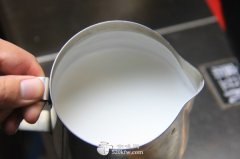
The knowledge of coffee foam
Milk should be refrigerated with fat content above 3.5, and very cold milk should be used. After hitting the foam, let the delicate and rough foam separate, scrape off the top rough foam, and the rest of the delicate foam can be used to make Latte art. The finer and denser the foam is, the longer it stays, the easier it is to pull flowers.
2014-07-26
Angola, the producer of world boutique coffee.
In the mid-1970s, Angola (Angola) exported 3.5 million bags of coffee a year, 98 per cent of which was Robbins (probably the best in Africa), but total production fell to 200000 bags in 1990. The best brands in Angola used to be Ambriz, Amborm and Novo Redondo, all of which are consistent
2014-09-17 Coffee knowledge world boutique coffee producing area Angola
Coffee beans Africa Angola
Once a big coffee producer, in the mid-1970s, Angola (Angola) exported 3.5 million bags of coffee a year, 98 per cent of which was robusta (probably the best in Africa), but total production fell to 200000 bags in 1990. The best brands in Angola used to be Ambriz, Amborm and Nov
2014-09-22 Coffee beans Africa Angola
Angola, once a big coffee producer
Once a big coffee producer, the future is now uncertain. In the mid-1970s, Angola exported 3.5 million bags of coffee a year, 98 per cent of which was Roberts (probably the best in Africa), but total production fell to 200000 bags in 1990. The best brands in Angola used to be Ambriz, Amborm and Nov
2014-09-27 Coffee knowledge big coffee producer Angola
The main varieties and characteristics of coffee.
Blue Mountain Coffee: produced in Jamaica, mellow, slightly sour, supple, sweet, delicate flavor, light taste. Columbia: produced in South America, slightly acid glycol, soft mellow, slightly to medium acid. Brazil: from South America, neutral, medium bitter, strong fragrance, slightly sour, slightly bitter, introverted. Manning: produced in Indonesia ~ Sumatra, bitter and mellow, fragrant and bitter. Mocha: producing Isopi
2014-09-29 Coffee knowledge coffee bean varieties coffee bean characteristics