“cultivation” search results (13701)
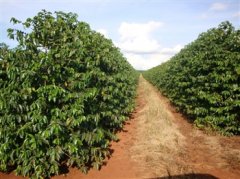
Coffee cultivation techniques for cultivating strong seedlings of Coffee
Coffee cultivation techniques 1, cultivate strong coffee seedlings 1, nursery site selection close to water sources, convenient transportation, loose and fertile soil, deep soil layer, well-drained loam or sandy loam, paddy field with pH 66.5 or early nursery land, and close to coffee garden. Turn over the depth of the ground by 0.200. 30 meters, after hoing and removing stones, the ridge moisture width is 1.01. 2 meters, about 10 meters long, and in the soil moisture
2015-10-07 Coffee cultivation techniques cultivation strong seedlings technology coffee
Introduction to the Development History of cultivation and planting techniques for Coffee seedlings
Coffee planting technology introduces the origin of coffee trees in Ethiopia in Africa. In botany, coffee trees belong to the evergreen trees of the subgenus Rubiaceae, and coffee beans, commonly known as coffee beans, are the seeds of the fruit of coffee trees, just because they are shaped like beans, so they are called coffee beans. Climate is the decisive factor for coffee cultivation, and coffee trees are only suitable for growing in the tropics or subtropics.
2016-10-19 Coffee saplings how cultivation planting technology development history introduction coffee
Introduction of three Coffee varieties
Arabica variety (Arabica) is suitable for plateau cultivation, Robesta variety (Robusta) is suitable for lowland cultivation, and Liberian variety (Liberica) is suitable for minimum cultivation.
2014-08-13 Coffee knowledge coffee varieties Arabica Robstein Liberia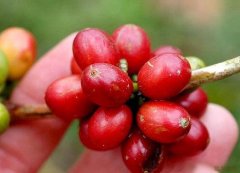
The method of cultivating coffee trees how to grow coffee trees at home?
"Coffee Coffee for you"-oblique planting method: when planting, the seedlings are oblique, usually at an angle of 30 degrees to 60 degrees from the ground (preferably 45 degrees). Oblique planting can inhibit the growth of the top of the trunk and promote the germination of basal straight branches. Attention should be paid to the selection of 3 or 4 sturdy and spaced direct branches for new stem culture. Cut off the old stem after the new stem grows (figure 2)-curved dry method: straight when planting, waiting for
2015-09-11 Coffee cultivation method at home oneself how grow coffee coffee for you to share
Cultivation techniques of Chinese small-grain Coffee cultivation of Coffee varieties of Tieli Katim in Yunnan, China
Prevention and treatment methods: ① strengthen management, reasonable pruning, appropriate shade. ② artificially killed adults and larvae, cut off the damaged branches and burned them in time. two。 Coffee leopard bark moth. It is widely distributed and is one of the common coffee pests, which can harm a variety of cash crops. The larvae overwintered in the branches, and the larvae often ate upward in the branches, forming a tunnel of 30cm to 60cm. Prevention and control methods:
2015-10-07 Small grains coffee cultivation techniques coffee beans planting control methods strengthening tube
Low yield coffee cultivation conditions Cultivation process and method Introduction
West Africa is the origin of Liberian coffee. It has strong adaptability to various environments such as high temperature or low temperature, humidity or dryness. It is not resistant to leaf rust and its flavor is worse than Arabica. Therefore, it is only traded domestically in some West African countries (Libya, Cote d'Ivoire, etc.) or planted for research. Coffee circulating in the world market
2016-06-30 estate coffee cultivation condition process method presentation west africa libby
Introduction of coffee beans and some boutique coffee in the main producing areas of coffee beans in the world (2)
Introduction of coffee beans and some boutique coffee in the main coffee producing areas of the world: central America
2014-06-18 Coffee knowledge coffee bean producing areas boutique coffee
The story of the four major cultivation systems of Ethiopian coffee, Xueke Omar, imported coffee
Ethiopia is located between 3 and 14 degrees north latitude, and the coffee tree cultivation area is close to 600,000 hectares. There are two rainy seasons in the south and east of the country and only one rainy season in the west. The distribution of rainy seasons is different, so that Ethiopia has coffee harvest all year round. Coffee grows between 550 and 2,750 meters above sea level. The soil in the west and south belongs to volcanic rocks and is rich in minerals.
2016-04-20 Ethiopia Coffee Big Four Cultivation Systems Snow Omar Story Import
The spread History of Coffee in China introduction to the characteristics of Flavor and Taste of Coffee Bean cultivation in Yunnan
According to historical records, Taiwan's planting was successful for the first time in 1884. Since then, coffee trees have been planted in China, and coffee cultivation in mainland China began in Yunnan. In 1902, a French missionary named Tian introduced seeds from Yinggong and planted them in Binchuan County, Yunnan Province. it is located in a place called Zhu Kula, which is located on the bank of the Yushan River, a tributary of the Jinsha River
2022-07-22 Coffee China Communication Yunnan Commercialization cultivation began in 1985 Historical data
Cultivating "Coffee Mother Tree" in Holland to achieve Coffee Prosperity
About 16 ⊙○ years ago, the Indian Babudan was infatuated with Middle Eastern coffee and hid seven Yemeni mocha seeds in a hidden bag on his belly to avoid the eyes and ears of Turkish soldiers. After returning to India, he planted coffee beans on Mount Chandragiri Hills in the southwestern state of Kanlataka, outside Babudan's spiritual cave. Due to the climate
2015-04-02 Holland cultivation Coffee Mother Tree Achievement Coffee Prosperity 16 around Indians
Introduction to Coffee cultivation in Yunnan
The history of coffee cultivation in Yunnan can be traced back to 1892. A French missionary brought coffee to Yunnan from abroad and successfully planted it in a valley in Binchuan County, Yunnan Province. The coffee plants of this batch of coffee seeds are still blooming and bearing fruit in Binchuan County.
2014-06-16 Coffee knowledge Yunnan coffee coffee cultivation
Cultivation techniques of small-grain Coffee in Yunnan Province: pest Control
Small-grain coffee cultivation, coffee cultivation techniques and coffee pest control in Yunnan Province
2014-06-17 Coffee knowledge coffee bean cultivation Yunnan coffee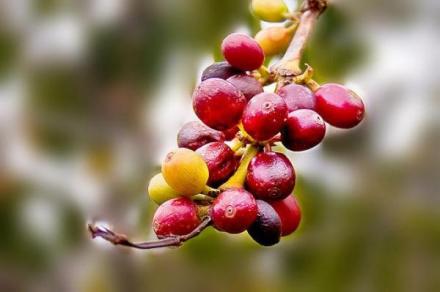
Climate change affects coffee cultivation in equatorial countries
As the second most traded commodity, coffee is second only to oil in value. Global climate change is affecting coffee cultivation in tropical countries on both sides of the equator, and the coffee crisis is already brewing. It is generally believed that large food companies will always be able to get coffee from somewhere in the future, or even if the temperature warms up, farmers can still grow coffee on higher mountains. But the researchers point out that in the main
2015-08-01 Climate change impact equator country coffee cultivation as ranking second big
Columbia Colombia huila coffee beans
Colombia huila, Colombia: located in the southwest of Colombia, it is one of the major coffee growing areas. Because there are famous coffee cultivation places in Huilan area, the names of small areas become brand names and circulate. Although the cultivation conditions in this area are also very good, the cultivation infrastructure of coffee cultivation farm and surrounding conditions is not yet.
2016-02-25 Columbia Huilan Colombia huila Coffee beans Columby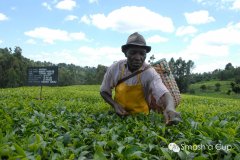
Puerto Rico has a very long history of coffee cultivation.
Puerto Rico has a very long history of coffee cultivation. As a Caribbean island country, coffee planting as a commodity began to rise here as early as the 1860s. What is interesting is that in recent years, with the increase of import tariffs on Puerto Rico coffee in the United States and other countries, although the coffee planting industry here has shrunk to a great extent, a new round of industrial reshuffle and integration
2016-06-12 Bodo Li has each has very long coffee cultivation history introduction
Coffee tree cultivation conditions
The coffee tree is native to Ethiopia in Africa. Coffee tree in botany, belongs to the Rubiaceae coffee subgenus evergreen tree, and generally known as coffee beans, survey is the coffee tree fruit seeds, only because the shape like beans, so called coffee beans. Climate is the decisive factor for coffee cultivation. Coffee trees are only suitable for growing in the tropics or subtropics, so latitude 25 from north to south
2016-06-01 coffee cultivation condition origin Africa Ethiopia botany genus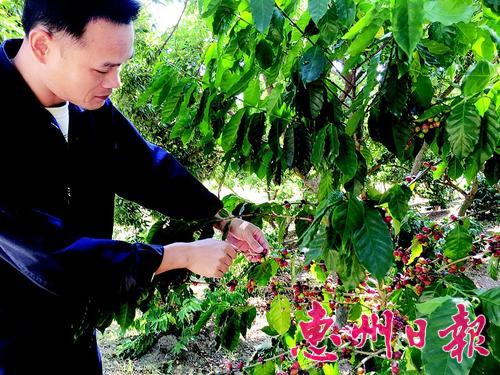
Coffee is also produced in Huizhou, Guangdong. Coffee beans brought by Taiwan businessmen are cultivated and germinated in Huizhou.
Coffee beans cultivated in Huizhou. Coffee beans cultivated in Huizhou. Our reporter Huang Tao Chen Chunhui (Reporter Huang Tao Chen Chunhui) I have heard of Hainan coffee, and Yunnan coffee is also known. Have you tried Huizhou coffee? The reporter learned yesterday that African coffee is also quietly planted on many hillsides in Huizhou. After years of trial, it is now known as African coffee.
2015-12-01 Guangdong Huizhou production coffee Taiwan businessmen bring coffee beans breeding germination
Coffee botany knowledge-Malaysia Coffee City White Coffee
According to the botanical description of coffee: coffee is Rubiaceae, coffee genus, perennial evergreen shrubs or small trees. There are more than 60 types of coffee classified, but there are roughly two varieties of coffee grown commercially on a large scale, one is Arabica, accounting for about 70 percent of the world's coffee planting area, and the other is Robasta, accounting for about 30 percent of the world's coffee planting area. According to our country
2016-08-15 Coffee Botany knowledge Malaysia Chengbai
The basics of coffee cultivation
What is coffee? Coffee is the fruit of a Rubiaceae plant growing about 6000 feet above sea level, distributed on the world's narrow subtropical axis; coffee trees grow green all the year round and can grow up to 20 feet tall, and are generally controlled at 8 to 10 feet for easy harvest.
2014-06-17 Coffee knowledge coffee cultivation coffee encyclopedia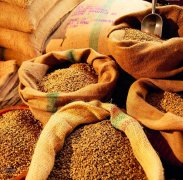
Knowledge of coffee botany basic knowledge of fine coffee
According to the botanical description of coffee: coffee is Rubiaceae, coffee genus, perennial evergreen shrubs or small trees. There are more than 60 types of coffee classified, but there are roughly two varieties of coffee grown commercially on a large scale, one is Arabica, accounting for about 70 percent of the world's coffee planting area, and the other is Robasta, accounting for about 30 percent of the world's coffee planting area. According to our country
2015-01-29 Coffee Botany knowledge Fine goods basic knowledge description Grass