“transplant” search results (922)

The sowing method of Coffee basic knowledge of planting Coffee trees
The coffee wrapped in endocarp will be planted to the seedbed and will germinate in 40-60 days and grow to about 50 cm in about 6 months after germination. At this stage, the seedlings are still fragile and must be covered with cold gauze and other things to block direct sunlight. The seedlings blossomed about three years after they were transplanted from the seedbed to the garden. In this period, Central America and other countries that use hand-picking to harvest coffee beans, for
2015-03-28 Coffee sowing method planting basics common sense wrapped inner fruit skin coffee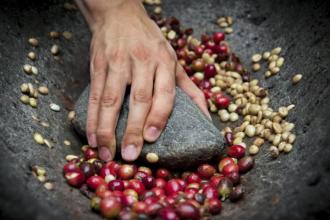
Refreshing and refreshing Yemeni coffee flavor, characteristics, taste and manor
Yemeni coffee originated from Arabian coffee trees hundreds of years ago, all produced in areas above 3000 feet above sea level. For hundreds of years, the unique planting and production methods of Yemeni coffee have remained almost unchanged. The seedlings of Yemeni coffee trees are first cultivated in nurseries and then transplanted to high elevations. Pesticides and fertilizers are not used in the breeding process. Mature coffee beans are naturally dried on coffee trees and shelled by stone grinding.
2016-08-30 Refreshing refreshing endless aftertaste Yemen coffee flavor specialty mouth
Indonesian coffee Asian coffee has a higher body than Central and South American and African beans
Asian coffee is more full-bodied than Central and South American and African beans, but less sour, with a hint of heavy wood, herbs, spices and earth, and a deep, smoky aroma over an elevated acid aroma. At the end of the seventeenth century, the Dutch East India Company transplanted the Arabica tree (tibica) from India to Jakarta, Java. Due to the favorable climate and soil conditions, Arabica soon spread to Sumatra on Java Island.
2015-01-27 Indonesia Coffee Asia Thickness Central and South America Africa Bean High Thick
Boutique coffee beans Yemeni Matari mocha coffee
Yemen is the first stop for the coffee variety Arabica to be transplanted from Ethiopia. Although the genetic polymorphism is impaired, it still retains a considerable number of multiple coffee genes, making it the second country in the world qualified to be crowned with ancient superior varieties. In addition, early Yemeni coffee was mainly exported from the port of Mocha, so the coffee that was later exported from here was named after Mocha. At the same time, Yemen is also a classic of early taste in the sun.
2015-01-08 Boutique coffee beans Yemen Matari Tali mocha coffee seed
Dirkley's "Father of Coffee trees in Central and South America"
In the middle of the 18th century, cafes were opened in major cities in Europe, and the huge demand for coffee led to the popularity of growing coffee in Central America. At present, most of the Tibica coffee trees in Central America are related to the coffee mother tree transplanted by Deckley. In 1777, 19 million coffee trees were planted on Martinique Island alone. Haiti, Puerto Rico and Cuba in the Caribbean followed suit to grow coffee.
2015-02-12 Klee Central and South America Coffee Father of Coffee 18th Century Mid-Mid Cafe all over Europe
Cultivating "Coffee Mother Tree" in the Netherlands to achieve Coffee Prosperity the History of Coffee in the Middle East
About 16 ⊙○ years ago, the Indian Babudan was infatuated with Middle Eastern coffee and hid seven Yemeni mocha seeds in a hidden bag on his belly to avoid the eyes and ears of Turkish soldiers. After returning to India, he planted coffee beans on Mount Chandragiri Hills in the southwestern state of Kanlataka, outside Babudan's spiritual cave. Due to the climate
2016-03-16 Holland cultivation Coffee Mother Tree Achievement Coffee Prosperity Middle East History India one
Characteristics of Panamanian Coffee introduction to Panamanian Coffee
Feicui Manor is famous for its Geisha variety. Rose summer seeds were discovered in the rose summer forests of Ethiopia in 1931 and sent to the Coffee Institute in Kenya, and then introduced to Uganda, Tanzania and Costa Rica, all mediocre. It was not until it was transplanted to Panama in the 1960s that it became a blockbuster after nearly half a century. 2005, 2006 and 2007
2016-08-01 Panama coffee characteristics Allie manor flavor taste introduction emerald
Coffee culture has always been a top-down pyramid communication.
In the first decade, instant coffee was almost synonymous with coffee, until a group of Taiwanese transplanted bright window tables, comfortable seats and coffee pots with brown bubbles to the mainland. In the 1990s, the best-known coffee and carving time on the island by mainlanders
2014-08-12 Coffee culture always a top-down pyramid spread the first ten years speed
Indonesian coffee Asian coffee has a higher alcohol thickness than Central and South America and African beans.
The mellow thickness of Asian coffee is higher than that of Central and South American and African beans, but its sour taste is lower, with slightly sunken wood, herb, spice and earthy flavor, and its low and stuffy aroma is higher than that of rising sour flavor. At the end of the 17th century, the Dutch East India Company transplanted Indian Arabica trees (Tibica) to Jakarta, Java. Due to the favorable climate and soil, Arabica quickly spread to Sumatra in Java.
2015-10-26 Indonesia coffee Asia thickness Central and South America Africa bean height thick
The latest coffee information and introduction
In 1931, it was exported from Geisha Mountain in southwest Ethiopia to Kenya in obscurity, Tanzania and Costa Rica. It was transplanted to Panama in the 1960s. After nearly half a century, it was amazing. It defeated Changsheng Army, such as Boben, Kadulla, Kaduai and Tibika. It included 2005 in one breath.
2015-12-21 boutique coffee beans rose summer coffee latest information introduction 1931 silent
A brief History of World Coffee (3)
An English coffee shop was born in Boston in 1688. Coffee cultivation began in 1696 from the Netherlands and western India to Java. Coffee was successfully cultivated on the Dutch island of Java in 1699. In 1706, cafes in Java shipped goods to the Netherlands for the first time. At the same time, the seedlings were sent together and planted in the Amsterdam Botanical Garden. In 1720, F in Venice
2014-05-23 Coffee history
Boutique coffee beans blue mountains Geisha rosy summer
It begins with a passage from teacher Han Huaizong's "Fine Coffee Studies": coffee varieties from Ethiopia and Yemen in the old world were transplanted to the Central and South American promised land in the new world, and took root, giving rise to many new varieties of mixed-race domestication. Among them, the most legendary color, the most beautiful taste spectrum, the cup test competition in the world won the most awards, the highest price, when the Panamanian green top pointed body Geisha; 2004
2015-01-13 Boutique coffee beans blue mountains Geisha Rosa Han Huaizong teacher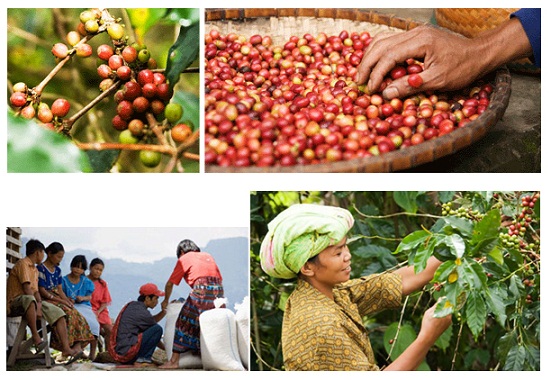
Are Colombian super Santa Rita coffee beans Robusta or Arabica? Coffee beans
Global coffee bean tree species are mainly divided into: Arabica and Canephora, of which Arabica coffee beans account for more than 100 coffee varieties of 70%80%coffee. The more common coffee varieties are: Arabica Arabica, with outstanding personality and unique flavor, is the main force of boutique coffee, mainly used in coffee shop management and high-end coffee market supply; Robsta
2016-04-22 Columbia Super Santa Rita Coffee beans Robbs Booth or Rabbi Card
How do coffee trees grow and bear fruit? Coffee Bean Growth
After a period of time in the seedbed, the better-growing seedlings are transplanted to the plantation. In order for the seedling to thrive, it should be watered, fertilized and weeded in time. There is also a need for pest control. After these procedures, coffee trees that have grown for three years are only at the stage of flowering once a year. Rain after the dry season, flowers.
2015-09-10 coffee how long results coffee beans growing Cafe popular science
Boutique Coffee beans Blue Mountains Geisha Rose Summer introduction
It begins with a passage from teacher Han Huaizong's "Fine Coffee Studies": coffee varieties from Ethiopia and Yemen in the old world were transplanted to the Central and South American promised land in the new world, and took root, giving rise to many new varieties of mixed-race domestication. Among them, the most legendary color, the most beautiful taste spectrum, the cup test competition in the world won the most awards, the highest price, when the Panamanian green top pointed body Geisha; 2004
2014-09-26 Coffee knowledge coffee beans rose summer blue mountains
Introduction to the History of Rosa Coffee the latest information on Rosa Coffee
In 1931, he obscure exported Kenya from Geisha Mountain Mountain in southwestern Ethiopia to Tanzania and Costa Rica, then transplanted to Panama in the 1960s, and then went through nearly half a century before he became a blockbuster, defeating the victorious armies such as Bourbon, Kaddura, Kaduai, Tibica and so on, winning 2005 in one breath.
2015-12-23 Rose summer coffee history introduction boutique coffee beans latest information 1931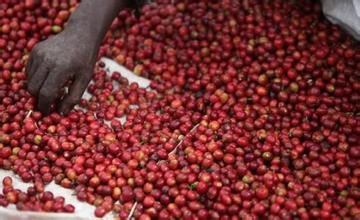
Refreshing, giving people an endless aftertaste of Yemeni coffee flavor, characteristics, taste and manor
Yemeni coffee originated from Arabian coffee trees hundreds of years ago, all produced in areas above 3000 feet above sea level. For hundreds of years, the unique planting and production methods of Yemeni coffee have remained almost unchanged. The seedlings of Yemeni coffee trees are first cultivated in nurseries and then transplanted to high elevations. Pesticides and fertilizers are not used in the breeding process. Mature coffee beans are naturally dried on coffee trees and shelled by stone grinding.
2016-08-30 Refreshing refreshing endless aftertaste Yemen coffee flavor specialty mouth
World Coffee-3
An English coffee shop was born in Boston in 1688. Coffee cultivation began in 1696 from the Netherlands and western India to Java. Coffee was successfully cultivated on the Dutch island of Java in 1699. In 1706, cafes in Java shipped goods to the Netherlands for the first time. At the same time, the seedlings were sent together and planted in the Amsterdam Botanical Garden. In 1720, F in Venice
2014-08-07 Coffee knowledge World Coffee Coffee Encyclopedia
Yemeni coffee grains of China Coffee Network are small and heavy.
Yemeni coffee originated from Arabian coffee trees hundreds of years ago, all of which are produced in areas above 3000 feet above sea level. For hundreds of years, the unique planting and production methods of Yemeni coffee have remained almost unchanged. The seedlings of Yemeni coffee trees are first cultivated in nurseries and then transplanted to high elevations. Pesticides and fertilizers are not used in the breeding process. Mature coffee beans are naturally dried on coffee trees and shelled by stone mill.
2015-11-20 China coffee net Yemen small heavy from hundreds
Dirkley-- the Father of Coffee trees in Central and South America
In the middle of the 18th century, cafes were opened in major cities in Europe, and the huge demand for coffee led to the popularity of growing coffee in Central America. At present, most of the Tibica coffee trees in Central America are related to the coffee mother tree transplanted by Deckley. In 1777, 19 million coffee trees were planted on Martinique Island alone. Haiti, Puerto Rico and Cuba in the Caribbean followed suit to grow coffee.
2015-04-02 Klee Central and South America Coffee Father of Coffee 18th Century Mid-Mid Cafe all over Europe