“the nature of coffee beans” search results (10000)
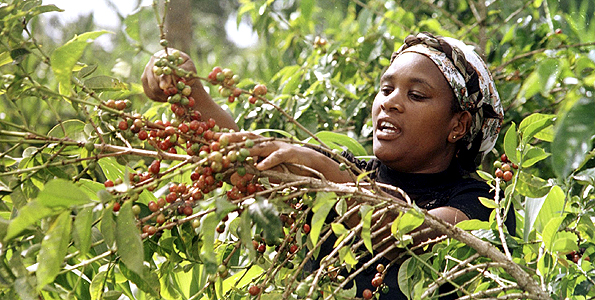
Coffee from fruit to raw bean dry washing semi-washing refined Colombian coffee beans
Coffee changes from fruit to raw bean there is a pair of oval seeds in the middle of the fruit, which are covered with outer skin, inner pulp and pulp. Ripe fruit spoils in a short time without treatment. Refining is to remove the skin and pulp of the coffee fruit, and then take out the seeds. Generally speaking, about 1 kg of raw coffee beans can be obtained from 5 kg of coffee fruit. The refining methods include drying and washing.
2016-03-29 Coffee fruit turn raw beans dried washed refined Colombian coffee beans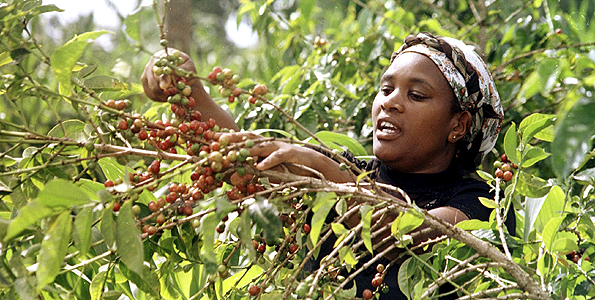
Dry water washing roasted coffee beans raw beans Ethiopian Sidamo sun treatment Lion King
The appearance of dry coffee is different from that of water-washed coffee: the water content of water-washed coffee is 12% Mel 13%, and that of dry coffee beans is 11% Mel 12%. Outwardly, the former looks darker green. Generally speaking, the raw beans with higher water content are mostly green or cyan, while those with less water content are brown or close to white. Raw beans are refined by washing.
2016-03-29 Dry washed roasted coffee beans coffee raw beans Ethiopia Dharma sun
Introduction to the characteristics of Peruvian Organic Coffee Flavor and Fine Coffee beans
Peru's finest coffee is produced in Chaximayo, Cusco, Note and Puno. Most Peruvian coffee is grown under natural conditions, but it is also difficult to confirm the cultivation of all coffee trees. Coffee grown under natural conditions costs 10% more than others and is exported to the United States and Japan. The quality of Peruvian coffee is comparable to that of any kind of coffee in Central or South America. Peru
2016-08-10 Peru organic coffee flavor taste manor producing area characteristics boutique coffee beans
The Cultural History of Fine Coffee the History of Cuban Coffee
In 1748, coffee was introduced into Cuba from Dominica, and Cuba began to grow coffee ever since. With fertile land, humid climate and abundant Rain Water, Cuba can be called a natural treasure land for coffee cultivation. The suitable natural conditions provide a favorable natural environment for the growth of coffee trees, and coffee is well planted and developed here. In Cuba, the cultivation of coffee is regulated by the state. Cuba is the most
2015-01-15 Boutique coffee cultural history Cuba history 1748 Dominica
Noble elegant and tender Cuban Crystal Mountain Coffee varieties taste characteristics Manor boutique coffee bean flavor introduction
In 1748, coffee was introduced into Cuba from Domiga, and Cuba began to grow coffee. With fertile land, humid climate and abundant Rain Water, Cuba can be called a natural treasure land for coffee cultivation. The suitable natural conditions provide a favorable natural environment for the growth of coffee trees, and coffee is well planted and developed here. In Cuba, the cultivation of coffee is regulated by the state. The best coffee in Cuba
2016-09-03 Noble elegant tender Cuba Crystal Mountain Coffee varieties Taste characteristics Manor
The difference between plain coffee and instant coffee-coffee review
About the production process, instant coffee is made from coffee beans after baking and grinding, adding fungicides, stabilizers, pigments, flavors and other chemical substances, and then high-pressure pulping and spray drying into powder particles, while the natural coffee in the coffee shop is after the coffee trees are picked, the raw beans are processed by physical processing such as washing or drying, and then roasted. About the taste of instant coffee in
2016-08-04 Coffee instant distinction comment about production craftsmanship coffee is made by
The key to coffee blending is that the nature must be consistent.
The key to matching is that the nature must be continuous and consistent. All commercial blends aim for stability, and some of them are excellent, such as Finnish Paulig, Swedish Gevalia, Zeogas and AvidNorquis and Dutch DonweEgberts, which are unique premium coffee mixes. For people who have just started drinking coffee, breakfast coffee is an ideal choice. This is
2016-06-24 Coffee blending key property must continuous consistent
How many treatments are there for Brazilian coffee? Brazilian coffee flavor
The four most common treatment methods of Brazilian coffee are natural solarization, desizing, semi-washing and water washing, among which natural solarization is the most popular. Since the harvest seasons in Brazil's two main producing areas, Serrado Minero (CerradoMineiro) and Mogiana Paulista (Mogiana Paulista), are both dry seasons of the year, natural solarization is popular in this region.
2016-06-06 Brazil coffee how much treatment way flavor common four kinds
The characteristics of Cubita Cuban Crystal Mountain Coffee the unique addition of special coffee beans in island coffee beans
In 1748, coffee was introduced into Cuba from Domiga, and Cuba began to grow coffee ever since. With fertile land, humid climate and abundant Rain Water, Cuba can be called a natural treasure land for coffee cultivation. The suitable natural conditions provide a favorable natural environment for the growth of coffee trees, and coffee is well planted and developed here. In Cuba, the cultivation of coffee is regulated by the state. Cuba is the best
2016-03-07 Cubita Cuba Crystal Mountain Coffee characteristics Island Coffee beans medium
The History and Culture of Coffee the History of Cuban Coffee
In 1748, coffee was introduced into Cuba from Dominica, and Cuba began to grow coffee ever since. With fertile land, humid climate and abundant Rain Water, Cuba can be called a natural treasure land for coffee cultivation. The suitable natural conditions provide a favorable natural environment for the growth of coffee trees, and coffee is well planted and developed here. In Cuba, the cultivation of coffee is regulated by the state. Cuba is the most
2015-07-28 Coffee History and Culture Common sense Cuba History 1748 Dominica
San Cristobal, the Galapagos coffee producing area of Ecuador with a unique ecological environment.
The coffee beans produced in Ecuador's Galapagos Islands are organic coffee beans, thanks to the unique ecological environment such as volcanic soil and microclimate, coupled with the fact that they do not use any chemical fertilizers or pesticides, they are recognized as natural green boutique coffee. this naturally grown coffee has a mild taste with a hint of flowers and fruit and caramel. It is understood that the Galapagos Islands are far from Eritrea.
2016-06-28 Natural thick Ecological Environment Ecuador Lapa Goss Coffee producing area Kerry
How should coffee beans be treated? coffee washing and tanning?
Coffee beans harvested in the sun must immediately enter the treatment process, otherwise they will begin to ferment and produce a peculiar smell. There are two methods of treatment, the sun method and the water washing method. The beans of the sun method have a complete natural mellow taste, and the coffee beans with gentle aroma and more glue must enter the treatment program immediately, otherwise they will begin to ferment and make the coffee beans smell peculiar.
2016-06-04 Coffee beans should how carry out processing coffee washing sun drying
Peruka Hamaka producing area Sunshine Cooperative Fair Trade Coffee beans in Peru
Sunshine Cooperative (SOL Y COOP) was established in 2005, located in the Cajamarca coffee producing area of Peru (Peru) in South America, the eastern mountain area of the Andes Mountains, the cooperative is surrounded by natural primeval rainforest, a large amount of fine sand provides a well-drained soil, the daily afternoon intermittent rain brings abundant Rain Water and moisture, and native animals and plants create natural.
2016-05-03 Peru Caha Maka producing areas Sunshine Cooperatives Fairness Trade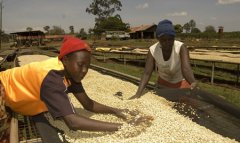
Cuban Crystal Mountain Fine Coffee the taste of Cuban Crystal Mountain Coffee
In 1748, coffee was introduced into Cuba from Dominica, and Cuba began to grow coffee ever since. With fertile land, humid climate and abundant Rain Water, Cuba can be called a natural treasure land for coffee cultivation. The suitable natural conditions provide a favorable natural environment for the growth of coffee trees, and coffee is well planted and developed here. In Cuba, the cultivation of coffee is regulated by the state. Cuba is the most
2016-03-31 Cuba Crystal Mountain boutique coffee taste characteristics 1748 Dom
General knowledge of Coffee Culture the History and Culture of Cuban Coffee
In 1748, coffee was introduced into Cuba from Dominica, and Cuba began to grow coffee ever since. With fertile land, humid climate and abundant Rain Water, Cuba can be called a natural treasure land for coffee cultivation. The suitable natural conditions provide a favorable natural environment for the growth of coffee trees, and coffee is well planted and developed here. In Cuba, the cultivation of coffee is regulated by the state. Cuba is the most
2015-02-05 Coffee culture common sense Cuba coffee history and culture 1748 Dom
General knowledge of Fine Coffee Culture History and Culture of Cuban Coffee
In 1748, coffee was introduced into Cuba from Dominica, and Cuba began to grow coffee ever since. With fertile land, humid climate and abundant Rain Water, Cuba can be called a natural treasure land for coffee cultivation. The suitable natural conditions provide a favorable natural environment for the growth of coffee trees, and coffee is well planted and developed here. In Cuba, the cultivation of coffee is regulated by the state. Cuba is the most
2014-12-03 Boutique coffee culture common sense Cuba coffee history and culture 1748
Delicate, smooth, refreshing and elegant Cuban Crystal Mountain Coffee flavor, characteristics, taste and manor introduction
In 1748, coffee was introduced into Cuba from Domiga, and Cuba began to grow coffee ever since. With fertile land, humid climate and abundant Rain Water, Cuba can be called a natural treasure land for coffee cultivation. The suitable natural conditions provide a favorable natural environment for the growth of coffee trees, and coffee is well planted and developed here. In Cuba, the cultivation of coffee is regulated by the state. Cuba is the best
2016-08-30 Meticulous smooth refreshing elegant Cuba Crystal Mountain coffee flavor taste
Washed or dry? The relationship between the handling method and the level name
The coffee beans baked by us as ingredients are actually the seeds in the coffee fruit. Coffee farmers give the fruit another name, coffee cherry (Coffee Cherry). If the pulp is separated from the seed, and how to dry the seed into a state that is easy to preserve, the whole process is collectively referred to as treatment. Due to the effect of the treatment process on the quality and flavor of coffee beans
2015-04-14 Washing or drying handling method level name relationship we as
Coffee common sense Crystal Mountain Coffee is synonymous with Top Cuban Coffee
In 1748, coffee was introduced into Cuba from Dominica, and Cuba began to grow coffee ever since. With fertile land, humid climate and abundant Rain Water, Cuba can be called a natural treasure land for coffee cultivation. The suitable natural conditions provide a favorable natural environment for the growth of coffee trees, and coffee is well planted and developed here. In Cuba, the cultivation of coffee is regulated by the state. Cuba is the most
2014-12-15 Coffee common sense Crystal Mountain that is top Cuba synonym 1748 coffee
Coffee common sense Crystal Mountain Coffee is synonymous with Top Cuban Coffee
In 1748, coffee was introduced into Cuba from Dominica, and Cuba began to grow coffee ever since. With fertile land, humid climate and abundant Rain Water, Cuba can be called a natural treasure land for coffee cultivation. The suitable natural conditions provide a favorable natural environment for the growth of coffee trees, and coffee is well planted and developed here. In Cuba, the cultivation of coffee is regulated by the state. Cuba is the most
2015-03-23 Coffee common sense Crystal Mountain that is top Cuba synonym 1748 coffee