“tanning method” search results (400)

Cuban Crystal Coffee Flavor and Taste introduction Cuban Fine Coffee Cuban Coffee characteristic Manor
Cuba is like a crocodile crouching in the Caribbean, her tail brushing right on the Tropic of Cancer. Cubans have always been known for their enthusiasm, but they are also very sincere and stubborn. The same is true of the coffee they produce, which has always been carried out in accordance with the washing standards of Arab coffee, and they have always followed their unique traditional methods of making coffee, controlling roasting extremely.
2016-08-03 Cuba Crystal Coffee Flavor Taste introduction boutique Features Manor
Full and juicy civet coffee flavor description fermentation process treatment method grinding degree mouth feeling
Traditionally, coffee fruit is washed or tanned to remove the peel, pulp and sheep skin, and finally take out the coffee beans, but Luwak uses the method of natural fermentation in the body to remove the coffee beans, so it has a special flavor. In the mountains of Indonesia, there is a kind of civet named Luwak that likes to eat oar coffee fruits, but the hard coffee seeds cannot be digested.
2016-09-30 Full juicy musk coffee flavor description fermentation process treatment way
Introduction to the flavor description and processing methods of Cuban Crystal Mountain Coffee with uniform taste
In Cuba, most of the coffee beans are picked by hand. Coffee beans are picked about every half a month during the ripening period. During or after picking, coffee beans are classified and those immature and bad beans are removed to ensure the quality of the coffee. Cubans usually deal with coffee beans in two ways: sun exposure and water washing. Sunbathing is the easiest,
2016-09-26 Taste uniformity Cuba Crystal Mountain Coffee Flavor description treatment way method
Cuban Crystal Mountain Coffee Flavor description methods and methods for uniform taste Fine Coffee
Cuba has more than 200 rivers and thousands of streams, most of which run north-south, so the current is shallow and fast. The Cato River, which flows east-west to the north of the Maestra Mountains, is the largest river in Cuba, but it is only 370 kilometers long and is the only navigable river in Cuba. Cuba's coastline is tortuous, generally steep in the north and flat in the south, with many good ports. They are almost all in shape.
2016-10-06 Taste uniformity Cuba Crystal Mountain Coffee Flavor description treatment way method
Introduction to the flavor and taste of Cuban Crystal Mountain Coffee characteristics of Cuban Crystal Coffee Fine Coffee beans
Cuba is like a crocodile crouching in the Caribbean, her tail brushing right on the Tropic of Cancer. Cubans have always been known for their enthusiasm, but they are also very sincere and stubborn. The same is true of the coffee they produce, which has always been carried out in accordance with the washing standards of Arab coffee, and they have always followed their unique traditional methods of making coffee, controlling roasting extremely.
2016-08-01 Cuba Crystal Mountain coffee flavor taste introduction crystal characteristics boutique
Introduction to the flavor and taste characteristics of boutique coffee bean Banqi Maggie coffee
At this time last year, we got the beans of Banchi Maggie for the first time, but that time we only airlifted more than 10 kg to China, and our own people drank a few kg, and it was a pity that we didn't get many of the remaining beans. This year, we will introduce this unique style of sun-tanned coffee to share with more friends. Bancimaji (Bench Maji), located in southwest Ethiopia, distance
2016-07-12 Boutique Coffee beans Benji Maggie Coffee Flavor Taste characteristics introduction year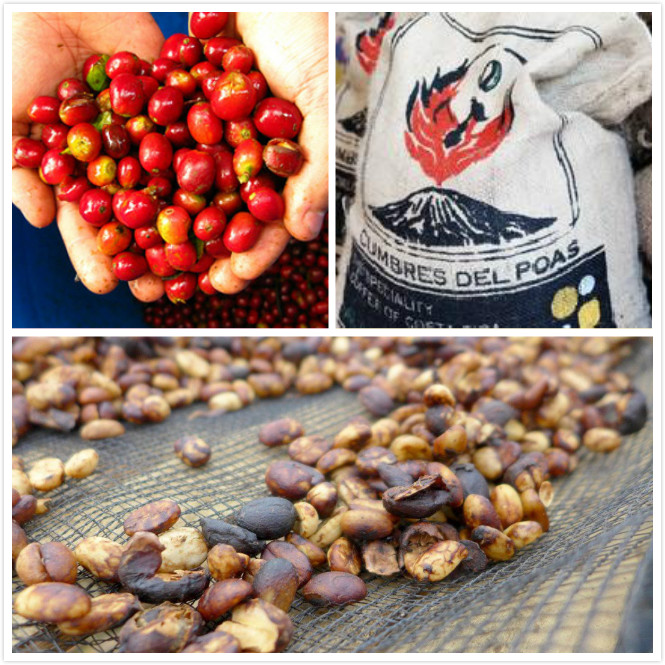
How to treat green coffee beans? Sunlight treatment Ethiopia Sunlight Ye Jia Xue Fei Ye Jia Xue Fei G1
Solarization is a traditional method of primary processing of coffee beans, and ancient coffee growing countries such as Ethiopia and Yemen still use solarization almost exclusively for raw beans. Sun-drying begins by spreading tank-identified beans, ripe or semi-ripe, on a drying ground. The exact time depends on local climatic conditions, and generally takes two weeks to four weeks.
2016-04-25 coffee green beans processing method sun ethiopia yega sherry
Introduction to the treatment method of taste and flavor in the producing area of Cuban Crystal Mountain Coffee
Cubita is produced in coffee from the pollution-free Crystal Mountain in the high altitude of Cuba, which is adjacent to the Blue Mountain Mountains of Jamaica and has similar climatic conditions, comparable to Jamaican Blue Mountain Coffee. Crystal Mountain is also known as the Blue Mountain of Cuba. So there are a lot of coffee under the banner of the Cuban Blue Mountains, but the purest Crystal Mountain Coffee Cubita is allowed to use Cuban water.
2016-10-15 Cuba Crystal Mountain Coffee Grinding characteristics Variety producing area Taste Flavor treatment
The History of Cuban Coffee
In 1748, coffee was introduced into Cuba from Dominica, and Cuba began to grow coffee ever since. With fertile land, humid climate and abundant Rain Water, Cuba can be called a natural treasure land for coffee cultivation. The suitable natural conditions provide a favorable natural environment for the growth of coffee trees, and coffee is well planted and developed here. In Cuba, the cultivation of coffee is regulated by the state. Cuba is the most
2014-08-06 Coffee Culture Cuban Coffee History Coffee Encyclopedia
History and culture of Cuban coffee
Coffee was introduced to Cuba from Dominica in 1748, and Cuba has since grown coffee. The fertile soil, humid climate and abundant rainfall in Cuba make it a natural treasure for coffee cultivation. Suitable natural conditions provide a favorable natural environment for the growth of coffee trees, where coffee is well planted and developed. In Cuba, coffee cultivation is regulated by the State. Cuba
2015-04-29 Coffee Country of origin Cultural knowledge Cuba History and culture 1748 Domi
Delicious, rich, smooth Cuban crystal coffee Introduction Boutique coffee
In Cuba, coffee beans are mostly picked by hand. During the ripening period of coffee beans, they are picked about once every half month. During or after picking, coffee beans are sorted to eliminate immature and bad beans to ensure coffee quality. Cubans usually treat coffee beans in two ways: sunning and washing. Sunburn is the easiest,
2016-06-28 very delicious rich smooth cuban crystal coffee presentation boutique
Introduction to Cuban Crystal Coffee with mellow and fragrant taste
Cubita is the number one export brand of Cuban coffee, famous for its mellow and fragrant taste. Export markets are mainly Japan, France, Germany, Ireland, Canada, China and other countries. The cubita coffee entering the Chinese market is all selected from the pollution-free Crystal Mountain coffee beans in the high altitude areas of Cuba, which is a typical Caribbean coffee bean, which is refined by the traditional washing process.
2016-06-30 Mellow fragrant taste Cuba Crystal Coffee introduction Cubita
Noble, tender, elegant Cuban crystal coffee Introduction Boutique coffee
In Cuba, coffee beans are mostly picked by hand. During the ripening period of coffee beans, they are picked about once every half month. During or after picking, coffee beans are sorted to eliminate immature and bad beans to ensure coffee quality. Cubans usually treat coffee beans in two ways: sunning and washing. Sunburn is the easiest,
2016-07-01 noble tender elegant cuban crystal coffee presentation boutique cuba coffee beans
History of Cuban Coffee Culture of Cuban Coffee City
Coffee was introduced to Cuba from Dominica in 1748, and Cuba has since grown coffee. The fertile soil, humid climate and abundant rainfall in Cuba make it a natural treasure for coffee cultivation. Suitable natural conditions provide a favorable natural environment for the growth of coffee trees, where coffee is well planted and developed. In Cuba, coffee cultivation is regulated by the State. Cuba
2015-03-10 Cuba Coffee History Culture City 1748 Dominica
Cuban Crystal Coffee Flavor Taste Introduction Cuban Fine Coffee Beans Cuban Coffee Manor
In Cuba, coffee beans are mostly picked by hand. During the ripening period of coffee beans, they are picked about once every half month. During or after picking, coffee beans are sorted to eliminate immature and bad beans to ensure coffee quality. Cubans usually treat coffee beans in two ways: sunning and washing. Sunburn is the easiest,
2016-07-29 Cuban Coffee Flavor Taste Introduction Boutique Coffee Bean Manor Cuba
Crystal Mountain Coffee is synonymous with premium Cuban coffee.
Coffee was introduced to Cuba from Dominica in 1748, and Cuba has since grown coffee. The fertile soil, humid climate and abundant rainfall in Cuba make it a natural treasure for coffee cultivation. Suitable natural conditions provide a favorable natural environment for the growth of coffee trees, where coffee is well planted and developed. In Cuba, coffee cultivation is regulated by the State. Cuba
2015-01-30 Crystal Mountain Coffee Top Cuba Synonym 1748 Dominica
Cuban coffee Cuban crystal mountain coffee boutique coffee beans the latest coffee introduction unique flavor
Cubita is Cuban coffee, which is mainly exported to Japan, France, Germany, Ireland, Canada and other countries. The cubita coffee entering the Chinese market is all selected from the pollution-free Crystal Mountain coffee beans in the high altitude areas of Cuba, which is a typical Caribbean coffee bean. All the granules of coffee beans are strictly selected according to the standard of sieve 17-19, and the selected coffee beans have large particles and high maturity.
2016-01-08 Cuba coffee crystal mountain boutique coffee beans latest introduction flavor unique C.
Introduction of pollution-free Cuban Crystal Coffee at High altitude
In Cuba, most of the coffee beans are picked by hand. Coffee beans are picked about every half a month during the ripening period. During or after picking, coffee beans are classified and those immature and bad beans are removed to ensure the quality of the coffee. Cubans usually deal with coffee beans in two ways: sun exposure and water washing. Sunbathing is the easiest,
2016-06-23 High altitude altitude region pollution-free Cuba Crystal Coffee introduction
Introduction to Ted Manor in the producing area of Sidamo Coffee Flavor Manor
1. After picking beans without special screening and treatment, uneven appearance and maturity are mixed together, the process is relatively rough, so the quality of coffee beans is unstable and prone to defective beans. two。 Coffee farmers usually find an open space near their home to deal with it, so there are often a lot of impurities or dirt on the ground, and coffee is easy to get smelly. Improved tanning method
2016-07-30 Realistic low Dharma coffee flavor taste manor producing area introduction Ted
Introduction to Cuban Crystal Coffee with Natural growing conditions
In Cuba, most of the coffee beans are picked by hand. Coffee beans are picked about every half a month during the ripening period. During or after picking, coffee beans are classified and those immature and bad beans are removed to ensure the quality of the coffee. Cubans usually deal with coffee beans in two ways: sun exposure and water washing. Sunbathing is the easiest,
2016-06-23 Natural planting conditions Cuba Crystal Coffee introduction Coffee beans picking