“statistics” search results (1250)

The Development of Coffee Industry in China
There is great potential for the development of the domestic coffee market. With the rapid development of China's economy and the continuous improvement of people's living standards after China's entry into WTO, coffee is being accepted by more and more Chinese. Coffee is no longer just a drink, it is gradually closely linked with fashion and taste, or make friends and talk, or business talks, or leisure, in a cup of coffee filled with music.
2014-06-09 Coffee News Coffee Development in China
Follow the heir to explore the Korean popular coffee shop
Recently, a wave of successors has swept the world, according to incomplete statistics, about 400 million people around the world are chasing the South Korean TV series "successors." This is a series of sweet, moving, rampant romance stories that tell the story of a series of sweet, moving, rampant romances around the extremely ordinary and poor heroines of 0.1% of the Korean elite. Recently, a wave of successors has swept the world. According to incomplete statistics, there are about 400 million people around the world.
2015-08-12 Then heirs mysteries Korean popularity coffee shops recently successors.
Introduction to the Development of Coffee Industry in China in recent years
1. Great potential for the development of the domestic coffee market after China's entry into WTO, China's economy is developing rapidly, people's living standards are constantly improving, and coffee is being accepted by more and more Chinese. Coffee is no longer just a drink, it is gradually closely linked with fashion and taste, or make friends and talk, or business talks, or leisure, in a cup of coffee filled with music.
2014-08-13 Coffee news coffee industry coffee development coffee development in China
The increase of Coffee share leads the turn of consumption pattern
Between 2008 and 2013, Chinese mainland cafes and beverage shops grew by an average of 32% a year, while the number of bars that specialize in alcoholic drinks decreased or even closed down, according to statistics released by an agency. Specifically, coffee shops and beverage shops have grown by an average of 32% a year, making it the most representative overlord in the catering industry. ten years ago, there were only about 1600 coffee shops in Beijing.
2015-08-18 Coffee share promotion leadership consumption model shift institution release statistical capital
Looking forward to the development trend of coffee in China
1. Great potential for the development of the domestic coffee market after China's entry into WTO, China's economy is developing rapidly, people's living standards are constantly improving, and coffee is being accepted by more and more Chinese. Coffee is no longer just a drink, it is gradually closely linked with fashion and taste, or make friends and talk, or business talks, or leisure, in a cup of coffee filled with music.
2014-08-19 Coffee News Coffee Development Chinese Coffee Development trend
Vietnam fine coffee beans Vietnam cat shit coffee?
According to the statistics of Vietnam Coffee Association, in 2000-2001 (from October 2000 to September 2001), Vietnam exported 874676 tons of coffee from 149 enterprises, among which the three largest exporters were OLAM Company (foreign-owned enterprise, 21326 tons), DAKMAN Company (joint venture, 18076 tons) and Vinafimex Company (local enterprise, 13719 tons). Vietnamese coffee
2016-07-04 vietnam boutique coffee beans cat poop coffee association business statistics
An introduction to the founding history of IOC International Coffee Organization
125 million people in the world live on coffee, and most of the coffee is produced by small coffee farmers, who work so hard that the world can consume 600 billion cups of coffee a year. Large consumption makes coffee one of the most popular commodities in the world. More than 60 countries mainly produce and trade coffee. These countries rely heavily on coffee exports. According to statistics, there are many countries.
2015-11-26 IOC International Coffee Organization Founding History introduction Global 1.25
Taiwan drinks 2.1 billion cups of freshly brewed coffee every year
According to statistics from the Customs Department of Taiwan's Ministry of Finance, Taiwan's coffee bean imports have nearly doubled in five years, which is equivalent to 2.17 billion cups of freshly brewed coffee consumed by Taiwanese every year, that is, 94.3 cups per person per year. The China Times reported that Taiwan has the third longest working hours in the world, and the sight of office workers holding a cup of coffee on the road can be seen at any time. According to Customs information, coffee beans imported last year amounted to 2.1
2014-10-25 Coffee News Taiwan Coffee Freshly brewed coffee
How much coffee does the world drink every day? Do you drink differently from place to place?
According to the statistics of ICO (International Coffee Organization) in 2007, the country that imports the largest amount of coffee is the United States, which imports nearly three times that of Japan, Germany ranks second, and Japan ranks third; if exports are taken into account, Brazil ranks second, while Japan ranks fourth in terms of coffee consumption; if ranked by per capita consumption, Finland, Norway,
2015-09-10 All over the world every day how much to drink coffee everywhere how to drink different ICO
Taiwan drinks 2.1 billion cups of freshly brewed coffee every year.
According to the statistics of the Customs Department of Taiwan's Ministry of Finance, the import of coffee beans in Taiwan has nearly doubled in five years, which translates to 2.17 billion cups of freshly brewed coffee consumed by Taiwanese every year, that is, 94.3 cups per person per year. Taiwan's working hours are the third longest in the world, and office workers can be seen with a cup of coffee on the road, the China Times reported. According to customs data, coffee bean imports reached 2.1 last year.
2016-09-05 Taiwan every year drink 2.1 billion cup of coffee according to Ministry of Finance Guan
Development of Coffee in Korea South Korea imported nearly 140000 tons of coffee in 2014
Although South Korea's economy is still in the doldrums and consumption is shrinking, South Korea's coffee imports hit an all-time high in 2014, according to statistics released by the South Korean Customs Agency on the 29th. Data show that South Korea imported 139764 tons of coffee in 2014, an increase of 14.8 percent over the previous year, and imports of US $595.415 million, an increase of 18.2 percent over the previous year. Coffee imports are at an all-time high.
2015-02-27 South Korea coffee development 2014 imports close to 140000 tons although
Is the development prospect of diffuse coffee good? introduction to the coffee industry
According to statistics, there are 13600 cafes in China, and this number is growing every day, and the growth rate of the Beijing market is as high as 18%. In Hangzhou, more than 10 new coffee shops opened in May, while the average number of new coffee shops in Hangzhou was only 20,30 in previous years, according to statistics from the Hangzhou Coffee Western Food Association. The cafe industry in China is really hot. But after all, this is accumulation
2016-10-18 Coffee development prospects okay industry introduction according to statistics at present state-owned 136
The flavor and taste of Bali coffee introduces which brand of Bali boutique coffee bean coffee is better.
Bali Coffee Club provides one-stop services from location selection, evaluation, decoration, equipment, materials, personnel training, marketing, systematic management and so on. It not only saves a lot of trouble for franchisees, but also enhances the confidence of success and improves the efficiency. According to the statistics of the Italian Ministry of Commerce in 2004, the commercial transaction volume of joining the chain operation has exceeded the total value of its retail market by 2.5 times. 2004
2016-07-27 Bali coffee flavor taste introduction boutique coffee beans
Introduction to the Export and sales of Colombian Coffee Lazmus Manor
Colombia is one of the most important coffee exporters in the world. According to the statistics of the International Coffee Organization, Colombian coffee exports accounted for an average of 17% of the world's total coffee exports in 1991 and 1996, second only to Brazil (24% of the world's total exports). In 1998, the total coffee exports of the member states of the organization were 79.5 million bags, of which Brazil accounted for 22.9%, Colombia 14.2% and Vietnam 8.1%.
2016-07-14 Colombia Coffee Export and its sales situation introduction Raz Moss Chuang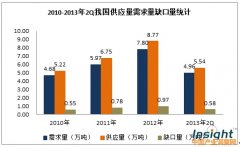
Analysis of Coffee demand data in China in recent five years
There are records of coffee in the poems of the late Qing Dynasty, such as the bamboo branch word "Kao Fei", which was popular in Shanghai at that time. Colored sugar is sweet and bitter, and westerners cook tea for each meal. In the 1920s and 1930s, some cafes have appeared in old Shanghai and Kunming. Coffee shops and cafes temporarily disappeared at the beginning of the founding of New China. After the reform and opening up
2015-09-08 China five years coffee demand data analysis late Qing Dynasty ci there are about
Japanese media: coffee retail sales continue to rise, consuming 50 billion cups a year
According to a report on the Japanese media website on December 8, although Japan's population is gradually decreasing and the social aging trend is becoming more and more serious, the sales of the coffee retail industry continue to rise. According to statistics released by the all-Japan Coffee Association, a group of Japanese coffee retail groups, domestic coffee consumption in Japan has been rising for three years as of last year, while last year
2016-02-25 Japanese media coffee retail sales continuous rising one year consumption 50 billion cups
Korean Coffee Brands make efforts to distribute the Chinese Market
Specialty stores in China are expected to break through a thousand this year and the domestic coffee market is setting off a Korean wave towards the end of the year. As South Korea's local coffee market is close to saturation, Korean coffee brands have begun to turn to the fast-growing Chinese market. According to statistics, the number of Korean brand cafes in China is expected to exceed 1000 this year. The large-scale expansion of Korean brands has also made the traditional coffee giants Starbucks and COSTA big.
2014-12-15 Korea Coffee Brand Power layout China Market Store in China year
Where do coffee beans usually come from?
[guide] the coffee we drink comes from the roasting and grinding of coffee beans, and all this is provided by magical coffee bars. The origin of this economic crop is in Yisuobi in Africa. It has been cultivated for more than 2000 years. At present, the main coffee producing areas in the world are Latin America, Africa and Africa. According to statistics, coffee is cultivated in 76 countries in the world, mainly from coffee.
2015-11-25 Coffee beans travel generally all how guide we coffee from coffee
Coffee chain joining-- Analysis of Coffee Entrepreneurship Market
The international coffee market is in the mature stage, and many people do not know that coffee beans are the second largest trading commodity in the world. Coffee is produced in more than 70 countries with an annual output of 1 million bags. the development of the coffee industry provides employment opportunities for 100 million people around the world. The coffee production of the exporting member countries of the International Coffee Organization accounts for more than 97% of the world's total output. While annual retail sales exceed 70%.
2015-08-13 Coffee chain franchise entrepreneurship market analysis
Description of Coffee Flavor in Crystal Mountain, Cuba. Introduction to the name of the manor.
11.2383 million (2014), of which 66 per cent are white, 11 per cent black, 22 per cent mixed race, 1 per cent Chinese and 75 per cent of the urban population. The official language is Spanish, which is mainly Catholic, African, Protestant, Cuban and Jewish. [9] according to Cuba's National Bureau of Statistics, 75 per cent of Cuba's population lives in cities, or more than 8.465 million people. Live in rural areas
2016-10-20 Cuba Crystal Mountain Coffee beans Flavor description Grinding characteristics Manor name introduction