“separate” search results (3777)

Specialty Coffee Making Specialty Hot Coffee Making Recipe
1. Pour coffee into Vienna coffee cup, cover with whipped cream, and finally sprinkle with white sugar. In Vienna, Austria, there is no drink called Vienna coffee, while in some countries outside Austria, coffee with whipped cream is called Vienna coffee. This coffee was introduced to Japan via the United States and is officially known as ViennaCoDe.
2014-10-20 Coffee knowledge Coffee making Fine coffee Coffee recipe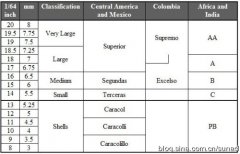
10 factors to consider when selecting raw coffee beans
The raw bean seller is mainly responsible for grading the coffee beans before selling them to the coffee bean merchant. After the grading is completed, premium coffee beans and boutique coffee beans will be selected, although they will have some defects but do not affect the coffee rating. These defects are not so serious, but they can also cause potential damage to the quality of coffee. Although Cupping is undoubtedly the most definite way to check coffee beans.
2015-06-06 Selection coffee raw beans need consider 10 coffee beans factors
Kenya Coffee Kenya rating
Usually, Kenyan coffee is classified as follows: 1) Common categories: coffee fruits picked by hand, picked by hand, picked out immature fruit (unripe), overripe fruit (overripe) and other defects, peeled, after about 36 hours of fermentation, placed on a metal grid for sun drying, in the processing plant to remove the seed shell (parchment) to become a blue-green appearance
2016-06-03 Kenya coffee grade division usually classification as follows often
Coffee Making Technology Features Hot Coffee Making Recipe
1. Pour coffee into Vienna coffee cup, cover with stirring cream, and finally sprinkle with white sugar. In Vienna, Austria, there is no drink called Vienna coffee, while in some countries outside Austria, coffee with whipped cream is called Vienna coffee. This coffee was introduced to Japan via the United States and is officially known as ViennaCoDe.
2014-09-24 Coffee knowledge Coffee making Hot coffee making Coffee making methods
Coffee Bean knowledge Coffee Raw Bean
Sellers of raw beans (usually coffee farmers or processing plants that deal with raw beans) must be responsible for the grading of coffee beans before they are sold to buyers (usually importers, brokers, or bean merchants). Once the classification is completed, there will still be some coffee beans of "Exceptional" and "Specialty" that will not be included in the classification.
2014-10-11 Coffee knowledge coffee beans
Multiple factors that affect a perfect espresso
To take you into the world of espresso. On the basis of affecting the quality of coffee, we divide the production process into several elements to facilitate the organization of a large number of materials, not to say that these elements are independent of each other or can be defined separately. For example, there are many small factors that affect the pump pressure, we just assume that they are all normal, that the valves in the machine are well sealed, and that the outlet head seal ring is intact.
2015-03-06 Influence one cup perfect concentrated coffee multiple factors take you walk into concentrate
Observe the common sense of 10 elements of coffee beans
The raw bean seller is mainly responsible for grading the coffee beans before selling them to the coffee bean merchant. After the grading is completed, premium coffee beans and boutique coffee beans will be selected, although they will have some defects but do not affect the coffee rating. These defects are not so serious, but they can also cause potential damage to the quality of coffee. Although Cupping is undoubtedly the most definite way to check coffee beans.
2015-04-16 Observation coffee raw beans essential elements coffee beans common sense sellers major responsible
The method of brewing coffee and the piston method and stewing method of brewing coffee with different flavors.
The piston method, some say, was invented in 1933 to extract the most flavor of ground coffee beans. Heat the pot in advance, add the rough ground coffee to the bottom of the pot, add hot water, then stir and boil for about three to five minutes, separating the ground coffee powder from the coffee drink before the piston has completely lost its strength. this
2016-03-02 Brewing coffee method and different taste piston stew
Kenyan grade coffee bean boutique coffee
Usually, Kenyan coffee is classified as follows: 1) Common categories: coffee fruits picked by hand, picked by hand, picked out immature fruit (unripe), overripe fruit (overripe) and other defects, peeled, after about 36 hours of fermentation, placed on a metal grid for sun drying, in the processing plant to remove the seed shell (parchment) to become a blue-green appearance
2016-06-08 Kenya grades divisions coffee beans boutique coffee usually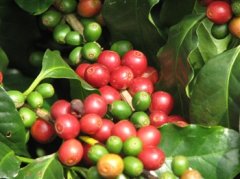
Initial processing requirements of Yunnan Coffee (Arabica species)
Technical requirements for the initial processing of small seed (Arabica seed) Coffee 1. There are two processing methods for coffee beans made from fresh coffee fruits, namely wet processing and dry processing. The first and second grade fruits are processed by wet method, and the third grade fruits are processed by dry method in areas without peeling machine and lack of water. 2. Processing technology 2.1 equipment and facilities should be equipped with fresh fruit collection pool and siphon
2014-09-29 Yunnan coffee is first processed Arabica species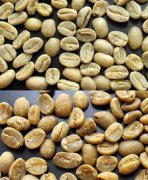
Grading of raw coffee beans there are two ways to grade raw coffee beans.
There are two ways to classify raw coffee beans, one is the filter number, and the other is the elevation. It is divided by the filter number, and the size is size in terms of the screen size. Round beans are generally smaller than flat beans, between 8-13 and 12-29. 8, 9, 10. 12, 13. 18. 29 = small, medium, ordinary. Quasi-big. Big, extra large. The bigger the size, the bigger the beans. Like SC-.
2015-06-05 Coffee beans grading coffee raw beans methods two kinds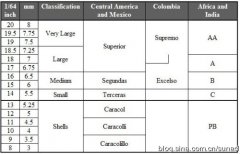
Ten elements of coffee common sense to consider when choosing raw coffee beans
The raw bean seller is mainly responsible for grading the coffee beans before selling them to the coffee bean merchant. After the grading is completed, premium coffee beans and boutique coffee beans will be selected, although they will have some defects but do not affect the coffee rating. These defects are not so serious, but they can also cause potential damage to the quality of coffee. Although Cupping is undoubtedly the most definite way to check coffee beans.
2015-09-16 Selection coffee raw beans need consider 10 elements common sense sell
Kenya Coffee Grade: Kenya AA
Kenyan coffee has many followers in the boutique coffee industry, and Kenyan AA has an extraordinary popularity. Usually, Kenyan coffee is classified as follows: 1) Common categories: coffee fruits picked by hand, picked by hand, picked out immature fruit (unripe), overripe fruit (overripe) and other defects, peeled, fermented for about 36 hours, and dried in the sun on a metal grid.
2014-09-03 Kenyan coffee
The method of primary processing of small coffee beans
Technical requirements for the initial processing of small seed (Arabica seed) Coffee 1. There are two processing methods for coffee beans made from fresh coffee fruits, namely wet processing and dry processing. The first and second grade fruits are processed by wet method, and the third grade fruits are processed by dry method in areas without peeling machine and lack of water. 2. Processing technology 2.1 equipment and facilities should be equipped with fresh fruit collection pool and rainbow
2014-09-02 Coffee knowledge small coffee coffee bean processing
Coffee common sense Why is plain coffee bitter?
Today, several friends have expressed to varying degrees that they do not adapt to the bitter taste of pure coffee. I believe many people feel the same way, but why is pure coffee bitter? A seemingly simple problem has been bothering scientists for decades. Now, scientists have narrowed down their research and targeted two chemical molecules. You have a cup of coffee, actually.
2015-03-12 Coffee common sense why bitter today there are several friends different degrees table
Classification of Kenyan coffee beans African boutique coffee
Usually, Kenyan coffee is classified as follows: 1) Common categories: coffee fruits picked by hand, picked by hand, picked out immature fruit (unripe), overripe fruit (overripe) and other defects, peeled, after about 36 hours of fermentation, placed on a metal grid for sun drying, in the processing plant to remove the seed shell (parchment) to become a blue-green appearance
2016-05-27 Kenya coffee beans grades divisions Africa boutique coffee usually
Matters needing attention in observing the appearance of raw coffee beans
How to buy raw beans? What kind of raw beans are good raw beans? Raw bean sellers (usually coffee farmers or processing plants that deal with raw beans) must be responsible for the grading of coffee beans before they are sold to buyers (usually importers, brokers, or bean merchants). Once the grading is completed, the two grades of coffee are "Exceptional" and "Specialty".
2014-09-05 Coffee knowledge coffee raw beans boutique coffee beans
Technical requirements for primary processing of coffee in Yunnan (Arabica species)
Technical requirements for the initial processing of small seed (Arabica seed) Coffee 1. There are two processing methods for coffee beans made from fresh coffee fruits, namely wet processing and dry processing. The first and second grade fruits are processed by wet method, and the third grade fruits are processed by dry method in areas without peeling machine and lack of water. 2. Processing technology 2.1 equipment and facilities should be equipped with fresh fruit collection pool and siphon
2015-06-06 Yunnan coffee primary processing technology requirements rabbi card species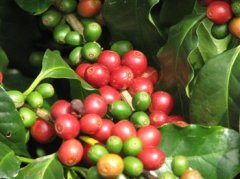
The primary processing technology of coffee in Yunnan requires Arabica species
Technical requirements for the initial processing of small seed (Arabica seed) Coffee 1. There are two processing methods for coffee beans made from fresh coffee fruits, namely wet processing and dry processing. The first and second grade fruits are processed by wet method, and the third grade fruits are processed by dry method in areas without peeling machine and lack of water. 2. Processing technology 2.1 equipment and facilities should be equipped with fresh fruit collection pool and siphon
2015-09-15 Yunnan coffee primary processing technology requirements rabbi card species
Basic knowledge of standard coffee beans sampled from bagged coffee beans
1 range this section specifies the sampling method for 10 or more bags of coffee beans. This section applies to: basic samples for supply; to test whether the coffee beans to be supplied comply with the producer's sales regulations; to determine one or more of the characteristics of coffee beans in order to provide a basis for technical, commercial, management and arbitration; quality control or quality inspection; as a dispute
2015-10-14 Bags coffee beans sampling standards basics common sense