“plant” search results (22423)

Yara Peaberry washing treatment of African flavor Muxiui treatment plant in the western province of Rwanda
Country: Rwanda production area: West province Lutesilo production area altitude: 1827 meters rainfall: 1500mm treatment method: washing, elevated scaffolding sun drying varieties: BM-139 (bourbon) seed treatment plant: Musuyi treatment plant landlord: 1756 members small farmers (about 253 plants per small farmer) flavor: red apple, cherry, cinnamon, honey [Mushonyi processing plant]
2016-04-19 Yara Peaberry washing treatment Africa flavor Rwanda
Yara Peaberry washing treatment of African flavor Muxiui treatment plant in the western province of Rwanda
Country: Rwanda production area: West province Lutesilo production area altitude: 1827 meters rainfall: 1500mm treatment method: washing, elevated scaffolding sun drying varieties: BM-139 (bourbon) seed treatment plant: Musuyi treatment plant landlord: 1756 members small farmers (about 253 plants per small farmer) flavor: red apple, cherry, cinnamon, honey [Mushonyi processing plant]
2016-04-19 Yara Peaberry washing treatment Africa flavor Rwanda
Coffee planting History-introduction to planting conditions and methods
Although Arabs ban the export of coffee seeds, they are indeed very open inside. The first coffee houses known as Kavin Kahn opened in Mecca, and for the first time in human history, anyone who spent a cup of coffee could go in and sit in a comfortable environment to do business and date. Coffee enters Asia. Arabs fail to make coffee.
2016-10-17 Coffee planting history conditions methods types introduction
The growth process of coffee
First, planting time: April 15-25 period. Second, planting location: plain, hillside, wasteland, front and back house, forest and fruit tree seedlings can be planted, but should not be planted in tall trees or other unventilated places. Third, herbal coffee does not like flood and fertilizer, conditional planting can use farm manure, during the growth period, it is best to irrigate 1-2 water during the growth period, absolutely do not allow the use of all kinds of chemical fertilizers and
2014-08-12 Coffee growing process coffee planting coffee beans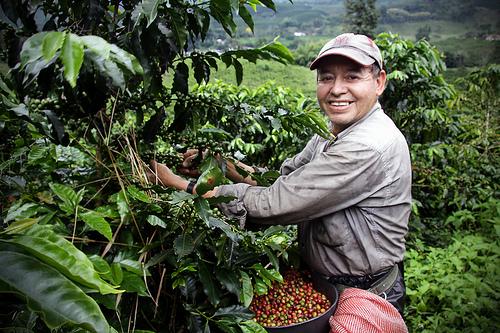
How much is the Rwandan coffee bean per jin? Washing treatment bourbon at Muxiui treatment Plant in the western province of Rwanda
Mushonyi processing plant has an amazing award record. In addition to winning the COE Excellence Cup in 2010, it won the championship, 12th, 16th and 28th in four batches in 2011 alone!
2016-04-08 Rwanda coffee beans less money one jin western province Muxiu treatment plant washing treatment
The natural environment in which coffee trees grow. Planting conditions of coffee trees.
In botany, coffee trees belong to the evergreen trees of the subgenus Rubiaceae, and coffee beans, commonly known as coffee beans, are actually the seeds of the fruit of coffee trees, just because they are shaped like beans, so they are called coffee beans. Climate is the decisive factor for coffee cultivation. Coffee trees are only suitable for growing in the tropics or subtropics, so the zone between latitude 25 degrees south and north is the most suitable for growing coffee. And this...
2015-11-02 Coffee tree growth natural environment planting conditions coffee botany belong to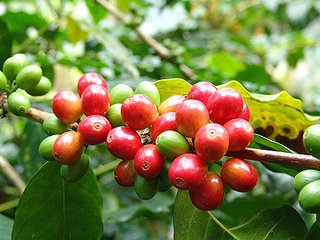
Coffee cultivation and cultivation Coffee cultivation techniques and techniques Introduction to the process of coffee green beans cultivation
(a) seedling propagation coffee seedling propagation can be divided into seed propagation and asexual propagation. 1. Seed propagation (1) Seed collection, seed washing and seed storage In the mature period of coffee (the mature period of medium seed coffee in Hainan Island is 2~3 months, and the mature period of small seed coffee is 9~11 months), fully mature fruits are picked from healthy and high-yield mother trees to make seeds. After the fruits are picked, peeling and seed washing are carried out immediately.
2016-01-22 coffee planting cultivation cultivation techniques techniques introduction green beans process
The common sense of fine coffee illustrates the whole process of planting and growth of coffee beans.
First, what is coffee seed? How did you get the coffee seeds? Coffee seeds, commonly known as dried beans with shells, are coffee seeds that have not yet removed their mesocarp and silver skin. Coffee seeds are divided into Arabica Arabica species and Robusta Robasta species. The picture shows commercial coffee raw beans available for consumption, and they are also two major coffee varieties grown commercially on a large scale. Coffee beans have been planted and grown
2014-11-26 Coffee knowledge coffee common sense coffee beans coffee bean cultivation
Yunnan Dehong small Coffee planting Base
Dehong small grain coffee is native to Africa and Ethiopia and is the main cultivated variety in the world. In 1951, coffee seed was first introduced to Dehong Luxi Cotton cropping Experimental Station for productive cultivation. The seedlings were planted in 6 mu and grew well. In 1956, the Dehong Prefecture Committee decided to vigorously develop coffee in the whole state, and held a training course on coffee planting techniques throughout the state, so that small-grain coffee was widely developed in the whole state. 1958 de
2015-10-07 Yunnan Dehong Xiao Grain Coffee planting Base Origin
The basic altitude of coffee planting technology is the most suitable for planting.
Coffee planting technology the origin of coffee trees is in Ethiopia, Africa. In botany, coffee trees belong to the evergreen trees of the subgenus Rubiaceae, and coffee beans, commonly known as coffee beans, are the seeds of the fruit of coffee trees, just because they are shaped like beans, so they are called coffee beans. Climate is the decisive factor for coffee cultivation. Coffee trees are only suitable for growing in the tropics or subtropics.
2016-10-19 Coffee planting technology basic altitude how much suitable coffee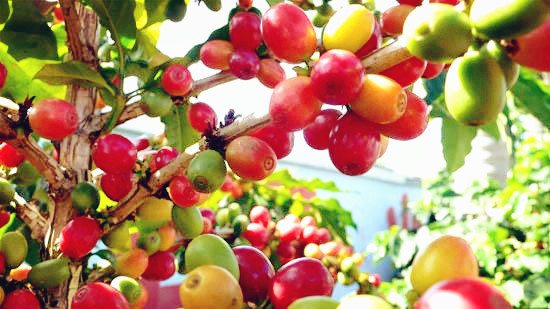
African Coffee Musiui treatment Plant in the western province of Rwanda washing bourbon boutique black coffee
Rwanda West Province Rutsiro Mushonyi CWS Bourbon country: Rwanda production area: West province Lute Xilo production area altitude: 1827 m rainfall: 1500mm treatment method: washing, elevated scaffolding sun drying varieties: BM-139 (bourbon) seed treatment plant: Musuyi treatment plant landlord: 1756 member small farmers (about 253 plants per small farmer)
2016-03-26 Africa coffee Rwanda western province Muxiu treatment plant washing treatment bourbon species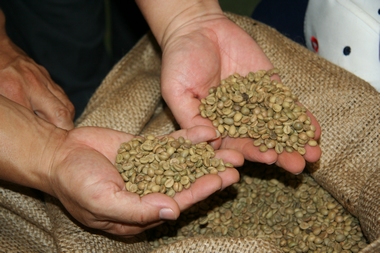
Costa Rica Tarazu St. Roman processing Plant Royal Coffee freshly roasted Black Coffee beans Super Grade
The best coffee in Costa Rica seems to come from small processing plants, spread across several major coffee producing areas, including Tarazu and the western valley. This so-called coffee revolution originated 15 years ago and has greatly changed the way bean baking experts and importers think about Costa Rican coffee. Take the processing plant as the center, collect coffee beans from the surrounding small farms for processing, most of these farms are small societies
2016-03-30 Costa Rica Tara producing area Roman processing Plant Royal Coffee fresh Baking
Yunnan Dehong small Coffee planting Base
Dehong small grain coffee is native to Africa and Ethiopia and is the main cultivated variety in the world. In 1951, coffee seed was first introduced to Dehong Luxi Cotton cropping Experimental Station for productive cultivation. The seedlings were planted in 6 mu and grew well. In 1956, the Dehong Prefecture Committee decided to vigorously develop coffee in the whole state, and held a training course on coffee planting techniques throughout the state, so that small-grain coffee was widely developed in the whole state. 1958 de
2014-04-27 Yunnan Dehong Xiao Grain Coffee planting Base Origin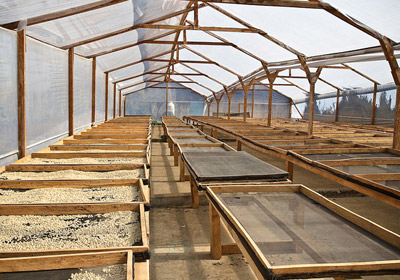
China Coffee Network recommends Royal Coffee Black Coffee from St. Roman processing Plant in Tarazu, Costa Rica.
The best coffee in Costa Rica seems to come from small processing plants, spread across several major coffee producing areas, including Tarazu and the western valley. This so-called coffee revolution originated 15 years ago and has greatly changed the way bean baking experts and importers think about Costa Rican coffee. Take the processing plant as the center, collect coffee beans from the surrounding small farms for processing, most of these farms are small societies
2016-03-28 China Coffee recommendation Costa Rica Tara producing area Roman processing Plant Royal
Introduction to the Flavor Grinding scale of the name of the Manor in the Coffee Bean planting area of Yunnan Province
According to Yunnan Coffee, in 1892, French missionary Father Tian used coffee fruit to breed the first coffee tree outside the church, and then cultivated more coffee trees and planted them around the church. Since then, the village of Zhukula began to grow coffee, and the village has been surrounded by coffee trees ever since. The two oldest elders in the village
2016-10-21 Yunnan coffee beans planting region name manor flavor taste grinding
An introduction to the characteristics of Tieka Coffee Flavor Manor in Yunnan, China
Pu'er, Xishuangbanna, Wenshan, Baoshan, Dehong, Lincang and other places in the south and west of Yunnan are all the distribution areas of small-grain coffee in Yunnan. As of January 1, 2012, according to the comprehensive survey of Yunnan Province, the planting area of coffee in Yunnan has exceeded 800000 mu, and the output of coffee beans in this period is expected to exceed 55000 tons. For the future, the blueprints of local governments in Yunnan have also been drawn up:
2016-09-21 China Yunnan pickup coffee flavor taste manor producing area characteristics introduction
3801 mu of coffee has been planted in Fengqing County
Coffee is a new industry in Fengqing County. this year, the municipal government ordered Fengqing County to plant 5000 mu of coffee. after the promotion of coffee production in Fengqing County, the county people's government promptly mobilized and made development plans. Through investigation, it was finally decided to develop seven villages in Yingpan, Luodang and Xinhua, which are rich in resources in hot areas, with an area of 5000 mu, with the three towers in Yingpan as the focus.
2014-04-27 Fengqing County completion Coffee planting 3801 mu one New
The technique of planting small Coffee-- Multi-dry shaping and Culture
Multi-dry shaping is a method of shaping using the first-order branch as the main fruiting branch. The purpose of plastic surgery is to cultivate multiple trunks and grow a large number of robust primary branches, and the multi-trunk trees will not be topped. As a result, when the yield decreases after 3-5 years, the new trunk will be replaced.
2014-09-02 Coffee knowledge small coffee coffee planting technology multi-dry shaping training
Developing Coffee planting Industry in Pu'er Tea Township
The "Pu'er Tea Township" has made great efforts to develop the coffee planting industry in recent years. In 2010, the coffee planting area of the city reached 230000 mu, accounting for 52.8% and 50.5% of the province and the country, respectively, making it the coffee producing area with the widest planting area and the highest output in China.
2014-07-09 Pu'er Tea Township Coffee planting Industry Coffee Manor
The Green Dream of Coffee in Yunnan Coffee planting Environment in Yunnan
Abstract: introduction: outshining others is not spring. In order to make great progress in Yunnan coffee industry, intensive processing is the only way, and in the face of competition from international coffee giants, Yunnan coffee needs the effect of industrial clusters more. And this will be the situation that zhengfu likes to hear and see. In 2012, Yunnan coffee output is expected to be 60,000 tons, accounting for 98% of the national coffee output, accounting for the world.
2016-05-05 Yunnan Coffee Green Dream Coffee Bean planting Environment Abstract Guide one