“medium grain” search results (1000)

Introduction to the species and characteristics of Yunnan small-grain coffee beans the ranking of Yunnan coffee producing area and the description of its flavor and taste
Varieties of Yunnan small-grain coffee beans, coffee varieties: Typica and Bourbon, two classic high-quality coffee varieties, are the main cultivated varieties of Yunnan coffee. In 1991, Katimo Catimor series varieties were introduced from Kenya (stronger anti-virus ability and higher yield).
2023-02-05 Varieties of coffee coffee beans Yunnan small-grain coffee
Yunnan small grain coffee beans | how about Yunnan small grain coffee _ Yunnan small grain coffee is better
Yunnan small-grain coffee, Rubiaceae, coffee genus, the planting area is mainly distributed in Lincang, Baoshan, Simao, Xishuangbanna, Dehong and other states. Small grains of coffee refer to Arabica, which is originally from Ethiopia or Arabian Peninsula. It is cultivated in Fujian, Guangdong, Hainan, Guangxi, Sichuan, Guizhou and Yunnan. The so-called Yunnan small grain
2021-10-17 Yunnan small grain coffee bean coffee grass family plant area main distribution
Description of Flavor of Yunnan small-grained Coffee Huaguoshan Flavor introduction to the characteristics of varieties producing grindness
The small seed species are also called Arabian species, the medium seed species are also called Ganfla species, and the large seed species are also called Liberian species. There are two common species: Arabica and Robusta. Coffee is rich in protein, fat, sucrose, starch, caffeine and other substances. after being made into a beverage, coffee is rich in aroma, delicious taste and rich nutrition, so it has become the world's three major beverages composed of tea and cocoa.
2016-10-10 Yunnan small grains Coffee Huaguoshan Flavor description Grinding Taste Variety producing area
Basic information about coffee in the Encyclopedia of Fine Coffee
[scientific name] the small seed is Coffea arabicaL., the medium seed is Coffea canephora, the large seed is Coffea liberica, the small seed is also called Arabian, the middle seed is also called Gaffra, and the large seed is also called Liberian species, there are two common species: Arabica and Robusta. Rubiaceae (Rubiaceae), coffee genus (Coffea) [at home and abroad]
2015-01-07 Boutique coffee encyclopedia about basic information scientific name small grain Coffea
Introduction to three kinds of high-quality coffee beans
At present, the main species of coffee plants growing in different regions of the world include the following: ARABICA/ROBUSTA/LIBERICA/DEWEVREI/STENOPHILLA/CONGENSIS/ABEOKUTAS/KLAINII/ZAANGUEBARIAE/RACEMOSA. Among them, the most commonly used coffee is divided into three categories: small seed coffee beans (Arabica) and medium seed coffee beans (Robusta).
2014-09-30 Coffee knowledge coffee beans coffee types
Introduction to three kinds of coffee beans in boutique coffee science
At present, the main species of coffee plants growing in different regions of the world include the following: ARABICA/ROBUSTA/LIBERICA/DEWEVREI/STENOPHILLA/CONGENSIS/ABEOKUTAS/KLAINII/ZAANGUEBARIAE/RACEMOSA. Among them, the most commonly used coffee is divided into three categories: small seed coffee beans (Arabica) and medium seed coffee beans (Robusta).
2014-11-12 Coffee knowledge boutique coffee science coffee bean types
Knowledge of boutique coffee beans introduction to three types of coffee beans
At present, the main species of coffee plants growing in different regions of the world include the following: ARABICA/ROBUSTA/LIBERICA/DEWEVREI/STENOPHILLA/CONGENSIS/ABEOKUTAS/KLAINII/ZAANGUEBARIAE/RACEMOSA. Among them, the most commonly used coffee is divided into three categories: small seed coffee beans (Arabica) and medium seed coffee beans (Robusta).
2014-12-28 Boutique coffee beans knowledge three major types introduction now growth in the world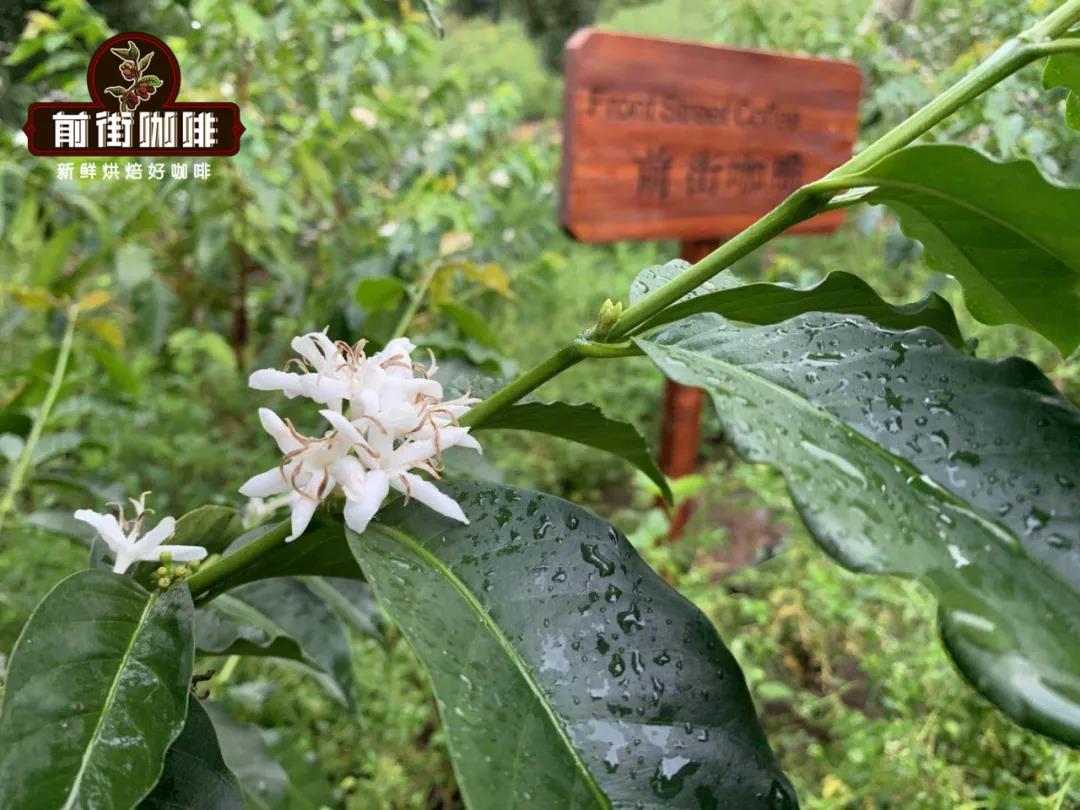
The difference of story flavor and taste between Yunnan coffee iron card and Katim small grain coffee bean varieties
Typica and Bourbon, two classic high-quality coffee varieties, are the main coffee varieties in Yunnan. In 1991, a series of Catimor varieties were introduced from Kenya (stronger anti-virus ability and higher yield). A variety of Arabian species (also known as small seed species). Because the morphology and habits of the two varieties are similar, the two varieties are mostly mixed. Yunnan area
2015-03-14 Yunnan Coffee beans Variety pickup Typica Bobang Bourbon
Requirements of Ecological Environment for planting Coffee trees
Small seed coffee is native to the lower part of the Ethiopian rainforest in northern Africa. The temperature is relatively low, with an average annual temperature of 20 degrees. The origin of medium-grain coffee is near the equator. Therefore, small seed coffee has stronger cold tolerance and wider adaptability than medium grain coffee. Medium-grain coffee requires a slightly higher temperature.
2014-09-02 Coffee knowledge coffee tree planting environmental requirements coffee beans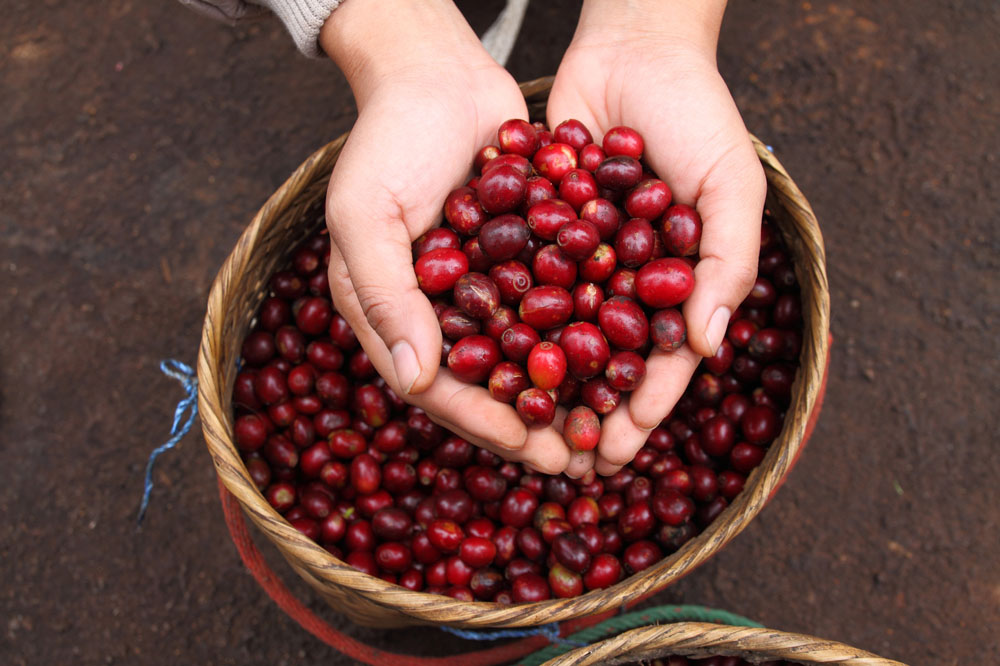
Chocolate color, grain type, complete Yemeni coffee flavor, character, taste and manor
Yemeni coffee is derived from hundreds of years old arabica coffee trees, all grown at altitudes above 3000 feet. For hundreds of years, the cultivation and production methods specific to Yemeni coffee have remained almost unchanged. Coffee seedlings are first cultivated in nurseries and then transplanted to high altitudes. No pesticides or fertilizers are used in the cultivation process. After maturity, coffee beans are naturally dried on coffee trees and shelled by stone mills.
2016-08-31 Chocolate Color Grain Type Whole Yemen Coffee Flavor Characteristics Taste Manor
Flavor Unique Grain Type Complete Yemeni Coffee Flavor, Character, Taste and Manor
Yemeni coffee is derived from hundreds of years old arabica coffee trees, all grown at altitudes above 3000 feet. For hundreds of years, the cultivation and production methods specific to Yemeni coffee have remained almost unchanged. Coffee seedlings are first cultivated in nurseries and then transplanted to high altitudes. No pesticides or fertilizers are used in the cultivation process. After maturity, coffee beans are naturally dried on coffee trees and shelled by stone mills.
2016-09-01 Flavor Unique Grain Type Complete Yemen Coffee Characteristics Taste Manor
Full-bodied Dominican Santo Domingo coffee flavor Taste Manor production characteristics Fine coffee medium
In the early 18th century, coffee was introduced to Dominica from Martinique, and the northern regions, represented by Ciba, and the southern regions, including Ocayabani Santo Domingo, produced fine coffee. Among them, Santo Domingo and Bani produced coffee, almost synonymous with Domica coffee, is world-famous quality coffee. Santo Domingo coffee, characterized by fresh and elegant,
2016-09-07 Taste Thick Dominican Santo Mingo Coffee Flavor Manor Region Special
Introduction to three kinds of coffee beans in the common sense of fine coffee
At present, the main species of coffee plants growing in different regions of the world include the following: ARABICA/ROBUSTA/LIBERICA/DEWEVREI/STENOPHILLA/CONGENSIS/ABEOKUTAS/KLAINII/ZAANGUEBARIAE/RACEMOSA. Among them, the most commonly used coffee is divided into three categories: small seed coffee beans (Arabica) and medium seed coffee beans (Robusta).
2015-06-04 Boutique coffee common sense three coffee beans species introduction now growth alive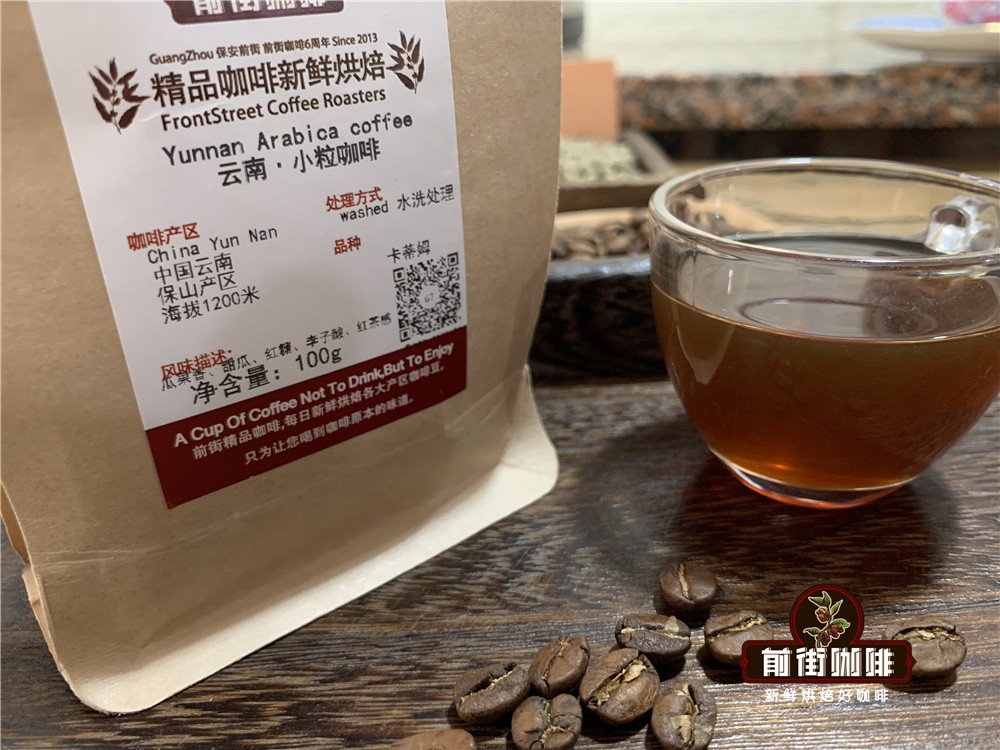
Introduction to the basic knowledge of Yunnan Fine Coffee Bean varieties description of hand-made taste of Yunnan small-grain coffee
[scientific name] small grain species are CoffeaarabicaL., medium grain species are Coffeacanephora, large grain species are Coffealiberica family genus: Rubiaceae Coffea [alias] small grain species, also known as Arabian species, medium grain species also known as Gaffra species, large grain species also known as large seed species
2023-02-05 Boutique Coffee Basics Common sense Yunnan Xiao Grain characteristics Scientific name Cof
With chocolate color, complete grain shape, Yemeni coffee flavor, characteristics, taste and manor
Yemeni coffee originated from Arabian coffee trees hundreds of years ago, all of which are produced in areas above 3000 feet above sea level. For hundreds of years, the unique planting and production methods of Yemeni coffee have remained almost unchanged. The seedlings of Yemeni coffee trees are first cultivated in nurseries and then transplanted to high elevations. Pesticides and fertilizers are not used in the breeding process. Mature coffee beans are naturally dried on coffee trees and shelled by stone mill.
2016-08-31 Chocolate Color Grain intact Yemen Coffee Flavor speciality Taste Manor
What are the young leaves of a coffee tree like?
In 1884, Taiwan Province began to introduce coffee. At the beginning of the 20th century, overseas Chinese brought coffee back from Malaysia to grow in Hainan Province. Later, tropical and subtropical provinces in the south began to grow plant coffee one after another. Although the cultivation time is short, the coffee from Hainan and Yunnan provinces in China has excellent quality and unique charm, and enjoys a high reputation in the world. After some foreign businessmen buy it at a low price.
2016-06-04 Coffee tender leaves what is it what it looks like
Unique Grain shape complete Yemeni Coffee Variety characteristics introduction to Flavor Coffee beans in Manor
Yemeni coffee originated from Arabian coffee trees hundreds of years ago, all produced in areas above 3000 feet above sea level. For hundreds of years, the unique planting and production methods of Yemeni coffee have remained almost unchanged. The seedlings of Yemeni coffee trees are first cultivated in nurseries and then transplanted to high elevations. Pesticides and fertilizers are not used in the breeding process. Mature coffee beans are naturally dried on coffee trees and shelled by stone grinding.
2016-09-01 Flavor unique grain shape complete Yemen coffee variety characteristics taste manor
Yemeni Coffee with complete Grain shape and unique Flavor introduction to Fine Coffee beans in Manor
Yemeni coffee originated from Arabian coffee trees hundreds of years ago, all produced in areas above 3000 feet above sea level. For hundreds of years, the unique planting and production methods of Yemeni coffee have remained almost unchanged. The seedlings of Yemeni coffee trees are first cultivated in nurseries and then transplanted to high elevations. Pesticides and fertilizers are not used in the breeding process. Mature coffee beans are naturally dried on coffee trees and shelled by stone grinding.
2016-09-02 Grain size integrity flavor unique Yemen coffee taste variety characteristics manor
Yemeni Coffee varieties with complete Grain shape and unique Flavor introduction to Fine Coffee beans in Manor
Yemeni coffee originated from Arabian coffee trees hundreds of years ago, all produced in areas above 3000 feet above sea level. For hundreds of years, the unique planting and production methods of Yemeni coffee have remained almost unchanged. The seedlings of Yemeni coffee trees are first cultivated in nurseries and then transplanted to high elevations. Pesticides and fertilizers are not used in the breeding process. Mature coffee beans are naturally dried on coffee trees and shelled by stone grinding.
2016-09-02 Grain shape integrity flavor unique Yemen coffee variety characteristics taste manor
Yemeni Coffee varieties with complete Grain shape and unique Flavor introduction to Fine Coffee beans in Manor
Yemeni coffee originated from Arabian coffee trees hundreds of years ago, all produced in areas above 3000 feet above sea level. For hundreds of years, the unique planting and production methods of Yemeni coffee have remained almost unchanged. The seedlings of Yemeni coffee trees are first cultivated in nurseries and then transplanted to high elevations. Pesticides and fertilizers are not used in the breeding process. Mature coffee beans are naturally dried on coffee trees and shelled by stone grinding.
2016-09-02 Grain shape integrity flavor unique Yemen coffee variety taste characteristics manor