“length” search results (1441)
Dynamic drip filter pot hand siphon kettle (stirring force) low temperature extraction filter kettle
The soaking time should be inversely proportional to the baking degree under a fixed amount of water, the longer (shorter) the steaming time, the higher (lower) the extraction rate and the higher (lower) the concentration. The baking degree should be taken as the main consideration for the length of soaking time. Shallow baked beans are not easy to extract, so the brewing time should be a little longer than baking. On the contrary, re-baked beans are easier to extract, so the brewing time is slightly shorter than that of shallow baking. In other words, the baking degree should be
2016-07-01 Dynamic drop filter pot hand flushing pot siphon stirring force low temperature extraction French filter pressure
High-quality coffee raw beans: the difference between new beans and old beans
After dry and wet processing, coffee fruit becomes coffee raw bean (Raw bean/Green bean). The main components of raw beans are: carbohydrates, about 49%; moisture, about 12%; protein. About 11%; chlorogenic acid, about 7.6% alkaloids and trace elements, about 0.4%. According to the length of time, raw beans can be divided into: seasonal beans (Current Cro)
2015-06-01 Boutique coffee raw beans new beans old beans fruit pass dry and wet
Colombia Coffee Boutique Coffee Flavor Taste Producing Area Features Manor Introduction
Colombia coffee is the first coffee produced in Medellin, both in terms of yield and texture. It is characterized by full coffee beans, rich nutrition, moderate acidity, good balance, rich aroma and soft and smooth taste. Apart from Medellin, Armenia and Manizales, the capital cities of two neighboring provinces in the south, are also famous coffee producing areas.
2016-09-21 Colombia Coffee Fine Flavor Taste Region Characteristics Manor Introduction None
Introduction to the manor by treating the characteristics of the varieties in the grinding degree of Coffee in Crystal Mountain, Cuba
In addition to Cuba, it also includes more than 1600 surrounding islands of different sizes. The islands are made up of five islands: Savannah, Camag ü ey, Colorados, Queen's Garden and Canareos. Youth Island (also known as Pine Island), located in Batahuano Bay, is the only larger island along the coast. The total length of the coastline is 6073 kilometers. Most of the island of Cuba is flat
2016-10-10 Cuba Crystal Mountain Coffee Grinding Taste Variety producing area characteristics treatment Manor
Introduction to the Andean Mountains in the main cultivated areas of coffee trees in Colombia
The main varieties of Colombian coffee are small grains of coffee. Plants are small trees or large shrubs, 5-8 m tall, usually much branched at base; old branches gray-white, nodes dilated, young branches glabrous, compressed. Leaves thinly leathery, ovate-lanceolate or lanceolate, 6-14 cm long and 3.5-5 cm wide, tip long acuminate, acuminate part 10-15 mm long, base cuneate or slightly obtuse, rarely rounded, entire or
2016-06-24 Colombia Coffee main cultivation region introduction Andes Mountains Columbia
Quality of Colombian coffee grade producing area
The history of coffee cultivation in Colombia can be traced back to the Spanish colonial era in the 16th century, and there are many theories about the history of coffee in Colombia: one: it is said to come from the island of Haiti in the Caribbean and from El Salvador in Central America. Second: in 1808, a priest introduced coffee beans to Colombia for the first time from the French Antilles via Venezuela. One of them
2016-05-27 Colombia Coffee Grade Origin quality cultivation History
Coffee raw beans: the main components of raw beans between new beans and old beans
After dry and wet processing, coffee fruit becomes coffee raw bean (Raw bean/Green bean). The main components of raw beans are: carbohydrates, about 49%; moisture, about 12%; protein. About 11%; chlorogenic acid, about 7.6% alkaloids and trace elements, about 0.4%. According to the length of time, raw beans can be divided into: seasonal beans (Current Cro)
2015-09-15 Coffee raw beans new beans old beans mainly coffee fruit after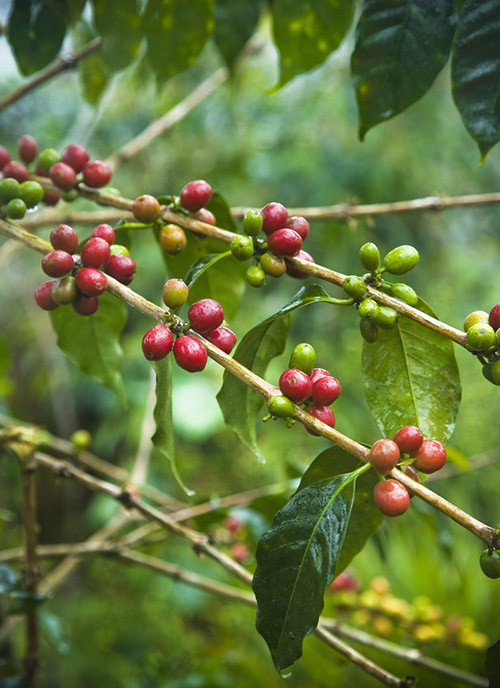
SCAA Coffee extract Water temperature time Water flow Fine Coffee beans roasted Coffee beans Italian blending
The soaking time should be inversely proportional to the baking degree under a fixed amount of water, the longer (shorter) the steaming time, the higher (lower) the extraction rate and the higher (lower) the concentration. The baking degree should be taken as the main consideration for the length of soaking time. Shallow baked beans are not easy to extract, so the brewing time should be a little longer than baking. On the contrary, re-baked beans are easier to extract, so the brewing time is slightly shorter than that of shallow baking. In other words, the baking degree should be
2016-07-22 SCAA coffee extract water temperature time water flow boutique coffee beans roasting
Rich flavor of Colombian coffee the characteristics of Santa Rita Manor are introduced.
One: it is said to come from the sea island of the Caribbean and from El Salvador in Central America. Second: in 1808, a priest introduced coffee beans to Colombia for the first time from the French Antilles via Venezuela. One of them is that Colombia's first coffee seeds were imported from Venezuela through the province of Santander. [1] third: the earliest coffee cultivation in Colombia
2016-08-08 Aroma rich Columbia coffee flavor taste manor producing area characteristics introduction
General knowledge of boutique coffee culture Turkish coffee divination
Turks drink coffee, the residue is not filtered out, because the coffee powder is ground very fine, so when tasting, most of the coffee powder will precipitate at the bottom of the cup. General coffee can not be used for divination, because coffee divination is mainly after drinking coffee, with the remaining residue, shape or pattern to predict good or bad luck, so only Turkish coffee can be used.
2014-11-21 Coffee knowledge Agfa common sense Turkish coffee divination
The processing of coffee beans basic knowledge of coffee beans
1. Peeling removes the peel and most of the flesh by mechanical or manual means. two。 Fermentation removes the mucus and film from the core by fermentation. as the length of fermentation time will affect the flavor of coffee, each manufacturer has its own fermentation time. 3. The drying method is mainly divided into natural sun drying and natural air drying. Excessive water content can easily lead to mildew and insect growth of raw coffee beans.
2015-06-06 Coffee beans processing boutique basics common sense peeling utilization machinery manpower methods
Introduction to the method of describing the Flavor of Cerro Asul, a single Coffee of Hope Manor in Colombia
Colombia hopes to describe the flavor of manor coffee. Colombian coffee is mainly small-grain coffee. Plants are small trees or large shrubs, 5-8 m tall, usually much branched at base; old branches gray-white, nodes dilated, young branches glabrous, compressed. Leaves thinly leathery, ovate-lanceolate or lanceolate, 6-14 cm long and 3.5-5 cm wide, tip long acuminate, acuminate part 10-1 long
2016-10-24 Columbia Hope Manor Rose Summer Coffee single Pint Roasu Flavor description
An introduction to the Origin Culture of Colombian Coffee
The history of coffee cultivation in Colombia can be traced back to the Spanish colonial era in the 16th century, and there are many theories about the history of coffee in Colombia: one: it is said to come from the island of Haiti in the Caribbean and from El Salvador in Central America. Second: in 1808, a priest introduced coffee beans to Colombia for the first time from the French Antilles via Venezuela. One of them
2016-06-05 Colombia Coffee characteristics Origin Culture introduction cultivation
Introduction of Coffee Bean Origin and Variety Coffee Bean species and comparison
The history of coffee cultivation in Colombia can be traced back to the Spanish colonial era in the 16th century, and there are many theories about the history of coffee in Colombia: one: it is said to come from the island of Haiti in the Caribbean and from El Salvador in Central America. Second: in 1808, a priest introduced coffee beans to Colombia for the first time from the French Antilles via Venezuela. One of them
2016-05-25 Coffee beans origin variety introduction type comparison Colombia cultivation coffee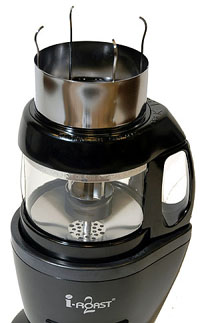
Coffee roasting: introduction of i-ROAST 2 Coffee Roaster (hot air household roaster)
Introduction: model: i-ROAST 2 Coffee Roaster (hot air household roaster) is the most popular household roaster with comprehensive functions, which is easy to use and suitable for coffee players to bake coffee with their own characteristics and taste. 150g coffee can be roasted each time. Model: i-ROAST 2 Coffee Roaster (hot air household roaster) Brand: i-Roast specification: length / width / height (9 / 9)
2015-12-25 Coffee roasting iMurroast hot
Colombian Coffee Flavor Taste Manor production area introduces Hope Manor
The history of coffee cultivation in Colombia can be traced back to the Spanish colonial era in the 16th century, and there are many theories about the history of coffee in Colombia: one: it is said to come from the island of Haiti in the Caribbean and from El Salvador in Central America. Second: in 1808, a priest introduced coffee beans to Colombia for the first time from the French Antilles via Venezuela. One of them
2016-07-22 Colombia Coffee Flavor Taste Manor producing area introduction Hope
The source of Colombian coffee. Colombian coffee producing areas.
The main varieties of Colombian coffee are small grains of coffee. Plants are small trees or large shrubs, 5-8 m tall, usually much branched at base; old branches gray-white, nodes dilated, young branches glabrous, compressed. Leaves thinly leathery, ovate-lanceolate or lanceolate, 6-14 cm long and 3.5-5 cm wide, tip long acuminate, acuminate part 10-15 mm long, base cuneate or slightly obtuse, rarely rounded, entire or
2016-05-25 Colombia coffee source producing area variety major small grain
Characteristics of the Historical Origin of Coffee Culture in Colombia
History tracing Editor Colombian Coffee Brand Colombian Coffee Brand (9) the history of coffee cultivation in Colombia can be traced back to the Spanish colonial era in the 16th century. there are also many theories about the history of coffee in Colombia: one: it is said to have come from the island of the Caribbean and by sea through El Salvador in Central America. Second: in 1808, a priest obeyed the law.
2016-06-05 Columbia Coffee Cultural History Origin characteristics History Editor Goran
The technology of high-quality coffee beans the processing of coffee beans
1. Peeling removes the peel and most of the flesh by mechanical or manual means. two。 Fermentation removes the mucus and film from the core by fermentation. as the length of fermentation time will affect the flavor of coffee, each manufacturer has its own fermentation time. 3. The drying method is mainly divided into natural sun drying and natural air drying. Excessive water content can easily lead to mildew and insect growth of raw coffee beans.
2014-10-17 Coffee knowledge coffee technology coffee bean processing
Characteristics, Origin, History and species Morphology of Colombian Coffee beans
History tracing Editor Colombian Coffee Brand Colombian Coffee Brand (9) the history of coffee cultivation in Colombia can be traced back to the Spanish colonial era in the 16th century. there are also many theories about the history of coffee in Colombia: one: it is said to have come from the island of the Caribbean and by sea through El Salvador in Central America. Second: in 1808, a priest obeyed the law.
2016-06-03 Columbia coffee beans characteristics origin history species morphology traceability